

Matching Panfish Diet with Artificial Lures
By: Jason Sealock
March 4, 2026
I think panfish are assumed to just be easy to catch at all times of the year because of their prevalence. However, like any other fish, finding better quality requires more understanding of their behaviors and their relation to their habitats and food sources. And matching panfish diet to the artificial lures that best mimic those in various seasons can yield much more consistent and rewarding fishing for anglers who love to catch and even eat bigger panfish.
I think panfish are assumed to just be easy to catch at all times of the year because of their prevalence. However, like any other fish, finding better quality requires more understanding of their behaviors and their relation to their habitats and food sources. And matching panfish diet to the artificial lures that best mimic those in various seasons can yield much more consistent and rewarding fishing for anglers who love to catch and even eat bigger panfish.
While I, too, believe just about anyone can catch smaller bluegills with nothing more than a worm and hook, catching big gills to eat or just for the pursuit of a trophy and the fight of a big bluegill, red ear sunfish, or other big panfish requires a more dedicated approach.
I've been studying the diet of panfish for the last few years, as well as doing some sampling with biologists like Dr. Michael Flynn of Murray State University on my home waters, and found some interesting correlations to their patterns around their food options and decisions, and lures that mimic these things really well when it matters.
Table of Contents
Panfish Diet and Food Choices
Anglers should acknowledge and realize that panfish make choices on food, and those choices vary throughout the year. Some because of the availability of different food sources in different seasons, and some because of the energy expenditure and other decisions around food choices. And you should also note that the activity levels of panfish vary alongside the activity levels of their food choices.
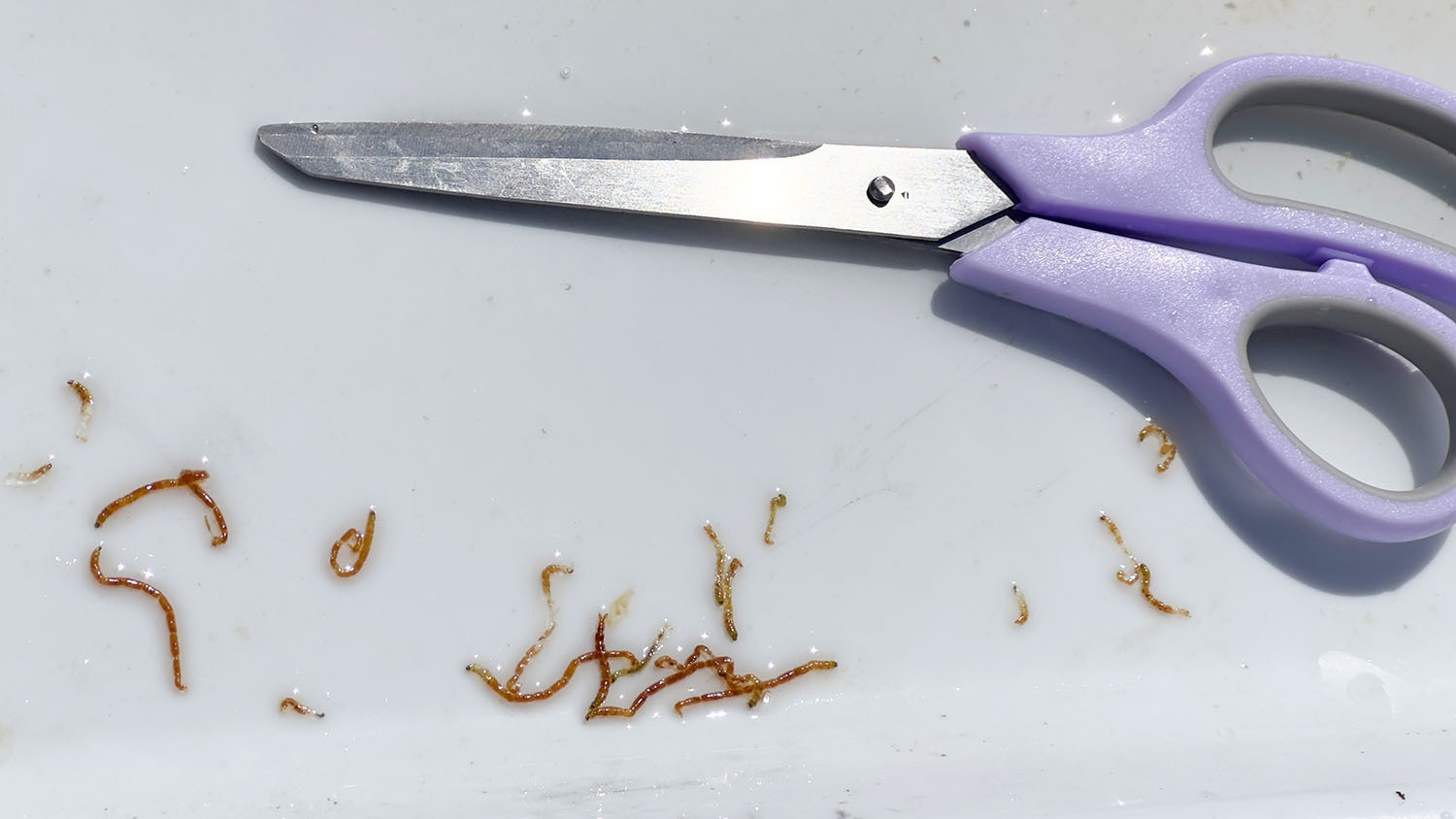
For example, in the colder months, panfish can have a lot more food in their bellies, like chironomids, than other organisms they have to chase down to eat. Partly because bug hatches are much less with the exception of some midges in the winter, and partly because they have to choose their food sources based on how much energy is required to acquire the food when their metabolism slows. These energy expenditure choices can have an effect on what they will react to best.
Then there is another choice panfish will often make related to diet that is also related to predation. Studies have shown that some panfish will move more offshore and eat zooplankton and other microorganisms because the predation levels are higher when they feed up shallow on the bank, say from bass, pike, gar, catfish, musky, and other large predator gamefish that can feed on them in shallow environments. They will completely abandon their normal dietary preferences in lieu of survival.
And then, finally, certain foods are more prevalent throughout the year because of hatches, spawns, and changes in water temperature. So there may be times where there are more grass shrimp, or more things like worms flushing into the system (think spring floods), or very small forage (shad spawns, minnow spawns), as well as a sporadic abundance of bug life related to hatches (say, emerging mayflies).
Knowing these things all can make up part of the panfish diet, and learning more about their abundance and behaviors on your fisheries can put you a step ahead in unlocking your fisheries for trophy panfish and just overall better panfishing.
Panfish Lures That Mimic Their Food Choices
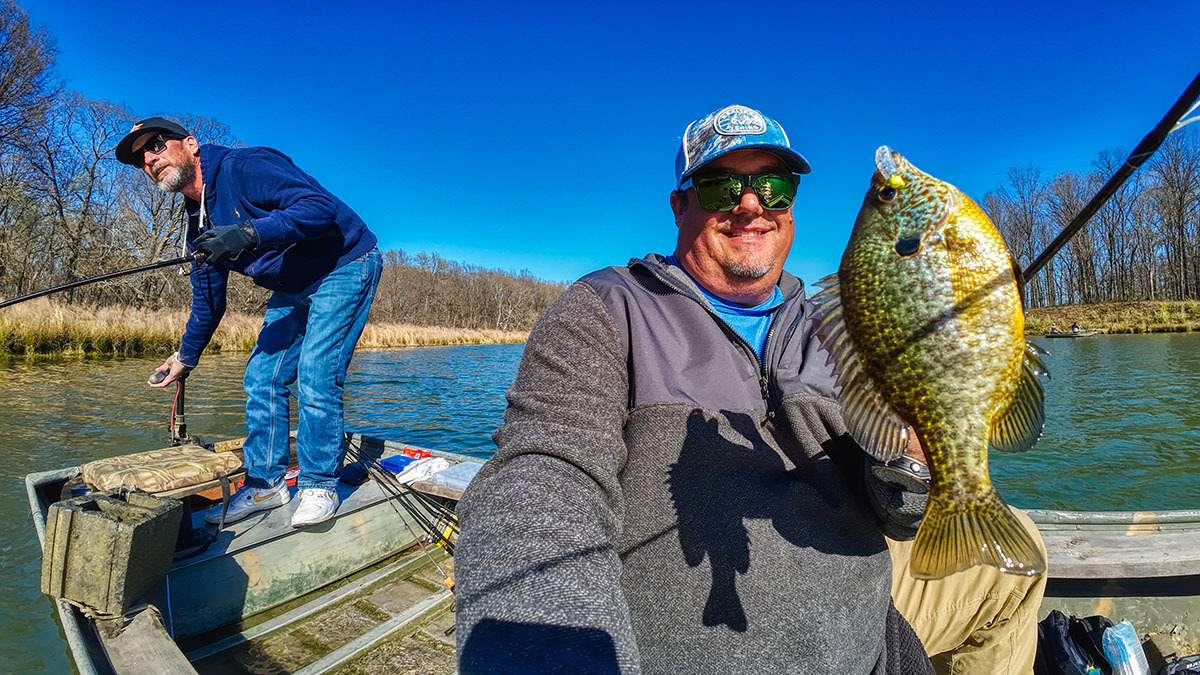
Anglers can now enjoy expanded offerings around panfish. Some crazy great days for big panfish have been had on more nonconventional lures like spoons, spinners, countdown cranks, jigs, both with plastic bodies and hand-tied bodies as well as flies and bugs, and hard baits like cricket and grasshopper topwaters, floating spiders and poppers, and more.
And there are times when one bait will really outclass others related to what is going on with that particular fishery at a particular time. So let's dive into some of the proven winners for panfish in various categories of lures that match the diet profile for panfish, and then we'll talk briefly about the seasonality of applying these different lures for big bluegills, red ears, and more.
Jigs and plastics
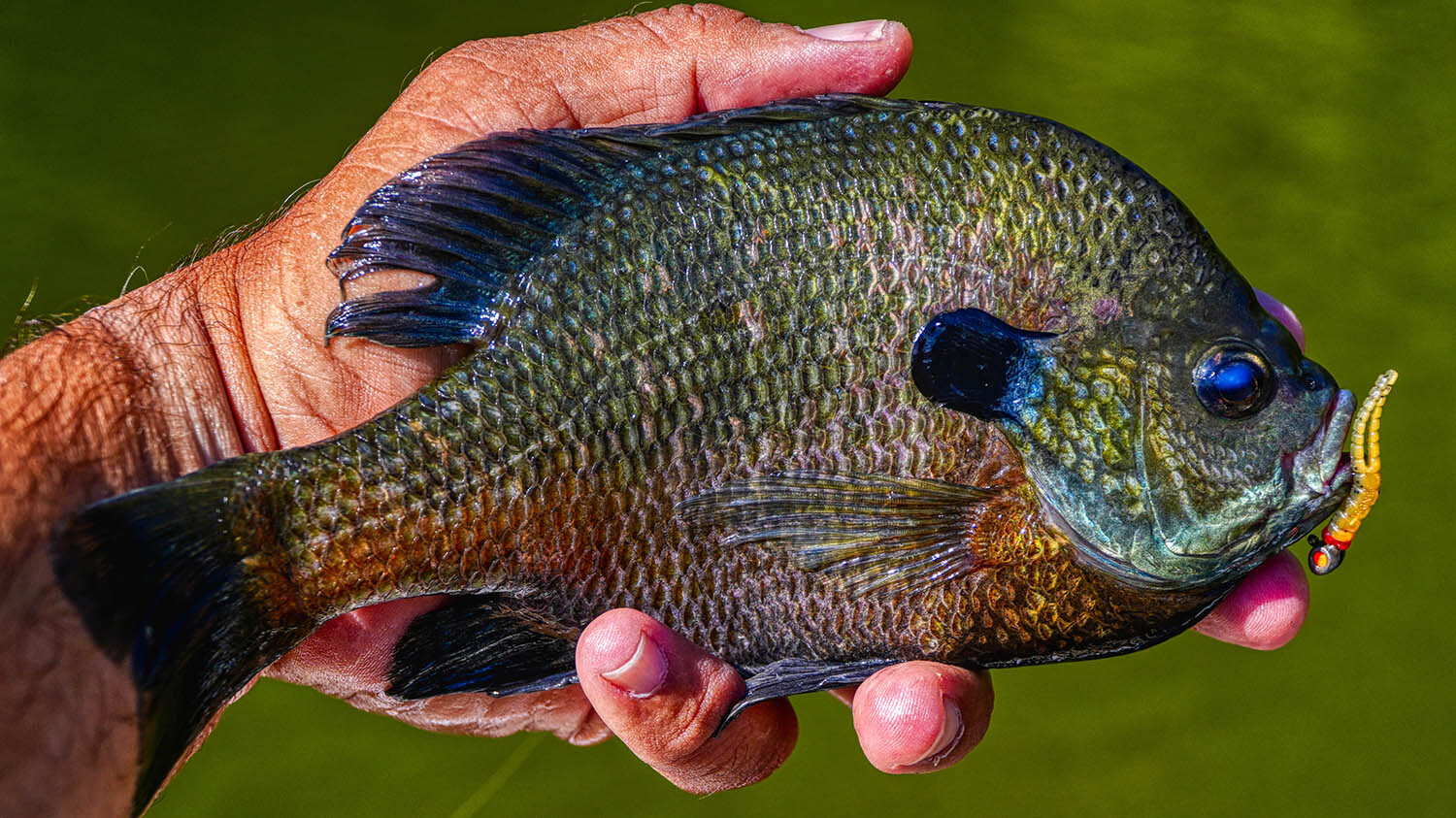
Most anglers will start their artificial lure journey for panfish with jigs and plastics. And that's a great place to start, save for maybe a fly rod (just because that's so much dang fun with big panfish). But it's easy to mimic a lot of different food sources with a simple plastic body on a small jighead. And now there are so many good options, anglers can really find grubs and jigs that fit the way they love to fish.
A thin plastic body on a jighead can mimic shrimp, baitfish, larvae, worms, grubs, larvae, chironomids, and more that panfish regularly find in their diet cycles. And the simplicity of a plastic on a jighead makes this a great place for anglers to start. Put them under a small float like an E-Z Panfish Float. Or just cast them out on 2- to 4-pound line on an ultralight setup and reel them back slowly with slight twitches and hops of the rod tip to elicit strikes.
We try to stick with plastics in the smaller range from 3/4 inch to 1 1/4 inch.
Some great examples of good jig plastics for panfish would include:
- Trout Magnets
- Charlie Brewer 1-inch Sliders
- Bobby Garland Itty Bit Slab Hunt'Rs
- Z-Man Micro Goats
- Mr. Crappie Maxie Waxie
- Trout Magnet Cross Worm
- Other Panfish Bodies
Shop our full selection of Panfish Jigs & Panfish Soft Plastics
For jigheads, you want heads with a No. 8 to No. 12 hooks in 1/64 to 1/16 ounce sizes. Some good options are as follows:
Shop our full selection of Panfish Jig Heads
Flies
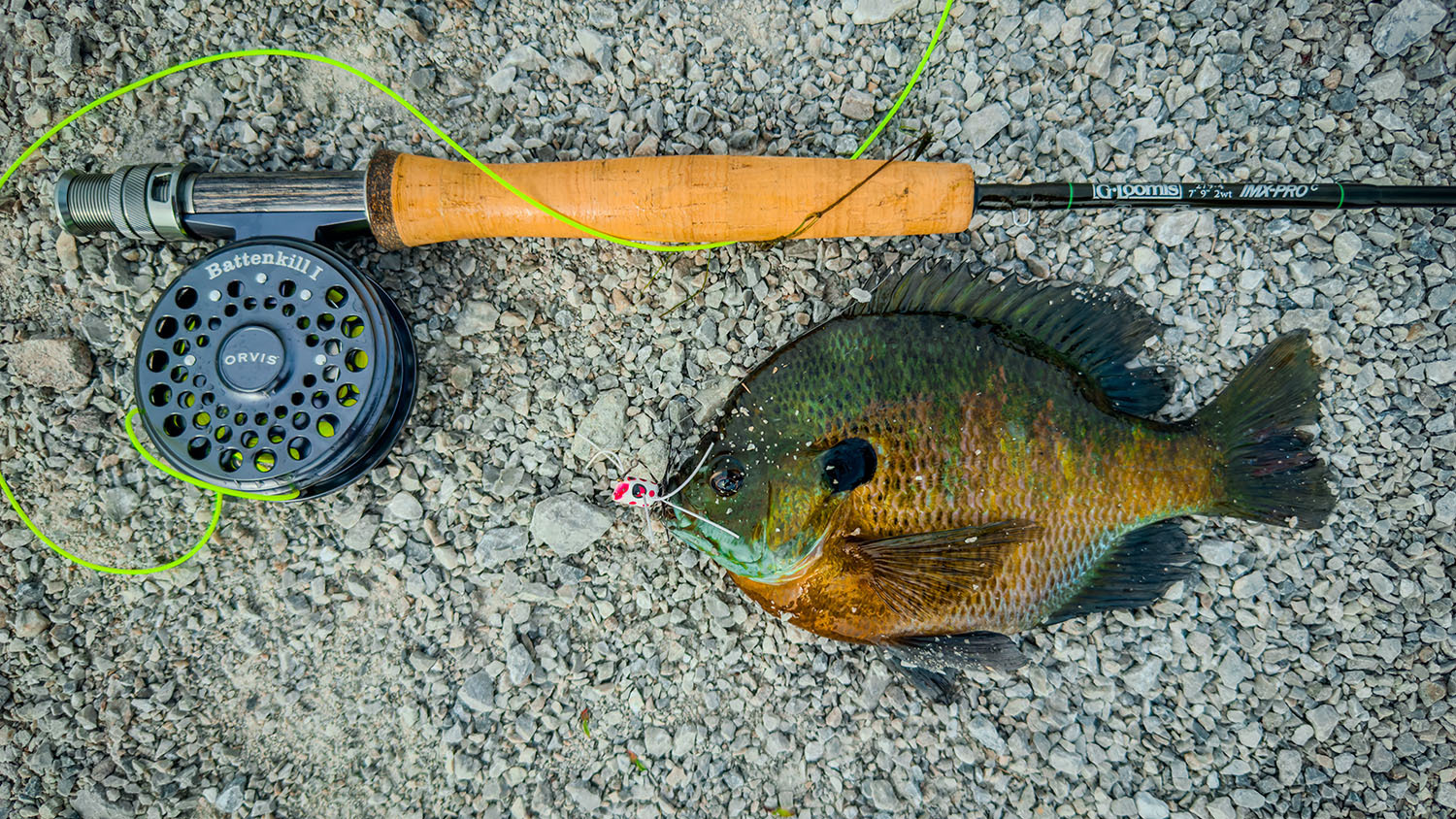
There is not much that is more fun when it comes to fly fishing than catching gills on a topwater fly. You can catch them under the surface as well, and often a floating ant or hopper on the surface with a smaller nymph or spider type fly under it can be the dynamite combo for panfish in the warmer months.
If you like to tie your flies, we have all the supplies to tie up some great bluegill patterns like foam ants, hoppers, bully spiders, woolly buggers, and more. Here are some examples to check out:
- Wapsi Popper Fly Kit
- Wooly Bugger Size 10
- Bully Spider Patterns
- Foam Ants and hopper patterns (supplies in our Fly Shop)
Buggy hard topwaters
There are cool micro topwaters available now that mimic everything from Cicadas to grasshoppers, and they can be fished on conventional gear. More importantly, bluegills love them! I go with the smallest sizes I can find.
A pro tip: trailer a jig off the back hookeye and you can fish a fly or jig under your topwater lure to get gills that come up to look at the bug but don't want to break the surface. Using the hard bait as an attractor to your more natural jig or fly.
Look at baits like these to get an idea:
Shop our full selection of Panfish Hard Baits
Sinking crankbaits
When the bluegills and red ears move shallow to feed in the prespawn and again in the fall, forage baits can work really well. One of the all-time favorites for bluegills that has produced everywhere for us is a Rapala Countdown 1. Another good option is the Yo-Zuri Snap Bean. They are easy to cast and fish on light lines with slow, steady retrieves, staying just above the bottom or cover.
Small spinners and spoons
And finally, the last great classes of lures that work really well for panfish are the flash baits that include spinners, underspins, and spoons. These are great options when you want to cover water and fish are more aggressive and feeding on swimming prey like shrimp and baitfish. Probably the most popular of these would be the Beetle Spin for elbow spinners, Road Runner for underspins, and Rooster Tail for inline spinners, along with Micro Kastmaster for the spoon.
Shop our full selection of Panfish Spinners and Panfish Spoons
Seasonal Applications of Panfish Lures
So now that we've covered the baits, it's good to consider the application of the various panfish lures as they line up with the seasonality of panfish diet preferences.
Winter
In the winter, you often find slower metabolisms, fewer bugs, and smaller aquatic forage bases. So things like macroinvertebrates and larvae can play a big role in the panfish diet.
When we sampled bluegills last February on Kentucky Lake, we found their bellies full of chironomids. The gills can easily pluck these larvae out of moss on the lake bottom and cover, and it's a great food source with minimal effort. So small jigs and slender worms like the Trout Magnet Cross can often be a great place to start for artificial lures for panfish in cold waters. This can also be a time when small spoons work really well to tempt deep gills.
Spring
Then, as we move into the spring prespawn, they will be a lot more active, there will be more food sources in the systems with bug larvae starting to move towards hatches, and baitfish and microorganisms moving towards warmer banks and areas with cover. This is a time of year when the panfish are really trying to feed up for their spawn, and larger lures can often work well.
To us, this is primetime crankbait time. Cast a countdown out and slowly swim it back over shallow feeding zones. Jigs will, of course, still work, and you can go up in size more to tempt bigger gills and red ear sunfish.
As we move into the spawn and post-spawn, everything becomes an option. Flies fished on fly rods, jigs fished over spawning flats or under floats, spinners, underspins, and some cranks. When they are spawning, it's often more about keeping your lure in their smaller zones for longer to antagonize them into biting. As we move towards the end of the spawn, spinners and underspins can really shine on fish feeding back up after the spawn and getting ready for their migration to summer areas.
Summer
As we get into summer, bug hatches become very prolific, and their patterns can often shift towards evening fishing when bug hatches become most prevalent. Topwater is our favorite by far. Whether that is fishing with a popping bug, foam ant, or hopper on a fly rod, or fishing small hopper or cicada topwater lures with a dropper jig.
Summertime can be very fun for fishing on top. I have also done some data collecting and found the bite often is best in the last 30 minutes before dark when gills are looking up for bugs. I have gone from 10% catch rates an hour before dark to 90% catch rates the last 30 minutes. It's that big a difference when the light gets low, when they are keying on bugs and hatches.
There are also good bites offshore on high spots off deeper creek channels with wood cover and structure breaks. Often, a drop shot rig with a jig above it can work wonders, as can a heavier jig on a tungsten head. And a spoon is often overlooked but effective bait for gills this time of year when they get a little deeper.
Fall
As we move into fall, the panfish will come back shallow to feed. They will get on high spots in the bays and shallow pockets to feed on snails, bugs, larvae, and small forage. So again, a more aggressive approach can work to catch a lot of big fish feeding up before winter. Cranks, jigs, spinners, underspins, and more will work this time of year. It is more about hunting for feeding areas and covering water to find the groups of feeding gills than certain lures. When you find a big school feeding shallow, what to use becomes less of a concern. Some of the biggest and most active schools of panfish I've ever found were in the fall in less than 2 feet of water.
Final Thoughts
We hope your love of panfish and our insights here will help you take advantage of the range of lures to match the diet preferences of panfish on your lakes. There are a lot of great lures designed to target panfish keying on different food sources at different times of the year, and you will find that it is a really fun pursuit in fishing that can be had all 12 months of the year. Pound for pound, the panfish are some of the hardest pulling fish for their size. Match your gear to your lure choices, and it really is a hoot to catch these fish all year long.
Panfishing Gear and Tackle