

Fishing Spring Creeks For Trout In The Winter
By: Jason Sealock
January 7, 2026
Knowing the nuances of spring-fed waters can lead you to better fishing at times when trout fishing gets tough or nonexistent on other waters. Freestone rivers that rely on a lot of elevation and snow runoff can slow down quite a bit in the winter, and the systems can be a lot more volatile, which is why fishing spring creeks for trout in the winter can be a much more favorable option.
Knowing the nuances of spring-fed waters can lead you to better fishing at times when trout fishing gets tough or nonexistent on other waters. Freestone rivers that rely on a lot of elevation and snow runoff can slow down quite a bit in the winter, and the systems can be a lot more volatile, which is why fishing spring creeks for trout in the winter can be a much more favorable option.
There are a number of factors that contribute to spring creeks being a great choice for winter-time trout fishing. Those include, but are not limited to, the following:
- Warmer water temperatures
- More consistent bug hatches and food abundance
- More active trout
- Longer active periods
- Better concentrations of fish
- Less fishing pressure
We will cover each of these reasons spring creeks excel in more detail, how to fish spring creeks in the winter, and how to get prepared to fish these in the winter.
Related: How To Catch Trout: Trout Fishing Tips & Techniques
Table of Contents
Why Spring Creek Trout Fishing Excels
The number one thing that makes spring creeks great locations for fishing at tough times, like during the winter, is that the water is a more consistently uniform temperature because it is coming out of the ground. Therefore, it is less affected by snow, cold air temperatures, and other related environmental and weather-related factors. Now, the further you get from the spring source, the more the waters become influenced by those factors. Which can also help direct you at times. So be mindful of where the springs are and how far you are fishing from them.
But for the most part, this is the single biggest factor that makes spring creek trout fishing attractive at times like winter. For example, the local lake temperatures here in the Midwest are 39 degrees currently. However, our temperature probe in the last spring creek we fished showed the water was 48 degrees. Significantly warmer than the surrounding water bodies. As a result, we found a lot of active trout by choosing a spring creek during the winter.
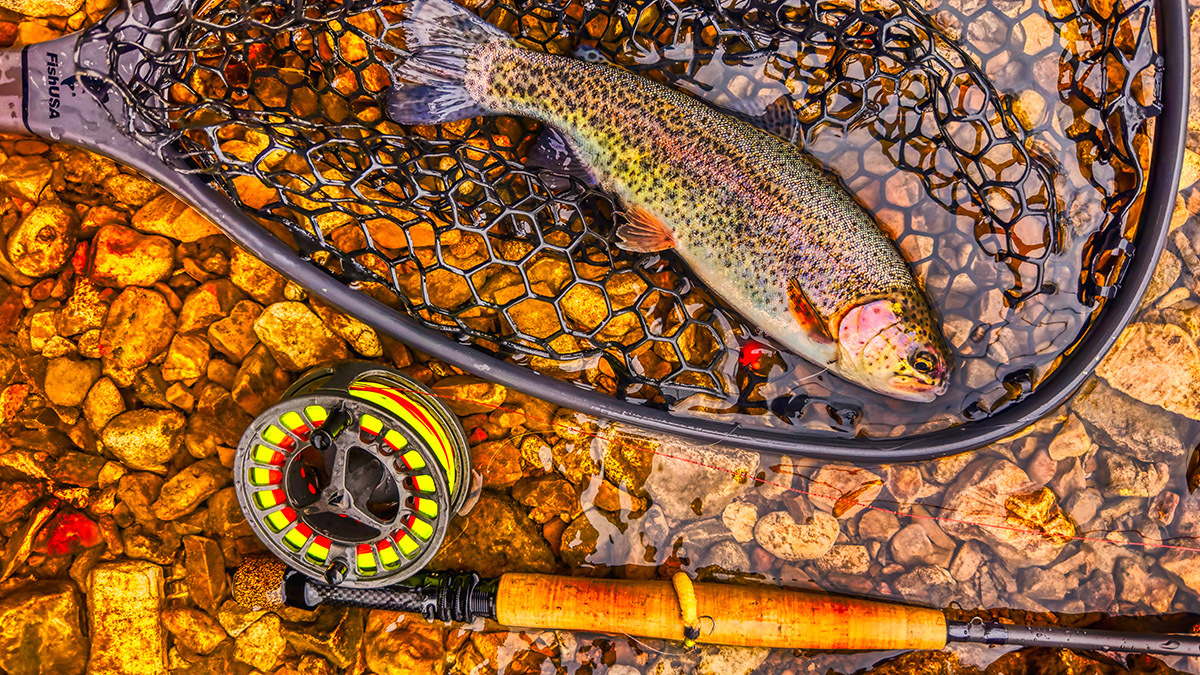
Because the water is often more consistent and even warmer than the surrounding areas when it gets really cold, spring creeks will often support a lot more diverse food ecosystem for the trout and a lot more consistent bug hatches, like midges and even BWOs and Caddis on mild winter days.
These warmer waters in the winter can also produce longer periods of activity. Where on a freestone river, the trout might only feed in a small window, say in the afternoon, and be pretty dormant the rest of the day. On a spring creek, they may also be most active in the afternoon, but that window might be several hours compared to just an hour on a regular freestone river.
In general, it seems like you also find more active trout comparatively speaking, as well as bigger concentrations of fish on spring creeks at times like winter. The water is often clean in the winter, and I have found pods of 100 trout or more grouped up and actively hitting my flies and jigs with snow on the banks on a spring creek. It might take me a changer or two of presentations to really dial in, but often they are aggressive and bite easily on that spring creek when I often struggle on other types of trout waters.
These are all the reasons that spring creeks are the better choice at times like winter.
How to Fish Spring Creeks for Trout
Obviously, a lot of methods and lures will work for trout on spring creeks. And at times, there are obviously better options, like after the spawn, the coldest parts of winter, or when other bodies seem to have inactive fish. We will cover conventional gear fishing first, as well as fly fishing for trout on spring creeks.
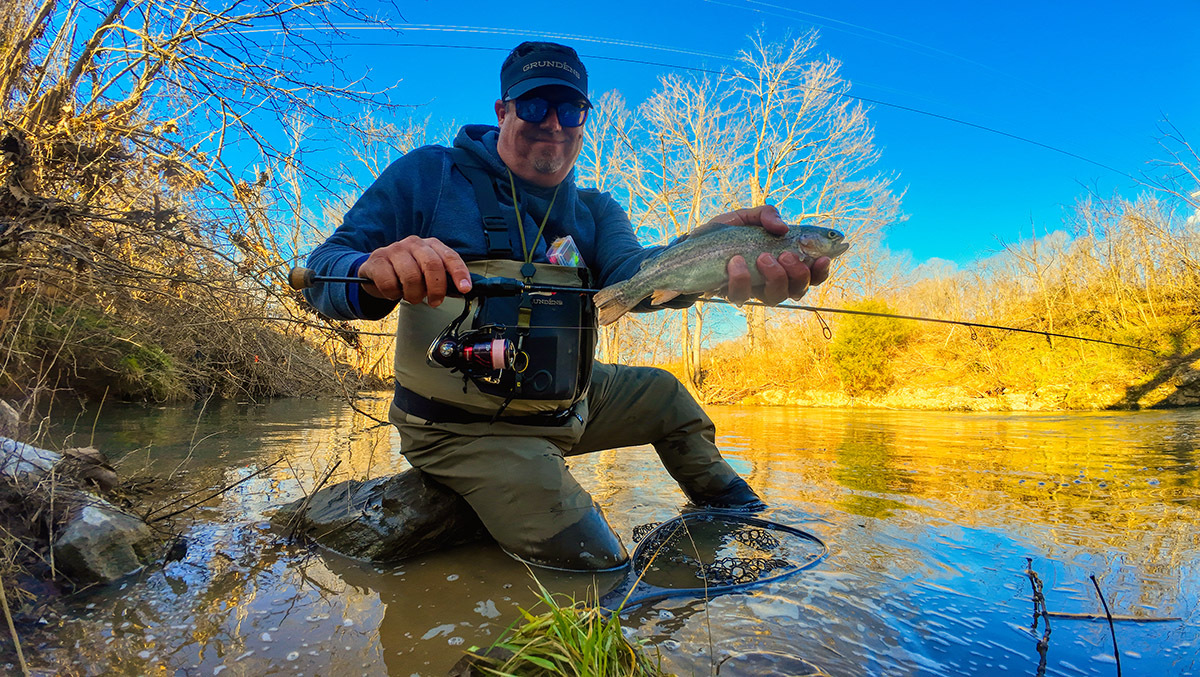
Conventional
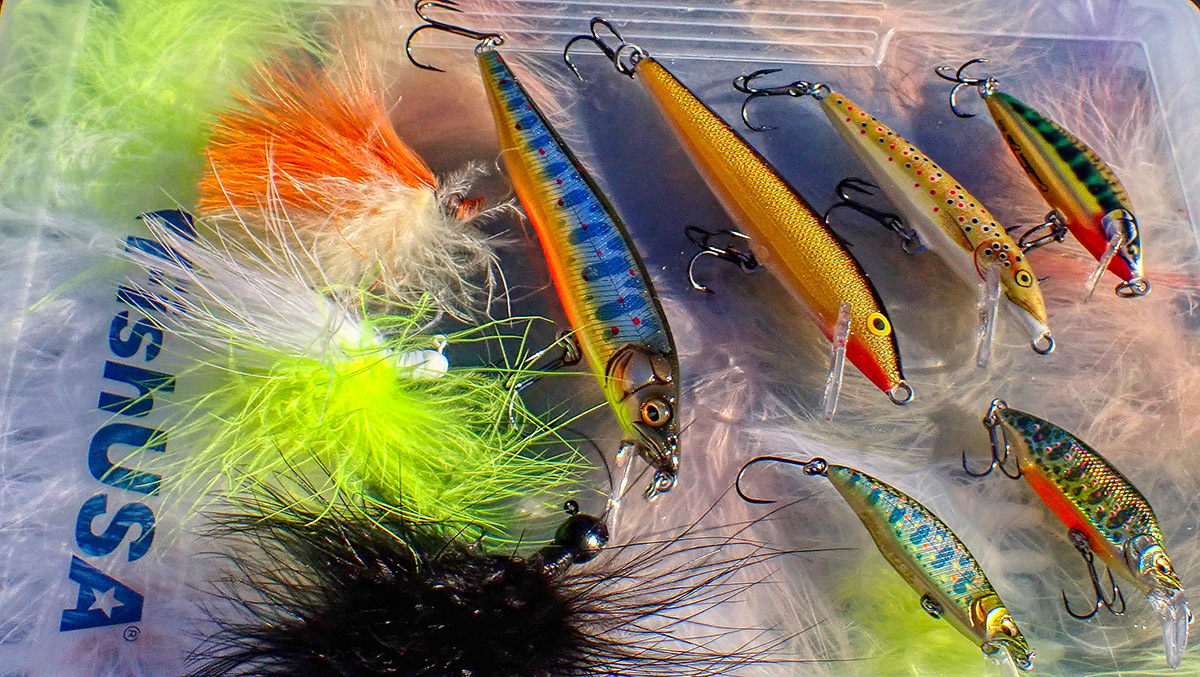
While there are lots of good options for trout, winter can often be a good time to fish with a bit bigger offerings. This is often a time when your trout jerkbaits and hard minnow baits like the Trout Magnet Crank, Megabass Great Hunting GH Humpback, Rapala Husky Jerk, and Countdown Minnows all excel, as well as bigger hair jigs like the D2 Jig. It can also be a time when mop flies get really good. And crossover jig flies like the Trout Magnet Mop Drop Kit will really shine in the winter on a spring creek.
Often, we will start with slower-moving pools. That's not to say we won't fish runs, tailouts, or pocket water as we move up and down the creeks, but we often start looking for that slower-moving water in low and wintertime spring creeks. Spring creeks can often have concentrations of fish hanging out and waiting on afternoon hatches in that slower water and on the edges of deep water and cover. It makes them pretty predictable, but also requires some stealth.
Because spring creeks are often clearer and lower at times in the winter, you have to approach each slow-moving pool with caution. Sometimes you can see the fish, and other times you have to visualize how they are set up in those deeper waters. So approach slowly and fish your way through the area with targeted casts, keeping your disturbance to a minimum. The stealthier you can be, the more fish you can pull from one deep, slow pool.
Fly Fishing
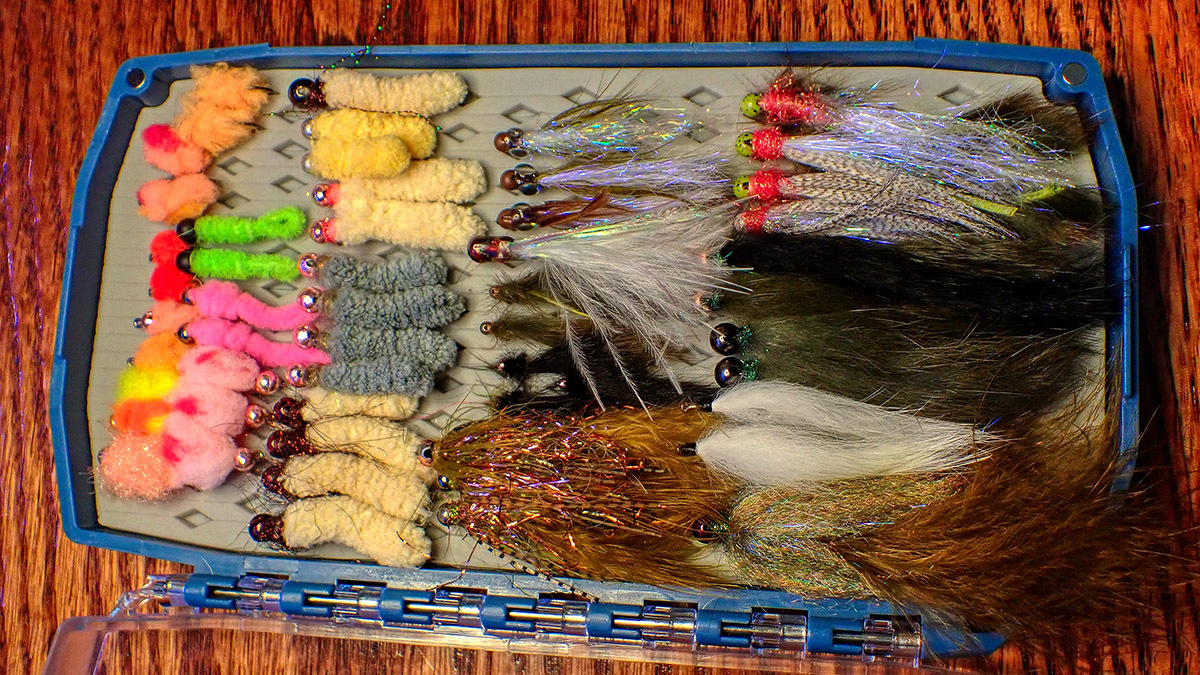
Spring creeks in the winter often call for a bit beefier flies like jig streamers, mop jigs, and egg patterns. An egg is pretty hard to beat in the winter. While everyone uses them during the fall spawns, an egg in the winter is like a signal to trout that this is some of the last easy protein in the system. Patterns like the Bead Head Estaz Egg and Glo-Bugs can work wonders, as the trout think they can get a mouthful with very little effort.
Likewise, a mop and a jig streamer give the trout a little more to chew on for their effort. Often in a slow pool, slow run, or just a deep trough, these offer an easy, bulky meal for trout looking for a protein boost.
At times, you can find some dynamite upper water column action with late evening midge hatches on unseasonably warm afternoons in the winter on spring creeks, especially if you catch it on one of those warm, calm days that are overcast. While you can find some nice trout willing to take a small midge dry fly pattern like a Griffiths gnat or a small BWO dry in sizes 18-22, a weightless midge emerger type pattern can be more effective. Trout often feed just under that surface film on those spring creek hatches in the winter. So something like a small hare's ear nymph, zebra midge, or something like a top secret midge under an indicator or small dry fly can pay big dividends. We often want to stay small in that 16-22 range for flies here when winter hatches are going off because midges are generally very small in the winter.
Jig streamers like beaded woolly buggers, jiggy buggers, Egan's poachers, and more often work well in the winter months. You can bounce these along the bottom, strip them like a streamer, or even suspend them under an indicator or euro nymph with them. They are extremely versatile options in the winter months. They can mimic sculpins, crawfish, chubs, and other forage in a spring creek system.
We carry a full line of fly-tying supplies to make just about every type of midge emerger you can find on the internet. So take a look at a pattern you want to try for this technique and tie some up. I highly recommend the Dai-Riki Hooks in the Scud and Emerger styles from size 16 to 22.
We will often take our 8 to 9-foot creek fly rods in that 3 to 5-weight size, depending on the fish in your spring creek system. We often fish nymphs under an indicator in the slower pools. You can stitch them along, or even just slow-pull them, or just sporadically twitch them to draw attention from otherwise dormant trout in a deeper, slow pool. You can fish jig streamers on a euro rod or a regular fly rod.
Preparing to Fish on Spring Creeks for Winter Trout
Spring creek trout can be a little more predictable. Obviously, they can be influenced by rain, snow runoff, and other environmental factors, but they are still a bit less volatile in the winter, when the weather can really crash the trout's activity levels on other types of rivers and fisheries. If you are going to fish in the winter, take the normal precautions, like extra clothes in case you take an unwanted spill, and walking sticks if your waters are higher than normal.
Be a weather watcher; incoming fronts can peak activity levels. Calmer, warmer days with overcast skies mean you might luck into a midge hatch on a spring creek. And water levels can help you decide which presentations you should start with.
Approach each deep, slow pool with caution, as you are likely to find concentrations of fish that will readily bite if you don't spook them beforehand. Don't overlook shallower spots and late afternoon opportunities with midge hatches if available. And keep an open mind about bait selection. There are times when just about any lure will work. But when it gets tough, the staples we covered should help you put a few more trout in the net.
Shop Trout Fishing Gear