

Walleye Harnesses & Spinner Rigs - Speed, Blades & Bottom Control
Walleye Harnesses & Spinner Rigs
Speed, Blades & Bottom Control
Spinner rigs outperform most presentations during the post-spawn flat bite and through summer — when walleye spread across structure and need a consistent, triggering profile. This hub covers speed targets, blade selection, bouncer weight rules, leader adjustments, and links to the complete shoppable setup guide.
Harness rule: set speed first, then match blade size and color. If you're not ticking bottom consistently, fix bouncer weight before you change anything else.
Start Here
Four decision rules that cover 90% of harness fishing problems. Pick your situation and follow the link.
Not ticking bottom
- • Increase bouncer weight one step — do this first, always.
- • Check boat speed — too fast lifts the rig off bottom.
- • Target: consistent light ticks, not constant dragging.
- • Full weight chart ›
Getting bumps but missing fish
- • Lengthen leader by 6–12 inches before changing anything else.
- • Add a trailing stinger hook 3–4 inches behind the main hook.
- • Slow down 0.1–0.2 mph and recheck.
- • Leader length guide ›
Bites stopped or slowed
- • Adjust speed first — up or down 0.2 mph.
- • Then change blade size to match the new speed.
- • Stained water / overcast: increase contrast and blade thump.
- • Blade rules ›
Just getting started
- • Default: 1.5 mph · 2 oz bouncer · 48 in leader · #4 Indiana blade.
- • Confirm bottom contact, then adjust speed ±0.2 mph for bites.
- • Build the full setup: Harness + Bottom Bouncer Setup ›
Most-used links
- • Complete Harness/Bottom Bouncer Setup — kit cards, bundle builder, full parts list
- • Blade size & color rules — match blade to speed and clarity
- • Bottom bouncer weight rules — depth × drift speed chart
- • Harness leader length rules — condition-based starting lengths
How Harnesses Work
A five-part system where every component has one job. When something stops working, fix the components in this order.
Bottom Bouncer
Maintains depth and keeps the rig just off bottom as you troll. Weight selection is the single biggest variable — too light and you lose contact, too heavy and you snag. Fix weight before changing anything else.
Ball-Bearing Swivel
Sits between your main line and the bouncer. Without it, the rotating blade sends twist up your main line within one hour of fishing. Use a size 3–5 quality ball-bearing swivel, not a standard barrel swivel.
Leader
Connects the bouncer arm to the harness. Length controls how far a fish can run before feeling the weight of the rig. Start at 48 inches and adjust by condition — longer in clear water, shorter in stained.
Blade + Beads
The flash-and-vibration trigger. Blade size and type must match your trolling speed — a Colorado blade at 2+ mph helicopters; an Indiana blade at 1.1 mph barely spins. Get speed right, then select blade.
Hook + Bait
Size 2 or 4 hook with a live or fresh crawler hooked through the nose. Hook straight — a kinked crawler kills the presentation. Inflate minimally for slight buoyancy. Add a trailing hook when short strikes occur.
Best season for harness fishing
Harnesses excel late spring through summer — after the spawn when walleye scatter to mid-depth flats and structure. Water temps of 55–72°F are peak. See the Summer Walleye Hub for staging locations and seasonal timing.
Speed + Blade Rules
Speed is the master variable. Lock it in first — then select a blade that spins cleanly at that speed, then pick color based on clarity and light. Changing color before speed is backward.
| Trolling Speed | Blade Type | Blade Size | Notes |
|---|---|---|---|
| 0.9–1.3 mph | Colorado | #3–4 | Round blade; maximum thump at slow speeds. Good for cold or pressured fish. |
| 1.3–1.8 mph — target zone | Indiana / Willowleaf | #4–5 | Most versatile range. Indiana spins true from 1.2–2.0 mph. Start here every trip. |
| 1.8–2.5 mph | Hatchet / Smile Blade | #5–7 | Elongated blades stay stable at speed. Good for covering water in wind or current. |
Order of adjustments
- 1. Confirm speed — use GPS or a reliable trolling motor reading, not feel
- 2. Adjust blade size — so the blade spins cleanly without helicoptering
- 3. Change blade color — natural (clear) vs. contrast (stained)
- 4. Adjust leader length — only after #1–3 are locked in
Color by clarity
- Clear / bright sun: silver, white, or natural copper
- Stained / overcast: gold, chartreuse, or orange
- Night / very low light: glow or UV-treated blades
- Rule: increase contrast as visibility drops — brightness beats hue
Full guide with blade shape comparison and starting set recommendations: Harness blade size & color rules ›
Bottom Bouncer Control
One weight step solves most contact problems. Always fix depth and bottom contact before changing blades or leader length.
| Depth | 1.2–1.5 mph | 1.5–2.0 mph | 2.0–2.5 mph |
|---|---|---|---|
| 10–20 ft | 1 oz | 1–1.5 oz | 1.5 oz |
| 20–35 ft | 1.5–2 oz | 2 oz | 2–3 oz |
| 35–50 ft | 2–3 oz | 3 oz | 3+ oz |
What right bottom contact feels like
- • Regular light ticks transmitted up the rod tip
- • Line angle roughly 45° out from the rod tip to the bottom
- • Occasional brief snags that release as the boat moves forward
- • Not constant dragging and not floating free between ticks
Weight vs. speed: what to fix first
- • Losing bottom: increase weight one step before slowing down
- • Constant snagging: increase speed before decreasing weight
- • Line angle too shallow (<30°): go heavier, not slower
- • Never drag — constant ground contact kills the blade's spin
Full chart with current and wind adjustments: Bottom bouncer weight rules ›
Leader Length Rules
48 inches is the standard starting length. Adjust based on water clarity, bite pressure, and how fish are committing to the bait.
| Condition | Starting Length | Why |
|---|---|---|
| Clear water / calm | 48–72 in | Fish are spooked by the rig; extra distance from the bouncer helps them commit |
| Stained water / wind chop | 30–48 in | Reduced visibility means fish commit sooner; shorter leaders improve hookset timing |
| Bumps without hookups | Add 6–12 in to current | Fish are hitting short of the hook — more leader or a stinger hook addresses this |
| Fast drift or current | 30–42 in | Long leaders flutter and tangle at higher speeds; shorter gives better control |
| Deep water (35+ ft) | 36–48 in | Heavier bouncers amplify tangles — shorter leaders keep the rig manageable |
Short-strike fix — 4 steps in order
- 1. Lengthen leader by 6–12 inches
- 2. Reduce trolling speed by 0.1–0.2 mph
- 3. Add a trailing stinger hook 3–4 inches behind the main hook
- 4. Check crawler — make sure it's hooked straight and barely inflated
Full condition table + leader material guide (mono vs. fluorocarbon): Harness leader length rules ›
What to Buy Now
A complete harness system is three things: pre-tied harnesses, bottom bouncers matched to your depths, and quality anti-twist terminal tackle. Keep a small blade and color rotation — the system works without an overwhelming tackle box.
Full Setup
Harness + Bottom Bouncer Bundle Builder
Pick a kit tier, customize the components, and add the complete system to cart in one click — Budget, Core, or Premium.
What's in the bundle
- • Pre-tied spinner harnesses (Indiana + Colorado + Wormburner + Smile Blade)
- • Eagle Claw bottom bouncers matched to your target depths
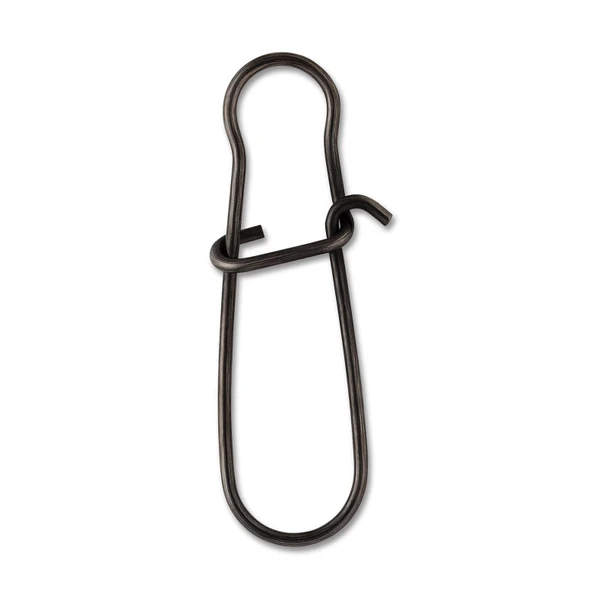
- • Ball-bearing swivels + duolock quick-change snaps
- • Fluorocarbon leader material
Three kit tiers
- • Budget: one harness + one bouncer — enough to fish today
- • Core: 3 harnesses + 2 bouncer weights — covers most situations
- • Premium: 4 harnesses + 3 bouncer weights + full terminal kit
Pre-Tied Harnesses
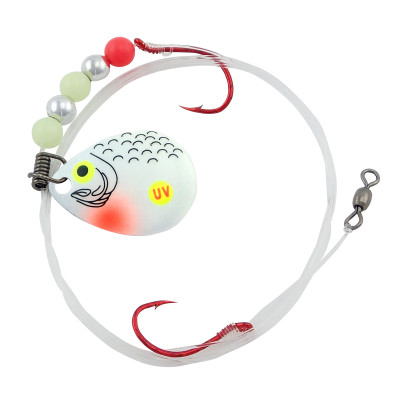
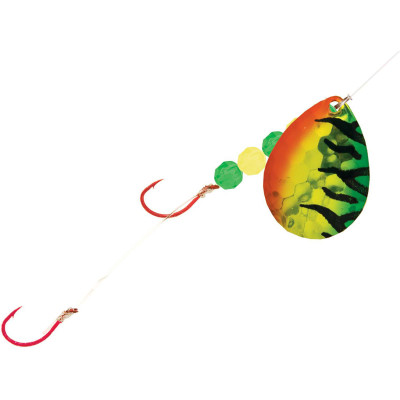
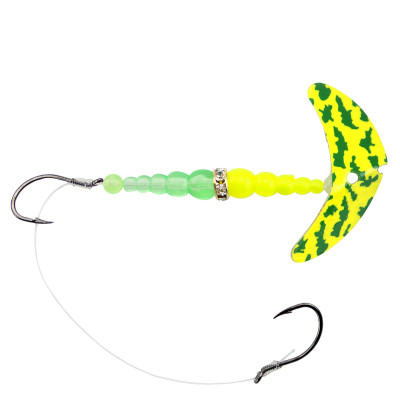
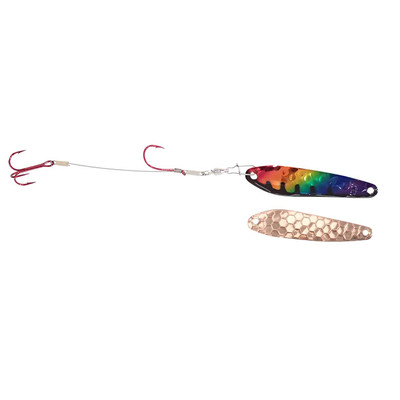
Spinner Harness Essentials
Four proven harnesses covering Indiana, Colorado, Smile Blade, and Wormburner profiles. Keep at least two styles on the water at all times.
Bottom Bouncers
Bottom Bouncers + Weights
Eagle Claw in four weights. Carry 1 oz for shallow (10–20 ft), 2 oz for mid-depth (20–35 ft), and 3 oz for deep or fast-drift conditions.
Eagle Claw Bottom Bouncer — 1 oz
Eagle Claw Bottom Bouncer — 1.5 oz
Eagle Claw Bottom Bouncer — 2 oz
Eagle Claw Bottom Bouncer — 3 oz
Terminal Tackle
Swivels + Snaps (Anti-Twist / Quick-Change)
A ball-bearing swivel between main line and bouncer is the only reliable line-twist prevention. Add duolock snaps for fast harness changes without retying.

Want the complete build with kit tiers and bundle pricing?
Complete Harness + Bottom Bouncer Setup › — kit cards, add-all bundle builder, and a full parts list organized by category.
Supporting Guides
Deep dives on each variable in the harness system. Read these when the quick rules above aren't enough.
Blade Selection
Blade Size & Color Rules
Speed-to-blade-size matching chart, color selection by clarity and light, blade shape comparison (Indiana vs. Colorado vs. Hatchet vs. Smile Blade), and a starting three-blade rotation you can fish anywhere on the Great Lakes.
Read Guide ›Weight + Depth
Bottom Bouncer Weight Rules
Depth × drift speed weight chart covering 10–50 ft, how to read bottom contact by rod tip and line angle, current and wind adjustments, and when to change weight vs. when to change speed.
Read Guide ›Leader Length
Harness Leader Length Rules
Condition-based starting lengths (clear, stained, fast drift, deep water), the four-step short-strike fix, trailing hook guidance, and leader material comparison — mono vs. fluorocarbon.
Read Guide ›Read Next
FAQ
1.3–1.8 mph covers most conditions. This is the sweet spot where Indiana and willowleaf blades spin cleanly and walleye are aggressive. Start at 1.5 mph and confirm the blade is spinning — your rod tip should pulse with a steady vibration. Adjust ±0.2 mph based on bite rate. Below 1.3 mph, switch to a smaller Colorado blade; above 1.8 mph, move to a Hatchet or Smile Blade that stays stable at higher speeds.
Match weight to depth and drift speed. Starting guide: 1 oz for 10–20 ft, 1.5–2 oz for 20–35 ft, 2–3 oz for 35–50 ft, assuming 1.3–1.8 mph. If you lose bottom contact, increase weight one step before adjusting anything else. The full bottom bouncer weight chart covers all depth and speed combinations including current adjustments.
Start with three: gold (stained water, overcast), silver or white (clear water, bright sun), and chartreuse or orange (low light or high stain). Pick based on clarity and light level first — contrast matters more than exact hue. See the blade size & color rules guide for a full condition-by-condition breakdown.
48 inches is the standard starting length. Go up to 72 inches in clear, calm water where fish are wary of the rig. Go shorter — 30–42 inches — in stained water, wind, or when running faster than 1.8 mph. Bumps without hookups usually mean you need a longer leader before anything else changes. Full details at the harness leader length rules guide.
Use a quality ball-bearing swivel between your main line and the bottom bouncer — this is the only reliable fix. A standard barrel swivel will twist over a full day of fishing; a ball-bearing swivel will not. Use size 3–5 rated for 10–15 lb. Adding a duolock snap at the leader connection lets you swap harnesses in seconds and reduces cumulative twist from handling.
Indiana blades are teardrop-shaped and spin cleanly at 1.2–2.0 mph — the most versatile all-around choice for the standard trolling zone. Colorado blades are round and spin at slower speeds (0.9–1.4 mph), producing more thump per rotation but helicoptering at higher speeds. Use Colorado in cold water or when fish are finicky at slow speeds; use Indiana as your default in the 1.3–1.8 mph zone.
Harnesses excel late spring through summer when walleye scatter across flats and mid-depth structure at 15–40 ft. They work best when fish want a slow, horizontal presentation with flash and vibration — typically post-spawn through early fall. If fish are tight to vertical structure or suspending open-water mid-column, a jig or crankbait covers those situations more efficiently.
Yes. Three-way swivel rigs, snap weights, and sliding sinkers all work with harnesses. A bottom bouncer is simply the most efficient system for maintaining consistent depth across flats and keeping the rig off bottom without constant tangles. In river current or rocky areas where bouncers snag, a three-way rig with a pencil sinker is a practical alternative.
A 7–8 ft medium-action rod with a fast tip. The sensitive tip transmits bouncer ticks and subtle bites. For light bouncers (1–1.5 oz), a spinning reel spooled with 10–14 lb mono works well. For 2–3 oz rigs at depth, a low-profile baitcasting reel gives better feel and control. Use monofilament as your main line — it absorbs shock better than straight braid for bottom bouncer work.
In order: lengthen leader by 6–12 inches; slow down 0.1–0.2 mph; add a trailing stinger hook 3–4 inches behind your main hook; confirm the crawler is hooked straight and barely inflated. Most short strikes are fish hitting the crawler short of the hook — a longer leader combined with a stinger solves the majority of cases. See the leader length guide for the full four-step sequence.