/
/
Blade selection is the step most harness anglers overthink. There are two decisions — size and color — and both follow a single upstream variable: trolling speed. Set speed first, match blade size to that speed, then adjust color for water clarity. This guide gives you the decision tree so you stop guessing and start adjusting with purpose.
Last updated: May 2026 · By: FishUSA Staff
The 60-second version
Blade size and trolling speed are linked — a blade too large for your speed over-spins and creates drag; a blade too small for your speed barely rotates and produces no thump. The chart below gives you the starting point. Pick your speed range, confirm your blade is in the right size window, then tune from there.
| Speed | MPH Range | Blade Sizes | Best Blade Shapes | When to Use | What to Change First |
|---|---|---|---|---|---|
| Slow | 0.9–1.2 mph | #3–4 | Colorado | Cold fronts, early season, neutral fish, ultra-clear cold water | Blade size down before color |
| Moderate | 1.2–1.5 mph | #4–5 | Colorado or Indiana | Typical summer contour trolling, most inland lake conditions | Color before leader length |
| Moderate-fast | 1.5–1.8 mph | #5–6 | Indiana or Willowleaf | Active fish, stained or windy water, warm water mid-summer | Contrast color, then leader length |
Blade shape changes what the speed range does
Colorado: wide, round profile — spins at a wide angle from the wire, maximum thump at slower speeds, best in cold water and stained conditions.
Indiana: narrower teardrop profile — spins tighter with less drag, handles higher speeds without losing rotation, the all-around blade shape for most summer conditions.
Willowleaf: long and slim — minimal drag, very tight spin, best at the top of the speed range or when a subtle, low-resistance presentation is needed in pressured clear water.
Shopping individual blades? Walleye lure components — blades, clevises, beads, and hooks sold separately.
If you feel erratic rod vibration, the blade is over-spinning — slow down or drop one size before assuming color is the problem. If you feel no thump at all, check for debris on the clevis before adjusting speed. A fouled blade reads like a blade that's too large or too slow.
Water clarity and light conditions determine how far fish can see the blade — and how much visual contrast they need to react. Natural metallic finishes work when fish have a long window to track the bait. High-contrast and UV finishes take over when visibility is compressed.
Clear water
Stained water & low light
Most walleye harness anglers overcomplicate their tackle box. Three blade colors and two blade shapes cover 90% of harness fishing situations. Start small and add only when a specific condition demands it.
The three-blade starting set
Pre-tied harnesses give you the blade, beads, and hook configuration already assembled — and they come in all three color categories. The Complete Harness + Bottom Bouncer Setup guide breaks down exactly which harnesses to carry per kit level.
Walleye Harness Starting Set
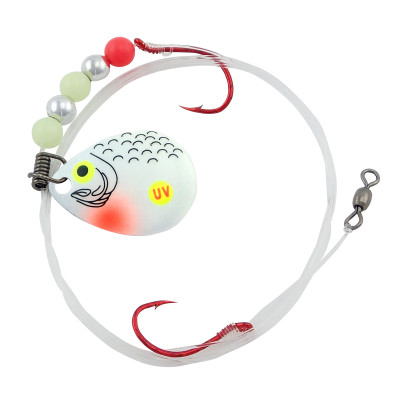
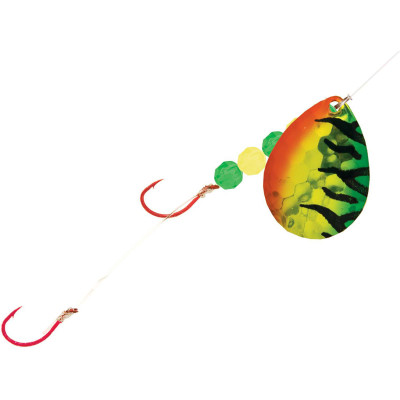
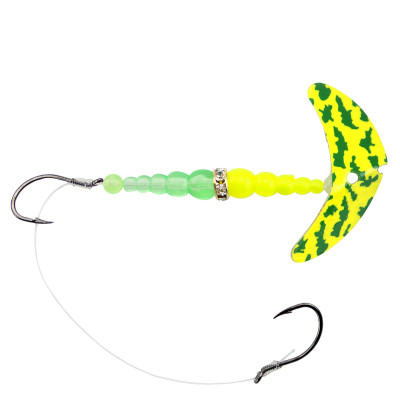
Natural, contrast, and premium blade options
Change trolling speed first — a ±0.2 mph adjustment changes the blade's RPM, thump intensity, and how far the vibration carries through the water. Try this before touching blade color or leader length. If adjusting speed produces nothing after 20–30 minutes, swap from natural to contrast (or contrast to natural) as your second move. Never adjust both speed and color on the same pass.
Fish are following but not fully committing. Lengthen the leader by 6–12 inches — this gives fish more time to catch up to the bait and move the hook further from the bouncer's vibration. Only after adjusting leader length should you consider downsizing the hook or blade. Short strikes are not usually a blade color problem.
Twist is a swivel failure, not a blade problem. A spinning Colorado or Indiana blade creates constant rotational force — a functioning ball-bearing swivel absorbs it. If you're getting twist, inspect the swivel for debris, grit, or corrosion that locks up the bearing. A fouled swivel can't counteract blade torque regardless of blade size. Replace swivels at the start of each season. Quality matters here: a $0.50 swivel is the most expensive mistake you can make.
Pull the rig and check the clevis before assuming wrong blade size. Weeds, zebra mussel fragments, and mono tags wrap the clevis and kill blade rotation silently. A blade that looks fine from the boat may have been dead for the last three passes. Check after every snag and every fish.
Strong erratic rod vibration at your normal trolling speed means the blade is too large for the speed or the blade shape creates too much drag at your preferred pace. Drop one blade size before slowing down — slowing the entire presentation to accommodate one over-sized blade costs you efficiency across the whole system.
A #4 Colorado or #4–5 Indiana is the best starting point for most walleye harness setups. The #4 Colorado works across the widest speed range (0.9–1.5 mph) and produces reliable thump in both clear and stained water. Once you know your preferred trolling speed, size up or down from there — #3 Colorado for slow cold-water presentations, #5 Indiana for faster moderate-to-warm conditions.
Move to high-contrast colors — chartreuse, hot orange, firetiger, or chartreuse/orange combinations. These show up at shorter visibility ranges and trigger more reflex-based bites when fish can't track the bait as far. UV finishes are worth adding at dawn and dusk in stained conditions. Start with a chartreuse-blade harness before moving to firetiger patterns as conditions get murkier.
Change speed first. A 0.1–0.2 mph speed adjustment changes blade RPM and thump intensity — often enough to trigger neutral fish before you swap any hardware. If speed adjustments produce nothing after 20–30 minutes, then swap blade color from natural to contrast or vice versa. Never change both at once — you need to know which variable made the difference.
Twist is almost always a swivel issue, not blade choice. A spinning harness blade creates constant torque — a malfunctioning ball-bearing swivel lets that torque spiral up the mainline. Check the swivel for debris or grit that locks the bearing, and confirm it rotates freely by watching the blade at speed. Replace swivels at the start of each season. Running too slow for your blade size can also overwhelm a quality swivel.
In clear water, UV blades are most useful at dawn, dusk, and in overcast conditions — times when UV light penetrates but visible light is low. In full midday sun in clear water, a UV blade often adds too much visibility and can spook wary fish that have a long window to inspect the bait. Stick with natural metallic finishes in bright clear conditions; reserve glow and UV for low-light windows or deeper edges.
Colorado blades have a wide, round profile — maximum thump and vibration at slower speeds, best in cold or stained water. Indiana blades are narrower and teardrop-shaped — less drag, tighter spin, performs well at moderate-to-higher speeds while maintaining rotation. This is the most versatile all-season choice. Willowleaf blades are long and slim — minimal drag, very tight spin, best at the top of the speed range (1.5–1.8 mph) or in pressured clear water where a subtler presentation outperforms.
Colder water (below 55°F) calls for slower trolling and smaller blades — a #3–4 Colorado in the 0.9–1.2 mph range. Fish metabolism slows in cold water and a smaller, slower presentation gives neutral fish more time to commit. As water warms into the mid-60s, fish become more active and will chase a larger, faster blade — a #5 Indiana or Willowleaf at 1.4–1.8 mph. Temperature drives speed choice; speed choice drives blade size.
Let out a short section of line and watch the blade at trolling speed. A properly spinning blade rotates consistently without stalling, pulling the leader into a spiral, or vibrating the rod erratically. You should feel a steady, light thump through the rod. No thump usually means debris on the clevis or the blade is too small for your speed. Strong erratic vibration means over-spinning — slow down or drop one blade size. Check after every snag and every fish landed.
Hook Me Up!
Sign up for emails and texts to get exclusive updates and offers.
By providing your number above, you agree to receive recurring automated marketing text msgs (e.g. cart reminders) to the mobile number used at opt-in from FishUSA on 25043. Consent is not a condition of purchase. Msg frequency may vary. Msg & data rates may apply. Reply HELP for help and STOP to cancel. See Terms and Conditions & Privacy Policy