

Early to Mid-Season Ice Fishing for Walleye: Locations, Patterns, and Proven Tactics
By: FishUSA Staff
December 17, 2025
Ask any serious winter angler, and they’ll tell you: if you want to stay on active fish all winter, you need to understand early to mid-season ice fishing for walleye. Walleyes don’t sit still under the ice. They slide, shift, and transition from classic first-ice spots to deeper mid-season haunts, and if you don’t follow those moves, your bite dies long before your interest does.
Ask any serious winter angler, and they’ll tell you: if you want to stay on active fish all winter, you need to understand early to mid-season ice fishing for walleye. Walleyes don’t sit still under the ice. They slide, shift, and transition from classic first-ice spots to deeper mid-season haunts, and if you don’t follow those moves, your bite dies long before your interest does.
This guide breaks down how walleyes behave from first safe ice into midwinter, where they go and why, and how to adjust your location, lures, and presentations along the way. We’ll cover structure and mapping, aggressive versus finesse tactics, electronics, safety, and common mistakes. Throughout, you’ll see actionable tips you can apply on your next trip, plus suggestions for internal and external resources that deepen your understanding of winter walleye fishing.
Whether you’re dialing in your local inland lake or exploring a sprawling walleye factory, this is your blueprint for catching more walleyes from early ice through mid-season—not just during that first hot weekend.
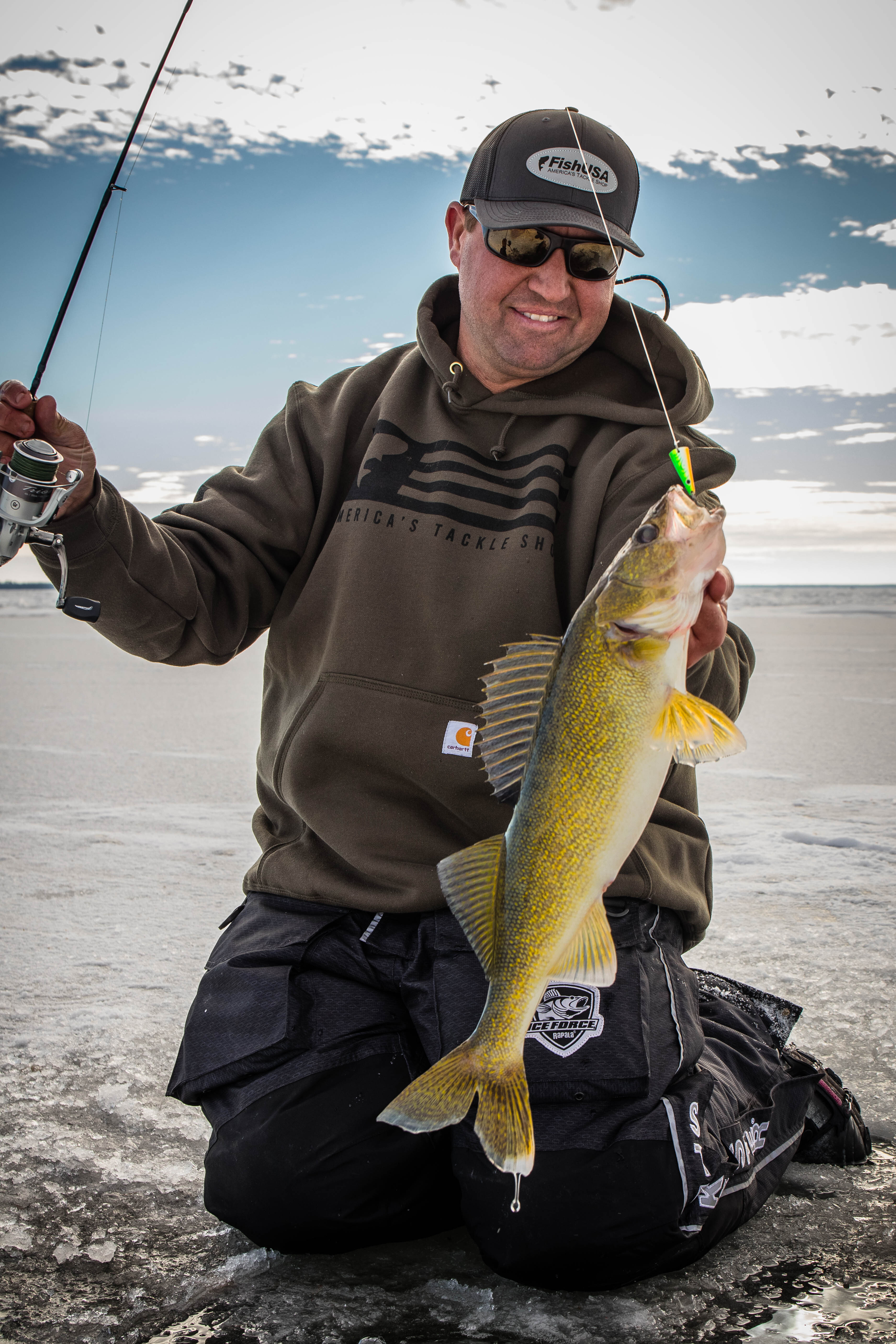
Table of Contents
- How Walleyes Move from Early Ice to Mid-Season
- Safety and Ice Conditions from Early to Mid Season
- Early Ice Walleye Locations: Classic First-Ice Spots
- Mid-Season Walleye Locations: Following the Migration
- Timing the Bite: Early and Mid-Season Feeding Windows
- Tackle and Lure Strategies for Early and Mid-Season Walleyes
- Walleye Ice Fishing Tactics: Aggression vs Finesse
- Electronics, Mapping, and Mobility for Winter Walleyes
- Common Mistakes in Early to Mid-Season Walleye Ice Fishing
- FAQs: Early to Mid-Season Ice Fishing for Walleye
- Conclusion: Build a Seasonal Game Plan for Winter Walleyes
How Walleyes Move from Early Ice to Mid-Season
From Late Fall to First Ice: Where Walleyes Start
Winter walleye patterns don’t appear out of thin air. They’re an extension of late-fall movements. As water temps drop and ice begins to form, walleyes typically stage on:
- Main-lake points that reach into deeper water.
- Rock or rubble reefs near spawning shorelines.
- Offshore humps and bars adjacent to basins.
The key theme is access to both food and depth. Walleyes want quick routes from deeper daytime holding areas to shallower feeding shelves. When that first safe ice forms, most fish are still in the same neighborhoods they used in November—they’re just under a lid now.
Early Ice Walleye Behavior: Short Moves, Big Windows
During early ice, walleyes tend to move vertically more than horizontally. Instead of roaming miles across the lake, they ride up and down the breaks around their favorite structures. You’ll often see them:
- Holding deeper on the edges or base of a reef during the day.
- Sliding shallower onto the crown or upper break at dawn and dusk.
- Using defined edges—weedlines, rubble transitions, or hard-to-soft bottom changes—as travel routes.
First-ice walleyes are usually more aggressive. The ice is new, fishing pressure is low, and forage is still abundant. That’s why larger, louder baits and more aggressive jigging often shine in this period.
Transitioning to Mid-Ice: Deeper, Pickier Fish
As winter marches on, snow and ice cover increase. Weeds die back, light penetration changes, and oxygen and forage shift. In many systems, this nudges walleyes:
- Off the shallow crowns and weedlines they used at first ice.
- Down into deeper breaks, secondary shelves, and mid-lake humps.
- Out over basins and flats where baitfish like perch and ciscoes roam.
By mid-season, walleyes are often more selective. Bite windows compress, especially on clear lakes, and heavy fishing pressure makes them less eager to chase noisy, oversized baits. Understanding this transition is the heart of successful early to mid season ice fishing for walleye.
Safety and Ice Conditions from Early to Mid Season
Before drilling your first hole on a new walleye pattern, you need to know the ice can hold you—especially on big, windswept lakes and around current.
First Ice Safety Fundamentals
At first ice, aim for at least 4 inches of clear, solid ice for walking, and more if you’re hauling heavy gear. But thickness is only part of the story. Ice forms unevenly due to wind, current, springs, and snow cover. Be methodical:
- Use a spud bar and check every few steps as you walk out.
- Wear ice picks and a flotation suit or PFD.
- Carry a throw rope and fish with a partner whenever possible.
- Be extra cautious near inlets, outlets, narrows, pressure ridges, and areas with visible current.
Mid-Season Ice Hazards You Can’t Ignore
Once there’s a foot of ice everywhere, you’re invincible, right? Not quite. Mid-season ice can still be dangerous:
- Pressure ridges crack and refreeze, creating weak spots.
- Snow insulates and hides slush pockets and thin ice over currents.
- Plowed ice roads and heavy vehicle traffic can stress certain areas.
For more safety tips, check out Comprehensive Guide to Ice Fishing Safety Gear and Tips
Early Ice Walleye Locations: Classic First-Ice Spots
Before drilling your first hole on a new walleye pattern, you need to know the ice can hold you—especially on big, windswept lakes and around current.
First Ice Safety Fundamentals
At first ice, aim for at least 4 inches of clear, solid ice for walking, and more if you’re hauling heavy gear. But thickness is only part of the story. Ice forms unevenly due to wind, current, springs, and snow cover. Be methodical:
- Use a spud bar and check every few steps as you walk out.
- Wear ice picks and a flotation suit or PFD.
- Carry a throw rope and fish with a partner whenever possible.
- Be extra cautious near inlets, outlets, narrows, pressure ridges, and areas with visible current.
Mid-Season Ice Hazards You Can’t Ignore
Once there’s a foot of ice everywhere, you’re invincible, right? Not quite. Mid-season ice can still be dangerous:
- Pressure ridges crack and refreeze, creating weak spots.
- Snow insulates and hides slush pockets and thin ice over currents.
- Plowed ice roads and heavy vehicle traffic can stress certain areas.
For more safety tips, check out Comprehensive Guide to Ice Fishing Safety Gear and Tips
Points, Reefs, and Humps Near Deep Water
On many lakes, your first-ice walleye search starts with obvious structure tied to deep water. Look for:
- Main-lake and island points that taper into basins.
- Rocky reefs and bars with a mix of rubble and broken rock.
- Offshore humps with a distinct saddle or inside turn linking them to shoreline structure.
Drill along the top, mid-slope, and base of these structures. Early ice often sees walleyes spread across the entire complex depending on light level, time of day, and forage. Mapping tools or GPS apps make it simple to trace these contours and mark your best spots.
Weeds, Edges, and Transition Zones
Don’t overlook weeds. On some lakes, the best early ice walleye fishing happens where the last green cabbage or coontail meets hard bottom:
- Weed flats adjacent to deeper water.
- Edges where vegetation stops abruptly on a breakline.
- Pockets and points in the weed edge that funnel bait and fish.
In these areas, jigging spoons, rattle baits, or jig-and-minnow combinations shine, especially at dawn and dusk when walleyes push shallow to feed.
Rivers, Current Edges, and Big-Lake Bays
On river systems and large lakes, early ice walleyes often relate to current seams and structural funnels:
- Channel edges and inside bends.
- Necked-down areas where current speeds change.
- Big-lake bays that concentrate baitfish as they move shallow.
Current areas can be extremely productive but also dangerous. If you include river or current-focused tactics, pair them with a strong safety reminder and a link to Reading Ice on Rivers and Current Areas.
Mid-Season Walleye Locations: Following the Migration
Sliding from Edges to Deeper Structure
As snowpack grows and weeds die, many walleyes leave the tops of structures and settle deeper. Instead of 10–15 feet on the reef crown, you might find them:
- On the mid-slope of a reef, holding along the 20–30 foot contour.
- At the base of a bar where it meets the basin.
- On subtle secondary points or inside turns on a breakline.
Use your GPS to follow these lines and drill a series of holes along them. When you start marking fish consistently at a certain depth, you’ve likely found the “new” mid-season sweet spot.
Basin Flats and Suspended Walleyes
On many classic walleye lakes, mid-season finds fish relating more to open basins and flats. They’re not just glued to bottom, either. They may suspend:
- A few feet off bottom over a mud flat full of invertebrates.
- Halfway up the water column chasing ciscoes or smelt.
- Just under a thermally stable layer where baitfish concentrate.
Here is where your electronics become critical. If you only fish the bottom and ignore marks higher in the water column, you’ll miss a lot of mid-season walleyes.
Lake Type Matters: Clear vs Stained, Natural vs Reservoir
Your exact early-to-mid-ice pattern depends on the lake type:
- Clear natural lakes: Walleyes tend to hold deeper during the day and feed shallower at night, especially by midwinter.
- Stained or turbid lakes: You can often catch walleyes shallower, even mid-day, thanks to reduced light penetration.
- Reservoirs and rivers: Channel edges, submerged points, and current seams are prime throughout the season, but the depth band may shift as water levels and clarity change.
Timing the Bite: Early and Mid-Season Feeding Windows
Early Ice: Powerful Dawn and Dusk Bites
At first ice, walleyes usually follow a simple pattern: slide shallow to feed at low light, then drop deeper as the sun rises. Plan your day so you’re already set up before the window opens:
- Set lines on top of or just above structural elements at dusk and dawn.
- Shift deeper along the break as the sun gets higher.
- Focus on aggressive lures during peak windows; switch to subtler options between them.
Mid-Season: Shorter Windows, Subtle Midday Bites
As winter deepens, bite windows often compress. Some lakes turn almost strictly dawn/dusk, while others still offer midday opportunities if you find the right combination of depth, structure, and weather conditions. Stable weather, light snow cover, or slight current can trigger surprising daytime flurries.
Night Fishing for Walleyes Through the Transition
Night fishing can be a huge part of early to mid season ice fishing for walleye, especially on clear lakes. Walleyes that play hard-to-get by day may roam shallower structure after dark. Tactics that shine at night include:
- Running set-lines or tip-ups across the tops of reefs and along weed edges.
- Using glow spoons or subtle rattle baits with long pauses.
- Spacing lines at varying depths along a break to intercept cruising fish.
Tackle and Lure Strategies for Early and Mid-Season Walleyes
Rods, Reels, and Line Setups
You don’t need a truck full of rods, but you do need a couple of purpose-driven setups:
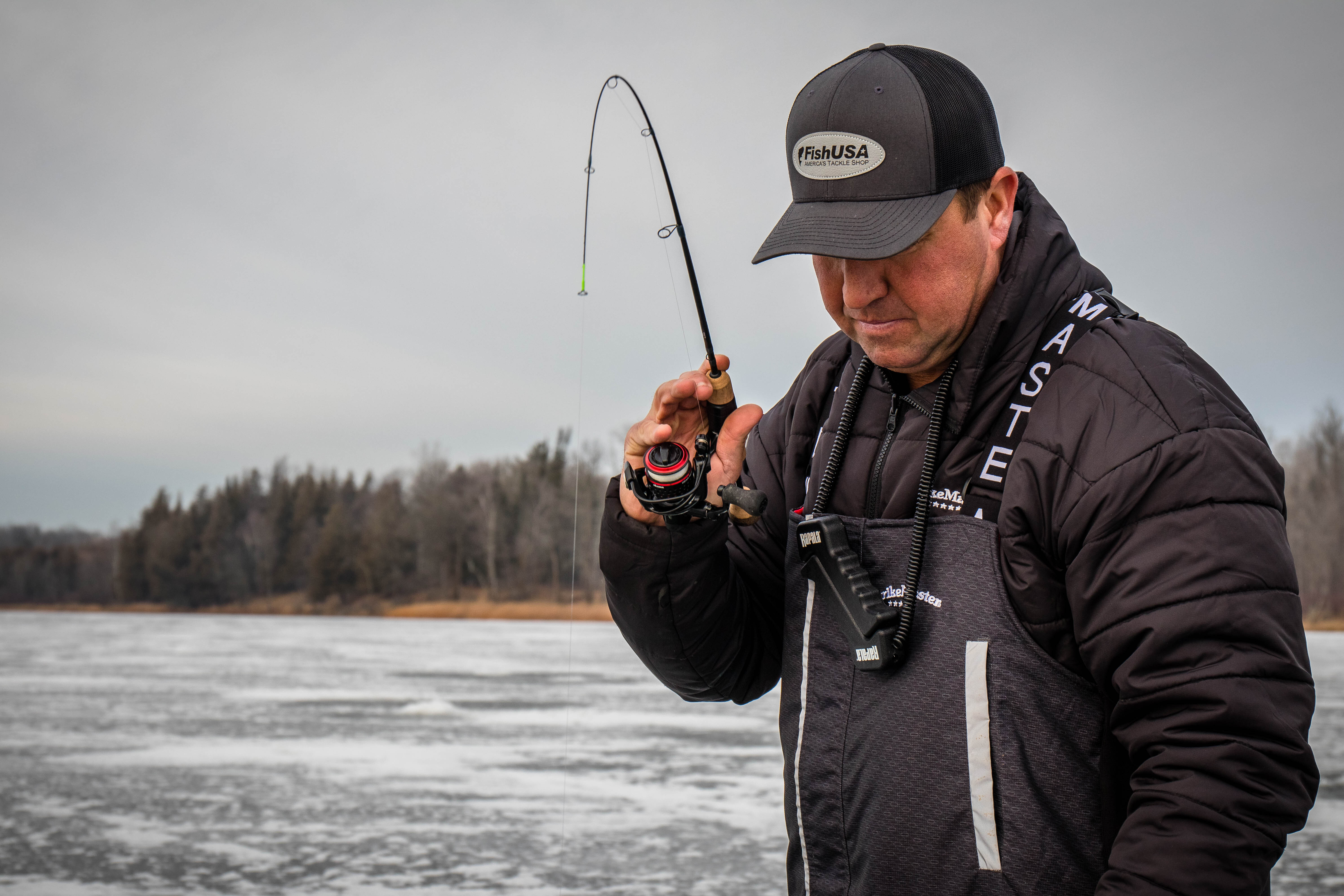
- Medium or medium-light jigging rod (28–34"): For spoons, rattle baits, and jigging minnows.
- Medium-light deadstick rod: Softer tip to present live bait naturally and telegraph light pickups.
- Reels: Quality spinning reels with smooth drags. Consider high-vis main line for bite detection.
Line choices:
- 6–10 lb braided main line with a 6–8 lb fluorocarbon leader for jigging.
- 6–8 lb mono or fluoro on deadsticks for a bit of stretch and forgiveness.
If you need new rods, reels, or line, check out our top recommendations:
- The Best Ice Fishing Rods: Reliable Gear for Every Ice Angler
- The Best Ice Fishing Reels: Top-Rated Options for Every Angler
- Top Ice Fishing Lines: Best Picks for Strength, Sensitivity, and Freeze Resistance
Best Lures for Early Ice Walleye
Early ice is the time to start bold and dial back only if needed. Confidence early-ice baits include:
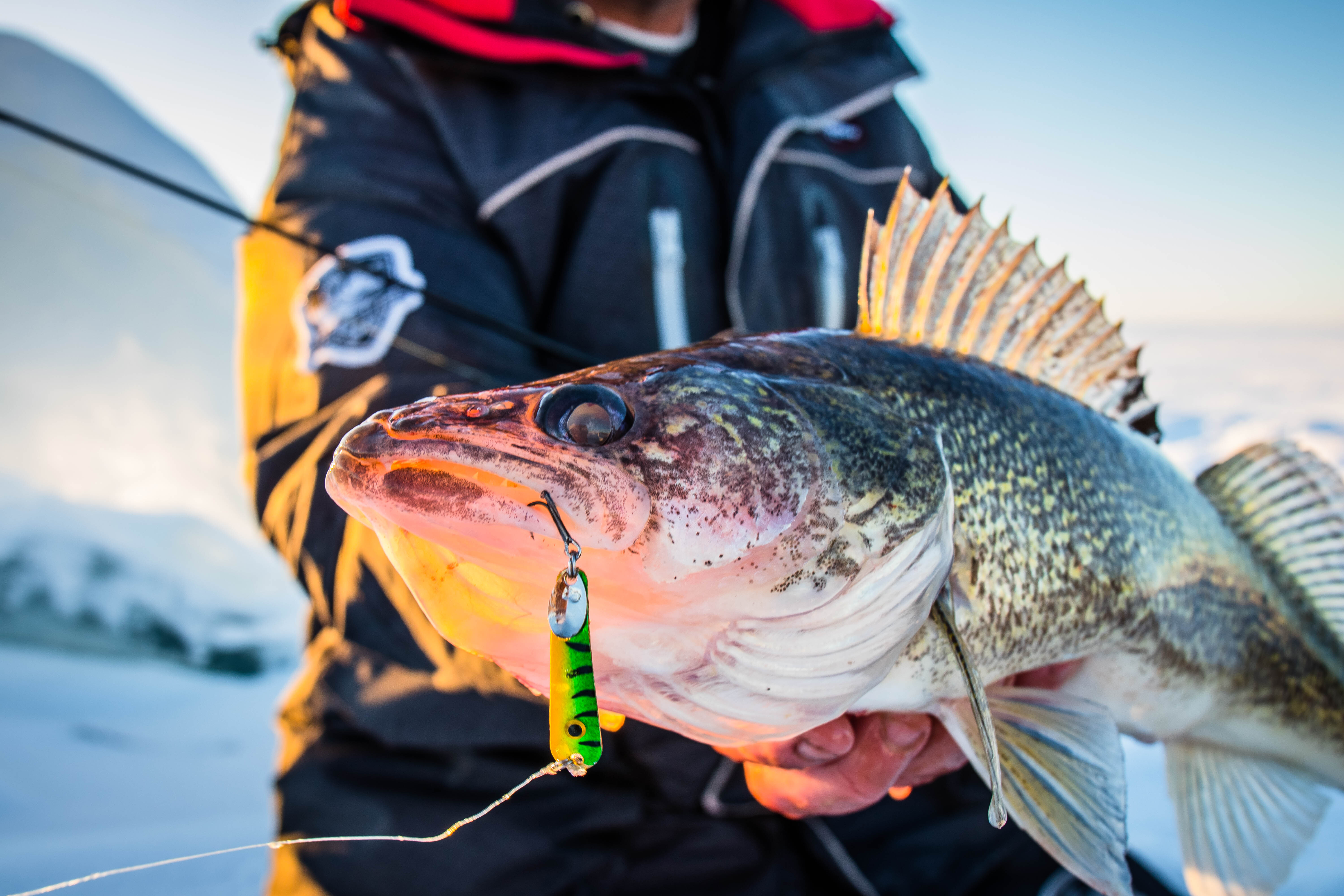
- Jigging spoons: Slab-style spoons (for pounding bottom) and flutter spoons (for more hang-time and flash).
- Rattle baits and lipless cranks: Great for calling fish from a distance on big flats and reef tops. See our selection here: Ice Fishing Baits & Lures
- Jig-and-minnow combos: A lead head with a shiner or fathead is still a walleye classic on points and on the edges of weeds. Shop our Ice Fishing Jigs
Experiment with natural metallics and baitfish patterns in clear water, and brighter or glow patterns when fishing stained systems or low-light windows.
Mid-Season Adjustments: Downsizing and Live Bait
Once the crowds have hammered the early-ice spots and walleyes wise up, downsizing and subtlety matter more:
- Smaller spoons with less rattle and a gentler action.
- Glide baits and jigging minnows worked with shorter hops and longer pauses.
- Deadstick rigs with live minnows on plain hooks or small jigs, set just off bottom.
This is also when more anglers lean on a mix of jigging and set-lines. You can link to a gear-focused piece like Best Walleye Ice Fishing Lures for deeper product breakdowns.
Walleye Ice Fishing Tactics: Aggression vs Finesse
Early Ice Presentation: Call Them, Then Seal the Deal
With aggressive early-ice fish, think of your presentation in two phases:
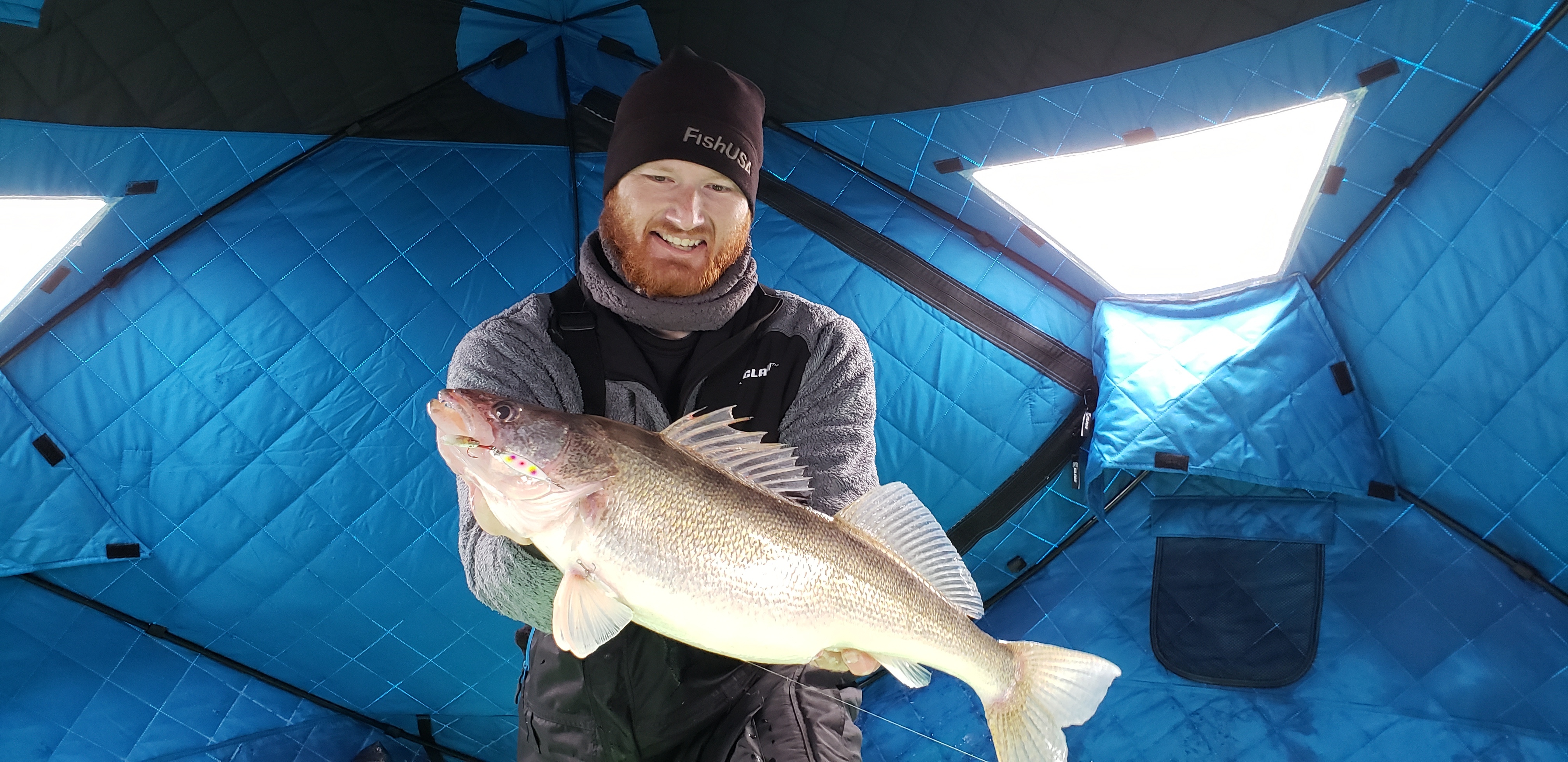
- Calling: Use big lifts, sharp rips, and bottom pounding with spoons or rattle baits to draw fish in.
- Triggering: Once marks appear on sonar, switch to subtle shakes, shorter lifts, and controlled drops to get them to commit.
Walleyes often eat on the pause, so build deliberate pauses into your cadence and keep an eye on your line for slack or slight ticks.
Mid-Season Finesse: Reading Fish and Slowing Down
By mid-season, fish may track your lure up and down the column without biting. Use your electronics as a feedback loop:
- If fish rush in and stall, try downsizing your bait or lengthening your pauses.
- If they follow but won’t commit, raise the bait slowly—they often chase up and finally eat.
- If marks slide away the moment you start pounding, switch to a quieter presentation or deadstick.
Deadsticks, Tip-Ups, and Set-Lines
Combining aggressive jigging with passive presentations is one of the best ways to fish the early-to-mid-ice transition:
- Run a deadstick or tip-up along a travel route while you jig nearby.
- Stagger your set-lines at different depths along a break or basin edge.
- Use live minnows on simple rigs—sometimes the “do nothing” rod out-fishes everything else.
Electronics, Mapping, and Mobility for Winter Walleyes
Using Sonar, Flashers, and Live Imaging
Modern electronics drastically shorten the learning curve for early to mid-season ice fishing for walleye. Even a basic flasher tells you:
- Exact depth and bottom composition.
- Whether fish are present or not (so you don’t waste time on dead water).
- How walleyes respond to different jigging cadences.
Live imaging units add another layer, allowing you to see how fish move around structure, how far they roam, and what angles they use to approach your bait. If your audience uses high-end electronics, this is a great place to embed a short video demonstration.
Shop Flashers & Sonars at FishUSA
Mapping and Marking Productive Transitions
Use contour maps, either paper or digital, to identify:
- Points, humps, and bars connected to basins.
- Inside turns on breaklines where fish funnel through.
- Subtle hooks, shelves, and saddles that concentrate fish.
Mark your early-ice and mid-season spots separately on your GPS. Over time, you’ll build a “milk run” of structures that hold fish at different phases of the season.
Hole-Hopping and Smart Mobility
Mobility is your best friend in winter. Walleyes move, and you should, too:
- Drill a series of holes along key contours and structural elements.
- Give each hole a reasonable shot—if you don’t mark or catch within 10–15 minutes, move.
- On early ice, drill before peak windows so you can fish quietly when it matters most.
For more information on ice fishing electronics, check out The Ultimate Guide For Choosing The Best Ice Fishing Flashers and Sonars
Common Mistakes in Early to Mid-Season Walleye Ice Fishing
Camping Too Long on Early-Ice Spots
One of the biggest mistakes is assuming walleyes will stay on the same shallow crown or weedline all winter. When the bite fades, many anglers simply blame “lockjaw” instead of sliding deeper along the structure or checking nearby basins. Always think in terms of transitions, not individual spots.
Ignoring Subtle Structure Changes
On paper a point is just a point, but in reality, small details matter:
- An inside turn halfway down the break.
- A tiny rubble patch in an otherwise smooth slope.
- A slight change from hard to soft bottom at a specific depth.
Walleyes often stack on these “spot-on-the-spot” features. Don’t just fish the obvious; work the entire structural complex.
Sticking with the Wrong Presentation for the Season
Another common mistake is failing to match your presentation to the fish’s mood and the phase of winter:
- Pounding big rattle baits mid-season when fish are clearly neutral.
- Using ultra-finesse tactics at first ice when aggressive, noisy baits would call in more fish.
Let your electronics and results dictate whether you should be aggressive or subtle—not just habit.
Underestimating Ice Changes and Safety
Finally, some anglers treat early-season ice as if it’s mid-season and vice versa. On big lakes with currents or fluctuating water levels, conditions can change quickly. Recheck access points, active cracks, and pressure ridges throughout the season rather than assuming yesterday’s safe route is still safe.
FAQs: Early to Mid-Season Ice Fishing for Walleye
Where do walleyes go from early ice to mid-season?
In most lakes, walleyes start on classic late-fall structures—points, reefs, humps—and gradually slide deeper as winter progresses. By mid-season, many hold on deeper breaks, basin edges, or even suspend over flats chasing baitfish.
How deep should I fish for walleyes in early vs mid-ice season?
Early ice often finds walleyes in 10–20 feet on structure, moving shallower at low light. Mid-season fish frequently shift deeper, holding in 20–40 feet or suspending over basins. Use sonar to find the actual depth band on your specific lake.
What are the best lures for early ice walleye?
Jigging spoons, rattle baits, lipless cranks, and jig-and-minnow combos are top producers at first ice. Start with aggressive baits and dial back to smaller, quieter offerings only if fish are shy.
How do I find mid-season walleyes when they leave the weeds?
Follow the nearest breaks and contours from the weed edge into deeper water. Check mid-slope shelves, the base of the break, and nearby basins. Mark spots where you see consistent marks and build a mid-season route.
Do walleyes feed more at night or during the day under the ice?
It depends on the lake and clarity. On clear water, many of the best bites happen at night or during low-light windows. In stained or turbid systems, daytime bites can be strong, even mid-season.
How important are electronics for winter walleye fishing?
Electronics aren’t mandatory, but they make a huge difference. A flasher or sonar helps you find the right depth, see fish, and watch how they react to your lure, letting you refine your presentations in real time.
What line and leader setup should I use for ice fishing walleyes?
A common setup is 6–10 lb braid main line with a 6–8 lb fluorocarbon leader for jigging rods, and 6–8 lb mono or fluoro on deadsticks. Adjust up or down based on water clarity and average fish size.
Conclusion: Build a Seasonal Game Plan for Winter Walleyes
Dialing in early to mid season ice fishing for walleye isn’t about memorizing one magic spot. It’s about understanding how walleyes transition from late fall to early ice to midwinter—and then building a flexible game plan that follows those moves.
Start by mapping your lake’s points, reefs, humps, and basins. Fish early ice aggressively on classic structure with louder, larger baits. As winter progresses, slide deeper, pay more attention to basin edges and subtle structure, and lean more on finesse and live bait. Use your electronics to read fish mood, keep safety at the top of your list, and stay mobile enough to find the next school instead of waiting for it.
Shop Ice Fishing Gear