


/
/
Flashers and sonars show you depth, fish, and your lure in real time beneath the ice. Here are our top picks — from budget flashers and CHIRP units to sonar/camera systems and live sonar — plus a buying guide to help you choose.
Last updated: October 2026 · By: FishUSA Staff
Ice fishing flashers and sonars are essential for any angler who wants to optimize their time on the ice. These devices provide real-time data to help you locate fish, understand depth, and detect movement beneath the surface — whether you're jigging for perch and crappie, hunting suspended walleye, or running and gunning across a frozen lake. With various models available, choosing the right one can seem daunting.
Here, we break down the best options, so you can make an informed decision.
| Unit | Best For | Type | Angler Level |
|---|---|---|---|
| Vexilar FL-8SE Genz Pack | Budget | Flasher | Beginner |
| Humminbird Ice 55 | Best Display | Flasher | All Levels |
| Humminbird Ice Helix 5 CHIRP G3 | CHIRP Sonar | Sonar / GPS | Intermediate |
| MarCum LX-9L | Sonar + Camera | Digital Sonar / Camera | Advanced |
| Humminbird Ice Helix 7 CHIRP G4 | Year-Round Use | Sonar / GPS | Intermediate |
| Garmin ECHOMAP UHD2 73sv/PS22-IF | Live Sonar | Live Sonar / Chartplotter | Advanced |
The Vexilar FL-8SE Genz Pack is ideal for anglers looking for affordability and reliability. It features a simple three-color flasher display that delivers accurate readings of fish depth, structure, and lure movement. The unit is rugged and designed for tough ice fishing conditions, with easy-to-use controls and long battery life for extended sessions. For anglers on a budget, this flasher offers consistent performance and durability at an entry-level price.

The Humminbird Ice 55 stands out with a bright, easy-to-read display that excels in any light conditions. Its six-color fiber-optic screen provides high-resolution, real-time readings with adjustable brightness, while the adjustable zoom feature lets you zero in on your target depth. A dual-frequency transducer adds versatile performance. Anglers who prioritize a clear, customizable display for easy fish, lure, and structure detection will appreciate the precision of this flasher.

For those wanting cutting-edge sonar technology, the Humminbird Ice Helix 5 CHIRP Sonar / GPS G3 Combo Fish Finder is a standout option. CHIRP sonar provides superior target separation, offering a detailed look beneath the ice. It helps you track fish movements and find your lure with impressive accuracy and clarity, and its rugged design holds up in harsh ice environments. It's perfect for serious anglers seeking unparalleled detail and accuracy through CHIRP technology.

The MarCum LX-9L combines digital sonar and an underwater camera, providing a visual experience like no other. A split-screen display shows the sonar and video feed side by side, and a long-lasting LiFePO4 battery powers extended days on the ice. It allows you to see what's happening below the ice, enhancing your fishing strategy and boosting success rates — a next-level experience for precise fish and structure identification.

The Humminbird Ice Helix 7 combines CHIRP sonar with GPS mapping for ultimate functionality. The large, high-resolution 7-inch display makes it easy to read in any condition, and the built-in GPS allows for waypoint marking, making it a great year-round tool. This combo unit is ideal for anglers who want an all-in-one system for navigation, fish detection, and year-round use.
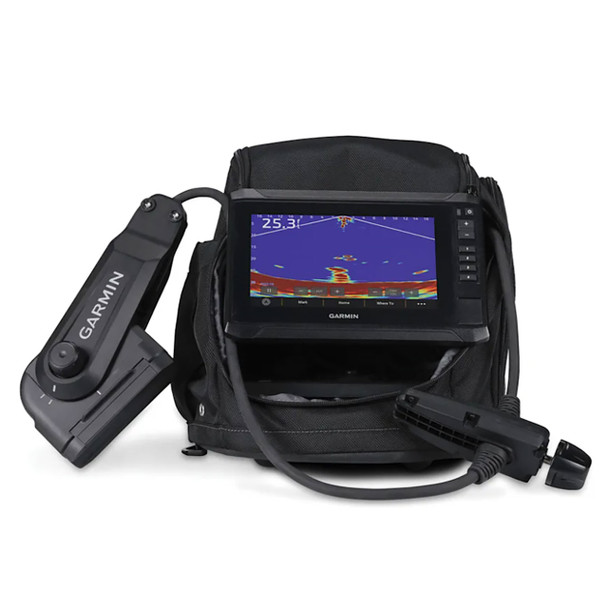
The Garmin ECHOMAP UHD2 73sv/PS22-IF Ice Bundle gives ice anglers a clear, real-time look beneath the ice with advanced LiveVü Forward and LiveVü Down sonar views. The 7-inch ECHOMAP UHD2 touchscreen chartplotter with keyed assist displays fish and structure in sharp detail, helping you stay on active schools of walleye, perch, and crappie. It includes the Panoptix PS22-IF transducer and preloaded Garmin Navionics+ maps featuring over 23,000 U.S. lakes with a one-year subscription for daily updates.
Easily create custom combo pages that merge sonar and mapping data, swap between wide and narrow sonar beams with the removable lens, and transport it all in the rugged, glove-friendly carrying case built for long days on the ice. The bundle is backed by a manufacturer's limited warranty and is perfect for serious ice anglers who want the best technology available at their fingertips.
Higher-end flashers and sonars offer advanced features but come at a premium. Prioritize the features you need most — a reliable flasher covers the basics, while CHIRP, GPS, cameras, and live sonar add capability at a higher price.
If visibility is important, opt for a model with a bright, clear, and customizable display. Adjustable brightness and multiple color palettes help in both bright sun and a dark shelter.
Ensure the device covers the depth ranges you fish in for optimal performance. Zoom features help you focus on the bottom few feet where many fish hold.
High target separation helps distinguish between fish and other objects, improving accuracy — especially when fish hold tight to the bottom or your lure is near them.
Consider the transducer cone angle; a wider angle covers more area, while a narrow cone offers more detail. Some units let you switch between wide and narrow beams.
Choose a device with intuitive controls and user-friendly menus to maximize your time on the ice. Glove-friendly buttons and simple gain and zoom adjustments matter in the cold.
CHIRP sonar and digital sonar offer greater accuracy and target separation compared to basic sonar systems. Live sonar adds real-time forward and down views of fish moving around the hole.
Combo units with GPS functionality provide more versatility for navigation and year-round fishing. Integrated cameras let you confirm species and watch how fish react to your presentation — learn more in our breakdown of sonar vs. underwater cameras.
Turn the gain up until you see a faint line of interference, then back it down slightly. Too little gain hides small jigs and light-biting fish; too much clutters the screen.
The biggest advantage of a flasher is seeing your jig and the fish at the same time. Raise your lure when fish come in high, hold it still when a mark rises toward it, and pay attention to which jigging cadence draws fish closer.
A tilted transducer skews readings. Make sure the float or arm hangs it straight down below the ice, and clear slush from the hole so the cone has an unobstructed view.
Cold weather drains batteries faster. Fully charge between trips, keep the battery in its case or shelter, and use the charger recommended for your battery type — lithium batteries like the LiFePO4 pack in the MarCum LX-9L need a compatible charger.
A flasher shows sonar returns on a circular dial in real time, so you see your jig, fish, and the bottom move instantly with no screen lag. A sonar fish finder, such as a Humminbird Ice Helix or Garmin ECHOMAP, displays sonar on an LCD screen and often adds GPS mapping, waypoints, and history. Flashers are simpler and very fast to read, while LCD sonar units add mapping and year-round versatility.
The Vexilar FL-8SE Genz Pack is one of the best budget ice fishing flashers. It has a simple three-color display that clearly shows depth, fish, and lure movement, easy controls, a rugged case built for ice conditions, and long battery life, all at an entry-level price.
Live sonar is worth it for serious ice anglers who move often and target roaming fish like crappie, perch, and walleye. Units like the Garmin ECHOMAP UHD2 73sv with the Panoptix PS22-IF transducer show fish swimming around and below the hole in real time with forward and down views, which helps you find active fish and decide quickly whether to drill or move. Casual anglers who fish one spot may be well served by a traditional flasher.
CHIRP sonar sends a sweep of frequencies instead of a single frequency, which produces sharper images and better target separation. On the ice, that means you can more easily tell fish apart from each other, from your lure, and from the bottom, which is especially helpful when fish hold tight to structure.
A wide transducer cone covers more water so you see more fish around the hole, which is useful in shallow water and when searching. A narrow cone covers less area but shows more detail and better target separation, which is useful in deep water and when fish hold tight to the bottom. Many modern units let you switch between wide and narrow beams.
Yes, many combo units are designed for year-round use. The Humminbird Ice Helix 7 CHIRP GPS G4 All-Season Combo, for example, can be used on the ice with its portable ice transducer and then mounted on a boat in open water, giving you CHIRP sonar and GPS mapping all year.
You do not need an underwater camera, but a camera helps you identify fish species, see how fish react to your lure, and check bottom composition. A flasher or sonar is better for finding fish and covering water quickly. Units like the MarCum LX-9L combine digital sonar and a camera on a split screen so you get both views at once.
Choosing the right ice fishing flasher or sonar can greatly enhance your success and enjoyment on the ice. Each option above offers unique benefits tailored to different angler needs and preferences — from a simple, dependable flasher to a full live sonar and mapping system.
Browse the full selection of ice fishing electronics at FishUSA.
Hook Me Up!
Sign up for emails and texts to get exclusive updates and offers.
By providing your number above, you agree to receive recurring automated marketing text msgs (e.g. cart reminders) to the mobile number used at opt-in from FishUSA on 25043. Consent is not a condition of purchase. Msg frequency may vary. Msg & data rates may apply. Reply HELP for help and STOP to cancel. See Terms and Conditions & Privacy Policy
