


/
/
A lot of us grew up fishing creeks. The scaled-down nature of small streams teaches you to be efficient on the water while delivering some of the best scenery in fishing. This guide covers how to identify the right creek, gear up smart, read the water, and consistently catch fish — whether you’re chasing smallmouth bass or wild trout.
Last updated: July 2026 · By: Jason Sealock
The 60-second version
The most important decision before you fish a creek is whether you’re dealing with warm water or cold water. This determines everything — which species you’ll encounter, which gear to bring, and which techniques will produce.
| Warm Water Creeks | Cold Water Creeks | |
|---|---|---|
| Target species | Smallmouth & largemouth bass, bluegill, crappie, muskie, stripers | Rainbow trout, brown trout, brook trout, cutthroat trout |
| Water temp | 65°F+ in season (fish actively) | Below 65°F; below 55°F ideal for trout |
| Key holding spots | Rocks, laydowns, deep pools, shade, current breaks | Current seams, pocket water, undercut banks, confluences |
| Top presentations | 1/8 oz jig + grub/tube, small poppers, jerkbaits, chatterbaits | Inline spinners, sinking minnow baits, dead-drift soft plastics |
| Wading style | Warm-water wading (shorts + boots) in season | Waders usually preferred; cold water year-round |
Once you know which type of water you’re fishing, do some homework before you go. Read local DNR info and fishery reports, use Google Maps or Google Earth to identify access points, and use apps like Trout Routes for cold water stream scouting. Online paddler’s guides can also provide useful intel on water levels, access, and flow conditions that fishing-specific resources sometimes miss.
One of the biggest draws to creek fishing
You can cover a lot of water on foot if you’re willing to wade. Most productive fishing creeks have multiple access points, are easy to dissect on foot or by small watercraft like a kayak, and reward anglers who think like explorers rather than campers.
Creek fishing rewards minimalism. One rod, one small tackle box, and the right line choice can make you effective all day. The key is matching your setup to the water and the fish.
A small Plano Pocket Utility Box with a few soft plastics and jigheads was the standard for creek fishing for decades — and it still works. For something that holds more gear while still fitting in a pocket, a FishUSA Mini Stickbait Box is a great modern upgrade.
An ultralight spinning combo is the most versatile creek setup there is. It handles trout, panfish, and plenty of smallmouth on 2 lb line with 1/8 oz jigheads. A rod like the B’n’M TCB Spinning Rod paired with a 500-size reel like the Daiwa QR Ultralight is a time-tested winner.
For bass on creeks — especially when you want precision casting to tight cover — a BFS rod like the FishUSA Flagship BFS Casting Rod paired with a BFS reel is hard to beat. It’s purpose-built for small jerkbaits, poppers, mini-glides, and hybrid baits like the Megabass Karashi. The extra casting precision pays off significantly in tight, brushy water.
If you want a more challenging and rewarding experience, a fly rod transforms creek fishing entirely. An 8 or 9-foot 4 wt or 5 wt rod — like the FishUSA Flagship Fly Rod — works for most small creeks. Woolly buggers and poppers for smallmouth; streamers, nymphs, and hoppers for trout. There’s nothing quite like wading up a remote small creek with a fly rod looking for fish that rarely see pressure.
Rod length matters in tight cover
In brushy creeks, a shorter rod (6’0” to 6’10”) with a medium-light tip and a little backbone is easier to maneuver than longer sticks. Shorter rods also help you load on sidearm casts when overhead space is limited.
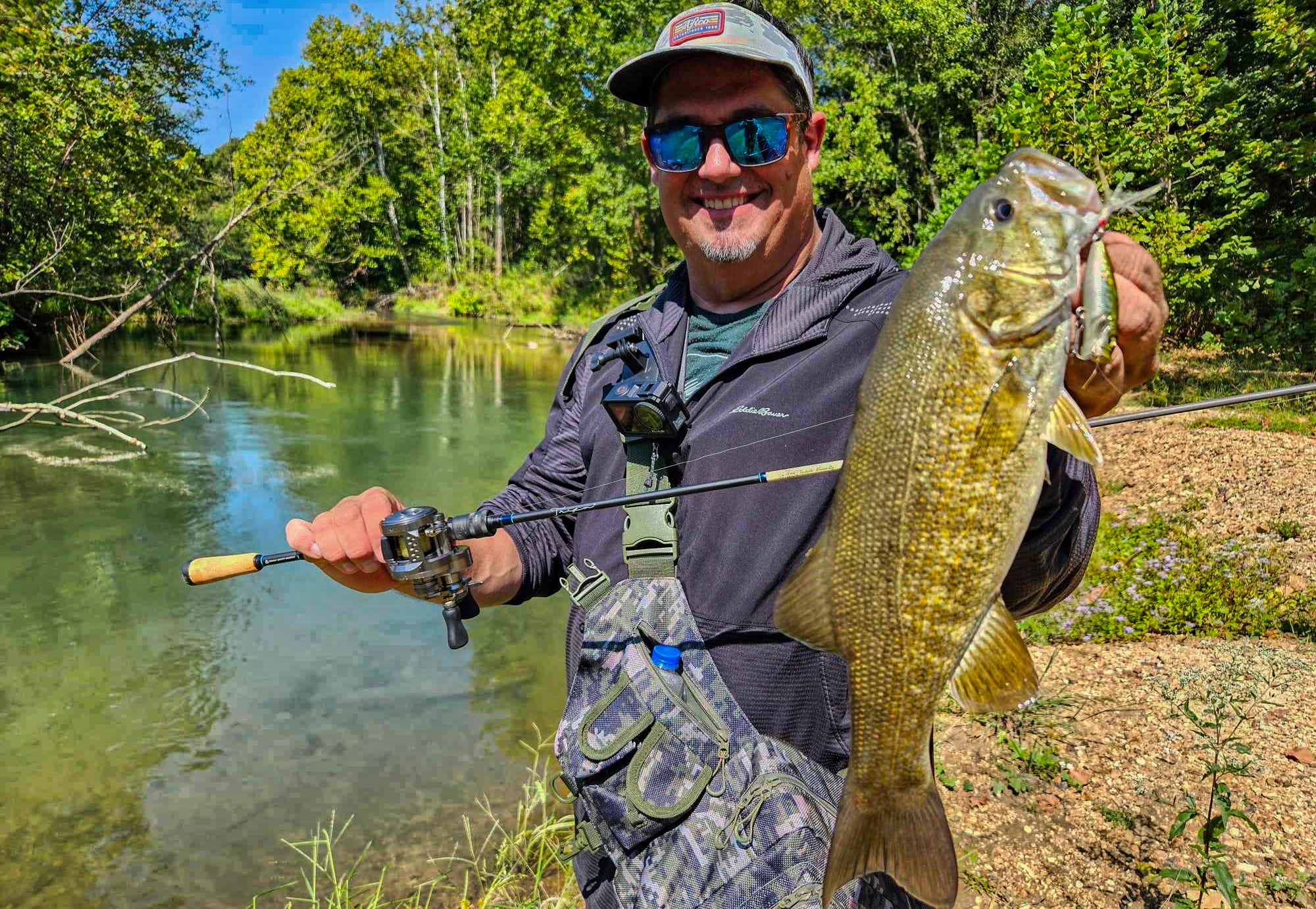
When you’re chasing bass in creeks and small streams, think in terms of ambush points. Bass don’t chase food across open water in small streams — they sit in cover and wait for it to come to them.
Smallmouth and spotted bass relate more to current and current-adjacent cover. Largemouth seek out the slower, deeper pools with more overhead cover and shade. If both species are present in the same creek, you can often target them separately by fishing faster, rockier water for smallmouth and slower, silted or weedy stretches for largemouth.
A spinning rod with 4 lb mono or fluorocarbon and a 1/8 oz jighead with a grub or tube is as consistent as it gets for creek bass. It covers both species, handles structure well, and fishes across the entire water column.
Small poppers and jerkbaits on a BFS setup are an absolute blast in small creeks — especially for visible surface eats in shallow water. A medium-light 6’0” to 6’10” rod with a whippy tip and some backbone handles these lures well and gives you the casting accuracy you need in tight cover.
Fish the ambush first, then move on
In small creeks, most visible ambush spots will either produce immediately or not at all. Make two or three precise casts to each piece of cover, then keep moving. Creek fishing rewards anglers who cover water — not those who linger on dead water.
These are productive, modern choices for warm-water creek bass — sized and designed for small water:
The original creek kit still works
A few Rooster Tails, Gitzits, and Kalin’s Grubs on 1/8 oz jigheads in a small utility box will still catch everything in a creek. Modern tackle has evolved, but simplicity still wins on small water.
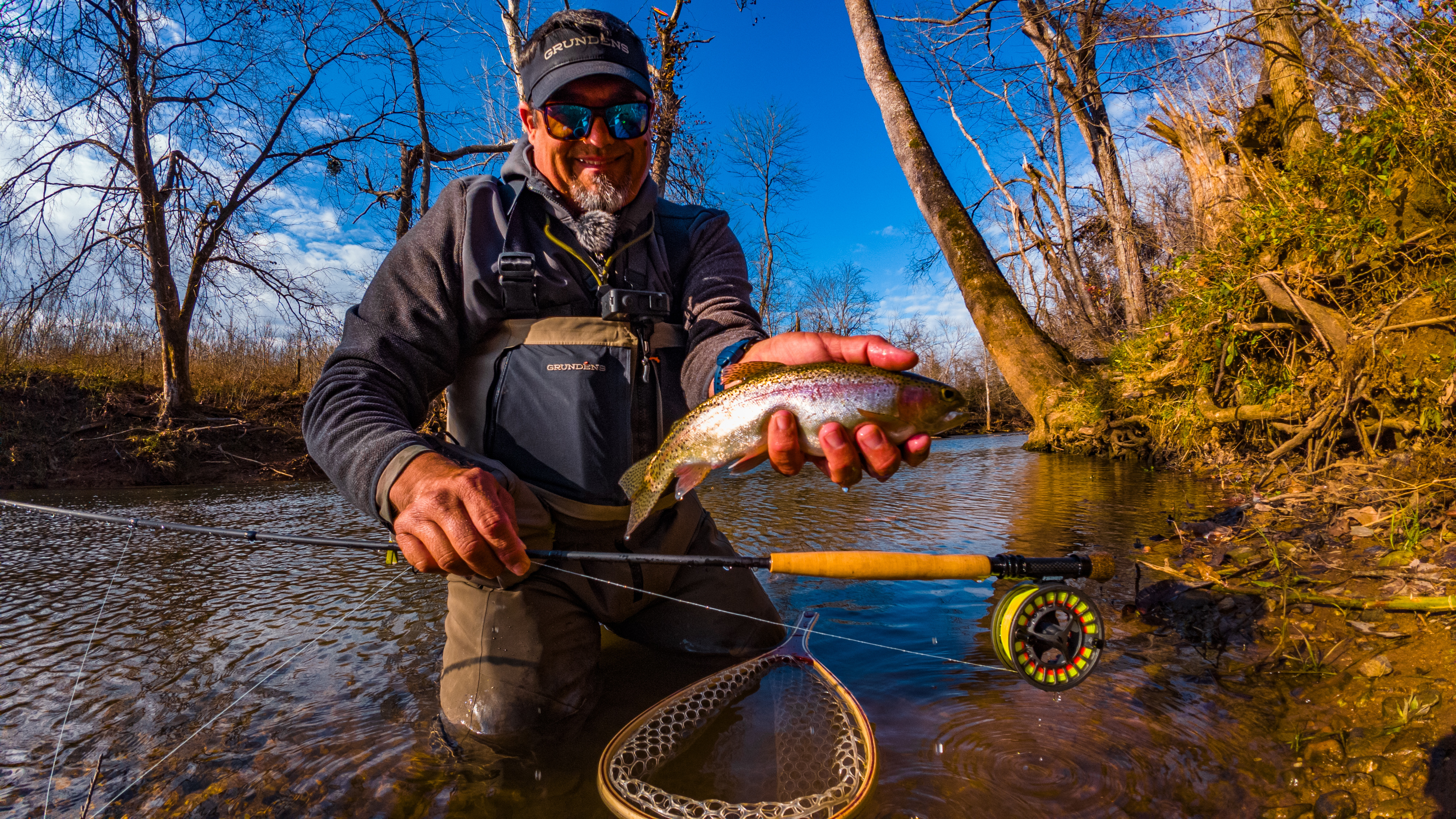
Creek trout fishing centers on two skills: reading current and understanding where food moves through the system. Trout in small streams can be anywhere from shallow riffles to deeper pocket water depending on the season, population density, and fishing pressure.
The most important concept for creek trout is the current seam — the line between fast water and slow water. Trout position along these seams to rest in the slower current while intercepting food delivered by the faster current. Look for seams:
Trout also relate to depth transitions — where water gets shallower and then deepens again. A section of water that drops from a shallow run into a deeper pocket almost always holds fish. The key is identifying which pockets have both depth and cover (current break, overhead shade, or structure).
Water speed and depth dictate which presentation works best:
These lures cover the full range of creek trout situations — fast runs, pocket water, and slower pools:
Creek fishing is as simple or as technical as you want to make it. After decades of plugging around on creeks all over the country, there’s still something new to learn on every outing. Here are the variables that matter most:
Seasonality affects where fish will be and how aggressively they feed. Spring and fall are peak seasons for both bass and trout in most creek systems. Summer heat pushes trout into cold-water seams and shaded stretches, and slows warm-water bass during midday. Adjust your schedule accordingly — early morning and evening during summer heat, all-day in spring and fall.
After heavy rains, look for protected areas close to the banks where current is reduced. Eddies behind boulders, inside bends, and slower backwater pockets along flooded grass edges are where fish stack up during high flows. Avoid main-channel presentations that blow through too fast.
In drought conditions, fish get spooky in ultra-clear, shallow water. Stay out of the water as much as possible, walk slowly, and keep a low profile. Make longer casts with lighter lures. A wading staff helps check depth ahead of you in both colored and unknown water.
In clear water, keep your colors as natural as possible — natural browns, olives, and silver work. In deeper or more turbulent water with color or stain, more contrast (chartreuse, orange, white) shows up better and triggers more strikes.
Compared to large lakes and rivers, creek baitfish are smaller and bugs and smaller forage items make up a larger portion of what fish eat. Downsizing your lure profiles — even if it means going to a smaller size of something you already fish — almost always helps on smaller water.
Creek fishing builds skills that transfer everywhere
As you get better at breaking down small creeks, the skills you develop — reading current, identifying ambush points, presenting lures precisely in tight spots — transfer directly to larger bodies of water. Small streams are one of the best training grounds for becoming a more complete angler.
Warm water creeks support species like smallmouth bass, largemouth bass, bluegill, crappie, and even muskie or stripers depending on your region. Cold water creeks — typically fed by springs or headwaters with temperatures below 65°F — support trout like rainbow, brown, and brook trout. Your target species determines your gear, lures, and technique, so identifying which type of water you’re fishing is the most important first step.
For most creek situations, a lightweight ultralight spinning rod (5’6” to 6’6”) paired with a small reel and 2–4 lb line covers both trout and small bass. For larger warm-water bass, step up to a medium-light spinning setup or a BFS casting rod for precise casting with lighter lures. Fly rods (8–9 ft, 4–5 wt) work beautifully for trout in creeks with overhead room.
Not always. Many creeks can be fished from the bank or by warm-water wading (shorts and boots) in warmer months. Waders are more useful when crossing frequently, fishing cold-water trout streams, or extending sessions into cooler conditions. When in doubt, check water depth and temperature before wading without protection.
For warm-water bass: 1/8 oz jigheads with grubs or tubes, small poppers, jerkbaits, and chatterbaits. For trout: inline spinners, small sinking minnow baits, marabou jigs, and Trout Magnet-style soft plastics. Downsize your profiles compared to what you’d throw on a lake — creek forage runs smaller.
A current seam is the line between fast water and slower water in a creek. Trout position along these seams to rest in the slow current while intercepting food delivered by the faster current. Identifying seams — especially where riffles dump into pools or where water wraps around boulders — is the single most valuable skill for creek trout fishing.
In transitional zones where cool headwaters meet warmer downstream stretches, it’s possible to catch both. However, trout and warm-water bass rarely share the same water temperature range — trout prefer cooler stretches (below 65°F), while bass thrive in warmer water. Learn to identify where water temperature changes along a creek system and you’ll know which species to target in each zone.
High, swift water pushes fish into protected areas close to the banks where current is reduced. Target eddies behind boulders, flooded grass edges, and slow backwater pockets along the inside of bends. Avoid heavy lures that blow through the strike zone too fast — slow down your presentation and let fish come to you.
Yes, especially for bass in creeks. BFS casting rods and reels let you throw very light lures (1/8 oz and under) with precision that a standard baitcaster can’t match. In tight, brushy creeks where accurate casting to specific targets matters, a BFS setup gives you more control than most spinning gear and significantly more casting precision.
Spring and fall are typically peak seasons for both warm and cold water species in creeks. Bass are active pre-spawn in spring and feed aggressively again in fall. Trout fishing peaks in spring and fall when water temperatures hit their sweet spots. Summer can be productive in cold water creeks or early mornings on warm water streams, but midday heat in summer can slow both bass and trout significantly.
Stay out of the water as much as possible. Walk slowly, keep a low profile, and use bank-side cover to break your outline. Make longer casts with lighter lures. Fish upstream when possible so disturbed water flows away from your target. In ultra-clear, low-flow conditions, fish can easily detect footstep vibrations and shadow movement — treat each pool like it has one shot before it shuts down.
Hook Me Up!
Sign up for emails and texts to get exclusive updates and offers.
By providing your number above, you agree to receive recurring automated marketing text msgs (e.g. cart reminders) to the mobile number used at opt-in from FishUSA on 25043. Consent is not a condition of purchase. Msg frequency may vary. Msg & data rates may apply. Reply HELP for help and STOP to cancel. See Terms and Conditions & Privacy Policy