

Best Catfish Reels: Expert Picks for Blues, Channels, and Flatheads
Best Catfish Reels: Expert Picks for Blues, Channels, and Flatheads
Big cats punish bad reels. This guide covers drag, frame strength, line capacity, and must-have features — then reviews six proven spinning and casting reels with clear Best For callouts and scenario setups for anchor fishing, drifts, and bank work.
Published: November 2025 · By: FishUSA Staff
Big cats punish bad reels. Blues torch long runs, channels peck then surge, and flatheads lean into structure until gears cry uncle. Your reel has to start smooth, stay smooth, and hold steady pressure with heavy line and big sinkers — no hiccups, no hot spots.
This guide breaks down exactly what matters for catfish reels — drag startup and consistency, frame and gear strength, line capacity for 40–65 lb braid or 20–30 lb mono, and must-have features like clickers, baitfeeders, and power handles. You’ll get clear comparisons of spinning vs. casting setups, and simple, proven configurations for anchor fishing, slow drifts, and bank work. If you want fewer pulled hooks and more fish in the net, start here.
Related: The Best Catfish Rods: Expert Picks, Specs, and Setups for Blues, Channels, and Flatheads
What Makes a Great Catfish Reel?
Catfish reels need three things: smooth drag, strong build, and useful features. Drag must start clean at low settings and stay even across the fight — a drag that grabs at startup will pull circle hooks before they rotate. Frames and gears must hold up under heavy sinkers, big baits, and repeated casts. Useful features include a bait clicker, a power handle, and smart line capacity for 40–65 lb braid or 20–30 lb mono. A reel that checks these boxes will land more fish and save leaders at boatside.
| Feature | Why It Matters | What to Look For |
|---|---|---|
| Drag startup | A grabby startup pulls circle hooks before they seat | Smooth from 0 lb; washers that don’t stick |
| Drag max output | Trophy blues and flatheads need sustained pressure | 15–25 lb sustained for big fish; 8–15 lb for eaters |
| Frame and gears | Heavy sinkers and hard runs flex cheap frames | Aluminum or graphite body; brass or aluminum gears |
| Line capacity | Long runs and heavy leaders eat spool fast | 200+ yards of 40–65 lb braid; deep spool for casting |
| Clicker / baitfeeder | Lets fish take line before the fight starts | Loud clicker (casting) or adjustable free-spool (spinning) |
| Handle and grip | Turning fish from cover needs torque | Power handle with EVA or rubber knob |
Spinning vs. Casting for Catfish
Spinning reels shine for bank fishing and windy days. They cast heavy rigs with less backlash, and baitfeeder systems let fish take line before you engage the drag. Spinning is simple for new anglers and works well with slip floats and lighter leaders for channel catfish.
Casting reels (round baitcasters) give you tight line control, better clickers, and stronger handles for big baits and heavy sinkers. They pair well with Carolina, Santee, and three-way rigs on rivers and big lakes. If you chase trophy blues or flatheads, a round reel with a clicker and a power handle is a strong choice.
| Style | Best For | Key Features | Trade-off |
|---|---|---|---|
| Spinning | Bank fishing, slip floats, wind, new anglers | Baitfeeder, easy casting, light leader friendly | Less torque for heavy cover |
| Round casting | Anchor rigs, heavy sinkers, trophy fish, night fishing | Clicker, levelwind, power handle, deep spool | Steeper learning curve |
Best Spinning Reels for Catfish
1. Okuma Cat Slayer Custom Baitfeeder Spinning Reel
Best Overall (Spinning) • Best Bank and Slip-Float Reel
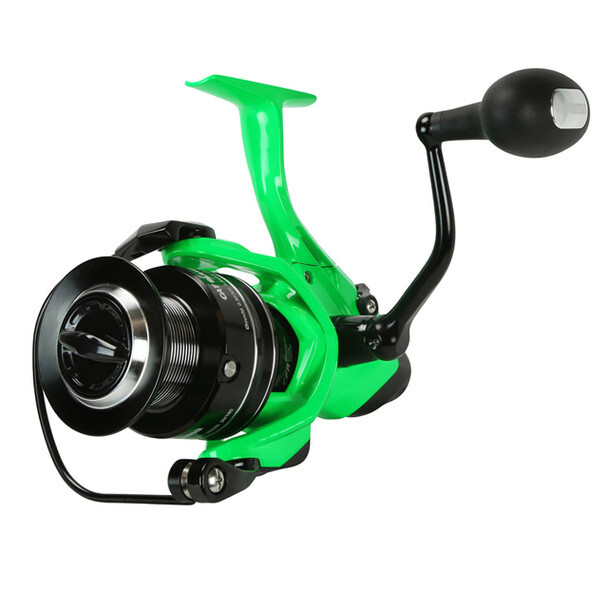
Best Overall Spinning
Okuma Cat Slayer Custom Baitfeeder Spinning Reel
Bank fishing • Slip floats • Moderate currents • Channels & eater blues
The secondary free-spool lever is the star here. It lets a cat move off with a bait while your main drag stays set for the fight. The drag picks up clean with a turn of the handle, which protects light leaders and circle hooks. The spool holds ample 40–50 lb braid for long casts from riprap and river bars, and the rotor tracks well under 2–6 oz sinkers. If you want a do-everything spinning reel for channels and eater blues, start here.
- Why it works: Baitfeeder control, smooth startup, sensible capacity for heavy braid.
2. Daiwa BG MQ Big Game Spinning Reel
Best Heavy-Duty Spinning • Big Blues and Strong Current
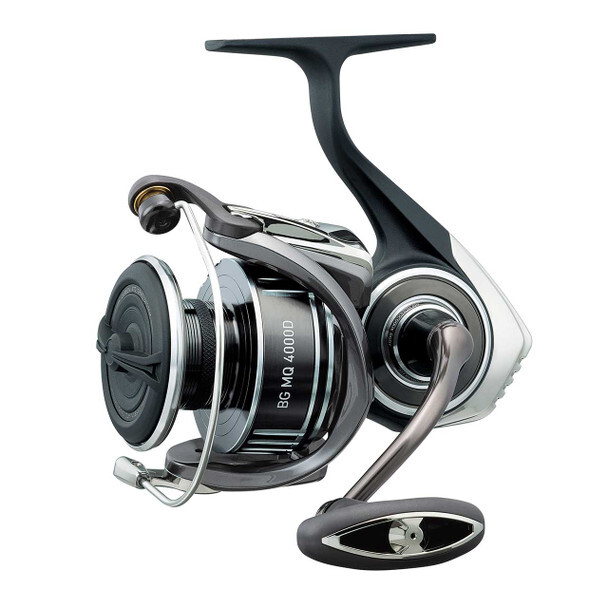
Best Heavy-Duty Spinning
Daiwa BG MQ Big Game Spinning Reel
Trophy blues • Heavy sinkers • Long casts from shore or boat
The Daiwa BG MQ uses a one-piece Monocoque body to keep gears aligned under load. The oversized main gear and strong bail wire handle heavy rigs and repeated casts. The drag stays smooth when a blue surges at short range, and the spool design lays braid tight to reduce wind knots. If you fish fast rivers or deep ledges with 6–10 oz sinkers but still prefer spinning, the MQ Big Game brings the backbone you want without rough startups.
- Why it works: Rigid Monocoque body, big main gear, drag that stays even under heat and sustained load.
3. Daiwa Free Swimmer Bite-Run Spinning Reel
Best Baitrunner Control • Live Bait and Finicky Bites
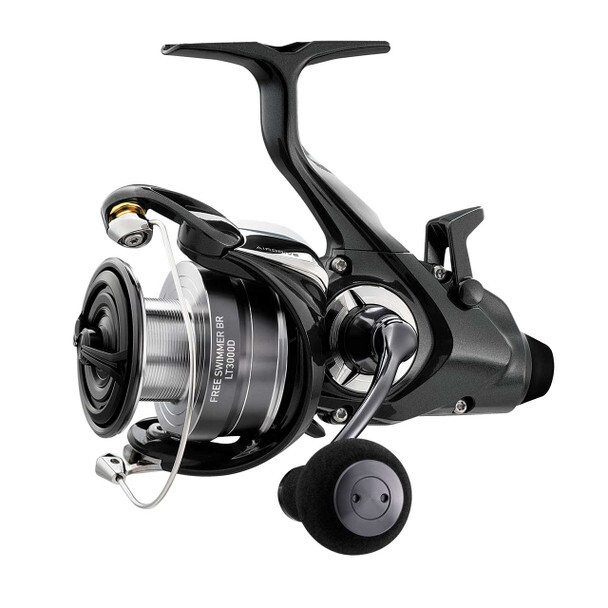
Best Baitrunner Control
Daiwa Free Swimmer Bite-Run Spinning Reel
Live bait near cover • Winter channels • Soft, sensitive pickups
Daiwa’s Bite-Run system is adjustable, so you can set a controlled free-spool tension level for soft pickups. That helps with cold-water channel cats and flatheads that mouth a bait before moving. The main drag engages with a turn, and the spool has the capacity for long leaders and shock knots. If you want maximum bite control for live bait or lighter presentations, this is the refined tool.
- Why it works: Tunable bite-run tension and a clean, immediate transition to the main drag.
Best Casting Reels for Catfish
4. MadKatz Xalt 6550 Casting Reel
Best Overall (Casting) • River Current and Big Baits
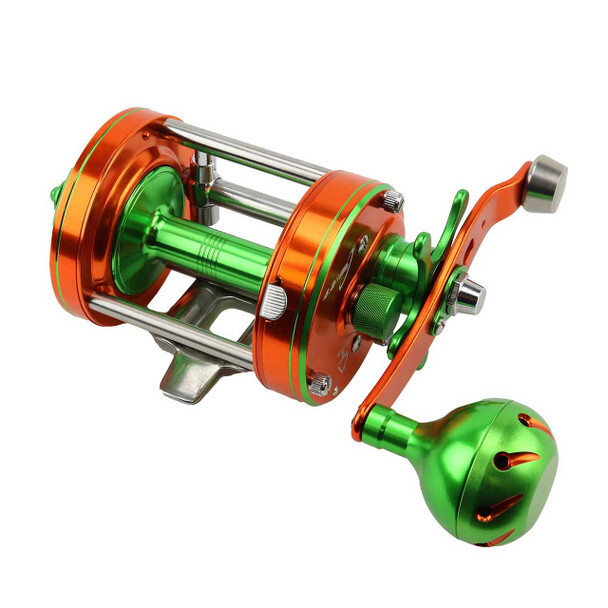
Best Overall Casting
MadKatz Xalt 6550 Casting Reel
Blues & flatheads in current • Santee rigs • Three-way rigs • Anchor sets
The MadKatz Xalt 6550 targets cat anglers who throw 3–10 oz sinkers and cut bait all season. The frame stays solid under clicker tension, and the power handle turns fish without wobble. The levelwind tracks well with thick mono leaders, and the spool offers deep capacity for 65–80 lb braid plus shock leader. If you want a primary boat reel for anchor sets and slow drifts, this is a strong pick.
- Why it works: Strong frame, steady clicker, smooth drag under heavy loads and sustained current pressure.
5. Abu Garcia Ambassadeur C3 Catfish Special Round Casting Reel
Best Classic Round Baitcaster • Proven Clicker and Control
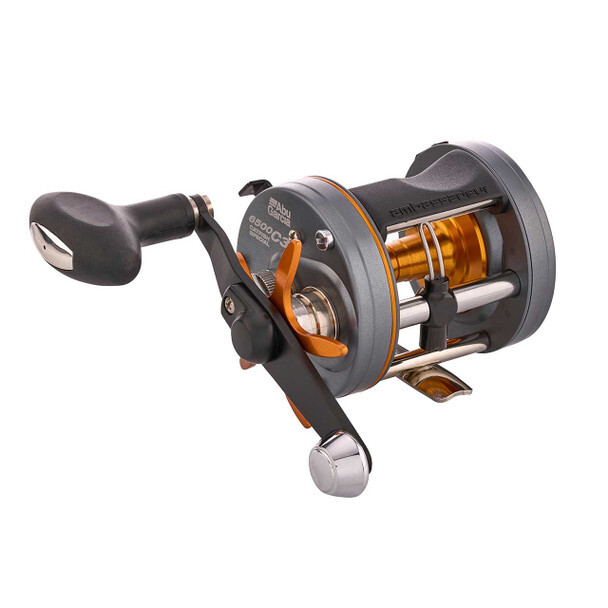
Best Classic Round Baitcaster
Abu Garcia Ambassadeur C3 Catfish Special
Anchor fishing • Night fishing with clicker • Mixed rivers and lakes
The Ambassadeur C3 Catfish Special is a known quantity. The clicker is loud and firm, which helps on anchor spreads at night. The synchronized levelwind handles thick leaders and big knots, and the brass gear train takes abuse for years if you oil it. The drag starts smooth at light settings for circle hooks and then adds pressure in a clean curve.
- Why it works: Reliable clicker, brass gears, easy field maintenance, and a proven drag curve for circle hooks.
6. Catfish Sumo Heavyweight Champions Casting Reel
Budget Pick (Casting) • Tough Value Workhorse
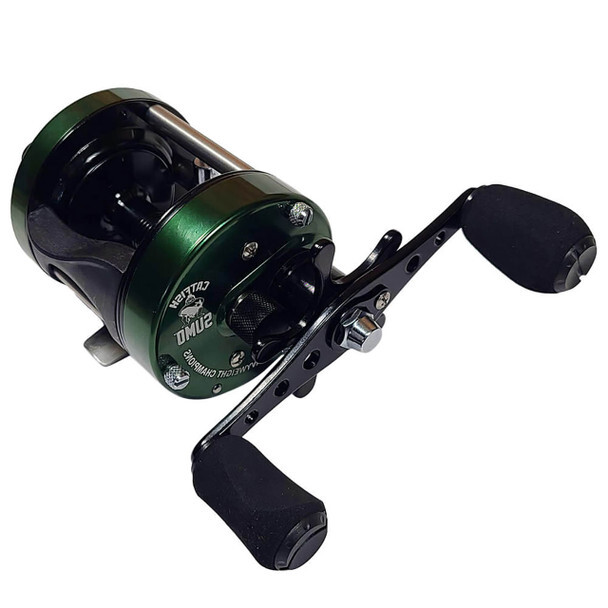
Best Budget Casting
Catfish Sumo Heavyweight Champions Casting Reel
Weekend trips • Backup reels • Large spreads on a budget
Catfish Sumo built this reel for hard use at a friendly price. The frame is solid for the class, the clicker is audible, and the drag stays consistent for eater-size blues and channels. The power handle gives extra torque on short lines, and the levelwind lays braid square for long runs on big flats. If you want to outfit a spread without a big bill, this delivers dependable performance.
- Why it works: Honest parts, steady drag, and a usable clicker at a price that lets you buy multiples.
How to Choose the Right Catfish Reel
Match your reel to your water first. Big rivers and deep lakes push you to casting reels with clickers, strong frames, and big spools. Small rivers and ponds favor spinning reels that cast well with lighter rigs. Next, size your line plan — 40–65 lb braid offers small diameter and strong knots, while 20–30 lb mono adds stretch for shock absorption at boatside. Pick a reel that holds at least 200 yards of your chosen line and runs drag smoothly at 6–15 lb of output, which covers most circle-hook fights.
Finally, select features that fit your tactics. A baitfeeder is gold for slip floats and bank fishing. A loud clicker is key for night sets and anchor spreads. A power handle and sturdy levelwind help when you throw 6–10 oz sinkers and fight fish from heavy cover.
| Situation | Reel Style | Must-Have Feature | Line |
|---|---|---|---|
| Bank fishing, slip floats | Spinning (baitfeeder) | Free-spool lever | 30–40 lb braid + 20–30 lb mono leader |
| Night anchor, rivers | Round casting | Loud clicker | 50–65 lb braid + 40–60 lb mono leader |
| Trophy blues / heavy cover | Round casting | Heavy-duty frame, power handle | 65–80 lb braid + 60–80 lb mono leader |
| Slow drift, big flats | Spinning or round casting | Smooth drag startup | 40–50 lb braid + mono leader |
| Live bait / finicky bites | Spinning (bite-run) | Adjustable free-spool tension | 20–30 lb braid or mono |
| Budget spread / multiple rods | Round casting (budget) | Clicker, usable drag | 40–65 lb braid |
Setups for Common Catfish Scenarios
Anchor on river ledges: Use a round casting reel with clicker and power handle. Spool 65 lb braid to a 40–60 lb mono leader. Run a Carolina or Santee rig with 3–8 oz no-roll sinkers. This setup holds bottom and lets circle hooks work while the rod loads on a steady pickup.
Slow drift on big flats: Use either a round casting reel or a strong spinning reel with steady drag. Spool 40–50 lb braid. Use Santee rigs with peg floats to lift baits off silt. Keep drift speed at 0.3–0.6 mph so the drag reads soft pickups without constant tension.
Bank fishing with slip floats: A baitfeeder spinning reel shines here. Spool 30–40 lb braid with a 20–30 lb mono leader. Run a large slip float, a bead, a float stop, and a short leader to a circle hook. Engage the main drag with a turn of the handle when the float slides and the line comes tight.
Drag setup tip: Set drag so the line yields with a hard pull at about 25–30% of your line’s rated breaking strength. Circle hooks need a clean startup to seat in the corner of the mouth — a sticky drag that grabs hard at the start will rip the hook before it rotates.
Not Sure Which Reel to Choose? Start Here
- Bank fishing or slip floats: Okuma Cat Slayer Custom Baitfeeder — best free-spool control and smooth drag engagement.
- Heavy current, big baits, primary boat reel: MadKatz Xalt 6550 — strong frame, steady clicker, heavy-load drag.
- Night anchor spreads, serviceable classic: Abu Garcia Ambassadeur C3 Catfish Special — loud clicker, brass gears, easy maintenance.
- Budget spread or backup reels: Catfish Sumo Heavyweight Champions — honest performance, low price, outfit multiple rods.
- Trophy blues from shore or boat, heavy spinning: Daiwa BG MQ Big Game — rigid body, big gear, smooth power.
- Finicky live-bait bites, precise control: Daiwa Free Swimmer Bite-Run — tunable free-spool tension, clean drag transition.
The best catfish reel pairs smooth drag with a strong build and the right features for your water. Spinning reels with baitfeeder systems excel from the bank and with floats. Round casting reels with clickers rule anchor fishing and big-bait work. Pick line capacity for your rigs, set drags to start clean, and let circle hooks do the work under steady pressure. Any model in this list will put more catfish on the bank and in the boat.
Catfish Reel FAQ
A 6000 to 8000 size spinning reel covers most catfish applications. A 6000 handles channel cats and eater blues with 30–40 lb braid and moderate sinkers. Step to an 8000 for trophy blues, heavy sinkers, or long casts from shore. Look for at least 200 yards of capacity at your braid weight and a drag that starts clean at light settings so circle hooks can seat without pulling free.
A baitfeeder is not required, but it is a significant advantage for bank fishing and slip-float setups. The free-spool lever lets a fish pick up the bait and move before you engage the main drag — this is especially useful for circle hooks, which need the fish to load the rod before the hook rotates. Without a baitfeeder, you can open the bail or put a casting reel in clicker mode to achieve a similar effect, but a baitfeeder makes the transition smoother and more reliable.
Most catfish fights are won with 8–15 lb of drag output, set at about 25–30% of your line’s breaking strength. A smooth startup is more important than a high maximum — a drag that grabs at low settings will pull circle hooks before they seat. For trophy blues and flatheads in current, a reel with 20+ lb of smooth, consistent drag output gives you room to work without risking break-off on a hard run.
Low-profile baitcasters work for channel cats and lighter applications, but round reels are better for serious catfishing. Round reels hold more line, have stronger levelwinds that handle thick mono leaders and heavy knots, and typically feature better clickers for night fishing and anchor sets. The handle position on round reels also provides more torque when pulling fish from heavy cover or fighting a blue in current.
40–65 lb braid paired with a 40–60 lb monofilament leader is the standard for most catfish setups. Braid’s thin diameter lets you carry more line and cast heavy rigs farther, while the mono leader adds abrasion resistance and stretch at boatside. For channel cats with light rigs, 20–30 lb mono or braid works fine. For trophy blues and flatheads near structure, step up to 65–80 lb braid with a heavy mono shock leader.