

Best Hooks for Catfish: Expert Picks for Blues, Channels, and Flatheads
Best Hooks for Catfish: Expert Picks for Blues, Channels, and Flatheads
Catfish hit hard and shake hooks at the net. The right catfish hook keeps steady pressure and lands more fish. Circle vs. J breakdown, hook size guide, rig pairing, bait technique, and five proven models with clear Best For callouts.
Published: November 2025 · By: FishUSA Staff
Catfish hit hard and shake hooks at the net. The right catfish hook keeps steady pressure and lands more fish. I cover the best catfish hooks for circle and J styles, explain hook size, and match each model to rigs, baits, and species. Use the callouts to choose fast.
Related: Best Catfish Rigs: How to Tie, When to Use, and Why They Work • Best Catfish Bait and Techniques for Every Situation
What Makes a Great Catfish Hook?
- Shape: Circle hooks pin the corner on steady pressure. J hooks suit quick sets and live bait in tight cover.
- Gap: A wide gap clears bulky cut bait and lets the hook point rotate fast.
- Wire: Heavy wire holds shape on trophy blues and flatheads under hard runs and strong current.
- Point and finish: Chemically sharpened points and black nickel or tin finishes hold sharpness and resist rust.
- Offset: A slight offset can speed rotation on circles. A straight eye helps snell cleanly and keeps the leader aligned.
Circle vs. J Hooks for Catfish
| Style | Best For | How to Set | Trade-off |
|---|---|---|---|
| Circle hook | Anchor fishing, drifting, tight-line rigs | Let rod load; reel down; do not swing | Slower hookup; very high retention |
| J hook | Live bait near wood cover | Firm sweep; keep rod loaded | Faster set; more deep-hook risk |
Rule of thumb: Circle hooks for cut bait on most rigs. J hooks when you need a quick pop on live bait near heavy cover and a fish can turn into brush before you react.
Best Catfish Hooks
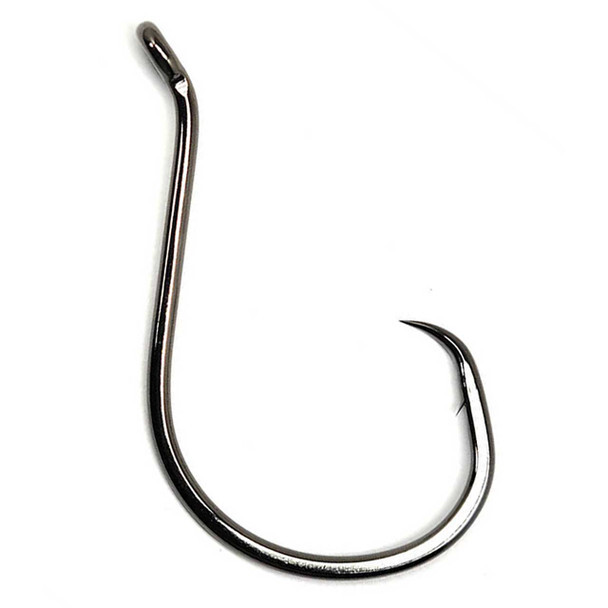
1. Gamakatsu Big Cat Circle Hook
Best Overall • Reliable Corner Hookups
Best Overall
Gamakatsu Big Cat Circle Hook
Blues & flatheads • Cut shad or skipjack • Carolina, Santee, three-way rigs
The wide gap and heavy wire make this a go-to for cut bait and circle-hook tactics. It rotates fast, pins the corner, and stays planted under a steady load. I like it for Carolina rigs, Santee rigs, and three-way rigs on blues and flatheads. It handles large chunks without burying the point.
- Why it works: Wide gap, strong shank, sharp point, clean rotation.
- Sizes to try: 5/0–7/0 for mixed fish; 8/0–10/0 for trophy baits.
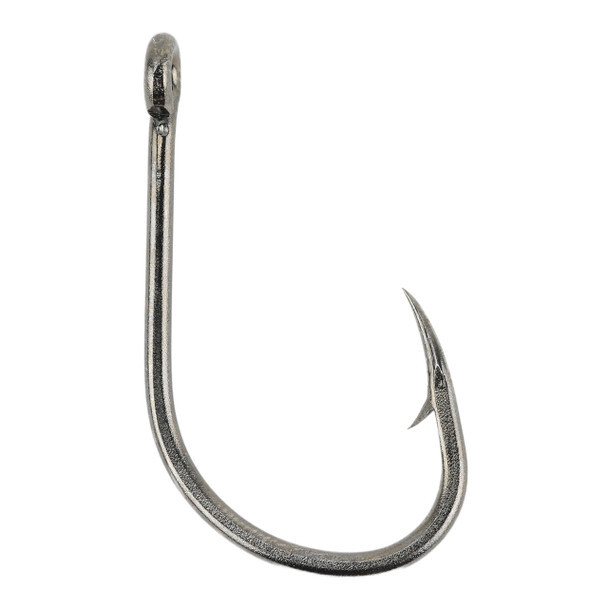
2. Boss Kat Boss J Live Bait Hook
Best J Hook for Live Bait • Tight Cover Control
Best J Hook
Boss Kat Boss J Live Bait Hook
Flatheads • Live bluegill or baitfish • Wood cover
When I run live bait near wood for flatheads, I want a positive set. The Boss Kat Boss J drives home with a firm sweep and keeps bait lively before the bite. The shape clears the bait fast and holds up when you have to pull a fish from brush. Pair with a snelled leader to keep alignment tight.
- Why it works: Quick penetration and strong wire for hard pulls from cover.
- Sizes to try: 5/0–8/0 based on bait size.
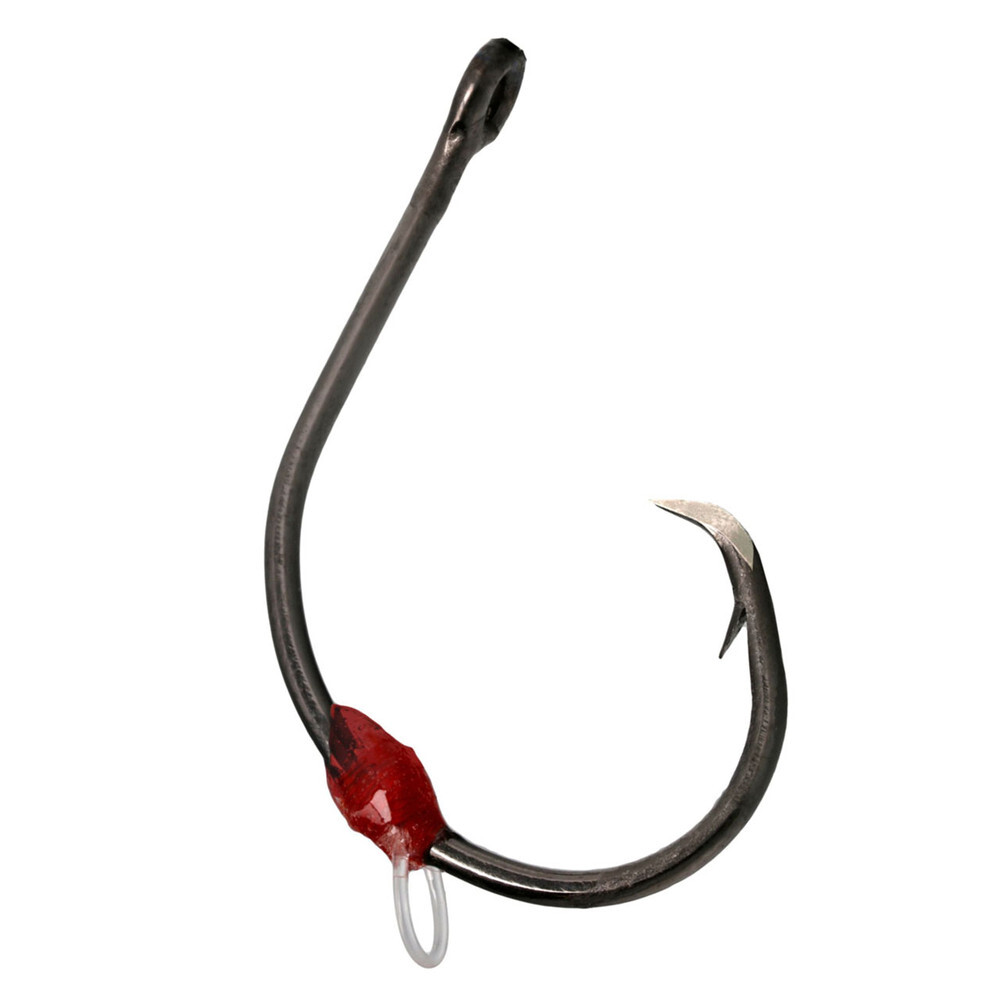
3. Trokar Bait Saver Circle Hook
Best Bait-Holding Circle • Long Drifts and Distance Casts
Best Bait-Holding Circle
Trokar Bait Saver Circle Hook
Long casts • Drifting cut bait • Bank fishing
The Trokar Bait Saver adds a keeper that reduces throw-offs on long drifts and hard casts. The point is very sharp, so light pressure starts the turn fast. It shines when you need a secure hold on softer cuts or when you cast far from the bank.
- Why it works: Bait keeper grips flesh; sharp point rotates and pins on minimal pressure.
- Sizes to try: 4/0–7/0 for channels and blues.
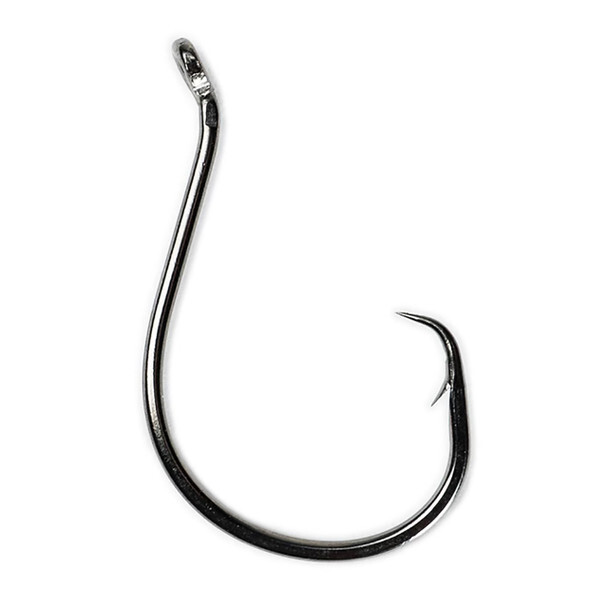
4. MadKatz Kat Snatcher Circle Hook
Best Heavy-Cover Circle • Big Fish Insurance
Best Heavy-Cover Circle
MadKatz Kat Snatcher Circle Hook
Trophy blues • Heavy current • Large cut bait
Built for pressure, the MadKatz Kat Snatcher uses heavy wire and a wide bite to tame trophy blues. It resists flex when a fish turns at the net or digs into current. I like it for big bait heads and strong river flows with no-roll sinkers.
- Why it works: Heavy wire, wide gap, dependable corner sets under maximum load.
- Sizes to try: 7/0–10/0.
5. Owner Mutu Hybrid Circle Hook
Most Versatile Premium Circle • Mixed Species Days
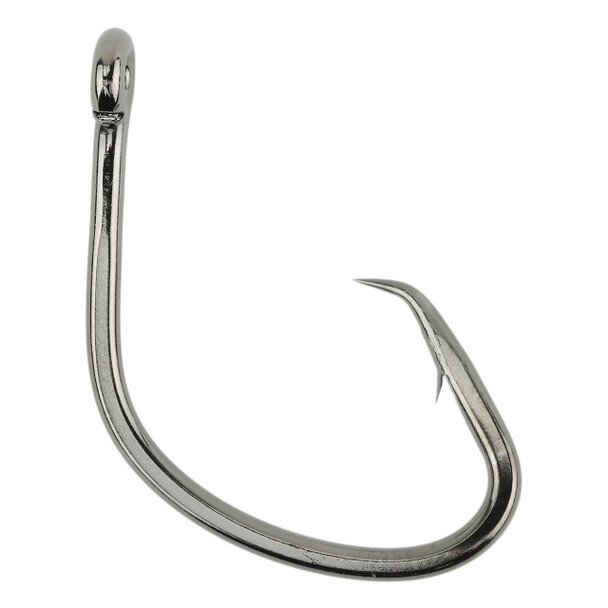
Most Versatile Premium
Owner Mutu Hybrid Circle Hook
Mixed lakes & rivers • Cut or small live bait • Blues, drum, stripers
The Owner Mutu Hybrid blends fast penetration with a circle profile that still finds the corner on steady pressure. The finish stays sharp after multiple fish. It is a strong choice when you may also hit stripers or drum while targeting blues.
- Why it works: Hybrid bend for quick starts and secure rotation; premium point retention.
- Sizes to try: 4/0–8/0.
Hook Size Guide (Quick Picks)
| Target | Bait | Hook Type | Common Sizes |
|---|---|---|---|
| Channel catfish (eaters) | Worms, small cuts, prepared bait | Circle | 1/0–4/0 |
| Blue catfish (mixed size) | Cut shad chunks | Circle | 5/0–7/0 |
| Trophy blue / large flathead | Large cuts, bait heads | Circle | 8/0–10/0 |
| Flathead (live bait, wood cover) | Live bluegill, legal baitfish | J hook | 5/0–8/0 |
Rig Pairing and Hook Choices
- Carolina (slip-sinker) rig: Circle hooks 4/0–8/0; short 12–18” leaders in current.
- Santee rig (peg float): Circle hooks 5/0–8/0; float lifts bait off silt and shell for easier pickup.
- Three-way rig: Circle or J based on bait and cover; use a light dropper for the weight to save your rig on snags.
- Slip float: J hook with live bait near cover; circle hook with cut bait over clean bottom.
See Best Catfish Rigs for full tie instructions and when to deploy each setup.
How to Hook Bait
- Cut bait chunks: Thread once through tough skin near the backbone or tail section — leave the point fully exposed and the gap clear.
- Bait heads: Enter behind the skull plate and exit through tough skin; keep the gap clear so the hook can rotate.
- Live bait: Dorsal or tail hook with J hooks when fishing near cover. Nostril or back hook with circles for slow current where the fish can pick up and move before loading the rod.
Gap rule: If you can’t see daylight between the hook point and the bait, size up to the next hook or trim the bait smaller. A buried point will not rotate or set.
Setting the Hook
- Circle hook: Do not swing. Watch the rod load, then reel down to take up slack. Sweep gently only to maintain steady pressure. The hook rotates and finds the corner on its own.
- J hook: Sweep firmly and keep the rod loaded throughout the fight. Do not snap-set with heavy mono — it stretches and absorbs the stroke before it reaches the hook.
Common Mistakes
- Burying the hook point in bait and blocking the gap — the most common reason circle hooks fail to set.
- Using too-small hooks with bulky bait heads or thick fillets.
- Hard swinging a circle hook and pulling the bait free before the hook can rotate.
- Running leaders that are too long in heavy current, letting hooks sag into snags and miss bites.
Not Sure Which Hook to Choose? Start Here
- Best Overall: Gamakatsu Big Cat Circle Hook in 5/0–7/0 for most blue and channel work.
- Live Bait in Wood: Boss Kat Boss J Live Bait Hook in 6/0–8/0.
- Long Casts / Bait Security: Trokar Bait Saver Circle Hook in 4/0–7/0.
- Trophy Blues in Current: MadKatz Kat Snatcher Circle Hook in 7/0–10/0.
- Premium Versatility: Owner Mutu Hybrid Circle Hook in 4/0–8/0.
The best catfish hook matches your bait and rig. Use circle hooks for cut bait and steady pressure. Use J hooks for live bait near wood. Keep the point clear, size up for bulky cuts, and let circle hooks work by loading the rod. Pick from the models above and your hookup and landing rates will improve fast.
Catfish Hook FAQ
2/0 to 4/0 circle hooks cover most channel catfish scenarios. Use 1/0–2/0 with worms and prepared baits, and step to 3/0–4/0 for small cut bait chunks or chicken liver. Keep the gap clear of bait so the point can rotate and pin the corner of the mouth.
5/0 to 7/0 circle hooks are standard for blue catfish using cut shad chunks. Step to 8/0–10/0 for large bait heads and trophy targeting. The hook must have a wide enough gap to clear the bait and rotate cleanly when the fish moves away from the rod tip.
Circle hooks are better for most cut-bait tactics — anchor, drift, or tight-line situations where the fish can load the rod on a steady pickup. J hooks shine for live bait near wood, where a quick sweep drives the hook before a flathead can turn into brush. Use circles as the default, J hooks for live bait in heavy cover.
A Santee rig is a modified Carolina rig with a short peg float added between the swivel and the leader. The float suspends the bait above silt and bottom debris so catfish can locate it by scent. Use a circle hook in 5/0–8/0 depending on bait size. The float keeps the hook elevated and helps it rotate cleanly on a slow pickup.
Thread the hook through tough skin near the backbone or the tail section — tough tissue grips the hook during the cast and resists tearing off. For softer cuts, a hook with a built-in bait keeper, like the Trokar Bait Saver, adds a barb that grips the flesh and reduces throw-off. Casting sidearm rather than overhead also reduces the g-force that tears soft bait loose.