

Walleye Trolling Speed Control: What to Change First
Walleye Trolling Speed Control: What to Change First
Speed is the most powerful variable in your trolling spread — it controls lure action, running depth, board behavior, and how walleye respond to your bait. This guide covers starting speed ranges, the change ladder that eliminates guesswork, and the adjustments that matter most by water temp, clarity, and presentation type.
Last updated: June 2026 · By: FishUSA Staff
Quick Start
If you want the essentials before diving into the details:
Speed control in 60 seconds
- Start at 1.8–2.0 mph GPS for most conditions. Cold water: 1.4–1.6 mph. Warm, active fish: 2.0–2.5 mph.
- Speed is the first lever. Change it before lead length, bait, or color — every time.
- Adjust in 0.2 mph increments and make a full pass before evaluating. One change, one pass.
- Use GPS speed — not throttle position. Wind and current shift actual speed by 0.5–1.0 mph without you noticing.
- Rod tip is your gauge: a steady, rhythmic pulse means good action. Erratic or dead tips mean something is wrong.
- Too fast: lures spin out or blow sideways, board releases trip prematurely, tips pulse frantically.
- Too slow: lures die or barely wobble, boards lose angle and sag toward the boat, rod tips go flat.
- Change ladder: speed → lead length → bait style → color. Never change two at once.
If you only do one thing differently: use GPS speed instead of throttle feel, and change speed first whenever bites stop. Most walleye trollers who struggle are chasing color when they should be adjusting speed. A crankbait running at the wrong speed catches nothing regardless of color. Get the speed right — then worry about everything else.
What Speed Actually Controls
Speed is not just about how fast the boat moves. It simultaneously affects four things that all interact with each other.
Lure Action
Every crankbait has an optimal speed range where it runs with the intended wobble — a consistent, rhythmic side-to-side action. Too slow and the bait barely wiggles or swims erratically. Too fast and it blows out, spinning or running sideways instead of wobbling. Within the optimal range, faster speeds typically tighten the action (faster, shorter wobble) while slower speeds widen it (slower, wider roll). Walleye preference for tight vs. wide action shifts with water temperature and fish mood — which is why speed is the first variable to test.
Running Depth
Speed affects running depth in two ways. First, faster speeds create more upward lift on a diving crankbait, often pushing it shallower than its published maximum. Second, speed changes the angle of your line in the water — at higher speeds, line angle becomes more horizontal, which directly affects how deep a bait on a given lead length will run. For most crankbaits, lead length has a bigger depth impact than speed alone, but they interact. When you change speed significantly (more than 0.3 mph), expect your bait's running depth to shift too.
Spread Behavior
Planer boards need adequate speed to maintain their planing angle. Too slow and boards lose their spread, sinking toward the boat and causing lines to sag or tangle. Too fast and board releases may trip on the increased line pressure. Divers are even more speed-sensitive — speed changes directly control how deep a diver tracks. A consistent GPS speed keeps your entire spread — boards, leads, and baits — behaving predictably and repeatably.
Fish Response
Walleye metabolism and activity level change with water temperature. In cold water, fish move slowly and prefer an easy target — a slower presentation matches their ability to commit. In warm water with active fish, a faster presentation can trigger reaction strikes and covers more water per hour. On neutral fish (cold fronts, post-spawn stress, heavy pressure), a very slow or unusually fast speed can sometimes break through when mid-range speeds produce nothing. Speed is the fastest way to trigger a bite or kill one — which is exactly why it's the first thing to change.
The Change Ladder (What to Adjust and When)
The single most important rule in trolling: change one variable per pass. Change two things at once and you'll never know what fixed — or broke — the bite.
The Order
- Speed — adjust 0.2 mph in one direction, complete a full pass, evaluate. This is always first because it affects everything else and is the fastest to test.
- Lead length — once speed is dialed, shorten or lengthen all rods by 25 ft to change depth zone. See Lead Length Rules for the depth impact of different leads.
- Bait style / action profile — swap from a wide-wobble crankbait to a tighter-action model or vice versa. Different action profiles trigger fish differently at different temps. Change this after speed and lead, not instead of them.
- Color — the most visible variable and the most over-adjusted. Color matters, but only after speed, lead, and action are right. A wrong-speed bait in the perfect color catches nothing.
Why color is last
Color is the easiest thing to change and the hardest to evaluate objectively. Most anglers reach for it first when bites stop because it feels like doing something. But a crankbait with the perfect color running at the wrong speed, wrong depth, or wrong action profile won't catch fish. Earn the right to change color by ruling out the three variables above it first.
Scenario: No Bites
Don't change anything for the first pass — establish a baseline. On the second pass with no bites, bump speed up 0.2 mph. Complete the full pass. If still nothing, drop back 0.3 mph from original speed (slower than the baseline you started with). Two full passes at different speeds covers the most likely range. If neither produces, move to lead length — lengthen by 25 ft to change depth. Then shorten. Only after those four passes without a bite should you consider bait style, and color comes last.
Scenario: Fish Following but Not Eating
This is often a speed problem disguised as a color problem. Fish that follow but won't commit are usually seeing the bait long enough to decide against it. Two approaches: speed up significantly (0.4–0.5 mph burst for 5–10 seconds, then return to normal) to trigger a reaction strike, or slow down and give them a longer look at an easier target. Try the speed burst first — it mimics a fleeing baitfish and often triggers the commit you couldn't get at a constant pace.
Scenario: Catching but Want More Bites
Once you're getting bites, use the change ladder in reverse to find a better version of what's working. Try 0.2 mph faster — if bite rate increases, stay there and try 0.2 more. Then try matching lead lengths across all rods to the one that's consistently producing. Don't make dramatic changes when something is already working. Small increments, one pass each, let you find the peak before you accidentally chase it away.
Speed Reference Starting Points
| Condition | Starting Speed (GPS) | First Adjustment | Notes |
|---|---|---|---|
| Early spring / cold water (<48°F) | 1.4–1.6 mph | Try up 0.2 mph first | Slow metabolism; easier target preferred |
| Mid-spring / transition (48–58°F) | 1.6–1.9 mph | Up or down 0.2 mph | Fish behavior most variable here |
| Summer / active fish (58°F+) | 2.0–2.5 mph | Try up first; go to 2.5 if fish are aggressive | Reaction bites more common |
| Post-cold-front / pressured fish | 1.4–1.7 mph | Try slower before faster | Neutral fish; don’t overpresent |
| Stained or dirty water | +0.3–0.4 mph above baseline | Try up first; match with wider-wobble bait | Fish locating by lateral line, not sight |
Temp + Clarity Adjustments
Water temperature and clarity don't replace the change ladder — they give you a better starting point so you need fewer adjustments to find bites.
Cold Water (Below 50°F)
Walleye are cold-blooded. Below 50°F their metabolism slows, their ability to accelerate drops, and they prefer a presentation they don't have to work hard to catch. Start at 1.4–1.6 mph. Use longer leads (75–100+ ft) to give fish a longer look before the bait passes. Tight-action crankbaits that look alive at slow speeds — finesse profiles with less water resistance — often outperform wide-wobble models that require more speed to trigger.
Cold water isn't absolute — a burst of warmer surface temp, a big bait school, or unusually active fish can produce bites at higher-than-expected speeds even in spring. The starting point is slow, but test the upper end of the range if slow isn't producing.
Warm Water (58°F and Above)
Fish metabolism increases with water temperature. In summer conditions, walleye can and do chase faster presentations — and a faster speed covers more water per hour. Start at 2.0–2.3 mph and don't be afraid to test up to 2.5 mph if fish are clearly active. At high speeds, monitor rod tips carefully — you can push a crankbait past its optimal action range quickly at warm-water speeds.
Speed bursts (a brief throttle increase of 0.5+ mph for 5–10 seconds) can be especially effective in warm water on fish that are chasing but not committing. The acceleration mimics a fleeing baitfish behavior that walleye respond to instinctively.
Clear Water
Fish see the bait — and they see it for longer. In clear water, subtle adjustments matter more than dramatic ones. A 0.1 mph change can alter the action enough to trigger reluctant fish. Use natural color patterns, longer leads (fish need more distance from the board and the boat), and finer line (10 lb vs. 12 lb mono makes a difference in clear water both in bait action and depth). Avoid over-twitching speed — smooth, consistent presentation beats erratic changes.
Stained or Dirty Water
Fish are locating by vibration and lateral line more than sight. A bait with more thump, more water displacement, and stronger contrast gets found faster. Run 0.3–0.4 mph faster than your clear-water baseline. High-contrast colors (chartreuse, orange, UV finishes) combined with higher speed and wider-wobble baits maximize the vibration signature that reaches fish in reduced visibility. Shorter leads work better in stained water — fish don't need as much time to decide.
These are starting points, not rules
Water temperature and clarity tell you where to start, but fish on a specific day and body of water often break the pattern. A cold-front day on stained water might require speed rules for both cold water and dirty water simultaneously. Use the guidance as a starting hypothesis, test it with the change ladder, and trust what the fish actually tell you.
Speed with Planer Boards
Boards add a layer of complexity to speed management because they respond to speed changes differently than the lines themselves — and because boards on opposite sides of the boat behave differently from each other on turns.
How Boards Respond to Speed Changes
- Too slow: boards lose their planing angle, the nose drops, and they begin tracking toward the boat. Lines sag. The spread collapses and tangle risk increases significantly.
- Too fast: releases may trip on wave pressure or increased line tension. Boards may skip or bounce. Lure action goes erratic before the board itself fails.
- Optimal range: boards plane cleanly at roughly 45 degrees off the stern. This is the range where speed changes affect lure behavior without destabilizing the board. Most inline boards work well in the 1.5–2.5 mph range, but check your board's specs.
Inside vs. Outside Boards on Turns
This is the most misunderstood part of board speed management. When you turn the boat:
- Inside board (the side you're turning toward) slows relative to the boat. Its line goes slightly slack, the bait drops, and the board begins to lose its spread angle. On a sharp turn, the inside board can collapse toward the boat entirely.
- Outside board (the side turning away from) speeds up relative to the boat. Its bait accelerates and rises slightly. The board planes harder and spreads wider.
These opposite responses are why wide, gradual turns are critical. A sharp turn has inside boards sinking and outside boards speeding up simultaneously — which creates the conditions for line crossings and tangles. A wide arc keeps the speed differential minimal. See Planer Boards 101 for the full deployment and turn guide.
Making Speed Adjustments with Boards Out
- One change per pass. Adjust speed, complete the full pass, evaluate. Don't change speed mid-pass — you won't know if a bite was from the new speed or the old one.
- After any speed change, check all boards before evaluating lure action. Confirm everything is still planing cleanly.
- Increase speed gradually — a sudden throttle jump can trip releases on lightly-tensioned setups. Ease to the new speed over 15–20 seconds.
- Keep a written log (or use a linecounter reel's memory) of what speed produced bites. Replicate it on the next pass before trying to improve on it.
Speed with Divers
Divers are more speed-sensitive than any other component of a trolling spread. A small speed change can shift diver depth by several feet — which is exactly what makes them useful, and exactly what makes them harder to manage than boards alone.
When Divers Help
Divers become the right tool when walleye are holding below what crankbaits on long leads can reach — typically 25–35+ feet — or when you need more lateral separation than boards alone provide. If you're running a full board spread and fish are consistently marked deeper than your baits are running, that's the signal to add divers. See When to Add Divers for a full breakdown.
How Speed Affects Diver Depth
Divers dive based on water resistance. More speed = more resistance = more depth, up to the diver's design limit. Slower speeds reduce depth. This means:
- When you change trolling speed, your divers change depth. A 0.3 mph increase can push a diver several additional feet deeper.
- Inconsistent speed (from wind gusts, waves, or throttle variation) causes divers to fluctuate in depth, which can make it difficult to hold a specific depth window.
- Turns affect diver depth similarly to how they affect boards — inside divers slow and rise, outside divers speed up and dive. This is amplified with divers because depth is directly tied to speed.
Delivery System Speed Thresholds
Not all trolling hardware operates efficiently at all speeds. Knowing each tool's optimal range prevents using the wrong delivery system for a given presentation:
- Dipsy Divers — work best at 1.7 mph and above. Below that threshold, the disc doesn't generate enough resistance to dive and track predictably. If you're running slow for cold water and need depth, jet divers or snap weights are better suited than Dipsy Divers.
- Jet Divers — operate across a wider speed range and are more forgiving at slower speeds than Dipsy Divers, though they don't reach the same depth.
- Inline weights / snap weights — most effective below 1.7 mph. At higher speeds they become erratic, lose depth control, and can interfere with bait action. If you're pushing speed past 1.7 mph to find fish or discourage bycatch, switch to divers.
- Crankbaits flat-lined — work across the full range but action varies significantly by speed. Check rod tip rhythm when crossing 2.0 mph — many crankbaits tighten up or start to blow out above that.
Master boards before adding divers
Divers add another layer of speed-sensitivity to an already complex spread. Get comfortable managing speed and board behavior consistently before adding divers. The change ladder applies the same way — speed first, lead length second, diver size third.
Common Speed Mistakes
Changing Multiple Variables at Once
The most costly mistake. You adjust speed, swap to a different crankbait, and lengthen leads all in the same pass. Bites resume. You have no idea which change triggered them — so next time conditions are similar, you have to guess again. Discipline on the change ladder turns random success into a repeatable pattern.
Using Throttle Feel Instead of GPS
Wind and current change your actual GPS speed by 0.5–1.0 mph from what throttle position suggests. Running into a 10 mph headwind at 2.0 mph throttle feel means you're actually doing 1.4 mph at the bait. Running downwind at the same throttle is 2.6 mph. These are completely different presentations. GPS speed is the only number that matters. If you're comparing results with other anglers, make sure everyone is using the same measurement — GPS, not RPM.
Ignoring Lead Length as a Depth Tool
Many anglers change speed multiple times trying to reach fish that are simply below the depth their baits can run at any reasonable speed. Lead length — not speed — is the primary depth lever. If you've tested the full speed range and fish aren't responding, try lengthening leads significantly (add 30–40 ft) before you decide the fish aren't there.
Running Too Many Lines Before Establishing a Baseline
Six rods at six different speeds, leads, and colors simultaneously gives you no information. You can't identify what's working or why. Start with 4 lines and establish a consistent speed and depth before adding rods. Once you know what the fish want, duplicate it across more rods — not before.
Inconsistent Speed Through Turns
Slowing down on turns causes all lines to sink simultaneously. If you habitually throttle back through turns, your baits are dropping to unexpected depths on every pass — and fish you mark at a specific depth are getting a different presentation than you intend. Maintain consistent GPS speed through turns. Let the arc of the turn do its work; don't add a speed variable on top of it.
Troubleshooting (Fast Checklists)
No bites
- Have you completed at least two full passes at your current speed? Don't change anything mid-pass.
- Bump speed up 0.2 mph and complete a full pass. Then try 0.3 mph slower than your original baseline.
- Check rod tips — are they pulsing rhythmically? A dead or erratic tip means the bait isn't running correctly regardless of speed.
- Confirm you're in the right depth zone — mark fish on sonar before committing to a depth. If fish are at 20 ft and your baits are at 10 ft, no speed or color change helps.
- If speed doesn't produce in 4 passes, move to lead length. Lengthen all rods 25 ft, then try shortening 25 ft from the original.
- Bait style after lead length. Color last.
Lures blowing out or spinning
- Reduce speed first. Most blowouts are a speed problem. Drop 0.2–0.3 mph and check rod tip action.
- Check snap size — an oversized snap can interfere with a crankbait's lip action and cause spinning at speeds that would be fine with the correct snap.
- Inspect the crankbait hook hardware. A bent treble or replaced hook that's heavier than stock can unbalance the bait and cause it to spin at normal trolling speeds.
- Check the line tie eye on the bait — if it's even slightly bent to one side, the bait will run off-center and blow out at lower speeds than it should.
- Pull the bait to the rod tip and watch its action in the water alongside the boat before setting it out at depth.
Not hitting the depth you need
- Increase lead length by 25–30 ft. This is the primary depth lever.
- Check line diameter — thinner line allows cranks to dive deeper at the same lead and speed. Switching from 12 lb to 10 lb mono is noticeable on most baits.
- Try slowing down slightly — a small speed reduction often allows baits to dive closer to their published maximum.
- Choose a crankbait with a deeper design dive rating if the one you're running maxes out above your target zone.
- When long leads and bait selection still can't reach the depth you need, divers are the right next step. See When to Add Divers.
Bycatch overrunning the spread (sheepshead / white bass / perch)
- Speed up. Higher trolling speeds — 2.2 mph and above — disproportionately discourage non-target species while walleye continue to commit. Sheepshead, white perch, and white bass are less inclined to chase a fast presentation; walleye are.
- This applies especially on Lake Erie and other mixed-species fisheries where bycatch can dominate a spread running at medium speeds.
- Increase speed in 0.2 mph increments as usual. If walleye bites hold while bycatch drops off, you've found the right window. If walleye bites also drop, back off 0.1 mph and hold there.
- Faster speeds also change what delivery systems work well — inline weights become erratic above 1.7 mph; switch to Dipsy Divers or jet divers if you're pushing speed to manage bycatch.
Gear That Makes Speed Control Easier
You don't need special equipment to manage trolling speed — but the right gear makes it faster to test, easier to repeat, and less likely to introduce variables you can't control.
Starter shopping list (3 essentials)
- 1. GPS unit or chartplotter — measures true over-ground speed. Without it you're guessing. Most modern fish finders include GPS speed.
- 2. Linecounter reels — repeatable lead lengths are how you replicate what's working. When one rod produces at 75 ft, you can set every rod to 75 ft in seconds.
- 3. Crankbait snaps — swap baits in 10 seconds without re-tying. Faster testing means more data per trip.
Shop the Gear
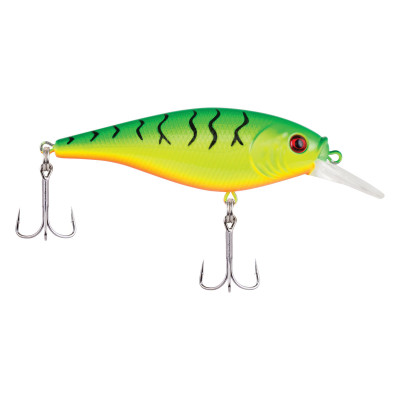
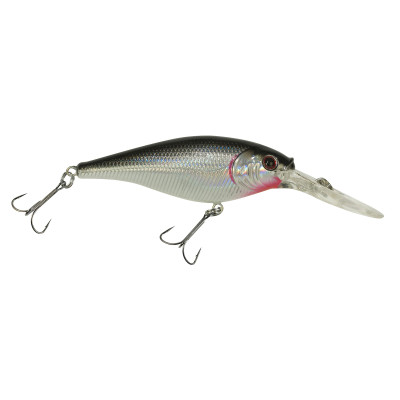
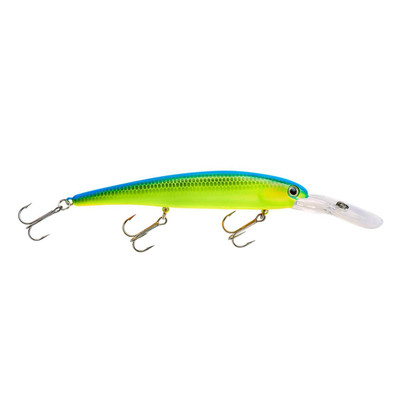


Want a complete setup with everything pre-selected?
The Walleye Trolling Starter Spread page covers boards, crankbaits, linecounter reels, and terminal in a full bundle builder — configured by kit tier so you can buy the right pieces without guessing.
Read Next
Walleye Trolling Speed FAQ
1.5–2.5 mph measured by GPS over ground covers most walleye trolling situations. Start at 1.8–2.0 mph as your baseline. In cold water (early spring, below 50°F) begin at 1.4–1.6 mph. In warm summer water with active fish, 2.0–2.5 mph is often more productive. Always measure GPS speed over ground — wind and current can shift your actual speed by 0.5–1.0 mph from throttle feel alone.
Speed first — always. Adjust in 0.2 mph increments and make a complete pass before evaluating. If speed doesn't produce after two adjustments, change lead length (shorter or longer by 25 ft). After that, swap bait style. Color is the last variable to change. Changing multiple things at once makes it impossible to identify what triggered or killed the bite.
Speed and depth interact in two ways. Faster speeds generally push crankbaits shallower because nose-up angle increases. Slower speeds let baits dive closer to their published maximum. However, the relationship varies by bait design, and lead length has a bigger depth impact than speed alone. When you need to change depth, adjust lead length first and speed second.
Generally yes. Stained water reduces visibility, so fish locate prey more by vibration than sight. A faster presentation with more wobble and vibration gets found more easily. Start 0.3–0.4 mph faster than your clear-water baseline and pair it with high-contrast colors or rattling baits. Don't go so fast that the bait loses proper action — watch rod tips for consistent rhythm.
Boards need adequate speed to maintain their planing angle. Too slow and boards sink toward the boat, causing lines to sag and tangle. Too fast and releases may trip prematurely. On turns, inside boards slow relative to the boat and lose angle; outside boards speed up and spread wider. This speed differential on turns is why wide, gradual turns are critical — sharp turns amplify the difference to the point of line crossings. See Planer Boards 101.
Add divers when fish are holding deeper than your crankbaits on long leads can reach — typically 25–35+ feet — or when you need more lateral separation than boards alone provide. Master your board spread and speed management first, then add divers as a depth extension tool. See When to Add Divers for details.
Several signs indicate you're too fast: rod tips pulse erratically or constantly rather than in a steady rhythm; lures spin out or run sideways (blow out); planer board releases trip prematurely from increased line pressure; the bait feels like it's skipping when you retrieve it. The ideal is a steady, rhythmic rod tip pulse — consistent and repeating, not frantic. When in doubt, slow down and watch tips reset.
Use GPS over-ground speed exclusively — not engine RPM or throttle position. Wind shifts actual GPS speed significantly from throttle feel. Running into a headwind requires more throttle to maintain the same GPS speed; running downwind requires less. Actively manage the throttle on every pass and make mental note of throttle positions for each heading. A speed-and-temp unit mounted at the board line gives the most accurate read at the bait's position.
In cold water (below 50°F) start at 1.4–1.6 mph. Walleye metabolism is slow and they prefer an easier target. In warmer water (60°F+) start at 2.0–2.3 mph — fish are more active and will chase faster presentations. These are starting points, not rules. Fish behavior on any given day can break the pattern, so always be willing to test outside the expected range if the baseline isn't producing.
Speed first. Change it in 0.2 mph increments and complete a full pass before evaluating. Lead length is your second dial — it affects depth and the angle at which fish encounter the bait. Change one at a time so you can identify what worked. If a speed change restores bites, you've solved the problem without touching anything else. See Lead Length Rules for the depth impact of different leads.