

Tips for Beginner Ice Anglers: Start Safe, Stay Warm, Catch Fish
By: FishUSA Staff
January 22, 2026
Curious about ice fishing but not sure where to start? You’re not alone. Plenty of people want to try it but get overwhelmed by the gear, worried about ice safety, or simply unsure how to actually catch fish through a hole in the ice. If that sounds familiar, these practical, no-nonsense tips for beginner ice anglers are for you.
Curious about ice fishing but not sure where to start? You’re not alone. Plenty of people want to try it but get overwhelmed by the gear, worried about ice safety, or simply unsure how to actually catch fish through a hole in the ice. If that sounds familiar, these practical, no-nonsense tips for beginner ice anglers are for you.
In this guide, we’ll walk step-by-step through everything you really need to know for your first few trips: how thick the ice should be, which beginner ice fishing gear is worth buying, what to wear to stay comfortable, basic locations and techniques, and the common mistakes that cost new anglers fish. We’ll also include answers to the most common beginner questions.
By the time you finish reading, you’ll be ready to plan your first ice fishing trip with confidence—and actually enjoy it.
Table of Contents
- Ice Fishing Safety Tips for Beginners
- Beginner Ice Fishing Gear: What You Actually Need
- Dressing for Success: Staying Warm and Comfortable
- Finding Fish: Simple Location Tips for Beginner Ice Anglers
- Basic Ice Fishing Techniques for Beginners
- Ice Fishing Etiquette, Regulations, and Conservation
- Common Mistakes Beginner Ice Anglers Make (and How to Avoid Them)
- FAQs – Tips for Beginner Ice Anglers
- Conclusion: Start Your Ice Fishing Journey with Confidence
Ice Fishing Safety Tips for Beginners
Before you think about rods, reels, or fancy electronics, start with safety. Hardwater fishing can be very safe if you respect the ice and follow a few simple rules.
How Thick Should Ice Be for Safe Ice Fishing?
General guidelines many agencies recommend for safe ice thickness are:
- 4 inches (10 cm): Minimum clear, solid ice for a single person on foot.
- 5–7 inches: Small groups on foot, light ATVs (check local rules).
- 8–12+ inches: Snowmobiles and light vehicles in some areas.
These are only guidelines. Ice conditions vary from lake to lake, and even across one lake. Current, springs, and structure can all cause weak spots. Always:
- Check recent ice reports from local tackle shops or angler groups.
- Carry a spud bar (ice chisel) and test the ice as you walk.
- Drill test holes and actually measure ice thickness where you fish.
Use local regulations and your state’s fisheries or natural resources website for official guidance on safe ice and access rules.
Essential Ice Safety Gear for New Ice Anglers
At a minimum, beginner ice anglers should carry:
- Ice picks: Wear them on a cord around your neck so you can pull yourself out if you break through.
- Float suit or PFD: A floatation snow suit or a life jacket worn under your outer layer adds a margin of safety.
- Throw rope: A 25–50 ft rope with a loop or throw bag to help someone else if they fall through.
- Spud bar: Use it to probe the ice ahead of you as you walk.
- Ice cleats: Traction devices on your boots can prevent dangerous slips and falls.
Always tell someone where you’re going, when you expect to return, and never head out on early or late ice alone.
Reading Ice Conditions and Avoiding Hazards
Even with good thickness overall, some areas are riskier than others. As a beginner ice angler, be extra cautious around:
- Inlets, outlets, and moving water.
- Bridges, culverts, and narrow channels.
- Pressure ridges and cracks with standing water.
- Areas with visible springs or wet-looking ice (“candled” or honeycombed ice).
When in doubt, back out. No fish is worth bad ice.
Related: Comprehensive Guide to Ice Fishing Safety Gear and Tips
Beginner Ice Fishing Gear: What You Actually Need
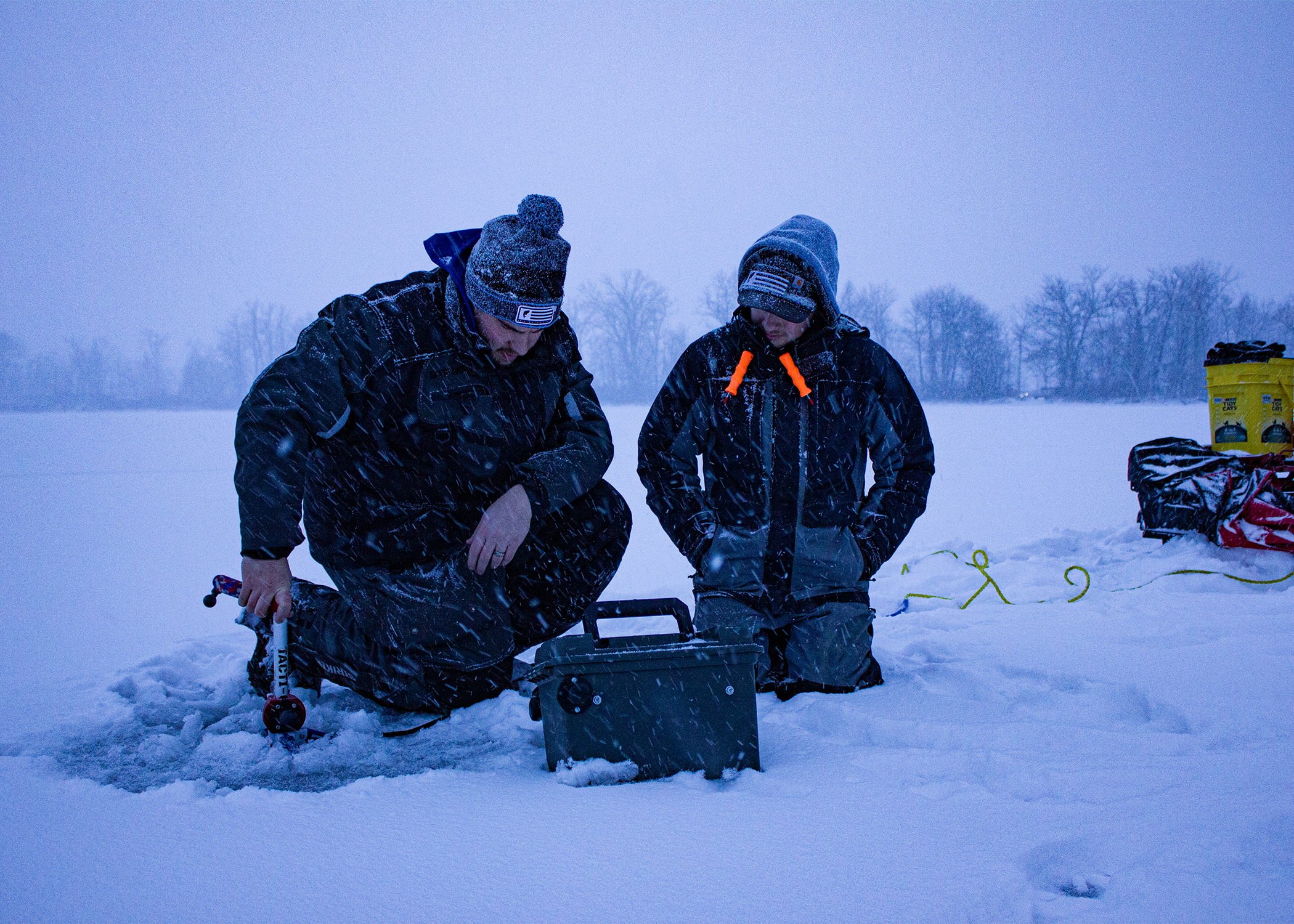
It’s easy to get carried away buying gear. The good news: you do not need a truck full of equipment to start. Focus on a simple, reliable setup that lets you learn the basics first.
Basic Ice Fishing Rod and Reel Setup for Beginners
A good starter combo for most species is:
- Ice Rod: 24–28 inch ultralight or light-power rod for panfish. For walleye and trout, consider a 28–32 inch medium-light rod.
- Ice Reel: Small spinning reel in the 500–1000 size range. They’re familiar and easy to use, making them ideal for ice fishing for beginners.
Inline reels are excellent for finesse panfish, but if this is your first season, a spinning combo is usually the simplest. Once you’re comfortable, you can explore specialty setups like inline reels for panfish or heavier rods for lake trout and pike.
Check out our buying guide: The Best Ice Fishing Rods: Reliable Gear for Every Ice Angler
Ice Fishing Line, Jigs, and Lures for Beginners
Line is often overlooked, but it matters a lot. For most beginners:
- Panfish: 3–4 lb monofilament or fluorocarbon.
- Walleye: 6–8 lb mono or braid with a 6 lb fluorocarbon leader.
- Trout/pike: 8–12 lb mono or braid with appropriate leader material.
Related: Top Ice Fishing Lines: Best Picks for Strength, Sensitivity, and Freeze Resistance
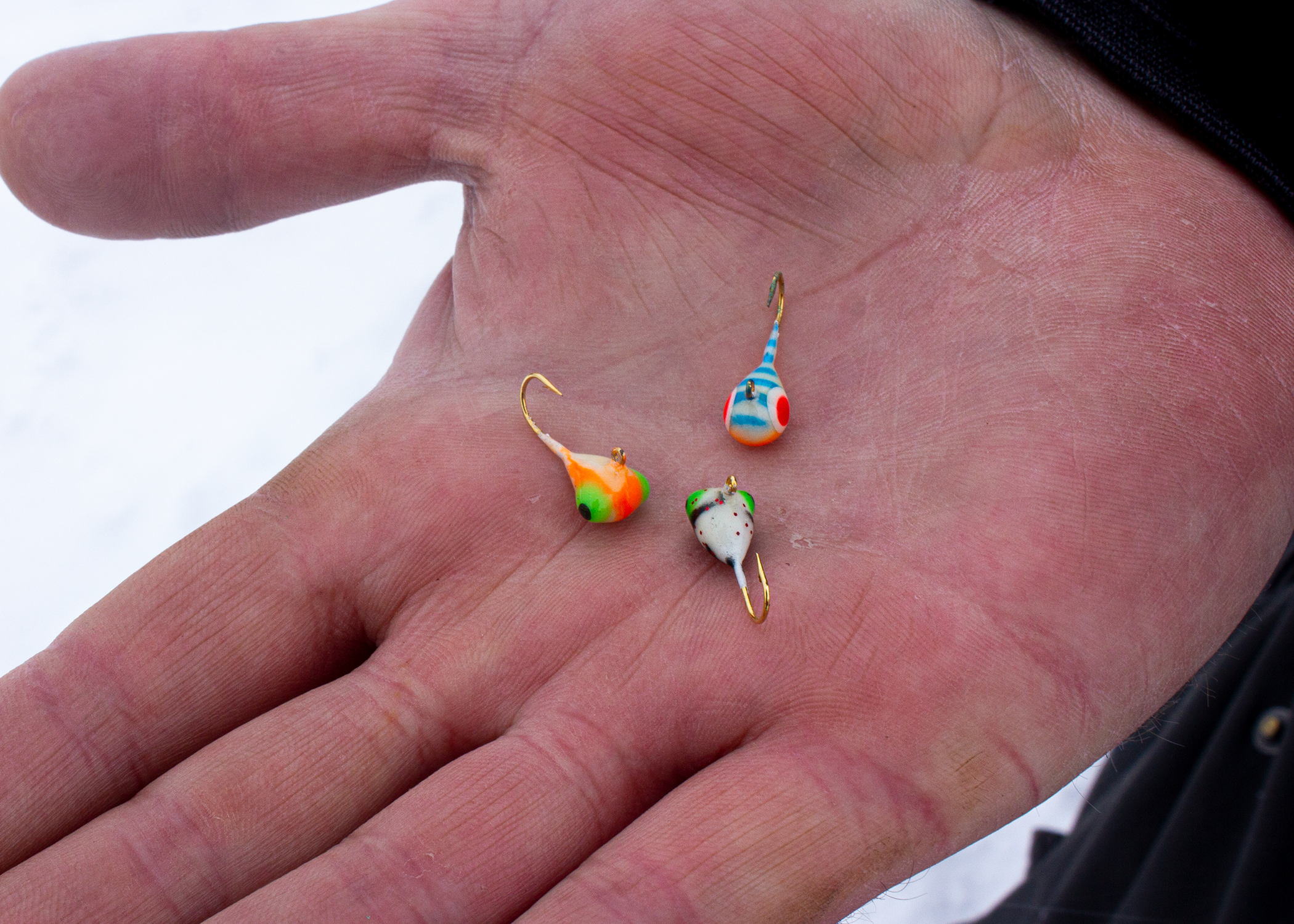
A basic starter assortment of lures might include:
- Small tungsten or lead jigs (in a few sizes and colors) for bluegill, crappie, and perch.
- Small spoons and swimming baits for walleye and trout.
- Live bait like waxworms, spikes, or minnows where legal and available.
You don’t need a hundred different baits—just a small, well-chosen selection that covers panfish and a couple of bigger species.
See our buying guide: Top Ice Fishing Lures: Must-Have Choices for Every Species
Essential Tools and Accessories
These simple tools make life on the ice easier:
- Ice scoop/skimmer: To clear slush out of your holes.
- Pliers and line cutters: For removing hooks and trimming line.
- Bucket or sled: To carry gear and double as a seat.
- Rod holders: Optional, but handy if you’re watching multiple lines or fishing with kids.
Electronics like flashers, sonar, or underwater cameras are incredibly helpful but not mandatory on day one. If your budget is tight, start without them and upgrade later.
Shelter, Seating, and Comfort Items
You can absolutely start ice fishing without a shelter, especially on mild days. But wind is your enemy. Options include:
- Fishing outside: Fine on calm, sunny days if you’re dressed properly.
- Flip-over shelter: Great for mobile anglers who drill lots of holes.
- Hub shelter: More room for groups or families, but less mobile.
A simple bucket, folding stool, or small chair helps keep you comfortable. If you use a propane heater inside a shelter, always ventilate and follow manufacturer safety guidelines.
Dressing for Success: Staying Warm and Comfortable
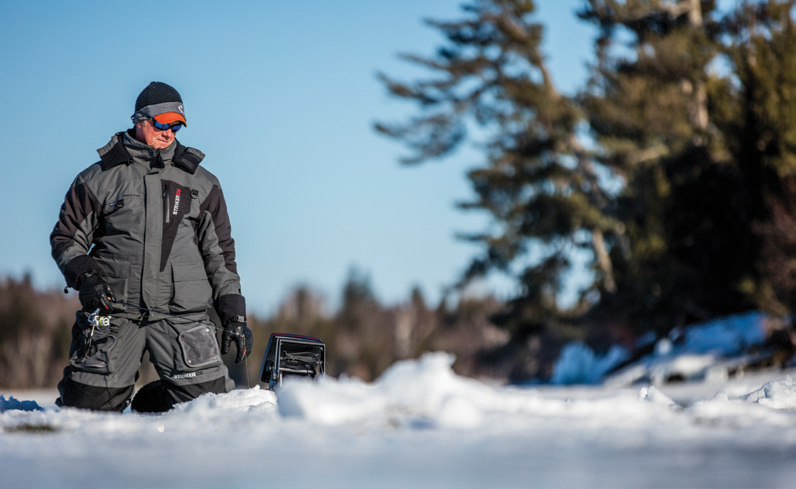
Being cold is the fastest way to decide you hate ice fishing. Good clothing is just as important as a good rod.
Layering Systems for Ice Fishing Beginners
Use a three-layer system:
- Base layer: Moisture-wicking long underwear (avoid cotton). Synthetic or merino wool works best.
- Mid layer: Insulating fleece or wool to trap heat.
- Outer layer: Windproof, waterproof jacket and bibs or snow pants.
This system lets you add or remove layers as temperatures and activity levels change. Overheating and sweating can make you colder later, so dress warm—but not so warm that you’re soaked inside your jacket.
Boots, Socks, and Foot Warmth
Cold feet can ruin even the best bite. For beginners:
- Choose waterproof, insulated boots designed for cold weather.
- Wear moisture-wicking socks (wool or synthetic) instead of cotton.
- Avoid boots that are too tight—room for warm air and circulation matters.
Disposable toe warmers can help on really cold days, especially if you’re not moving much.
See our selection of Ice Fishing Boots
Gloves, Headwear, and Face Protection
You’ll need at least two gloves or mitten options—one pair for warmth and one pair that allows enough dexterity to tie knots and handle fish. A warm hat, neck gaiter, or balaclava helps protect exposed skin from wind and cold. Sunglasses are also important to reduce glare and protect your eyes from the sun reflecting off the snow and ice.
Finding Fish: Simple Location Tips for Beginner Ice Anglers
You can have the best gear in the world and still get skunked if you’re fishing where there are no fish. Location is everything.
Start with Panfish and Simple Spots
For your first few trips, target panfish like bluegill, crappie, and perch. They’re widespread, willing biters, and often closer to shore than larger predators.
Common starting spots include:
- Shallow weed beds or the weed edge in 6–15 feet of water.
- Small bays and coves protected from current.
- Drop-offs where shallow flats break into deeper water.
Local tackle shops, fishing forums, and maps can point you toward good beginner-friendly lakes and bays. Many states now offer online depth maps for popular lakes.
Using Depth Maps and Structure
Even a basic contour map helps you find likely spots:
- Look for flats, humps, points, and inside turns.
- Early ice: fish shallow weeds and shorelines.
- Midwinter: transition to deeper flats and basin edges.
- Late ice: fish migrating back toward spawning bays.
A simple strategy is to drill a line or “grid” of holes along a depth change, then hop hole-to-hole until you connect with fish.
When Electronics Help—and When You Can Fish Without Them
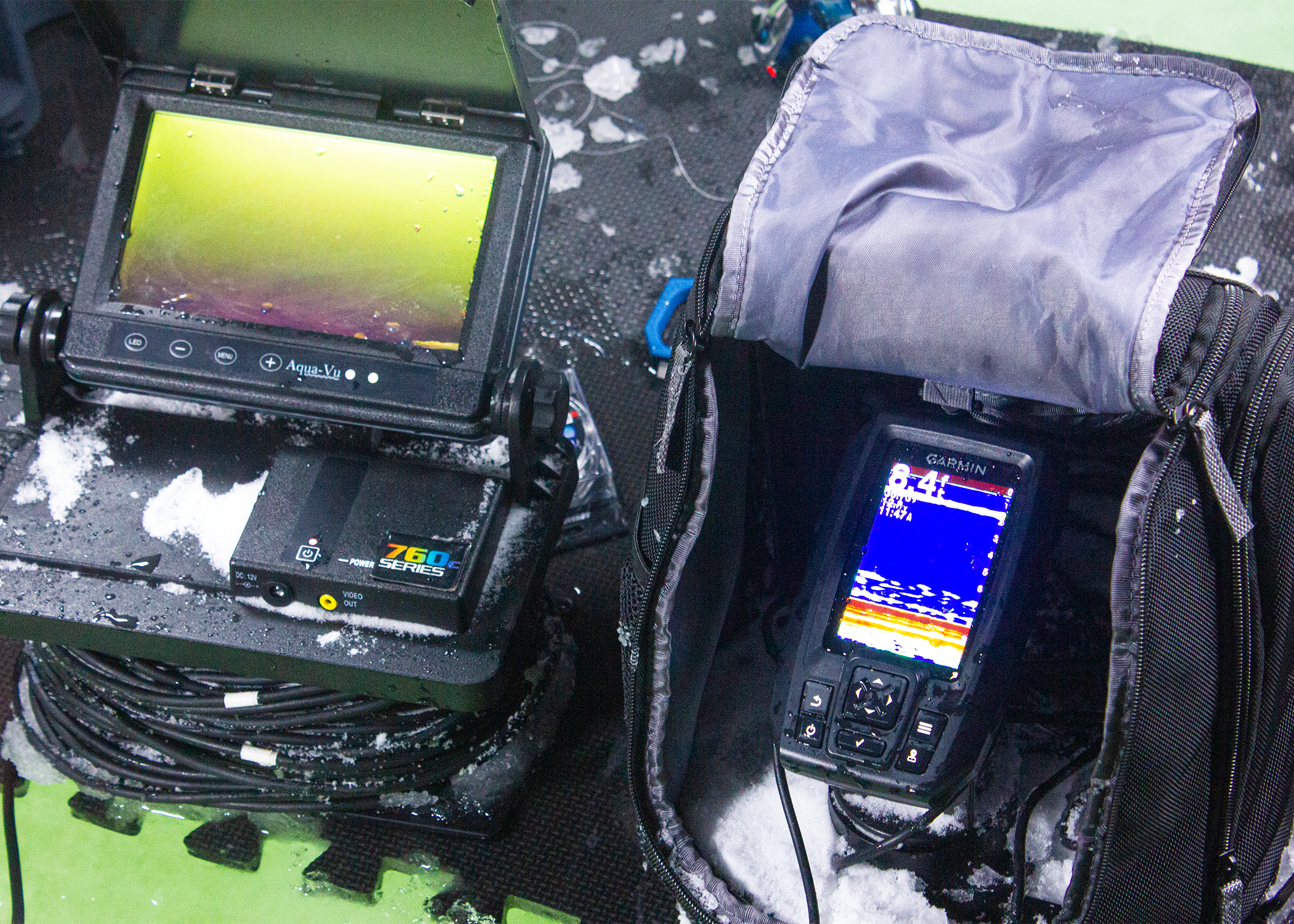
A flasher or sonar unit makes ice fishing easier by showing your depth, your lure, and fish. For beginners, seeing fish respond to your jig in real time is a huge confidence boost.
If electronics aren’t in the budget yet:
- Use a simple depth finder (clip-on weight) to check bottom depth.
- Pay attention to where other anglers are clustered (without crowding them).
- Move frequently if you don’t get bites within 15–20 minutes.
Basic Ice Fishing Techniques for Beginners
With safe ice, a decent spot, and basic gear in place, it’s time to actually catch fish. Keep your techniques simple to start.
Simple Jigging Cadences That Catch Fish
A basic jigging approach that works for many situations:
- Drop your jig to just above bottom, then reel up a foot.
- Lift the rod tip 2–4 inches and let the jig fall back on a semi-tight line.
- Pause for a few seconds.
- Repeat with occasional slightly higher lifts or shakes.
Watch your line and rod tip carefully—many bites are subtle. If you feel a “tick” or see the line move, gently lift the rod to set the hook.
Using Tip-Ups and Set-Lines
Tip-ups are devices that hold a line and flag and trip when a fish takes the bait. Check your local regulations on how many lines and tip-ups you can use. A simple beginner rig for pike or walleye includes:
- Main line on the tip-up spool.
- Swivel and leader (fluorocarbon or steel for pike).
- Single or treble hook with a live minnow, hooked lightly so it can swim.
Set the bait just off bottom, watch for flags, and give the fish a moment before gently pulling in the line to set the hook.
Learn more: Choosing an Ice Fishing Tip Up
Reading Bites and Setting the Hook
Beginner ice anglers often miss fish because they don’t recognize bites. Watch for:
- Line going slack unexpectedly (fish lifting the jig).
- Small “taps” or vibration in your rod tip.
- Line moving sideways under the hole.
When in doubt, gently lift and reel—many “false alarms” are actually fish you didn’t know were there.
Ice Fishing Etiquette, Regulations, and Conservation
Part of being a good ice angler is respecting the fishery and other people on the ice.
Checking Regulations Before You Go
Before your first trip, read your state or province’s fishing regulations:
- License requirements.
- Season dates for target species.
- Daily limits and size restrictions.
- Rules on number of lines, tip-ups, and bait.
Most fisheries agencies post their regulations and ice fishing safety tips online. Keep a digital or printed copy handy.
Etiquette on the Ice
Common-sense etiquette keeps everyone happy:
- Give other anglers space and avoid drilling right next to someone else without asking.
- Keep noise reasonable, especially early and late in the day.
- Don’t drive machines too close to others’ holes, shelters, or tip-ups.
- Pack out all trash, including line, bait containers, and food wrappers.
Responsible Harvest and Catch-and-Release
Harvesting fish for the table is part of the fun, but consider:
- Keeping enough for a meal, not filling the freezer every trip.
- Releasing larger “trophy” fish to help maintain quality genetics.
- Handling fish gently and quickly if you plan to release them.
This mindset helps ensure good fishing for years to come.
Common Mistakes Beginner Ice Anglers Make (and How to Avoid Them)
Safety Mistakes
Big red flags to avoid:
- Walking on ice without checking thickness.
- Fishing alone on early or late ice.
- Ignoring warning signs like slush, cracks with water, or rapidly changing temps.
Gear and Setup Mistakes
New anglers often:
- Buy too much gear before they know what they like.
- Use line that’s too heavy (e.g., 10–12 lb for panfish).
- Neglect to retie knots or check line for damage.
Start simple, learn what works, then upgrade or expand.
Fishing Technique Mistakes
Common technique issues include:
- Staying on unproductive holes too long instead of moving.
- Jigging too aggressively in cold, clear water.
- Not paying attention to subtle bites on light gear.
A good rule: if you don’t get a bite or see a fish on sonar in 15–20 minutes, move to a new hole.
FAQs – Tips for Beginner Ice Anglers
Is ice fishing safe for beginners?
Yes, ice fishing can be very safe if you respect ice thickness guidelines, carry basic safety gear, and fish with others. Always check local reports and test the ice as you go.
How thick should the ice be before I go ice fishing?
Many agencies recommend at least 4 inches of clear, solid ice for one person on foot. Thicker ice is needed for machines or vehicles. Always verify local recommendations and conditions.
What do I need for my first time ice fishing?
For your first trip, you mainly need: a simple rod and reel with appropriate line, a few jigs and baits, an ice scoop, a way to drill a hole (auger), and warm clothing. Safety gear like ice picks and a spud bar should also be on your must-have list.
What is the easiest fish to catch ice fishing as a beginner?
Panfish—bluegill, crappie, and perch—are usually the easiest for beginner ice anglers. They’re abundant, widespread, and often willing to bite simple jigs tipped with live bait.
Do I need a shelter to start ice fishing?
No, many beginners start by fishing outside. A shelter helps on windy or very cold days, but good clothing and a calm day can be enough for your first few outings.
Can I ice fish without a flasher or sonar?
Yes. Electronics make ice fishing easier and more efficient, but you can catch plenty of fish without them by focusing on proven spots, moving frequently, and using simple depth-finding methods.
What time of day is best for beginner ice anglers?
Early morning and late afternoon often produce the best bites, especially for walleye and crappie. Panfish can bite throughout the day, making them ideal for beginners learning the basics.
How cold is too cold for ice fishing?
That depends on your clothing, experience, and comfort level. If you’re properly dressed and have a shelter, you can fish safely in very cold conditions. As a beginner, it’s wise to start on milder days with lighter winds.
Conclusion: Start Your Ice Fishing Journey with Confidence
Ice fishing doesn’t have to be complicated or intimidating. With a few key tips for beginner ice anglers—respecting ice safety, investing in a basic but reliable gear setup, dressing in layers, targeting simple panfish spots, and practicing straightforward jigging techniques—you can turn that first trip into the start of a lifelong winter tradition.
Your next steps are simple:
- Pick a beginner-friendly lake or pond.
- Assemble a small, focused gear list instead of buying everything at once.
- Invite an experienced friend or consider hiring a guide for your first outing.
- Keep a log of where, when, and how you fished—and what worked.
If this guide helped you feel more prepared, share it with a friend who wants to try ice fishing.
Shop Ice Fishing Gear