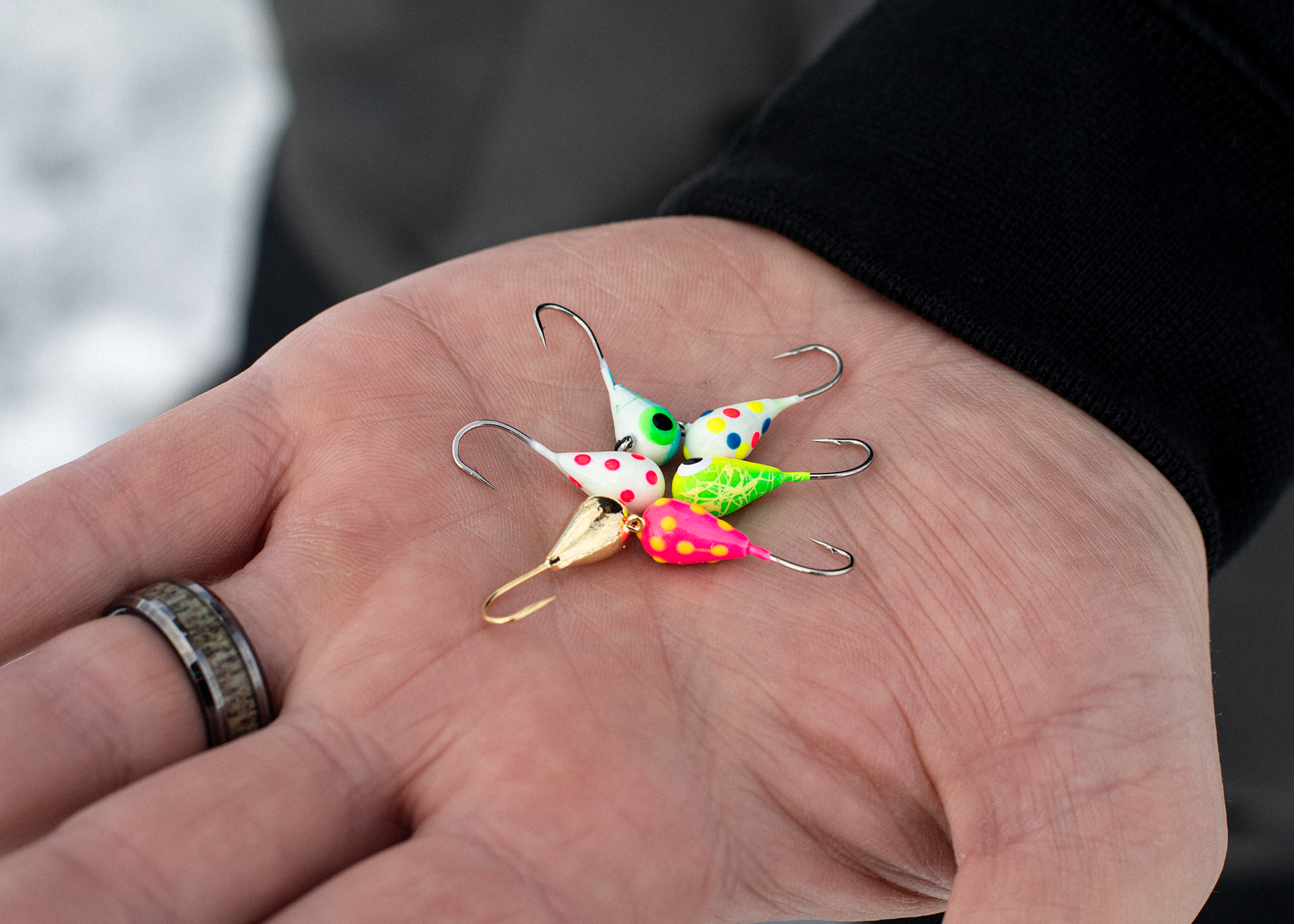

Icing Walleyes with a 1-2 Punch

Two jigs: attract, then close the deal. A bait-and-switch ice fishing system for walleyes that works nationwide.

Two jigs: attract, then close the deal. A bait-and-switch ice fishing system for walleyes that works nationwide.

Table of Contents

  • Why the 1-2 Punch Works for Ice Walleyes
  • Step 1: The Aggressive “Call-In” Lure
  • Step 2: The Finesse “Closer” Jig
  • Electronics Reading: The Key to Conversions
  • Tom Keenan’s 3 Tips
  • To Bobber, or Not
  • Best Aggressive Style Baits (Call-In Options)
  • FAQs: 1-2 Punch for Walleyes
  • Wrap-Up: Turn Lookers into Hookups

Why the 1-2 Punch Works for Ice Walleyes

Throughout history, there have been plenty of famous dynamic duos. Batman and Robin, Roy Rogers and Trigger, and the list goes on. When it comes to ice fishing walleyes, the real dynamic duo is a call-in lure that draws fish into your sonar cone, followed by a simple closer jig that seals the bite.

Think of it as a classic presentation: the aggressive lure is the “attractor,” and the subtle jig is the “closer.” Remove the attractor from the system, and many days you’ll never even see those walleyes show up on your electronics.

This mirrors open-water “attractor” concepts. Salmon charters often run an oversized attractor setup that doesn’t catch many fish itself, but boosts bites on the rest of the spread. Ice walleyes behave similarly: a loud, aggressive lure often creates the opportunity, while the finesse jig finishes it.

Step 1: The Aggressive “Call-In” Lure

In open water, you can drift or troll to eventually run into fish. Ice anglers don’t have that luxury—your bait is only covering a small area. That’s why a call-in bait matters. The most common “call-in” lures are rattle spoons, blade baits, and balanced swimmers like a Rapala Jigging Rap.

These lures can catch fish by themselves, but they’re often more efficient at triggering fish to commit on a better “closer” presentation. FLW walleye pro Tom Keenan (Hatley, WI) summarizes it bluntly: We rip aggressive lures such as Jigging Raps or rattle spoons so hard you nearly hit the roof of your shack. But that is what it takes many days to call fish to your hole.

How to work the call-in lure

  1. Rip aggressively for a short burst to draw attention.
  2. Pause for a few seconds—many walleyes show up on electronics right after the pause.
  3. Watch the reaction on your sonar/flasher to decide whether to keep teasing or switch to the closer.

Use sonar clues to identify what’s below

If a mark comes in and leaves quickly, you usually need to slow down or switch to the closer sooner. Walleyes often “investigate and exit” faster than perch. Marks that hang out and move up and down with your lure—especially in groups—are often perch. The faster you interpret this on ice electronics, the more fish you convert.

Keenan’s 3-step “call-in to commit” sequence

  1. Give the fish a few seconds. A motionless pause often triggers an aggressive strike.
  2. Shake slowly and rise. Keep vertical movement subtle—through ice, small rod movements translate bigger than you think.
  3. If it quits following, pop up 6–12 inches and hold. This is a last-ditch trigger on the aggressive lure. Many experienced anglers skip this and switch straight to the closer to avoid spooking fish. 

Step 2: The Finesse “Closer” Jig

The aggressive lure’s job is to put walleyes under you. Any fish you catch on it is a bonus. But a closer jig—already down and ready—often catches fish that would otherwise flare off and vanish.

Best closer jig sizes (match depth and current)

  • Great Lakes/current: 1/8–3/8 oz plain leadhead jig (adjust for depth and flow).
  • Inland lakes/low current: long-shank 1/16 oz jig is often ideal.
  • Spooky fish or smaller walleyes: an oversized panfish jig can work—just ensure hook strength is walleye-worthy.

The psychology is simple: just like a dog drops one toy to investigate a new one, walleyes often lose interest in the aggressive lure and slide to the closer. But don’t remove the call-in lure from the process—it doesn’t just attract fish, it holds attention.

Want more options for your finesse setups? Browse Ice Fishing Gear and essentials.

Keenan’s 3-step closer sequence (subtle wins)

  1. Give it a few seconds. Many walleyes simply inhale the suspended jig—take up slack and set.
  2. Micro-shake and rise. Subtle pulses only. Many fish spook from hard pops at this stage.
  3. If separation appears, pop 6–12 inches and hold. Last-ditch trigger—either immediate hookup or the fish fades out.

Bonus trick: a suspended “donkey rod”

Some lakes have a small percentage of walleyes roaming suspended mid-column—often the biggest fish. Keenan’s solution: keep a second rod suspended halfway down. Suspended fish may commit instantly. On tougher days, dropping that rod to fish that followed the call-in lure below can spook them—so treat it as a situational tool. 

Electronics Reading: The Key to Conversions

The 1-2 punch works because it’s a feedback loop: you call fish in, read their behavior on your electronics, then choose the exact level of finesse to convert. If you’re not watching your flasher/sonar closely, you’re leaving bites on the table.

  • Fast in, fast out: often walleyes—switch to subtle sooner.
  • Follows without closing: slow down, reduce vertical motion, consider smaller closer jig.
  • Multiple marks hovering: often perch—adjust target and cadence accordingly.

Tom Keenan’s 3 Tips (Quick Wins)

  1. Turn sensitivity slightly higher than normal. Helps reveal fish on the outside edge of the cone and higher in the column.
  2. Use a small jig instead of a bare hook. The added weight slows the minnow just enough to improve catchability.
  3. Always work up. Dropping the jig often loses the fish—keep them following upward until they commit or spook.

To Bobber, or Not

Inside a shack, a bobber can be an advantage—especially after a cold front—because it helps you hold a bait nearly motionless while still adding micro action. Outside, bobbers can freeze quickly. When fish are aggressive, a bobber can slow you down and make depth changes annoying, so many anglers skip it.

Aggressive Style Baits (Call-In Options)

These are reliable “attractor” baits that can pull walleyes into your cone—and sometimes close the deal too.

  • Rapala Jigging Rap — Balanced swimmer that darts in a semicircle. If fish shy away, downsizing often helps.
  • Rapala Rippin’ Rap — Excellent drawing ability thanks to loud rattles and a flashy shimmy on the rip and fall. Smaller sizes often get bit better. 
  • Silver Streak UV & Glow Rattle Spoon — High-visibility and loud; great for calling fish from distance.
  • Northland Buckshot Spoon — A rattle spoon that can call fish and sometimes act as a closer with minimal action.
  • Acme Kastmaster Spoon — Classic flutter and flash with a larger profile; can close bites when worked subtly.
  • Reef Runner Cicada — Often overlooked for ice; the curved blade can call fish when others fail. Smaller sizes can be a “secret closer.”

FAQs: 1-2 Punch Ice Fishing for Walleyes

What is the “1-2 punch” for ice walleyes?

It’s a bait-and-switch system: use an aggressive call-in lure to draw walleyes under your hole, then catch them on a subtle closer jig.

How long should I jig the call-in lure before switching?

Long enough to draw marks into your cone—often short aggressive bursts followed by pauses. If a walleye follows but won’t commit, switch to the closer sooner.

What’s the best closer bait for walleyes through the ice?

A simple leadhead jig matched to depth/current is hard to beat. In low current, a long-shank 1/16 oz jig is often ideal; in deeper/current situations, go heavier.

Why do walleyes follow and then leave?

Common causes are too much vertical movement, too aggressive cadence once the fish is close, or a bait profile that looks wrong at close range. Slow down and make subtle movements.

Wrap-Up: Turn Lookers into Hookups

The 1-2 punch for ice fishing walleyes is deadly because it matches how fish behave under the ice: first they’re curious (call-in lure), then they commit when the meal looks easy (closer jig). Once you build confidence reading your electronics and adjusting cadence, you’ll convert more of those “drive-by” marks into bites.

Shop Ice Fishing Gear

  • Ice Rods
  • Ice Reels
  • Ice Electronics
  • Ice Baits & Lures