

Ice Fishing With Plastics: How to Rig, Fish, and Catch More All Winter
By: FishUSA Staff
December 16, 2025
If your minnows keep freezing, your waxies are turning to mush, and your bites die as pressure builds on the ice, you’re not alone. Many anglers still rely almost entirely on live bait in winter—and they’re quietly getting outfished by the folks who’ve dialed in ice fishing with plastics.
If your minnows keep freezing, your waxies are turning to mush, and your bites die as pressure builds on the ice, you’re not alone. Many anglers still rely almost entirely on live bait in winter—and they’re quietly getting outfished by the folks who’ve dialed in ice fishing with plastics.
Soft plastics for ice fishing are durable, versatile, and incredibly effective when the water is just above freezing and fish are fussy. But you need the right shapes, colors, and presentations to make them work.
In this guide, you’ll learn:
- Why ice fishing plastics can be more effective than live bait
- The best soft plastics for ice fishing panfish, walleye, and predators
- How to rig plastics on jigs, droppers, and set-lines
- Proven jigging cadences and species-specific tactics
- Common mistakes that cost you bites—and how to fix them
By the end, you’ll have a complete playbook to confidently fish plastics all winter and put more fish on the ice.
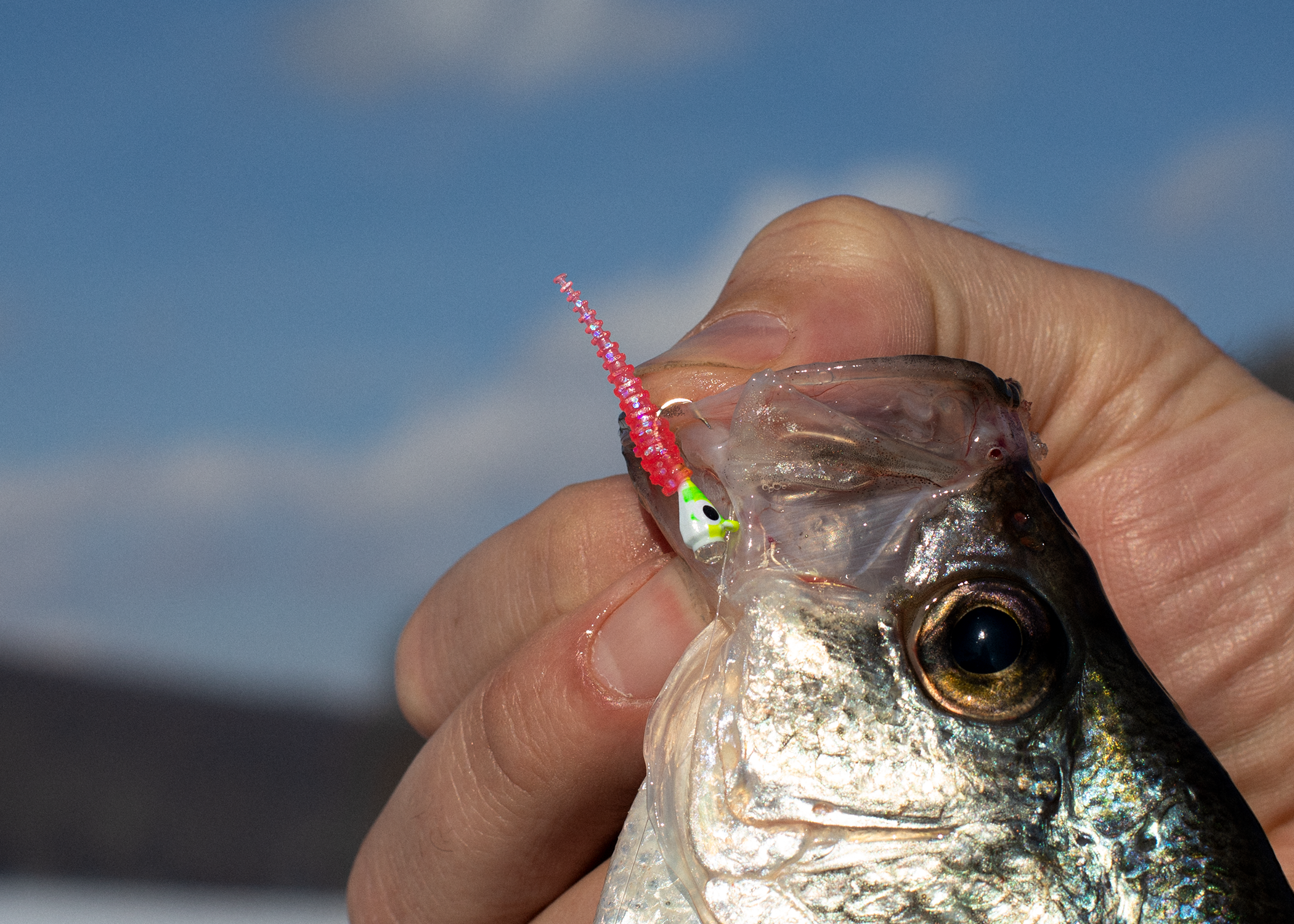
Table of Contents
- Why Ice Fishing With Plastics Works So Well
- Types of Soft Plastics for Ice Fishing
- How to Rig Plastics for Ice Fishing
- Ice Fishing Techniques With Plastics
- Dialing in Your Gear for Ice Fishing Plastics
- Species-Specific Tips for Ice Plastics
- Common Mistakes When Ice Fishing With Plastics
- FAQs About Ice Fishing With Plastics
- Final Thoughts: Tie On a Plastic and See the Difference
Why Ice Fishing With Plastics Works So Well
How Plastics Behave in Cold Water
In water that’s barely above freezing, fish don’t want to chase far or burn energy. Soft plastics shine here because they move with very little input.
A thin, soft tail quivers with the slightest hand movement or current. Even when you hold the rod still, micro-vibrations from your hand or the line are enough to breathe life into the bait. That subtle motion often looks more natural than a struggling live bait that just hangs there.
Advantages Over Live Bait Under the Ice
There’s nothing wrong with live bait—but ice fishing plastics offer real advantages:
- Durability: One plastic can survive dozens of fish. No rebaiting after every nibble.
- Consistency: The profile and color are exactly what you want, every time.
- Versatility: Swap from a bug imitation to a minnow profile in seconds.
- Less hassle: No aerators, no sloshing buckets, no frozen bait.
On heavy-use weekends when everyone is pounding the same holes, those subtle, controlled presentations with plastics can turn lookers into biters.
When to Choose Plastics vs. Live Bait
Think of plastics as your “precision tools”:
- Plastics shine when fish are pressured, finicky, or you’re hole-hopping aggressively.
- Live bait can still win on brutal cold fronts when fish absolutely refuse to move.
A powerful combo is to start with plastics—if you’re getting lookers but no takers, tip the plastic with a single maggot or minnow head for scent and taste.
Types of Soft Plastics for Ice Fishing
Not all plastics are created equal. Under the ice, profile and softness matter more than fancy creature designs.
Finesse Plastics for Panfish
For bluegill, sunfish, and crappie, think small and subtle:
- Micro worms and larvae (1–1.5") for bluegill and sunfish
- Tiny minnow profiles (1.5–2") for crappie and perch
- Straight tails that quiver instead of pulsing aggressively
Thin, needle-like tails give you maximum movement with minimal effort. They’re deadly when fish are staring the bait down and deciding whether to inhale.
Best Crappie & Panfish Ice Fishing Lures: Expert Picks for Every Condition
Walleye and Sauger Plastics
Walleye prefer a larger, meaty meal:
- Shad-style or minnow-style plastics in the 2.5–4" range
- Forked or split tails that kick gently on the lift
- Slightly thicker bodies that match common forage like shiners or smelt
Pair these with appropriately sized jig heads for vertical jigging or subtle lift-drop sequences.
Best Ice Fishing Lures for Walleye: Essential Picks for Winter Success
Plastics for Pike, Trout, and Other Predators
Big predators want a bigger profile and more displacement:
- Tubes and paddletails for lake trout and pike
- 3.5–5" swimbaits on heavy jig heads for deep water
- Bulkier bodies that push water and draw attention
These baits are especially effective when fished near structure, steep breaks, and bait schools you spot on electronics.
Scented vs. Unscented Ice Plastics
Scent can be a difference-maker in cold water:
- Scented plastics are great when fish are sniffing but not fully committing.
- Unscented plastics still work very well but benefit from a dab of scent gel.
Whatever you choose, keep plastics away from gas, sunscreen, and other contaminants. Store them in dedicated bags or boxes, not in the same pocket as your fuel bottle.
How to Rig Plastics for Ice Fishing
Jig and Plastic Combos
This is the backbone of ice fishing with plastics:
- Use tungsten jigs for fast drop and a small profile in deep water.
- Use lead jigs when you want a slower fall or are fishing shallow.
- Match jig weight to depth and line size—too heavy kills the action; too light and you can’t stay in the zone.
Thread the plastic straight on the hook so it hangs naturally. A kink or bend destroys the action and results in short strikes.

Deadsticking Plastics vs. Active Jigging
You can fish with plastics in two main ways:
- Deadstick: A plastic on a light jig under a rod holder. Let it sit with only natural sway. Great for panfish and walleye that want a stationary meal.
- Active jigging: You work the rod; the plastic comes to life. Use small hops, shakes, and pauses to trigger reaction bites.
A common strategy is a 1–2 punch: actively jig a brighter plastic in one hole to draw fish in, and keep a more natural-colored plastic deadsticked nearby for neutral fish.
Droppers, Tandem Rigs, and Attractor Setups
To up your odds:
- Tie a spoon or flashy jig above, then run a dropper line 12–24" below to a finesse plastic.
- Fish hit the plastic while the spoon acts as a visual and sonic attractor.
- Tandem rigs with two plastics at different heights are excellent for schooling crappie or perch.
Check your local regulations on multiple hooks or baits per line before using these setups.
Color and Size Selection
General guidelines:
- Clear water: Natural colors—browns, olives, smoke, and subtle sparkle.
- Stained water: Chartreuse, glow, white, and high-contrast combos.
- Low light: Glow plastics with just enough flash to stand out.
Start with a proven “confidence” color, and change either size or color when fish are looking but not eating—never both at the same time, so you know what made the difference.
Ice Fishing Techniques With Plastics
Finesse Jigging for Bluegill and Crappie
Panfish often inspect a bait for several seconds before committing. Your job is to:
- Keep movements tight and controlled—wiggles rather than big pops.
- Use your spring bobber or rod tip as a shock absorber for ultra-light bites.
- Slowly work from bottom up until you find the level where they’re feeding.
When a fish appears on the flasher, hold the bait just above it and quiver. Bluegill and crappie almost always prefer to feed upward.
Aggressive Jigging for Walleye
Walleye respond well to a more assertive cadence:
- Drop to the bottom and pound it a few times to kick up sediment.
- Lift the bait 6–12" off the bottom.
- Use a lift-drop or snap-and-fall action to trigger reaction strikes.
- Pause for 3–5 seconds between sequences.
If you see fish follow but not hit, lengthen the pauses and reduce the height of your lifts. When they commit, it’s often at the top or bottom of the lift.
Horizontal Plastics for Suspended Fish
Horizontal jigs that hang level in the water are killer for suspended crappie and roaming walleye:
- Let the bait glide and swing on the fall rather than dropping straight.
- Hold it in place with tiny shakes when it reaches the fish’s level.
- Slowly raise it to lead fish upward—make them chase just a bit.
Tip-Up and Set-Line Strategies With Plastics
You can incorporate plastics into tip-up and set-line systems, too:
- Add a small plastic as a teaser above a live minnow.
- Use glow plastics in low light or overnight for extra visibility.
- In heavily pressured lakes, a plastic-only set-line can outproduce bait when fish have seen thousands of minnows.
Dialing in Your Gear for Ice Fishing Plastics
Best Ice Rods and Reels
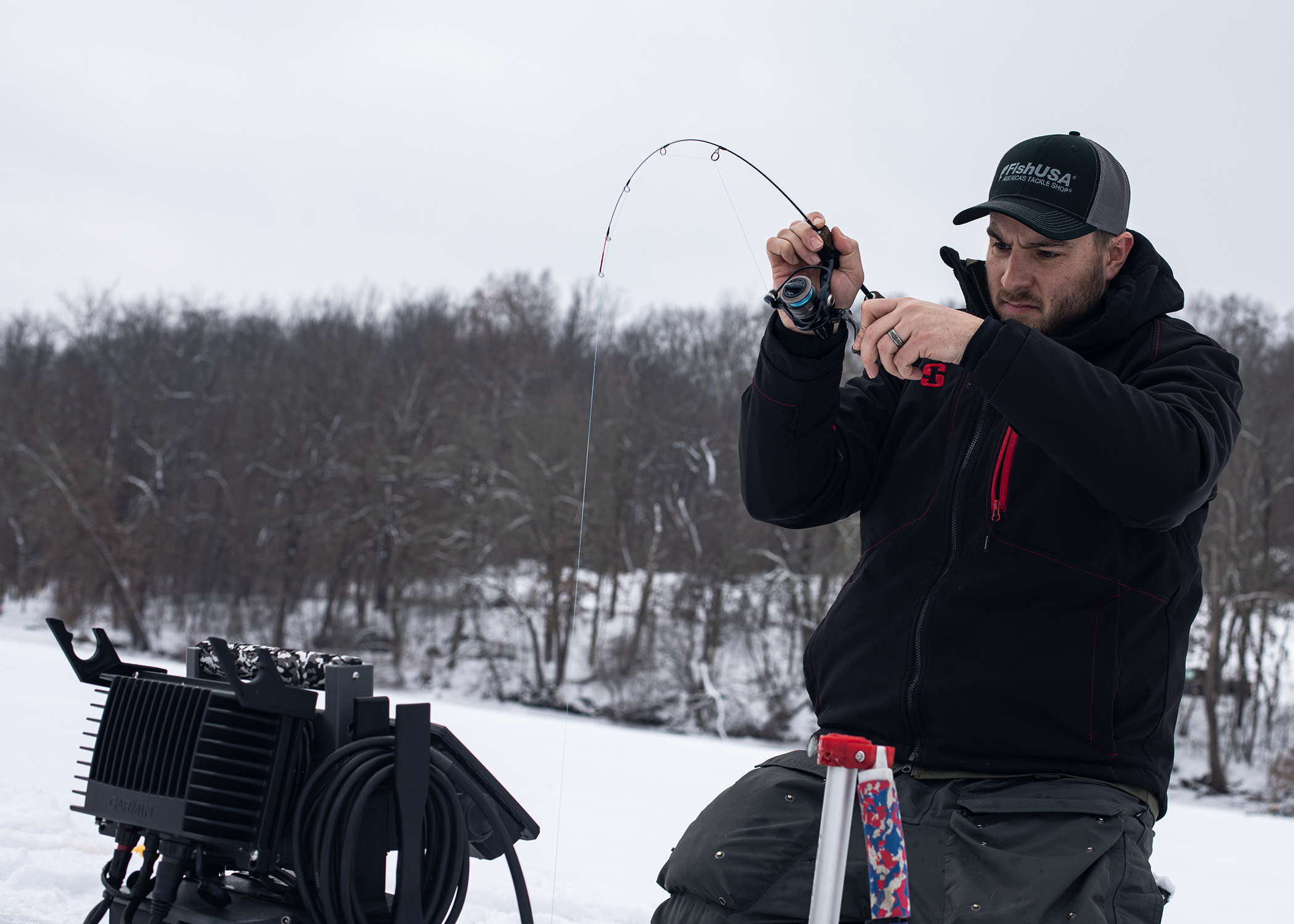
For plastics, sensitivity matters:
- Panfish: 24–30" UL or Light power, fast tip.
- Perch/Crappie/Walleye: 28–32" Light to Medium-Light, fast tip.
- Walleye and bigger: 30–36" Medium, fast or extra-fast.
Pair with a small spinning reel (500–1000 size) with a smooth drag. Every headshake and bump should transmit cleanly to your hand.
Check out our buying guides:
- The Best Ice Fishing Rods: Reliable Gear for Every Ice Angler
- The Best Ice Fishing Reels: Top-Rated Options for Every Angler
Line Choice: Mono, Fluorocarbon, or Braid?
Each has its place:
- Mono: Great for panfish; a bit of stretch protects tiny hooks and helps keep fish pinned.
- Fluorocarbon: Low-visibility and sensitive; excellent leader material.
- Braid: Super sensitive with almost no stretch; use with a fluorocarbon leader.
Shop our selection of ice fishing line.
A common setup for ice fishing with plastics is light braid (4–6 lb) main line and a 2–4 lb fluoro leader for panfish or 6–8 lb for walleye.
Learn more about line choice for ice fishing: Top Ice Fishing Lines: Best Picks for Strength, Sensitivity, and Freeze Resistance
Electronics: Seeing Your Plastic on Sonar
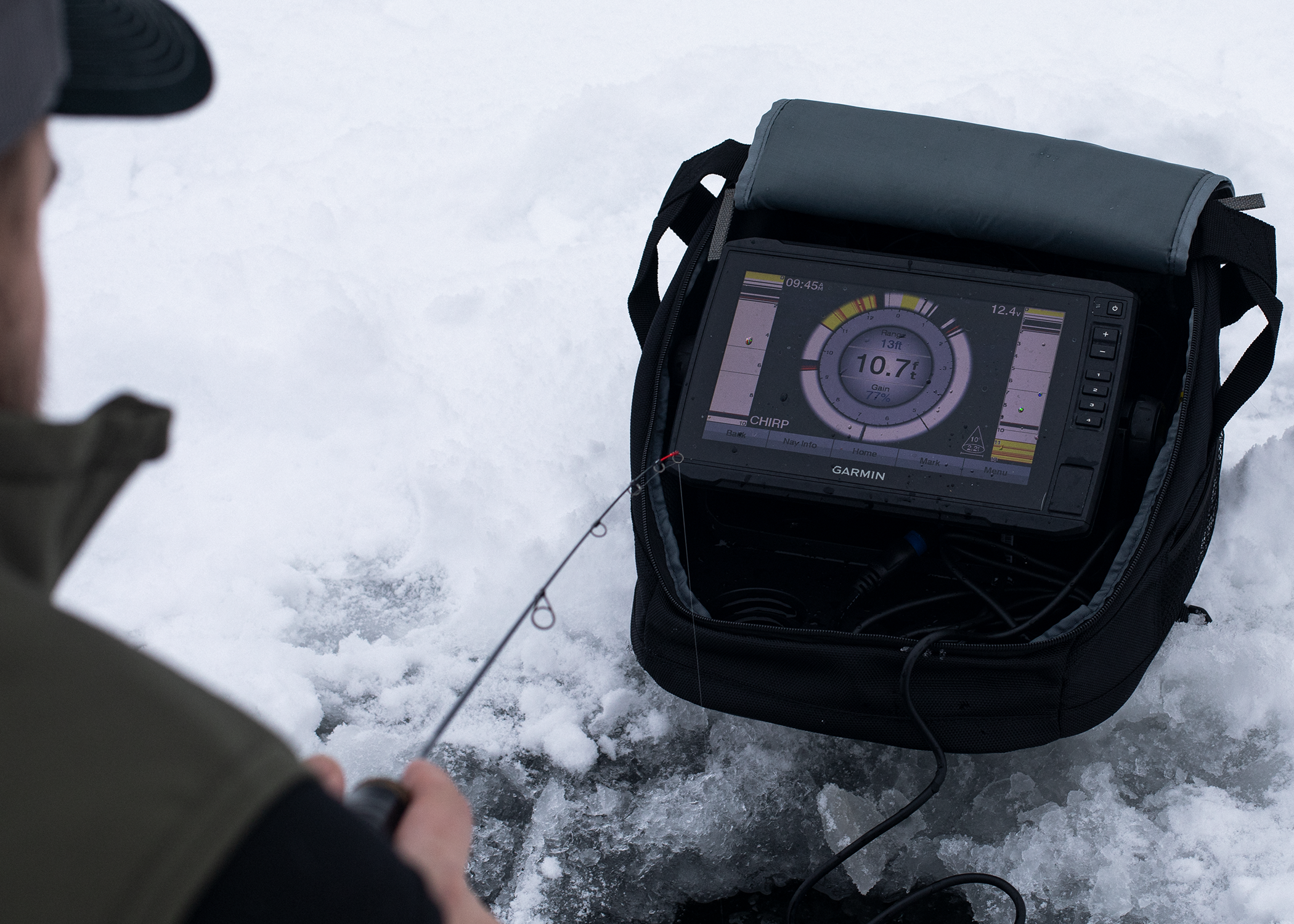
If you use a flasher or sonar:
- Increase sensitivity until you can see your tiny plastic clearly.
- Watch how fish respond—follow, stop, rise, or drop away.
- Adjust jigging cadence based on their behavior, not guesswork.
Electronics turn plastic fishing into a video game—you can literally watch how small changes in movement translate into bites.
Storing and Caring for Ice Plastics
Cold can stiffen plastics if you’re not careful:
- Keep plastics in their original bags or in quality compartment boxes.
- Store them in an inside pocket or an insulated bag to prevent freezing.
- Avoid mixing different plastic types that can melt or bleed colors.
Label bags by size, style, and color so you can grab the right option quickly when the bite changes.
Species-Specific Tips for Ice Plastics
Bluegill and Sunfish
- Tiny bug or larva-style plastics on 2–4 mm tungsten jigs.
- Keep movements small: a gentle quiver is often all you need.
- Downsize when they’re nipping the tail but not inhaling.
Crappie
- 1.5–2" minnow plastics with thin, wispy tails.
- Focus on suspended schools; rarely on the bottom.
- Experiment with glow and natural colors, especially at dusk and after dark.
Perch
- Small minnow or worm plastics near the bottom.
- Pound bottom, then lift 2–6" and hold.
- When perch are aggressive, you can get away with slightly larger plastics to target bigger fish.
Walleye
- 2.5–4" minnow or shad-style plastics on appropriately sized jigs.
- Focus on low-light windows—early morning, late evening, and overnight.
- Try plastic-only rigs on pressured lakes where fish have seen endless live minnows.
Common Mistakes When Ice Fishing With Plastics
Using Plastics That Are Too Big or Too Stiff
Big baits look appealing in the package, but often fail under the ice. Cold water slows everything down. If you’re getting follows but no bites, downsize and switch to a softer plastic.
Over-Jigging in Cold Water
Huge, fast snaps might work on aggressive fish, but most days you’re better off with:
- Small lifts of 1–3"
- Tight shakes instead of big twitches
- Longer pauses, especially when fish are nose-to-nose with your bait
Ignoring Color and Water Clarity
Fishing the same color all day is a recipe for mediocrity. Rotate through a few proven options:
- Natural / transparent
- Bright / chartreuse
- Glow / white
Keep notes on which color works in specific conditions so you can repeat success.
Poor Hook and Jig Selection
A plastic that’s too large for the jig, or a hook gap that’s too small, leads to missed fish. Make sure:
- The hook gap is wide enough to penetrate even with plastic on it.
- The jig isn’t so heavy that it turns your finesse plastic into a rock.
FAQs About Ice Fishing With Plastics
Can you ice fish with only plastics and no live bait?
Absolutely. Many anglers now do entire trips with only ice fishing plastics and catch plenty of fish. Plastics are especially effective when you’re mobile and hole-hopping.
What are the best plastics for ice fishing panfish?
Micro worms, larvae, and tiny minnow profiles in the 1–1.5" range are top producers. Focus on soft, thin tails and small tungsten jigs.
Do scented plastics work better under the ice?
Often, yes—especially on tough bites. Scent can convince a fish to hold on a split second longer, giving you time to set the hook.
What color plastics work best in clear vs. stained water?
Clear water: natural, translucent, subtle sparkle.
Stained water: bright colors (chartreuse, orange) and glow.
How do you keep plastics from freezing?
Store them in inner pockets or insulated tackle bags. Avoid leaving them exposed on the ice or in open boxes.
Final Thoughts: Tie On a Plastic and See the Difference
Ice fishing with plastics isn’t a gimmick—it’s a proven way to catch more fish, especially when pressure is high, and live bait alone isn’t getting it done.
Start simple:
- Pick a few finesse plastics for panfish and a couple of minnow plastics for walleye.
- Match them with good tungsten jigs and sensitive rods.
- Experiment with subtle jigging cadences and color changes.
Once you build confidence in a few plastic setups, you’ll wonder how you ever fished through the ice without them.
If this guide helped, share it with a buddy who’s still hauling buckets of minnows.
Shop Ice Fishing Gear