

Tip-Up Strategies: Spreading Lines, Setting Depth, and Hooking More Fish
By: FishUSA Staff
February 10, 2026
You can tell a lot about an ice angler by how their tip-ups are set. Randomly scattered flags usually mean random results. A precise spread that follows contour lines and key structure tells you someone is running real tip-up strategies—and those are the anglers quietly stacking walleyes, pike, and trout while everyone else waits on dead water.
You can tell a lot about an ice angler by how their tip-ups are set. Randomly scattered flags usually mean random results. A precise spread that follows contour lines and key structure tells you someone is running real tip-up strategies—and those are the anglers quietly stacking walleyes, pike, and trout while everyone else waits on dead water.
This guide is for experienced ice fishermen who already own tip-ups and want to turn them from “set-and-forget” gadgets into a true system. We’ll dig into advanced ice fishing tip-ups tactics: how to spread lines across structure, set the perfect depth for each species, and convert more flags into landed fish with smart rigging and hook-set mechanics.
If you’re ready to move beyond “plop a few tip-ups anywhere and hope” and start treating your flags like a scouting network, this is your playbook.
Table of Contents
- Why Tip-Ups Are More Than Just “Extra Lines”
- Advanced Tip-Up Strategies for Spreading Lines
- Setting Tip-Up Depth: Precision Beats Guessing
- Rigging Tip-Ups: Bait, Leaders, and Quick-Strike Systems
- Flag-to-Fish Conversion: Hooking and Landing More Fish
- Fine-Tuning Tip-Up Performance: Sensitivity, Stealth, and Reliability
- Species and Scenario-Specific Tip-Up Strategies
- Regulations, Ethics, and Practical Considerations
- FAQs – Tip-Up Strategies, Spreads, and Hooking More Fish
- Conclusion: Turn Random Flags into a Tip-Up System
Why Tip-Ups Are More Than Just “Extra Lines”
When Tip-Ups Outperform Jigging (and When They Don’t)
Tip-ups shine any time you need to cover water and give fish a longer window to find your bait. They’re especially lethal for:
- Pike and big predators: Patrolling weed edges, funnels, and inside turns with large live or dead bait.
- Walleyes: Working breaklines and flats during low light while you jig nearby.
- Perch and other panfish: When you want a “bonus” line on the edge of a school or off in deeper water.
- Lake trout and trout: Suspended fish roaming deep basins where a deadbait or large minnow can tempt giants all day.
Where tip-ups don’t shine is when fish are concentrated in tiny spots that respond better to constant jigging, or during ultra-finicky bites where subtle jig cadence matters more than a stationary bait. The key is to treat tip-up strategies as part of a bigger system: jigging to trigger, tip-ups to search and soak.
Types of Tip-Ups and What They Mean for Strategy
All tip-ups hold line and trip a flag, but design affects how and where you use them:
- Traditional cross-style tip-ups: Simple, reliable, easy to read. Great general-purpose tools.
- Thermal tip-ups: Cover the hole and reduce freeze-up and light penetration—ideal for shallow, spooky fish or extreme cold.
- Hybrid/jigging-style tip-ups: Combine a rod/reel with a flag system, letting you fight fish on a rod while still running a “set line.”
Understanding each style lets you match your ice fishing tip-ups to the structure, temperature, and species on a given day.
If you need help choosing a tip-up, refer to our buying guide: Best Ice Fishing Tip-Ups: Top Picks for Every Angler’s Style
Advanced Tip-Up Strategies for Spreading Lines
Map the Structure Before You Drop a Single Flag
Random tip-up placement is the number one mistake I see on the ice. Before drilling, study your lake map (chip, app, or paper):
- Identify points, breaks, and humps that connect shallow feeding areas to deeper basins.
- Look for inside turns, saddles, and funnels that naturally concentrate fish movement.
- Note weedlines and transitions (hard-to-soft bottom, sand-to-mud) that mark high-percentage travel corridors.
Your tip-ups should trace these structures—not sit in random circles.
Depth-Contour and “Spoke” Spreads
Two of the most effective tip-up strategies for covering water are contour spreads and spoke patterns.
Contour spread:
- Follow a specific depth (say 18 feet) around a point or reef with 3–5 tip-ups.
- This shows you whether fish are traveling that precise edge and if flags consistently pop along it.
Spoke pattern:
- Pick a central area (top of a hump or mid-depth flat).
- Run tip-ups in “spokes” radiating out in different directions and depths—e.g., 12, 18, 24, and 30 feet.
- This quickly reveals which depth/edge combo holds active fish.
Once you see a pattern—say most walleyes coming on the 24-foot contour—you can collapse the spread and cluster more lines along that depth or edge.
Using Wind, Current, and Travel Direction
On larger lakes and reservoirs, wind and subtle current influence how bait and fish move. Advanced anglers set ice fishing tip-ups with that in mind:
- On windswept points, run tip-ups along the upwind edge where bait piles up and predators ambush.
- In current areas (within legal and safe limits), follow the current’s path around bends and funnels.
- On flats, align spreads along likely walleye travel lanes between the basin and shallows.
Adjusting Your Spread Based on Early Flags
The first hour is reconnaissance. Every early flag gives you data:
- Where was the tip-up? Shallow, deep, on an inside turn, on the point’s tip?
- What species and size bit? Walleyes vs pike vs perch will change your plan.
- What time did it go? Dawn edge, high sun, or dusk push?
Use that information to move underperforming tip-ups toward the productive zone. Keep one or two “scouts” experimenting at different depths or edges to avoid tunnel vision.
Setting Tip-Up Depth: Precision Beats Guessing
Species-Specific Depth Zones
Depth is where experienced anglers separate from casual ones. General guidelines (which you’ll refine by lake and conditions):
- Walleyes: Often near breaklines and flats in 10–30 feet. Early/late they slide shallower; mid-day they may move deeper or suspend just off bottom.
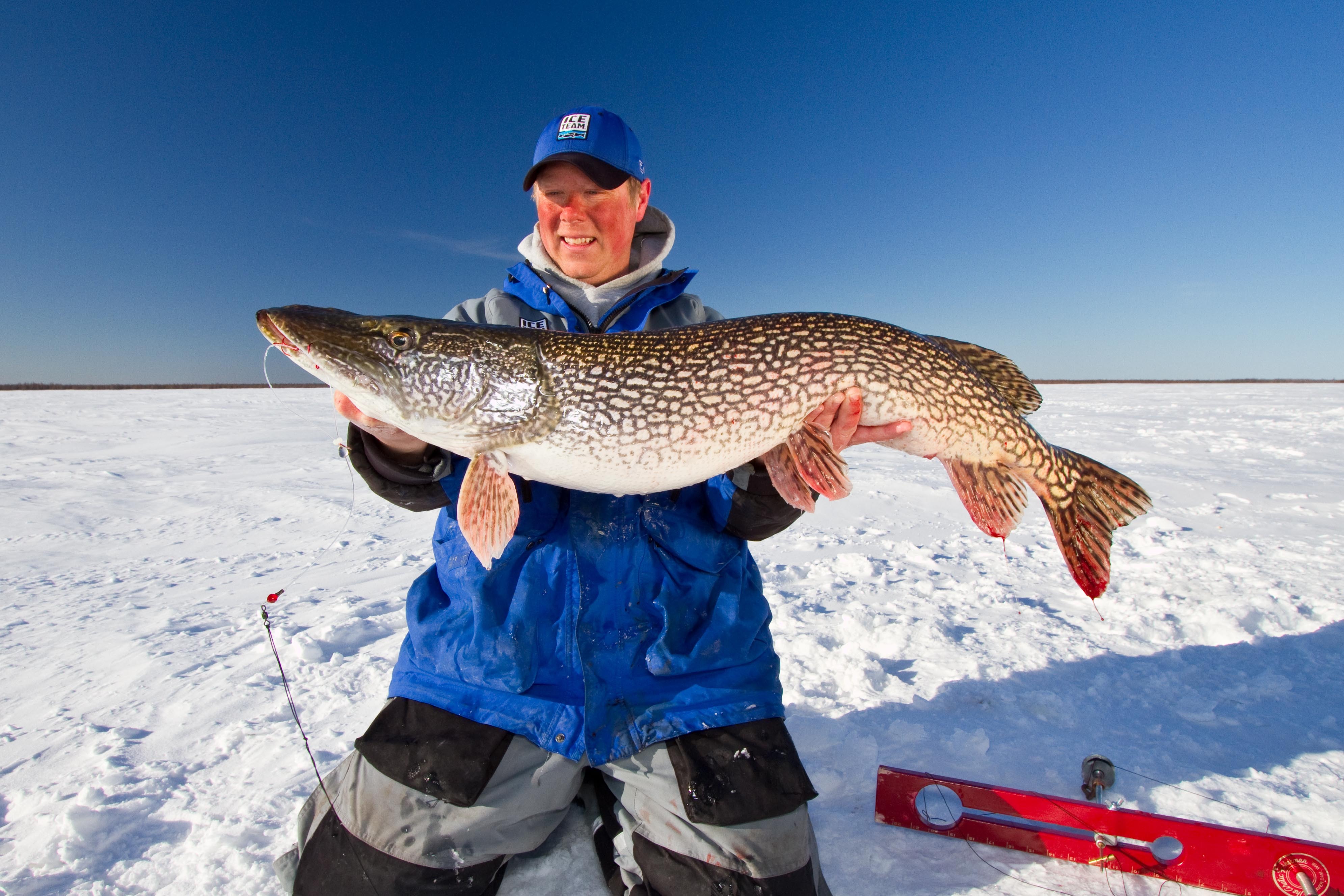
- Pike: Frequently roam 4–15 feet around weed edges, points, and shallow flats near deeper water.
- Lake trout: Work 20–100+ feet, relating to breaks, humps, and suspended bait. Often suspend well off bottom.
- Perch/crappie/panfish: Perch on deeper mud flats, crappie suspending over basins, gills along weed edges or mid-depth basins.
Use these as starting points, then refine using sonar and actual bites.
Tools and Techniques for Accurate Depth Control
Advanced tip-up strategies treat depth like a variable you control, not guess at. Tools that help include:
- Depth bombs (sounders): Clip on, drop to bottom, and set your stop or marker accordingly.
- Line markers: Small bobber stops, knots, or line paint at known depths (e.g., 10, 15, 20 feet).
- Sonar: Use your jigging hole’s flasher or graph to see exact depth and fish position; match tip-up depth to that zone.
For example, if sonar shows walleyes 2–3 feet off bottom in 22 feet, set your tip-ups with baits 18–20 feet down, not dragging along bottom.
Fine-Tuning Depth Through the Day
Fish don’t stay locked at one depth all day. On a typical walleye outing:
- Pre-dawn/dawn: Run some tip-ups shallow on the top or upper edge of the break.
- Mid-day: Shift more lines to mid-depth or deeper edges where fish rest or follow deeper bait.
- Dusk/after dark: Push a portion of your spread shallower again as fish move up to feed.
Using sonar on your jigging holes as a depth “thermometer” and then mirroring those depths with tip-ups is one of the best tip-up strategies you can implement immediately.
Rigging Tip-Ups: Bait, Leaders, and Quick-Strike Systems
Line and Leader Choices for Different Species
The backbone of any tip-up setup is the line and leader:
- Main line: Many anglers favor dacron or braid for low stretch and easy handling. Mono can work but is more prone to memory and stretch in cold.
- Walleye leaders: 8–12 lb fluorocarbon in clear water, sometimes mono in stained water.
- Pike and muskie leaders: 30–60 lb fluorocarbon or wire leaders to prevent bite-offs.
- Panfish leaders: 4–6 lb fluoro or mono with small hooks.
Shop our selection of Ice FIshing Tip-Up Line
Live Bait Rigs for Walleye and Perch
A classic walleye tip-up rig is simple but needs to be tied right:
- Slide on a small egg sinker or split shot if needed for current or depth.
- Tie a swivel, then 18–36 inches of fluorocarbon leader.
- Finish with a #4–#8 single hook, depending on minnow size.
Hook minnows behind the dorsal fin for more flash and movement, or through the nose in heavy current or when you want a more natural, forward-facing profile. For perch and panfish, downsize everything—lighter line, smaller hooks, and smaller bait.
Quick-Strike Rigs for Pike and Big Predators
For big pike, a quick-strike rig is the gold standard. It uses two small trebles spaced along a larger baitfish or deadbait:
- One treble near the head, one mid-body or toward the tail.
- Hook points lightly pinned just under the skin to keep bait natural.
- Leader material of 30–60 lb fluoro or wire, depending on toothiness and cover.
Quick-strike rigs allow you to set the hook quickly and still get solid hookups, greatly reducing deep gut hooks and improving release survival.
Deadbait Strategies for Cold Fronts and Night Bites
When fish are sluggish—post-front, midwinter, or at night—deadbait often outperforms live bait:
- Hang deadbait just off bottom on structure where pike or walleyes travel.
- Consider lightly scoring the skin or breaking the backbone to release more scent.
- Combine deadbait tip-ups with actively jigged spoons or rattle baits nearby.
These more subtle, scent-driven tip-up strategies are deadly when fish won’t chase.
Flag-to-Fish Conversion: Hooking and Landing More Fish
How Fast Should You Go to a Flag?
“Sprint or stroll?” is the classic question. The real answer: it depends on species, depth, and rigging.
- Pike with quick-strike rigs: A brisk walk is fine. You don’t need to give them long chewing time; they’ll often hit hard and move immediately.
- Walleyes in shallow water: Move smoothly but avoid stomping and yelling near the hole. Shallow fish are easily spooked.
- Deep fish (lakers, deeper walleyes): You can usually take a few extra seconds, as the vertical distance reduces spooking risk.
Reading the Spool and Timing the Hook-Set
Once you get to the flag, your next job is reading the spool. Advanced tip-up strategies use spool behavior as intel:
- Steady, fast run: Aggressive fish; be ready to set quickly.
- Slow, steady pull: Often neutral walleyes; maintain tension and give a controlled set.
- Start-stop-start: Fish repositioning bait; wait for consistent movement, then set.
With quick-strike rigs, set almost immediately once you have tension—no need to let pike “swallow.” With single-hook live bait rigs, especially on walleyes, a brief pause until you feel steady pressure is usually enough. Avoid the old-school “take a smoke break first” advice if you care about release survival.
Hook-Set Mechanics and Fighting Fish by Hand
Good hook-sets start before you pull the line:
- Pull the tip-up aside carefully, keeping line tension with one hand.
- Gather loose line in big coils away from the hole.
- Once you feel steady pressure, use a firm, sweeping hook-set—down and away or sideways if possible, not straight up.
During the fight:
- Let strong fish run, feeding line smoothly through your gloved fingers.
- Don’t let line saw across the ice edge; use a flasher scoop or your hand as a buffer.
- Keep the fish’s head below the hole until you’re ready to guide it through in one smooth motion.
Fine-Tuning Tip-Up Performance: Sensitivity, Stealth, and Reliability
Adjusting Tension and Trip Sensitivity
Too many anglers tolerate constant false flags or fish dropping bait because their tip-ups are tuned poorly. Take a few minutes to:
- Adjust trip sensitivity/lightness for target species—lighter for walleyes, heavier for pike and wind.
- Test in a bucket or shallow water; the bait should be able to pull line without excessive resistance.
- Set the flag so minor bumps don’t trip, but genuine runs do.
Preventing Line Freeze-Up and Spool Issues
Line that freezes in the spool or guides kills strikes. To reduce this:
- Keep water out of the spool area as much as possible.
- Consider line treatments or dry lubricants approved for cold weather.
- Use thermal tip-ups over shallow holes to reduce ice build-up.
Stealth Considerations: Visibility, Light, and Noise
In clear water or shallow areas, stealth matters for ice fishing tip-ups:
- Use longer fluorocarbon leaders and smaller hardware where possible.
- Bank snow around tip-up bases and lightly cover holes to block light and shadows.
- Keep heavy foot traffic, sleds, and machines away from shallow spreads during prime times.
Species- and Scenario-Specific Tip-Up Strategies
Walleye Tip-Up Strategies on Points and Flats
For walleyes, focus on structure that connects daytime basins to shallow feeding areas:
- Run contour spreads along the first breakline off a point or reef.
- Place a few tip-ups on the top of the structure at dawn and dusk for shallow-feeding fish.
- Shift deeper during bright midday periods, keeping some lines near the base of breaks or in adjacent basins.
Learn more: Ice Fishing for Walleye: Expert Techniques, Gear, and Strategies
Pike Tip-Up Strategies in Weeds and Bays
Pike love edges and ambush spots:
- Spread tip-ups along the outside weedline and around inside turns.
- Use big live or dead bait on quick-strike rigs, set 1–3 feet off bottom.
- In stained water, don’t be afraid to run some baits shallow—even under 6 feet can shine.
Learn more: Ice Fishing for Pike: Techniques, Gear, and Expert Tips
Lake Trout and Trout Tip-Ups
For lake trout and other trout species:
- Focus on points and humps that drop into deep basins.
- Set tip-ups at multiple depths: one near bottom, one mid-column, one just under the ice if you see bait or fish high.
- Use larger baitfish or deadbait, and check lines frequently.
Learn more:
- How to Tip-Up Fish for Lake Trout: Complete Setup, Baits, and Tactics
- Ice Fishing for Lake Trout: Techniques, Gear, and Tips
Panfish and Multi-Species Days
Tip-ups also play a role on panfish days:
- Run small minnows or waxies on light leaders just off bottom for perch and crappies.
- Use one or two tip-ups just outside the main school to pick off larger roamers.
- Combine with jigging for numbers while letting tip-ups hunt for bigger fish.
Learn more:
Regulations, Ethics, and Practical Considerations
Know Your Local Tip-Up Regulations
Before you set a dozen flags across the basin, check:
- Maximum lines or tip-ups allowed per angler.
- Rules on distance from angler or tagging requirements.
- Any special gear restrictions (barbless hooks, leader types) in specific waters.
Ethical Use of Tip-Ups and Fish Care
Used poorly, tip-ups can result in a lot of deep-hooked or unnecessary harvest. To fish ethically:
- Use quick-strike rigs for big predators instead of waiting for them to swallow bait.
- Set hooks promptly whenever possible, especially on fish you intend to release.
- Minimize air exposure, handle fish with wet hands, and support large fish horizontally.
Combine this with safety basics (ice picks, float suit, throw rope), and you can fish aggressively while staying legal and responsible.
FAQs – Tip-Up Strategies, Spreads, and Hooking More Fish
How far apart should I place my tip-ups when spreading lines?
On most lakes, spacing tip-ups 20–60 yards apart works well. Tighten spacing on small structure or when fine-tuning a pattern; spread out more on big flats or basins when searching. Always consider line limits, visibility, and your ability to safely monitor all flags.
How many tip-ups should I use for walleye vs pike?
Use as many as your local regulations and your attention allow. For walleyes, combining 2–4 tip-ups with a couple of jigging holes can be ideal. For pike, larger spreads with bigger baits make sense, but only if you can reach every flag quickly and handle fish properly.
How deep should I set tip-ups for walleye at first ice?
At first ice, walleyes often run surprisingly shallow, especially around weeds and rocky points. Start with some lines in 8–15 feet near structure and some on the first breakline deeper (15–25 feet), then adjust based on flags and sonar.
What is the best line and leader setup for tip-ups?
For general walleye use: 20–30 lb dacron main line with a swivel and 8–12 lb fluorocarbon leader. For pike: heavier main line (30–50 lb dacron) and 30–60 lb fluorocarbon or wire leaders. Match your setup to your target species, water clarity, and cover.
Do quick-strike rigs really help with pike on tip-ups?
Yes. Quick-strike rigs dramatically improve hook-up ratios and reduce deep hooking. They let you set the hook quickly without waiting for pike to swallow, which is better for both the fish and your hookup rate.
How long should I wait before setting the hook on a tip-up?
With quick-strike rigs, set almost immediately once you feel steady pressure. With single-hook rigs, especially for walleyes, a short pause until you feel the fish consistently pulling is usually enough. Avoid long waits that lead to gut-hooked fish.
How do I avoid false flags in windy conditions?
Increase trip tension slightly, shield tip-ups from direct wind with snow banks, and avoid oversized bait that constantly pulls line. Some anglers add small sinkers or adjust the flag position for more resistance on windy days.
Can I use tip-ups effectively for panfish and trout?
Absolutely. For panfish, downsize hooks, leaders, and bait. For trout, set baits higher in the water column and around high-percentage structure like points and humps. Tip-ups are versatile tools as long as you match your rigging and depth to the species.
Conclusion: Turn Random Flags into a Tip-Up System
Tip-ups can be more than just extra lines soaking bait. With the right tip-up strategies, they become a mobile scouting grid that maps structure, depth, and fish movement for you in real time. Strategic spreads over points and flats, precise depth control tailored to species, and disciplined hook-set mechanics separate anglers who “occasionally get lucky” from those who consistently put quality fish topside.
Before your next trip, take 10 minutes with a map to plan your spread. Rig leaders and quick-strike systems at home so you’re not tying knots with frozen fingers. On the ice, treat each flag as data: where, when, how deep, and what species. Log those details, and in a season or two, you’ll have a personalized playbook for your favorite lakes.
If this breakdown helped you see tip-ups in a new light, share it with a buddy who still “just throws them out there”.
Shop Ice Fishing Gear