

Early Ice Fishing for Bluegills: Location, Safety, and First-Ice Tactics
By: FishUSA Staff
December 17, 2025
When the first safe ice forms and the lake goes quiet, early ice fishing for bluegills can be as hot as panfishing gets all year. Those first few weeks of safe ice often deliver aggressive fish, shallow patterns, and fast action—if you know where to drill and how to present your bait. Get it wrong, and you’ll stare at a blank sonar screen wondering where all the gills went.
When the first safe ice forms and the lake goes quiet, early ice fishing for bluegills can be as hot as panfishing gets all year. Those first few weeks of safe ice often deliver aggressive fish, shallow patterns, and fast action—if you know where to drill and how to present your bait. Get it wrong, and you’ll stare at a blank sonar screen wondering where all the gills went.
This guide walks you step-by-step through first ice bluegill fishing: how to stay safe on early ice, where bluegills actually hold at first ice, which rods, line, and lures work best, and the subtle presentation tricks that turn lookers into biters. We’ll also cover common mistakes, seasonal transitions, and FAQs that target the same questions anglers ask Google every winter.
By the end, you’ll have a clear, repeatable game plan for your next first-ice trip—one that’s built to catch more and bigger bluegills while keeping you safe on new ice.
Table of Contents
- Understanding Early Ice Bluegill Behavior
- Early Ice Safety for Bluegill Anglers
- Where to Find Bluegills at Early Ice
- Early Ice Bluegill Gear: Rods, Line, and Tackle
- Early Ice Presentation Tactics for Bluegills
- Seasonal Strategy: From First Ice to Early Midwinter
- Common Mistakes in Early Ice Fishing for Bluegills
- FAQs – Early Ice Fishing for Bluegills
- Conclusion: Make the Most of Early Ice Bluegill Season
Understanding Early Ice Bluegill Behavior
Why Bluegills Shine at First Ice
Bluegills are cold-water survivors, but they’re at their most cooperative right after safe ice forms. Oxygen levels are still high, weeds are often alive and green, and water temps haven’t hit their midwinter lows yet. That combination creates a perfect storm: active fish in predictable, shallow locations.
At first ice, bluegills:
- Remain close to their late-fall haunts around weedlines and shallow structure.
- Feed heavily on insect larvae, small invertebrates, and the odd minnow.
- Are much less pressured than they will be later in the season.
That’s why experienced panfish anglers build their calendar around first ice bluegills—the bite can be fast and nearly every mark you see on sonar seems willing to eat.
Early Ice vs Midwinter Bluegills
Understanding how bluegills move as winter progresses helps you make smart decisions instead of random guesses. In broad strokes:
- Early ice: Bluegills are shallow, relating to green weeds, wood, and soft-bottom bays, often in 4–12 feet of water.
- Midwinter: As weeds die back and oxygen shifts, bluegills frequently move deeper to basin edges, mid-lake flats, and hole transitions.
- Late ice: They begin sliding back toward the shallows and eventually into spawning bays as ice starts to melt.
This article focuses on that early-ice window, when you can still take advantage of shallow, aggressive fish before they slip into midwinter funk.
Key Environmental Factors at First Ice
To fine-tune your early ice bluegill tactics, pay attention to:
- Light penetration: New, clear ice lets a lot of light in; fish may hold tight to weeds or cover, especially during bright afternoons.
- Snow cover: A fresh blanket of snow can quickly dim things down, pushing bluegills slightly shallower or making them bolder in open areas.
- Weed health: Green weeds = oxygen and food. Brown, dying weeds often mean fewer bugs and fewer fish.
Whenever possible, target areas with healthy vegetation or obvious life—small invertebrates, baitfish, or visible green weed clumps.

Early Ice Safety for Bluegill Anglers
Before we talk about rods or jigs, we need to talk about ice. First ice can be incredible, but it’s also the most dangerous phase of the season. No bluegill is worth a bad decision.
Minimum Ice Thickness and Safety Guidelines
General recommendations for walking on clear, solid ice are:
- 4 inches: Minimum for a single angler on foot.
- 5–6 inches: Safer margin for groups and gear.
But remember: ice thickness is rarely uniform. You might have 5 inches in one spot and 2 inches 10 yards away. Always verify conditions as you go and check local regulations and safety resources, such as your state’s official ice safety guidelines.
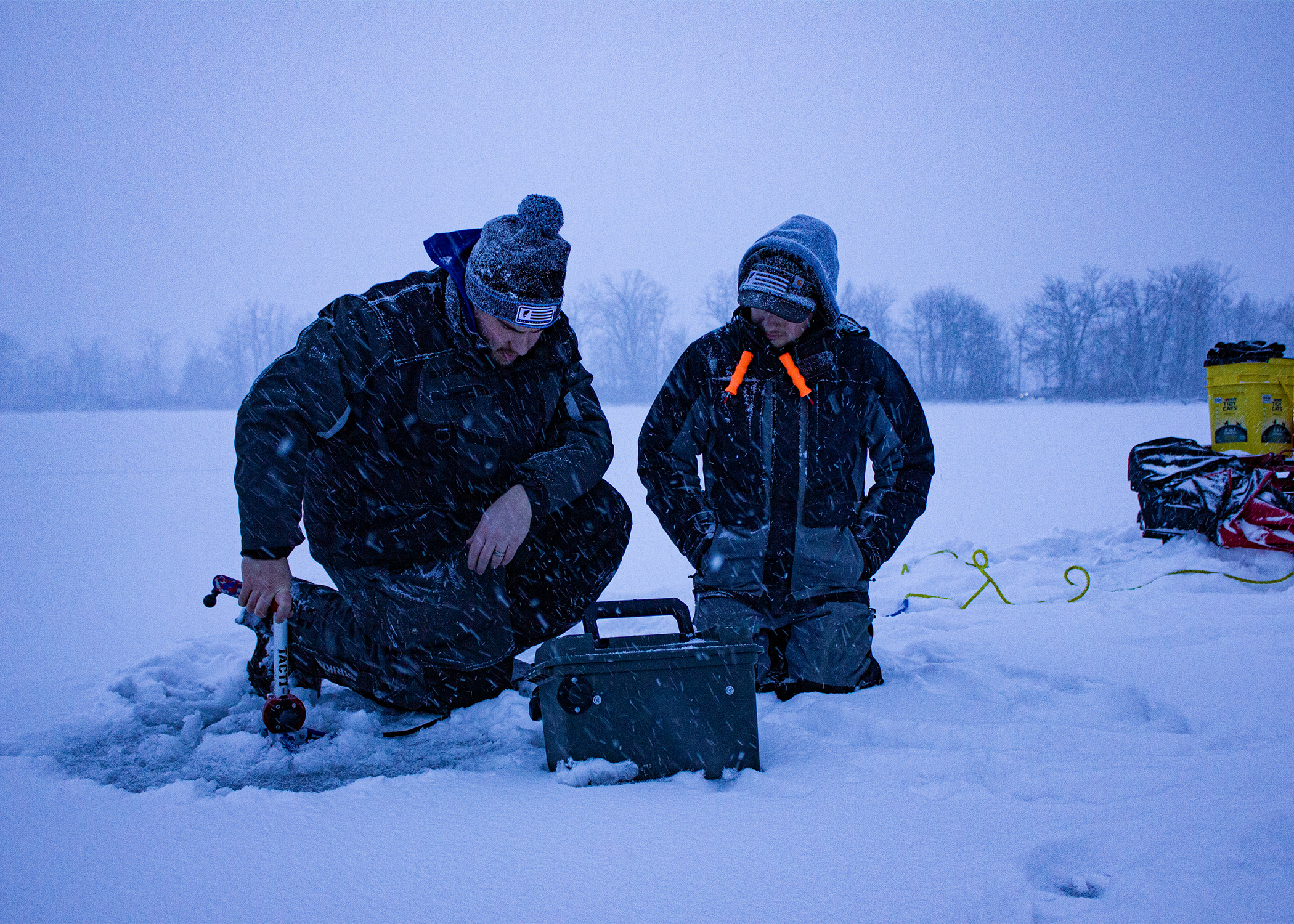
Essential First Ice Safety Gear
At minimum, bring:
- Spud bar/ice chisel: Check ice thickness every few steps as you walk out.
- Ice picks/ice claws: Worn around your neck so you can pull yourself out if you break through.
- Flotation: A float suit, PFD, or jacket/bibs with flotation built in.
- Throw rope: Long enough to reach someone who falls in.
- Cleats/traction devices: Early ice can be slick, and a fall with an auger or heavy gear can be serious.
Let someone know where you’re fishing and when you expect to be off the ice. If you’re new to first ice, go with an experienced angler or local guide your first few times.
High-Risk Areas to Avoid at First Ice
Be extra cautious around:
- Inlets, outlets, and narrows where current thins the ice.
- Springs, seeps, and wetland interfaces.
- Dock areas, marinas, and places where aerators are used.
On some lakes, those are also prime bluegill spots later in the season—but at first ice, safety wins every time.
Where to Find Bluegills at Early Ice
Shallow Weeds and Remaining Green Vegetation
When you think “early ice panfish,” think weeds. The single most reliable pattern for first ice bluegills is shallow weed bluegills in 4–12 feet of water, depending on the lake.
Focus on:
- Healthy, green weeds like coontail and cabbage.
- Weed edges where vegetation meets open bottom.
- Inside turns and small points along the weedline.
If you fished these areas in late fall, start there again. Early-ice bluegills often don’t move far until conditions force them to.
Soft Bottom Bays and Backwater Areas
Shallow, soft-bottom bays can be early-ice gold, especially on smaller lakes and ponds. These zones tend to hold:
- Insect larvae, bloodworms, and other invertebrates.
- Remnant weeds and scattered wood.
- Warm, slightly stained water that bluegills love.
Look for bays protected from the prevailing wind, where ice forms first. Drill a line of holes from shore out to the first significant drop and watch your sonar for fish suspended just off bottom or above any remaining vegetation.
Wood, Brush, and Man-Made Structure
Bluegills love cover. Brush piles, cribs, stumps, and laydowns are all early-ice magnets, especially on lakes with limited weed growth. When fishing wood:
- Position your bait above the cover, not buried inside it.
- Drill slightly off to the side to avoid constant snagging.
- Use your sonar or an underwater camera to confirm fish are actually present.
Using Maps, Drilling Patterns, and Electronics
To quickly dial in early ice bluegills:
- Study contour maps or your GPS app to find weed flats, inside turns, and small depressions.
- Drill holes in a grid, a zig-zag, or an “L” pattern across likely zones.
- Drop your flasher or sonar in each hole and look for life before committing.
In shallow water, sometimes just seeing weed tops or small panfish on the sonar is all the confirmation you need to start fishing.
Early Ice Bluegill Gear: Rods, Line, and Tackle
Best Rod and Reel Setup for Early Ice Bluegills
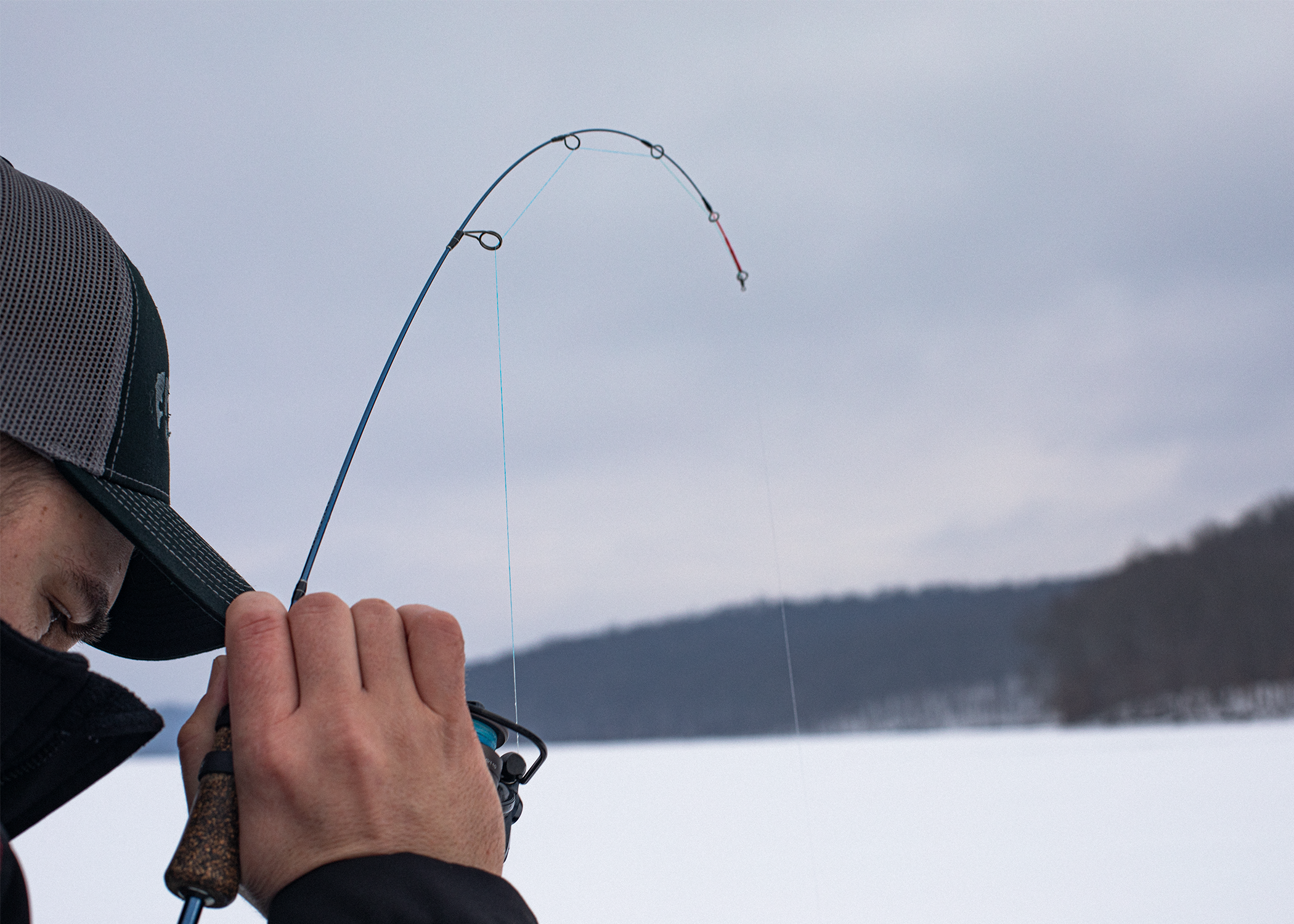
Bluegills have soft mouths and can bite incredibly light under the ice, so your gear should favor finesse over power:
- Rod: A 24–28 inch ultralight or light-power rod with a soft, sensitive tip and enough backbone to handle occasional bonus crappies or perch.
- Reel: Small spinning reel (500–1000 size) or an inline reel to reduce line twist when using micro jigs and plastics.
A soft-tipped rod helps you detect the classic “up bite,” where a bluegill inhales your jig and actually makes your line go slack as the jig lifts.
Line Choices for First Ice Panfish
For most first ice bluegill fishing:
- 2–4 lb mono or fluorocarbon is ideal.
- In ultra-clear or heavily pressured lakes, many anglers favor 3 lb fluorocarbon for its low visibility.
- Some prefer a thin braid main line (5–6 lb) with a 3–4 ft section of 3 lb fluorocarbon leader for added sensitivity.
Remember: early ice often means clear ice and clear water—heavy line and big hardware are much easier for fish to spot.
Best Early Ice Lures and Baits for Bluegills
When it comes to what to use for bluegills ice fishing, you don’t need a giant tackle box. A small, well-chosen selection covers most situations:
- Micro tungsten jigs: 3–5 mm sizes in natural and bright colors. Tungsten sinks fast and gives great feel.
- Lead teardrop jigs: Classic bluegill producers with a slower drop—great for shallow weeds.
- Small spoons: 1/32–1/16 oz spoons in silver, gold, or glow for searching and calling fish in.
- Check out our selection of ice fishing lures
Pair them with:
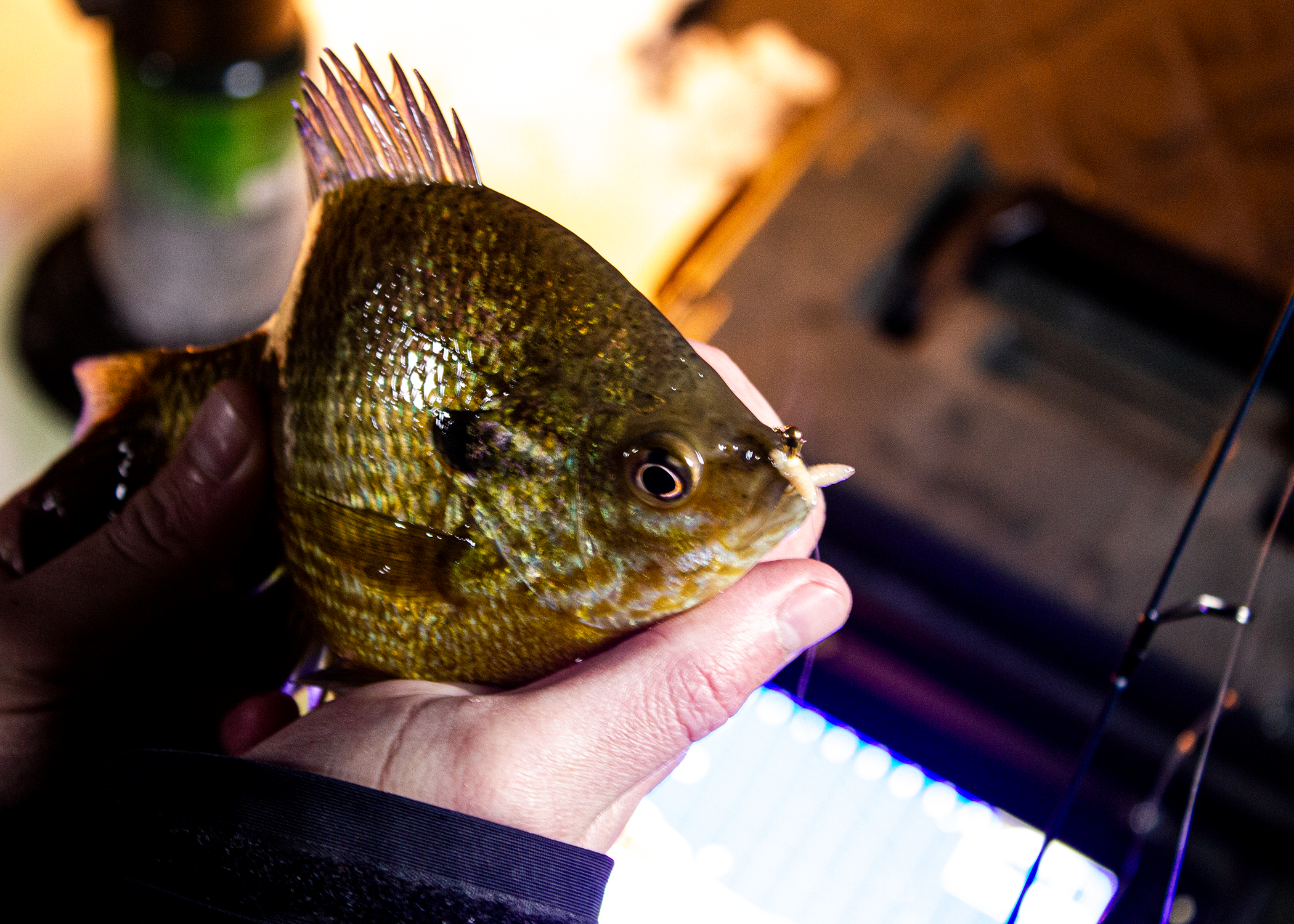
- Waxworms, spikes, or mousies for natural scent and taste.
- Micro plastics—minnow, nymph, and bug profiles—for durability and subtle movement.
For a deeper dive into tackle selection, see our guide: Top Ice Fishing Lures - Must-Have Choices for Every Species
Early Ice Presentation Tactics for Bluegills
Basic Jigging Patterns That Catch First Ice Bluegills
In shallow, clear water, less is often more. A good starting cadence looks like this:
- Drop your jig down to just above the weeds or where you see marks on sonar.
- Lift the rod tip 2–3 inches and let the jig fall while maintaining light tension.
- Give the rod a series of tiny shakes to make the bait quiver.
- Hold the bait dead still for 5–10 seconds and watch your line closely.
If fish rise and stop just below the jig, lengthen your pauses. If they ignore you completely, try slightly larger movements, a color change, or tipping your jig with live bait.
Horizontal vs Vertical Presentations
Early in the season, bluegills can key on different forage types. Match your jig style to what they’re eating:
- Vertical teardrop jigs: Great when bluegills are feeding on insect larvae and small invertebrates in weeds or soft-bottom bays.
- Horizontal jigs and plastics: Shine when fish are chasing small minnows or when you want a more natural, baitfish-like profile.
Sometimes it’s as simple as switching from a vertical tungsten jig tipped with a waxworm to a horizontal jig with a small paddle-tail plastic—suddenly the fish that were just looking start committing.
Targeting the Right Part of the Water Column
A common mistake at first ice is fishing too low. Bluegills in weeds often sit just above or within the top of the vegetation, and in soft-bottom bays they may suspend a foot or two off bottom.
Rules of thumb:
- Start your bait just above visible weed tops.
- When using sonar, fish a foot above the highest mark, not below it.
- If you get “lookers” that don’t bite, slowly raise the bait—bluegills often chase up.
Stealth and Noise Control on Early Ice
New, clear ice is like a drumhead—every stomp and dropped bucket echoes underwater. To avoid spooking shallow bluegills:
- Drill most of your holes at once, then settle down and fish quietly.
- Avoid dragging sleds across bare ice near your spots; pick up gear when possible.
- Keep noise inside the shack to a minimum, especially in less than 10 feet of water.
Seasonal Strategy: From First Ice to Early Midwinter
First-Week Strategy After Safe Ice Forms
When safe ice first appears, your best moves are:
- Head to your best fall bluegill spots—weed edges, shallow flats, and inside turns near deeper water.
- Drill a modest number of holes, then use sonar to quickly identify active zones.
- Use slightly larger jigs or small spoons to search, then downsize when you locate a school.
On some lakes, you’ll catch most of your fish in less than 8 feet of water during this window—don’t overlook it.
Adapting as Early Ice Transitions to Midwinter
As snow builds and weeds begin to die, you may notice:
- Fewer marks in your best shallow spots.
- Fish appearing slightly deeper or closer to the nearest basin edge.
- Bluegills becoming more sensitive to noise and pressure.
When this happens, begin checking deeper edges and nearby flats. Bluegills rarely vanish—they just slide to the next best combination of oxygen, cover, and food.
Common Mistakes in Early Ice Fishing for Bluegills
Fishing Too Deep, Too Soon
One of the biggest early-ice mistakes is heading straight to midwinter spots. Before you fish the basin, always check shallow weeds, bays, and soft-bottom flats. You may find aggressive fish in half the depth you were planning to fish.
Ignoring Weed Health and Oxygen
Not all weeds are equal. Brown, slimy, or decaying vegetation often means low oxygen and poor bug life. If you drop a camera or snag some weeds and they look dead, move until you find greener, healthier vegetation.
Using Heavy Line and Oversized Jigs
On clear early ice, 6–8 lb line and big jigs will cost you bites:
- Downsize to 2–4 lb test whenever possible.
- Stick with compact jigs and small plastics or live bait.
- Let your rod and drag do the work when you hook bigger fish.
Staying Put on Unproductive Holes
Hope is not a strategy. If you don’t mark fish or get bit in 10–15 minutes, move. On first ice, you can cover a lot of water quickly—and bluegills often school tightly, so a new hole 15 yards away can mean the difference between a skunk and a full bucket.
FAQs – Early Ice Fishing for Bluegills
How thick should the ice be before I go early ice fishing for bluegills?
Most agencies recommend at least 4 inches of clear, solid ice for one person on foot. Always check ice thickness with a spud bar as you walk out, and follow your local state ice safety recommendations.
What depth should I start at for first ice bluegills?
A great starting range is 4–12 feet, focusing on weedlines, shallow bays, and soft-bottom areas. On deeper lakes, you may find them slightly deeper, but it’s rare to start at the basin during true first ice.
What is the best bait for early ice bluegill fishing?
It’s hard to beat micro tungsten jigs tipped with waxworms or spikes. In pressured lakes, small plastics that imitate bugs or tiny minnows can match or outperform live bait.
Do I need electronics for early ice bluegills?
You can catch fish without electronics, but a basic flasher or LCD sonar helps you find weed edges, see fish depth, and monitor how bluegills react to your jig. It dramatically speeds up the learning curve.
Are bluegills more active at dawn or dusk at first ice?
Both dawn and dusk can be excellent, but many anglers find the last hour of light to be prime time. In clear, shallow water, bluegills often feed more confidently as light levels drop.
Can I keep bluegills shallow all winter, or do they move?
Some fish may stay shallow all winter if weeds and oxygen remain good, but many eventually slide deeper toward mid-lake basins or edges. Track their movements and adjust rather than assuming they’ll stay put.
What line size is best for early ice panfish?
For bluegills, 2–4 lb mono or fluorocarbon is standard. Go lighter and more subtle in clear, pressured lakes, and consider a slightly heavier leader if you expect the occasional pike or bass.
How many holes should I drill when searching for early ice bluegills?
On most lakes, plan for at least 15–30 holes over the course of a trip, especially if you’re exploring new water. Drill first, then let your electronics and bites tell you where to settle in.
Conclusion: Make the Most of Early Ice Bluegill Season
Early ice fishing for bluegills is all about stacking the odds in your favor: safe ice, smart spots, light gear, and subtle presentation. When you understand how bluegills use shallow weeds, soft-bottom bays, and wood at first ice—and when you match that knowledge with the right tackle and a willingness to move—you turn that first walk onto fresh ice into one of the best bites of the year.
On your next trip, pick a lake with a solid bluegill population, study its weedlines and shallow bays, and build a simple plan: drill a purposeful pattern, use your electronics to find life, and fish a micro jig or spoon just above the weeds. Take notes on depths, times, and lures that produce, and your first-ice patterns will only get sharper with each season.
If this guide helped you feel more prepared for first ice, share it with a buddy who loves panfish and drop your questions or success stories in the comments. Then explore our related articles on gear, safety, and electronics to round out your winter panfish playbook and stay ahead of the pack when the ice first locks up.
Shop Ice Fishing Gear