


/
/
Getting bit in heavy cover is easy. Landing fish without constant snags is the hard part. This guide breaks down the best weedless lures — and a few honest “weed-resistant” options — for every type of heavy cover, from matted slop and lily pads to laydowns and flooded timber.
Published: July 2026 · By: FishUSA Staff
Bass love heavy cover. Lily pads, matted hydrilla, laydowns, dock pilings — these are ambush zones where big fish live. The problem is getting a bait into that cover and back out without losing it to every branch and stalk. The right weedless lure solves that. This guide covers the top picks across every cover type, plus the gear setup and seasonal adjustments to fish them effectively.
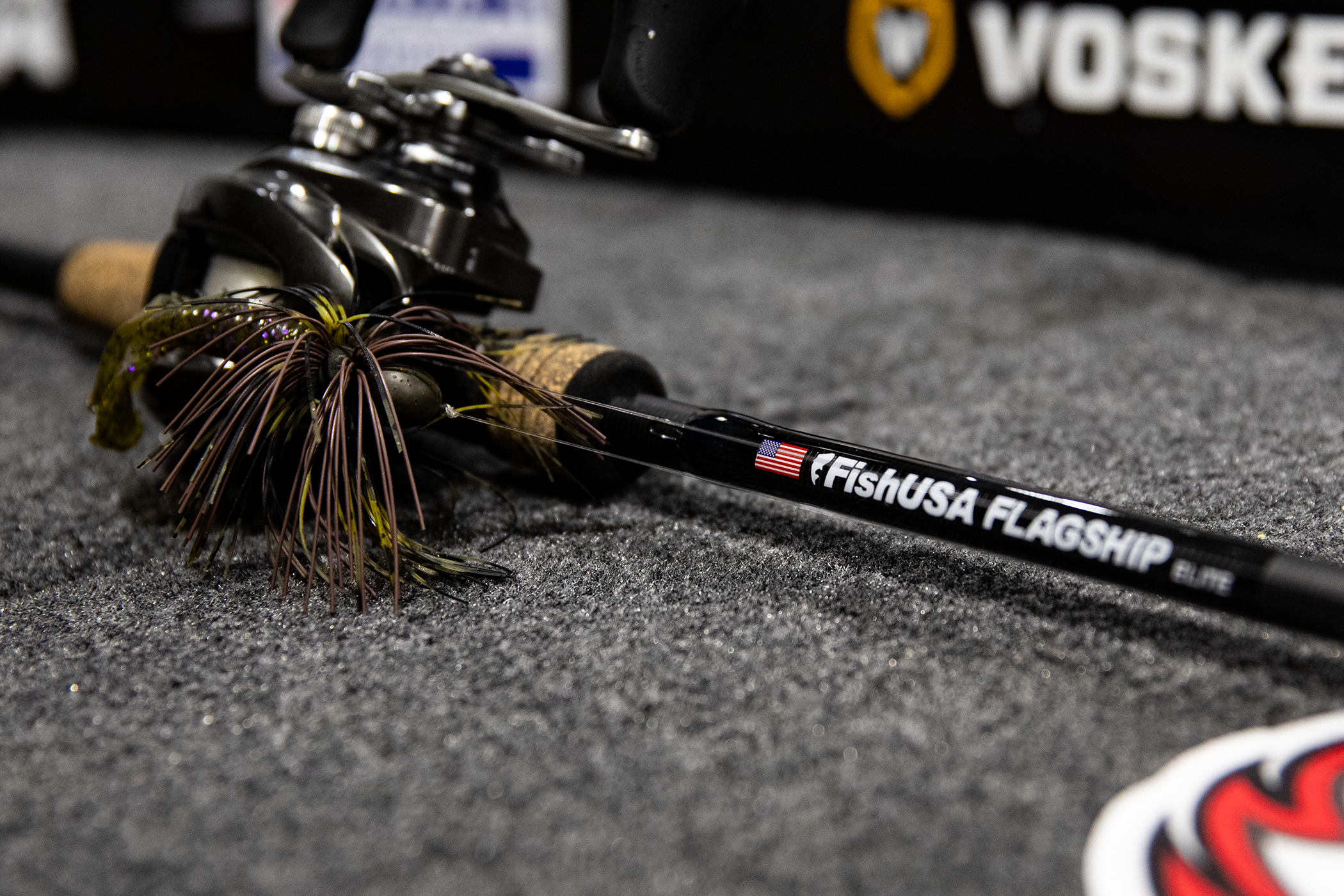
At a Glance
| Cover Type | Best Weedless Lure | Rig / Weight | Why It Works |
|---|---|---|---|
| Matted slop / hydrilla mat | Punch rig | 1–2 oz tungsten | Heavy weight punches through the canopy; creature bait sits in the strike zone below |
| Lily pads | Hollow-body frog | Walking cadence | Skitters over pads without snagging; bass blow up from below |
| Submerged grass | Texas rig / swim jig | 3/16–3/8 oz | Stays in the zone; weedless hook and tapered head deflect grass |
| Laydowns / brush | Flipping jig | 3/8–1/2 oz | Falls vertically into tight pockets; wire weed guard protects hook |
| Dock pilings | Flipping jig / Texas rig | 1/2–3/4 oz | Fast drop gets to shaded depths; bait sits on bottom near structure |
| Flooded timber | Swim jig / spinnerbait | 3/8–1/2 oz | Deflects off trunks; flash and vibration draw fish out from timber |
| Sparse pads / open pockets | Toad / soft jerkbait | Weightless / 1/16 oz | Subtle action in open water triggers hesitant fish |
| Grass lanes / edges | Bladed jig | 3/8–1/2 oz | Tick-and-pop off grass blades triggers reaction; vibration calls fish in |
Not every lure marketed as “weedless” performs equally. True weedless designs use one or more of these features to prevent snagging while still exposing enough hook to catch fish:
A few lures — like spinnerbaits and bladed jigs — are “weed-resistant” rather than truly weedless. The rotating blade deflects most vegetation and debris, but they will hang on tight cover. Use these in grass lanes and open pockets, not in dense mats.
When Weedless Reduces Hookups
A buried hook point or stiff weed guard can reduce hookup percentage if you don’t adjust your technique. Burn off the plastic tip of a frog’s body to shorten the gap to the hook. With Texas rigs in light cover, downsize your weight so the hook can pull free on the set. And always use a firm, low sweep hookset rather than a jerk — power hooks the fish, speed doesn’t.
Terminal tackle that helps: weedless EWG hooks, tungsten worm weights, and flipping jig heads.
Every pick in this guide was evaluated against four criteria:
Hollow-body frogs are the undisputed king of matted vegetation and lily pads. They are the only lure that can be walked across a floating mat of hydrilla, milfoil, or duckweed and still produce. When bass blow up from below, the soft body compresses on the hookset to reveal twin upturned hooks.
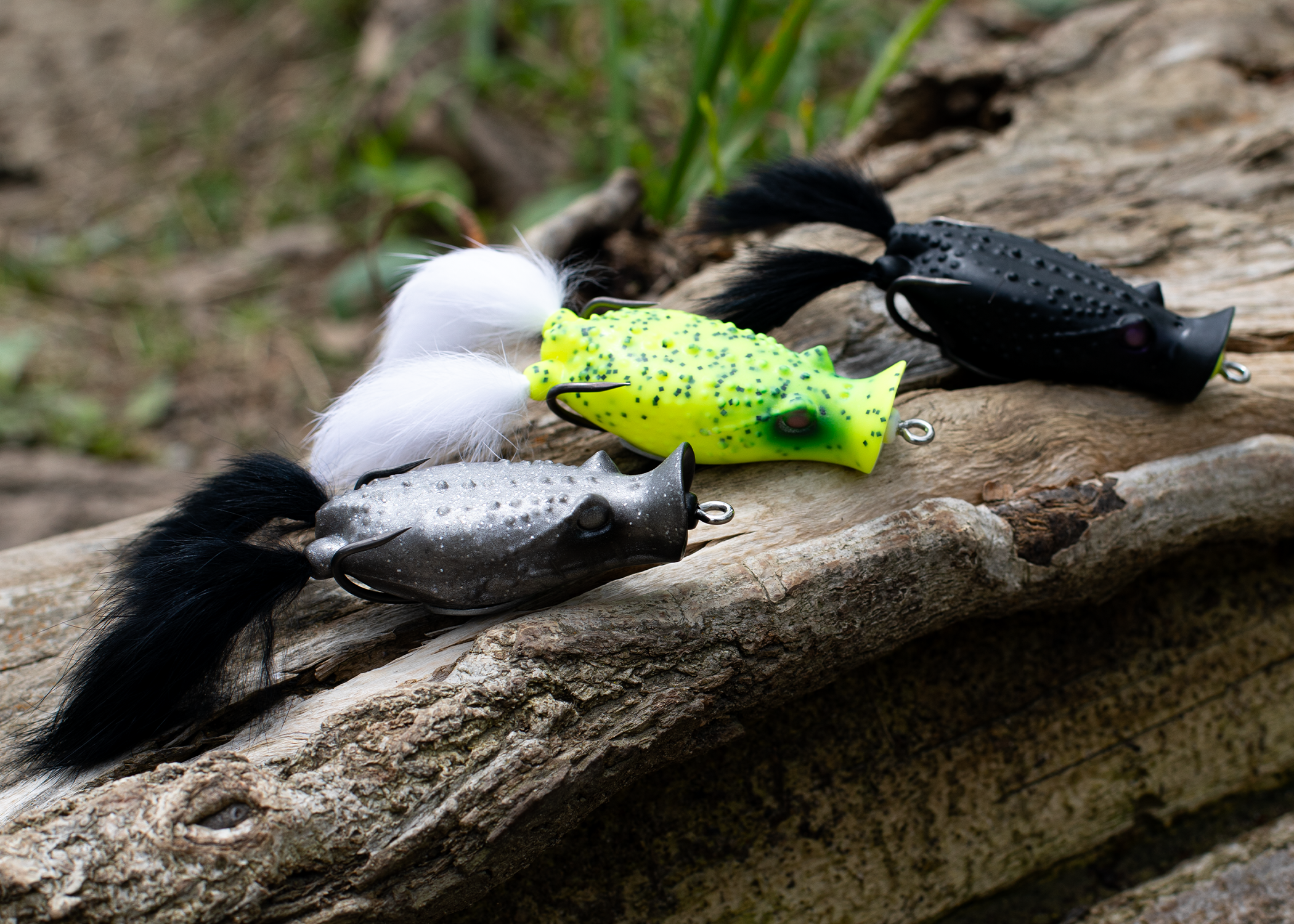
Walk the frog with sharp, rhythmic rod twitches — two or three pops, a one-second pause. Mimic a distressed frog struggling between stems. On open water pockets, slow way down. On tight, matted slop, keep it moving. When bass blows up, wait until you feel the weight before sweeping hard with a low, powerful hookset.
Pro Tip: Tune Your Frog
Frog not walking? Bend the hook points slightly inward. Frog rolling to one side? Squeeze the belly and adjust hook alignment. Most frog issues are a 30-second tuning fix, not a defective bait.
The Texas rig is the most versatile weedless presentation in bass fishing. Bury the hook point into the soft plastic body and peg or slip a tungsten weight above it. Use a Gamakatsu Offset EWG or Trokar EWG for the best hookup ratio. A FishUSA Tungsten Worm Weights Pro Pack covers the weight range from finesse (3/16 oz) to heavy cover (3/4 oz).
For weightless presentations, use a Gamakatsu Weighted Superline Spring Lock to keep the bait tracking straight and falling naturally.
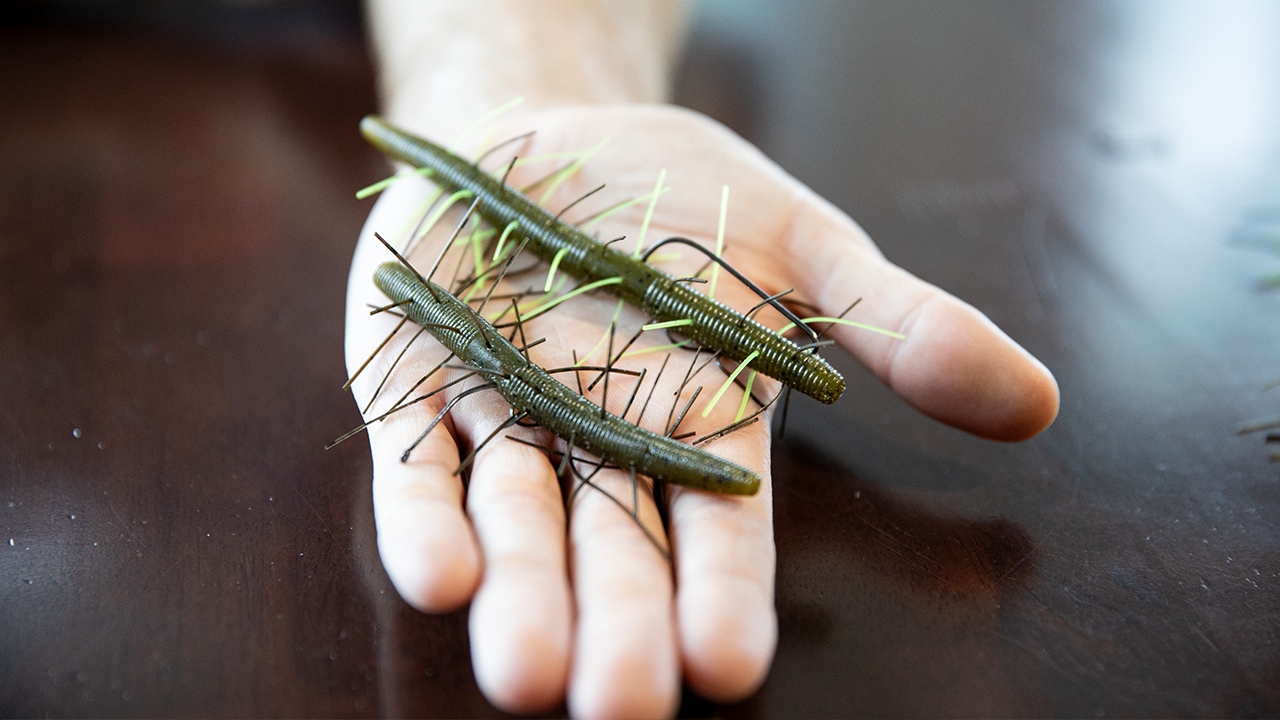
Work a Texas rig with a lift-and-fall cadence: drag it along bottom, lift your rod to pop the bait up, let it flutter back down. Most strikes come on the fall. In laydowns and brush, pitch or flip it into tight pockets and let it drop straight down — bass rarely chase in heavy cover, they ambush.
Two-Speed Approach
In cold water (below 55°F), slow to a crawl — inch the bait along bottom with almost no movement. In warm water, speed up and use more aggressive pops to trigger a reaction. The same bait, completely different presentations.
Terminal tackle: Gamakatsu Offset EWG · Trokar EWG · FishUSA Tungsten Worm Weights Pro Pack · Gamakatsu Weighted Superline Spring Lock
If bass are blowing up on a frog but not connecting, they may be holding tighter under the mat than the frog can reach. A punch rig solves this — use enough tungsten weight (typically 1–2 oz) to punch through the canopy and drop the bait directly into the strike zone. When the mat is open enough for a frog to penetrate, start with the frog. When it’s fully locked down, punch it.
Rig a compact creature bait or chunk on a heavy EWG hook with a heavy Epic Baits Tungsten Flipping Weight or FishUSA Tungsten Flipping Weights Pro Pack. Use a Nako Tungsten Skirted Weight for extra bulk and action on the drop. Peg the weight tight to the bait so the whole rig punches through cleanly.
Rod Tip
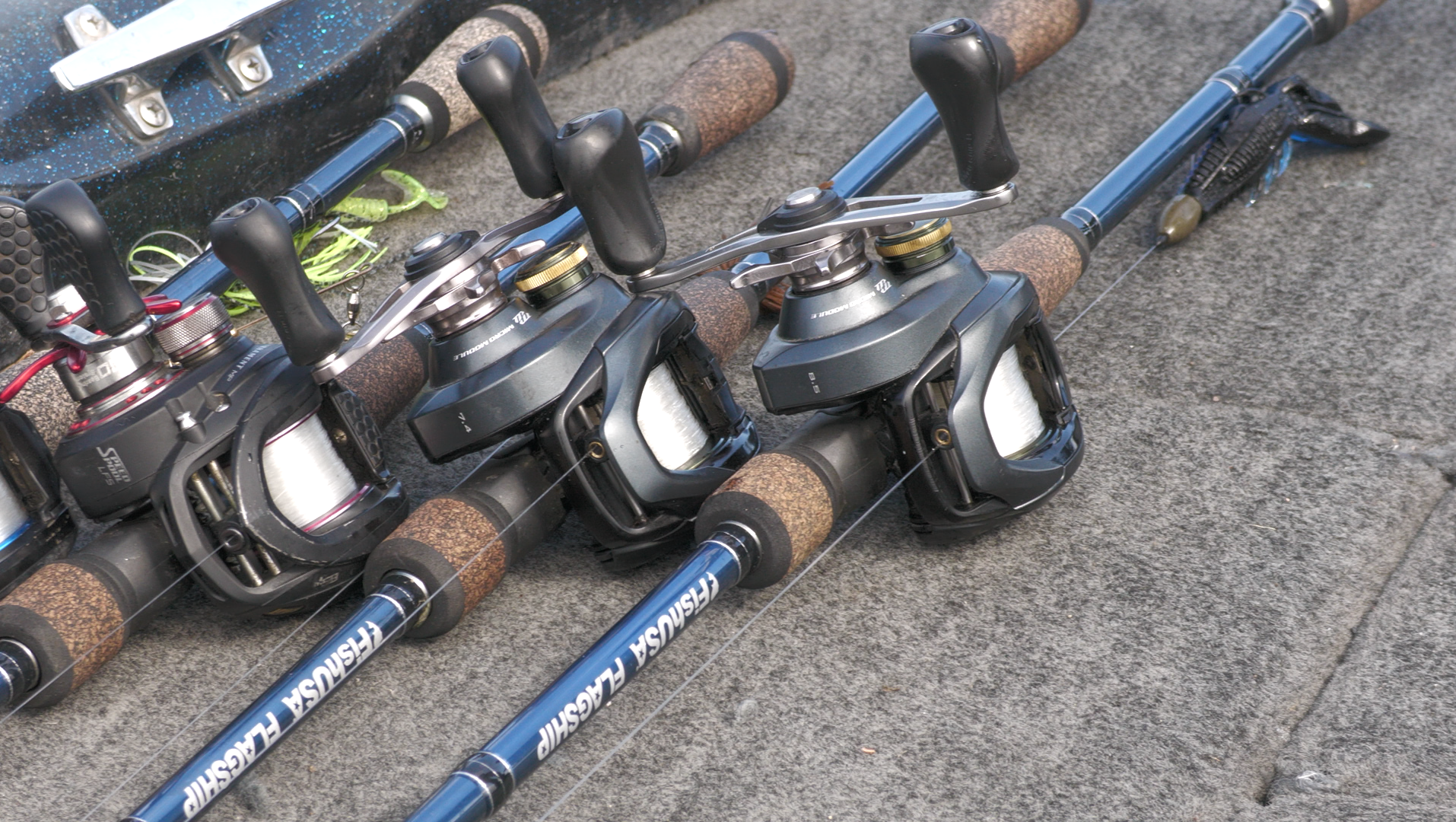
Punch fishing demands a heavy-power, extra-fast rod of at least 7’6”. You need enough length to pendulum cast to mat edges and enough backbone to pull big fish straight up through dense vegetation before they can wrap around stems.
Punching weights: Epic Baits Tungsten Flipping Weight · FishUSA Tungsten Flipping Weights Pro Pack · Nako Tungsten Skirted Weights
A weedless swimbait is one of the best search baits in scattered grass. Rig it on a keel-weighted screwlock hook like the 6th Sense Keel Weighted Hook or Owner Beast Hook to keep the bait tracking true and the hook point up. For heavier grass, switch to a Gamakatsu Weighted Superline Spring Lock for maximum snag protection.
Start with a steady medium-slow retrieve just above the grass tops. Let the bait briefly contact the grass, then free it — that hesitation triggers strikes. When you find a pocket or lane, let the bait flutter down and pause before continuing the retrieve.
Swimbait Color Tip
Match the shad or bluegill in your lake. In clear water, white and pearl with a chartreuse tail is hard to beat. In stained water, go with a natural green or dark blue shad color. In grass, a green pumpkin bait blends in and looks like something that belongs there.
Swimbait hooks: 6th Sense Keel Weighted Hook · Owner Beast Hooks · Gamakatsu Weighted Superline Spring Lock
Both use a wire weed guard but serve different roles. A swim jig has a pointed or narrow head that snakes through vertical cover on a horizontal retrieve — best in scattered grass, flooded timber, and along weed edges. A flipping jig has a heavy head designed for a vertical drop into tight pockets — best in laydowns, dock pilings, and brushpiles. Both keep the hook protected but expose it immediately on a firm hookset.
Match your trailer to the situation. In clear water, use a smaller paddle-tail swimbait for a natural baitfish look. In dirty water or cold temps, go with a craw trailer for bulk and vibration. A compact chunk is the best option for tight-pocket flipping where a big trailer hangs up on stems.
Weed Guard Pressure
Fresh out of the package, many jig weed guards are too stiff for consistent hookups. Bend the wires back toward the hook a few times to soften them up. You want resistance when the bait contacts cover, but a guard that gives easily when a bass bites down.
Swim Jigs:
Flipping Jigs:
Hollow-body frogs dominate dense mats, but in sparse pads, open shoreline grass, and shallow flats, a toad or weedless soft jerkbait often out-produces a frog. Toads are faster to fish, create more surface disturbance per cast, and hook fish at a higher rate because the hook is partially exposed. Soft jerkbaits fished just below the surface trigger hesitant bass that won’t commit to a topwater.
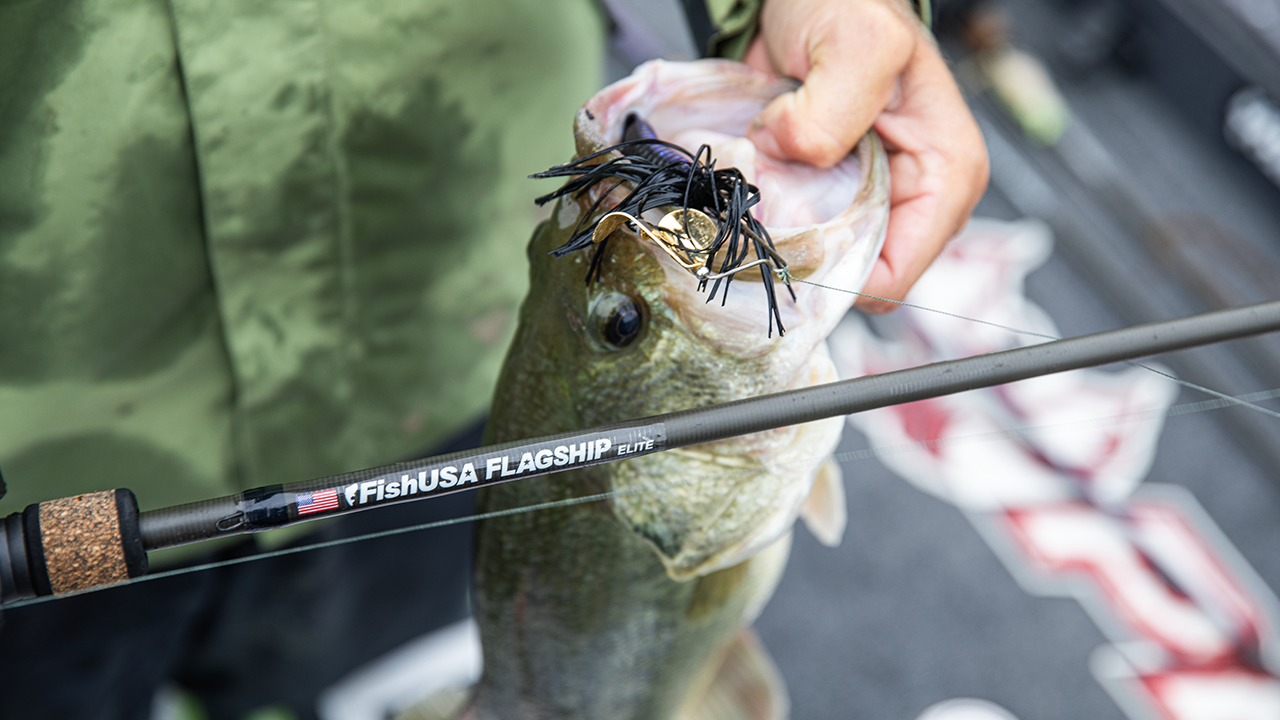
Spinnerbaits and bladed jigs are most effective along grass edges, in grass lanes, and in flooded timber where you have some clear water to retrieve through. They are not truly weedless in dense mats, but the rotating blade deflects most single stalks and sparse vegetation. The flash and vibration pull bass out from cover to strike in the open water beside it.
For both spinnerbaits and bladed jigs, use a tick-and-pop retrieve: let the bait contact the top of the grass or a wood element, give a quick pop to free it, then resume retrieve. That brief hesitation mimics a disoriented baitfish and consistently triggers reaction bites.
Spinnerbaits:
Bladed Jigs:
Pre-spawn bass are staging near cover in 4–10 feet of water before moving shallow to bed. Swim jigs and Texas-rigged creature baits are most effective — they cover water at the right depth and trigger feeding fish. As water temperatures push into the mid-60s, start throwing frogs on emerging pads and shallow shoreline grass.
Summer is prime frog and punch rig season. Vegetation mats fully by midsummer, creating ideal conditions for both presentations. Fish frogs on matted slop during early morning and late evening. When bass push under the mat during the heat of the day, punch it. Swimbaits and swim jigs excel on deeper grass edges when surface temperatures push fish off the flats.
Baitfish move shallow in the fall and bass follow them. Swimbaits and bladed jigs shine in fall grass as bass key on shad. Frogs remain effective on remaining pad fields. Spinnerbaits and swim jigs are strong choices for covering flats quickly. Don’t overlook the Texas rig around dying vegetation where bass ambush weakened baitfish.
In cold water, slow down significantly. A Texas-rigged finesse bait worked at a crawl near woody cover is often the best option. Flipping jigs with compact trailers stay in the strike zone longer and produce when nothing else does. Skip the topwater and bladed presentations until water temps climb back above 50°F.
Heavy cover demands heavy gear. A 7’3” to 7’6” heavy-power, fast-action casting rod handles frogs, punch rigs, and flipping. A 7’ medium-heavy fast rod covers swim jigs and swimbaits. Pair with a 7.5:1 to 8.1:1 gear-ratio baitcasting reel so you can take up line fast and get a fish moving before it reaches the heaviest cover.
65 lb braid is the standard for all heavy cover applications. It has zero stretch for instant hooksets, cuts through vegetation, and lets you muscle big fish. For frogs and punch rigs, go straight braid with no leader. For jigs and swimbaits in clearer water, a short 12–15 lb fluorocarbon leader tied with a double uni-knot helps reduce visibility without sacrificing strength on the hookset.
Recommended Setup
Frog / punch setup: 7’6” heavy-power extra-fast rod, 8:1 reel, 65 lb braid.
Swim jig / swimbait: 7’ medium-heavy fast rod, 7.5:1 reel, 50 lb braid + 15 lb fluorocarbon leader.
Flipping: 7’6” heavy-power fast rod, 7.5:1 reel, 65 lb braid.
Wait longer before setting the hook. Count to two after the blow-up before sweeping. Many anglers set too fast and pull the frog away before the bass has it fully in its mouth. Also check that your hook points are needle-sharp — dull hooks are the single biggest cause of missed frog fish.
Increase your weight or switch to a more streamlined bait profile. A big, winged creature bait creates drag in the mat. Downsize to a compact chunk or craw that punches through cleanly. Tungsten is denser than lead at the same weight and punches better — if you’re using lead, switching to tungsten alone may solve the issue.
Match your trailer to the cover density. A bulky paddle-tail or craw trailer catches more grass than a compact swimbait. Trim trailing skirt strands that stick out past the trailer. And slow your retrieve — a faster retrieve digs into the grass more than a steady medium-slow presentation that rides just above it.
Quick fix products: FishUSA Tungsten Flipping Weights Pro Pack · Weedless EWG Hooks · Flipping Jigs with Trimmed Weed Guards
Heavy cover isn’t the enemy — it’s where the biggest bass live. The right weedless lure puts you in that cover without sacrificing hookup rates or wasting casts. Key takeaways:
One-box starter kit: hollow-body frog + tungsten flipping weights + offset EWG hooks + swim jig + creature baits. That’s five categories, one box, and you can fish any heavy cover situation on any lake.
A Texas-rigged soft plastic or a punch rig is the best option for thick, submerged weeds. Use a 3/8 to 1 oz tungsten weight and a creature bait or craw to penetrate the mat and reach bass holding below.
Hollow-body frogs are the top choice in lily pads. Walk them across pad stems and open pockets. A weedless Texas-rigged swimbait or toad is a great follow-up when bass won’t commit to a frog on the surface.
Yes — weedless hooks like offset EWG and Weighted Superline Spring Lock hooks significantly reduce snags while still delivering solid hooksets on bass. They’re essential for soft plastics fished in cover.
It depends on the cover. Frogs win on top of matted vegetation and lily pads where other lures can’t go. Texas rigs shine in submerged grass, laydowns, and brushpiles where you want to put the bait in the strike zone rather than over it.
65 lb braided line is the standard for heavy cover applications. Braid has zero stretch, cuts through vegetation, and gives you the power to muscle big bass out before they can wrap around cover.
Rig the swimbait on a keel-weighted or screwlock hook to keep it tracking straight. Use a steady medium-slow retrieve just above the grass tops, or let it flutter down into pockets. Pause when you tick the grass to trigger reaction strikes.
Hook Me Up!
Sign up for emails and texts to get exclusive updates and offers.
By providing your number above, you agree to receive recurring automated marketing text msgs (e.g. cart reminders) to the mobile number used at opt-in from FishUSA on 25043. Consent is not a condition of purchase. Msg frequency may vary. Msg & data rates may apply. Reply HELP for help and STOP to cancel. See Terms and Conditions & Privacy Policy