

Complete Night Shore Walleye Setup
Complete Night Shore Walleye Setup
Everything you need to fish walleye from shore after dark — baits that work in low light, a braid-to-fluorocarbon system built for rocks, and the lighting and tools that keep you fishing efficiently.
Last updated: June 2026 · By: FishUSA Staff
How This Setup Works
Four decisions in the right order. Night shore walleye fishing is simpler than it looks — the system below covers each one.
Choose Your Bait Profile
Silhouette and contrast are the primary triggers after dark. Start with one high-contrast option (black/silver jerkbait or firetiger crankbait) and one natural shad profile. Rotate every 20–30 minutes without bites.
Set Up Braid-to-Leader
10 lb braid gives casting distance and sensitivity in the dark. A 10–15 lb fluorocarbon leader (24–36 inches) provides abrasion resistance near rocks and adds stealth at the business end.
Add Quality Snaps
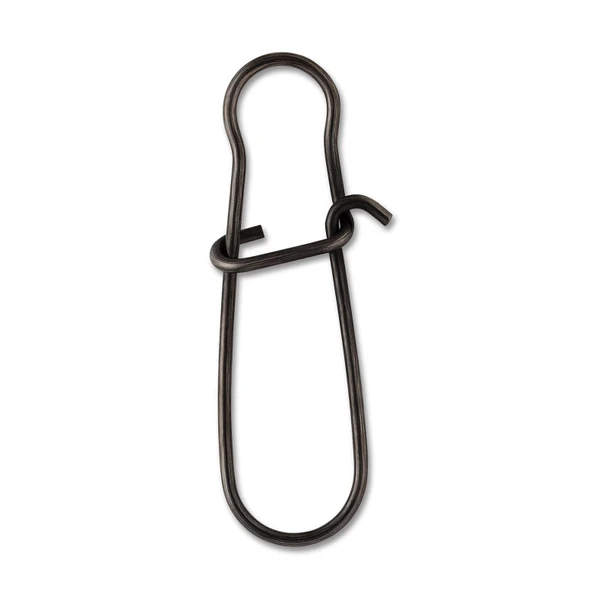
Snaps let you swap baits in the dark without re-tying. A VMC Crankbait Snap also improves jerkbait and crankbait action by letting the nose eyelet swing freely. Size 1 covers the whole night shore bait range.
Use Red-Mode Lighting
White headlamp light kills your night vision and alerts fish in shallow water. Red mode preserves both. A dedicated red-mode headlamp is the single most-overlooked piece of night shore gear.
Need the seasonal timing and location breakdown?
This page covers what to buy and how to use it. For staging locations, seasonal timing, and reading structure at night, start at the Walleye Hub.
Pick a Preset (Fast)
Three starting points based on conditions and experience. All cover the same core system — presets make the first decision for you.
Budget Starter
Best for: first night shore setup, calm conditions, clear-to-slightly-stained water, one or two bait options.
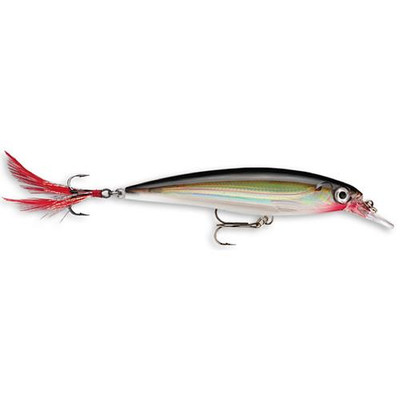
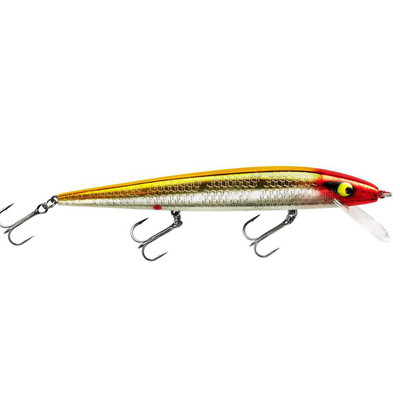
- Rapala X-Rap 10 (Silver) or Smithwick Perfect 10 Rogue (Clown)
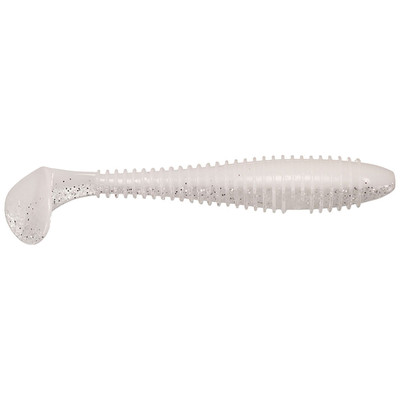
- Keitech Fat Swing Impact 3.8 in.
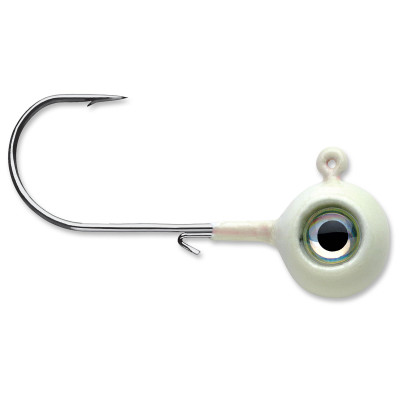
- VMC Neon Mooneye Jig 1/4 oz
- Trilene XL mono mainline
- Seaguar Blue Label 12 lb leader
- VMC Crankbait Snaps + headlamp
Core System
Most PopularBest for: most night shore conditions, braid-to-leader system, 2–3 bait rotation including contrast + natural, better lighting and tools.
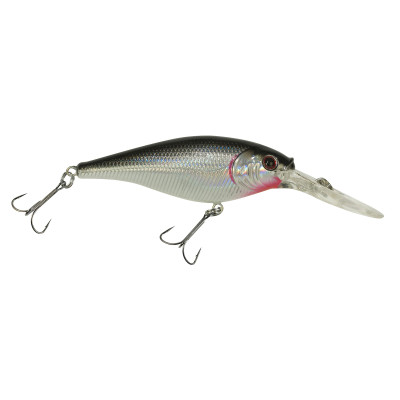
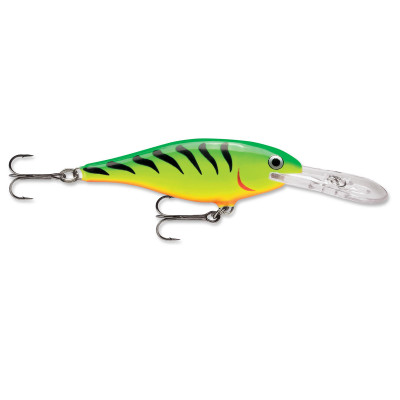
- X-Rap 10 (Silver + Firetiger UV), Perfect 10 Rogue, Flicker Shad 7 + Keitech Fat Swing Impact
- 10 lb Power Pro braid mainline
- Seaguar Blue Label 12 lb leader
- VMC snaps + rolling swivel
- Size 4 trebles, headlamp, pliers, tackle box
Rough Water / Deep Control
Best for: wave action, stained water, rocky structure, heavier leader for abrasion, high-visibility bait choices.
- X-Rap Firetiger UV, Perfect 10 Rogue, Flicker Shad, Shad Rap, WildEye Swim Shad, Keitech Fat Swing Impact
- 10 lb braid + Seaguar Blue Label 12 lb leader
- VMC snaps + rolling swivel
- Size 4 trebles + SPRO split rings
- Headlamp, pliers, tackle box
Night Shore Walleye System — Bundle Builder
All products shown below. Items in your selected kit are pre-checked — adjust to match your water and conditions.
What’s included
- • Night casting baits matched to your kit tier
- • Mainline + fluorocarbon leader for your conditions
- • Snaps and swivels for fast bait changes
- • Headlamp with red mode for night fishing
Swap guidance
- • Rocky structure? Upgrade to 20 lb leader
- • No bites on jerkbait? Try a slow paddletail retrieve
- • Stained water? Switch to firetiger or chartreuse
- • Uncheck items you already own
Night Casting Baits5 Selected
Line + Leader2 Selected
Terminal — Snaps + Swivels3 Selected
Hooks / Split Rings1 Selected
Tools + Lighting2 Selected
Storage / Organization1 Selected
Three rules before you add to cart
Start with two baits: one high-contrast (black/silver) and one natural shad profile covers 90% of nights. More baits don’t catch more fish.
Leader is not optional: rocks, zebra mussels, and wood will cut mono in one pass. Fluorocarbon leader is mandatory near structure.
Red mode matters: white light kills your night vision and spooks shallow fish. Switch to red before you reach the water.
Parts List (Shoppable)
Everything you need, organized by category. Expand each group to see details and shop links.
Night Casting Baits
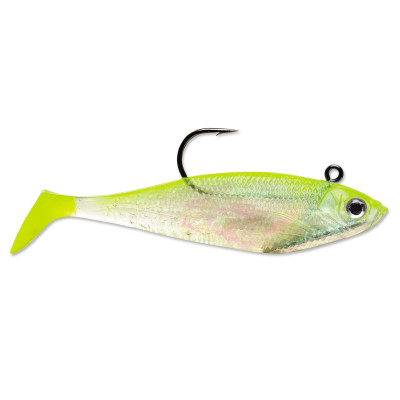
At night, walleye detect silhouette first. High-contrast profiles (black/silver, firetiger) create a distinct outline against any sky background. Natural shad patterns work under partial moon or in clear water. Paddletails and jigs produce when fish are holding near bottom.
Recommended: Rapala X-Rap 10 Silver + Berkley Flicker Shad 7 Black Silver as your starting pair. Add the Firetiger UV X-Rap for stained water or overcast nights, or the Smithwick Perfect 10 Rogue in Clown as a proven, budget-friendly high-contrast alternative.

Line + Leader
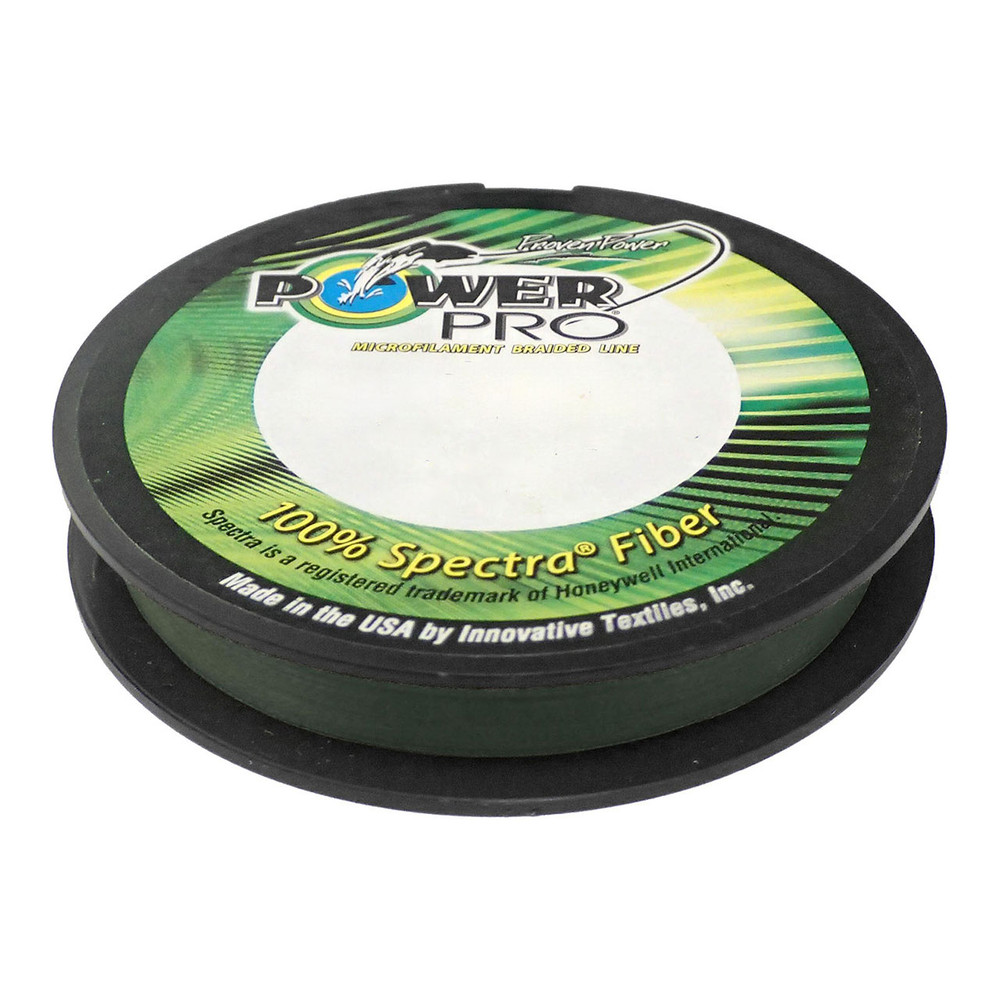
10 lb braid is the standard night shore mainline — low stretch gives sensitivity in the dark and the thin diameter maximizes casting distance. Connect to a 24–36 inch fluorocarbon leader with a double uni or Alberto knot. On rocky structure or heavy cover, upgrade the leader to 20 lb.
Recommended: Power Pro 10 lb braid + Seaguar Blue Label 12 lb fluorocarbon leader for most conditions. Budget option: Trilene XL 10 lb mono straight through (no leader needed, but less abrasion-resistant).


Terminal — Snaps + Swivels
Snaps let you swap baits quickly in the dark without re-tying. VMC Crankbait Snaps improve bait action on jerkbaits and crankbaits. A rolling swivel at the braid-to-leader connection prevents line twist when fishing paddletails or slow-rolling swimbaits.
Recommended: VMC Crankbait Snap Size 1 at the business end. Add a FishUSA Rolling Swivel Size 7 between the braid and leader if you’re fishing paddletails or slow-rolling lures.


Hooks / Split Rings
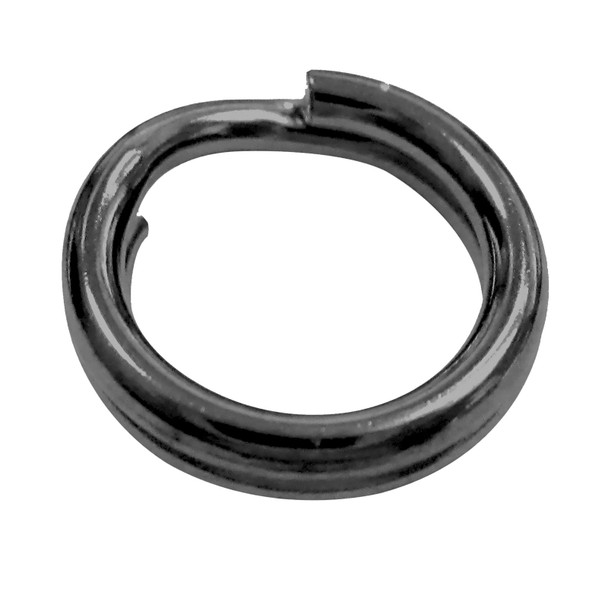
Dull treble hooks are the most common cause of missed fish at night — you can’t see them checking sharpness in the dark. Replace hooks at the start of the season and carry spares. SPRO split rings let you swap them on the water without a separate tool.
Recommended: VMC 9649 Round Bend Treble Size 4 for most jerkbaits and crankbaits in the night shore range. Pair with SPRO Size 4 split rings for swaps.

Tools + Lighting
A headlamp with a dedicated red mode is non-negotiable for night shore fishing. White light destroys night vision and spooks shallow fish. Red mode preserves both. Pliers are essential for hook removal, split ring work, and protecting your hands in the dark when a fish rolls at the bank.
Recommended: FishUSA Premium Fishing Headlamp (red mode) + FishUSA Long Nose Fishing Pliers. Both go on every trip regardless of kit tier.


Storage / Organization
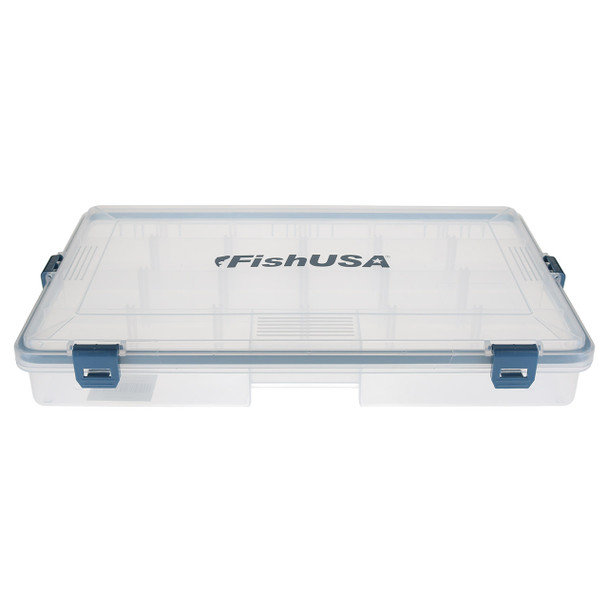
A single waterproof tackle box holds a full night shore bait rotation plus all your terminal tackle. Pre-rig it at home so you can grab the right bait in the dark without fumbling through loose bags.
Recommended: FishUSA Flagship Large Waterproof Tackle Box. One box covers a complete night shore kit.
What you can skip
Two baits (one contrast, one natural) cover most nights — skip the full rotation if you’re building a budget kit. Skip the split rings and spare trebles if you’re not comfortable with hook swaps in the dark. Carry the headlamp and pliers on every trip regardless — those are never optional at night.
How to Fish Night Shore Walleye
Location, timing, and retrieve discipline matter more than gear selection. These rules apply across most night shore walleye scenarios.
Best Nights
| Condition | Good / Bad | Why It Matters |
|---|---|---|
| Overcast sky | Good | Keeps light levels low; walleye hold shallower longer into the night |
| New moon | Best | Darkest nights push walleye into shallow shore-casting range |
| Full moon | Harder | Bright moonlight lets walleye see better; they often hold deeper or tighter to structure |
| Light wind (5–10 mph) | Good | Surface chop reduces light penetration and masks your presence on the bank |
| Heavy wind (15+ mph) | Difficult | Casting accuracy suffers; switch to heavier baits that cast into wind |
| Water temp 55–70°F | Prime | Peak activity window for shore-accessible walleye in most regions |
| Post-cold-front | Slow | Fish go deep and tight to structure; slow down your presentation significantly |
Where to Stand
Points, inside turns, rock piles adjacent to depth, current seams, and flats with a sharp drop within casting range. Position yourself so your cast lands near the depth break, not on the flat itself. Walleye cruise the edge after dark — your bait needs to cross their path, not sit on the feeding flat. Move 15–20 feet down the bank every 20 minutes without a bite rather than re-casting the same water.
Retrieve Rotation
| Retrieve | Best Bait | When to Use |
|---|---|---|
| Steady medium | Crankbait, paddletail | First 10 minutes; establish baseline and understand bait depth |
| Pause-and-dart | Jerkbait | Most consistent night producer; 3 cranks, 2-second pause, repeat |
| Slow sweep-pause | Jerkbait, paddletail | Cold front, post-pressure, fish following but not eating |
| Burn-and-drop | Crankbait | Active fish in warmer water (60°F+); fast retrieve then sudden stop |
Color Logic at Night
Walleye see silhouette first, color second after dark. A black/silver bait creates a high-contrast profile against any sky background — it works under full moon, new moon, and overcast equally well. Firetiger and chartreuse hold visibility in low-light and stained conditions because they maintain brightness without relying on flash. Natural shad patterns (silver, white, ghost) produce best under partial moon in clear water. Glow finishes work in the darkest conditions — use them on jigs when fish are near bottom.
Leader Choice
Standard: 12 lb fluorocarbon (24–36 inches) connected to braid with a double uni or Alberto knot. Rocky or snag-heavy structure: upgrade to 20 lb. Stealth matters far less at night than abrasion resistance — don’t go lighter than 10 lb even in clear water. Fluorocarbon is mandatory over mono at the leader connection; it sinks, handles abrasion on a single rock contact, and doesn’t absorb water the way mono does over the course of a night session.
Troubleshooting (Fast Fixes)
No bites at all
- Confirm you’re fishing within 30–60 minutes of full dark — walleye need the light-level transition before moving shallow.
- Move to a point or current seam if you’re fishing a flat — structure edge beats open flat every night.
- Slow your retrieve down and add longer pauses — fish are often there but not committed.
- Switch from natural to high-contrast color: black/silver or firetiger before anything else.
- Check your snap — a stiff or bent snap kills jerkbait action entirely.
Constant snags
- Shorten your cast to work the edge rather than the deep structure where most snags live.
- Slow your retrieve so the bait rides higher in the water column.
- Switch to a shallower-running crankbait or a paddletail on a light jig head that floats above the snag zone.
- Use a snap — quick bait swaps in the dark prevent long downtime from re-tying after a break-off.
Short strikes / fish missing the bait
- Slow down — fish are following but not fully committing. Add a longer pause after each dart.
- Check treble hooks for sharpness. Replace with fresh size 4 trebles if hooks are dull or bent.
- Drop to 12 lb leader if you’re running 20 lb in non-rocky conditions — it improves bait action slightly.
- Try a smaller profile bait — fish nipping at the tail are often sizing up the bait before committing.
Wind making casting difficult
- Cast across the wind rather than into it — better accuracy and bait control on the retrieve.
- Walleye often stack on the windward side of a point where baitfish concentrate — position yourself to fish that edge.
- Switch to a heavier jerkbait (X-Rap 10 vs X-Rap 8) or crankbait that punches through wind better.
- Close your bail immediately on the cast to prevent wind knots in braid.
Water clarity changes mid-trip
- Clear water (4+ ft vis): downsize to smaller profile baits, use 12 lb leader max, slow your retrieve.
- Stained water (1–3 ft): high-contrast only — firetiger, chartreuse, or black. Heavier leader is fine; fish aren’t leader-shy in low vis.
- Muddy conditions: switch to slow paddletail near bottom. Maximum vibration over flash — jigs with rattles can help.
Looking for a different walleye technique? Walleye Jigging Hub covers vertical jigging and current setups when shore casting isn’t the right tool.
Read Next
Dig deeper on the decisions that matter most for night shore walleye.
FAQ
Common questions on baits, leader, retrieve, and building a simple night shore kit.