/
/
Factory hooks on walleye jerkbaits are adequate out of the box — but they dull fast, and a dull point in cold water means missed fish. This guide covers when to replace, how to size, which hook styles convert more short bites, and how to do the swap without wasting time on the water.
Last updated: May 2026 · By: FishUSA Staff
The 60-second version
The thumbnail test is the fastest field check: drag the hook point lightly across your thumbnail. A sharp hook catches and drags. A dull hook skates cleanly across without biting in. If it skates, replace it — don’t try to fish through it.
Replace hooks when any of the following are true:
Why this matters more in cold water
In water under 48°F, walleye bite with less force and hold the bait for a shorter window before ejecting. A sharp hook penetrates the instant you load the rod. A dull hook requires more force to set — force the fish doesn’t give you time to apply before it drops the bait. Sharp hooks are the single highest-leverage upgrade in a cold-water jerkbait system.
| Usage Level | Inspect Every | Replace Typically |
|---|---|---|
| Light (1–2 fish, soft bottom) | End of day | Every 2–3 trips |
| Moderate (4–6 fish, mixed bottom) | Mid-session + end of day | Every trip |
| Heavy (rock structure, repeated contact) | Every 3–4 fish | 1–2× per day |
| After storage | Before first use each season | If any rust or dullness |
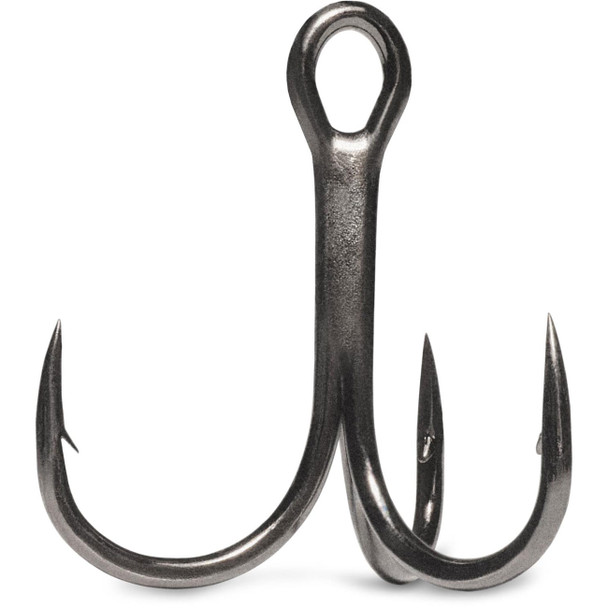
Not all treble hooks perform the same. The two styles most relevant to walleye jerkbait fishing are the round-bend treble and the hybrid treble — each solves a different problem.
Three identical hooks arranged symmetrically around the shank, each with a traditional round-bend profile. This is the style most jerkbaits ship with from the factory.
One wide-gap hook combined with two round-bend hooks on the same shank. The wide-gap side presents a larger hooking window for fish that contact only one side of the bait.
Which to choose
Start with round-bend when fish are fully committing. Switch to hybrid when you’re getting consistent short strikes or hook pulls after brief contact. If you fish primarily cold water (under 48°F), the hybrid treble is worth running as your default — short strikes are the norm, not the exception, when water is cold and fish are lethargic.
Hook size directly affects bait action and suspend depth. The rules are simple: match or go smaller, never larger.
Treble hooks add mass to the bait at the hook attachment points. Factory baits are tuned — weight at the front eye, weight at the rear eye, and internal ballast — to produce neutral suspension at a specific water temperature. Heavier replacement hooks shift that balance. A size-4 hook where a size-6 was designed causes the bait to nose-down or sink during the pause. In cold water, a bait that sinks even slightly during the pause produces far fewer bites than one that holds true depth.
The sizing rule
Match or go one size smaller than factory. One size smaller is a short-strike fix — the extra exposed point length hooks fish that nip without fully biting. The weight difference between a size 6 and size 8 is small enough that most baits absorb it without a meaningful change in suspend depth. Going one size larger (size 4 for a size-6 bait) risks tipping the bait toward slow-sinking behavior.
| Bait Length | Typical Factory Size | Recommended Replacement | Short-Strike Fix |
|---|---|---|---|
| 3–3.5 in | Size 8 | Size 8 (match) | Size 10 |
| 4–4.5 in | Size 6 | Size 6 (match) | Size 8 |
| 5–5.5 in | Size 4–6 | Size 4–6 (match) | Size 6–8 |
| 6+ in | Size 2–4 | Size 2–4 (match) | Size 4–6 |
If in doubt, remove one factory hook and weigh it, then weigh your replacement candidate. Within 0.1–0.2 g is generally safe. A difference of 0.5 g or more will likely change the bait’s action.
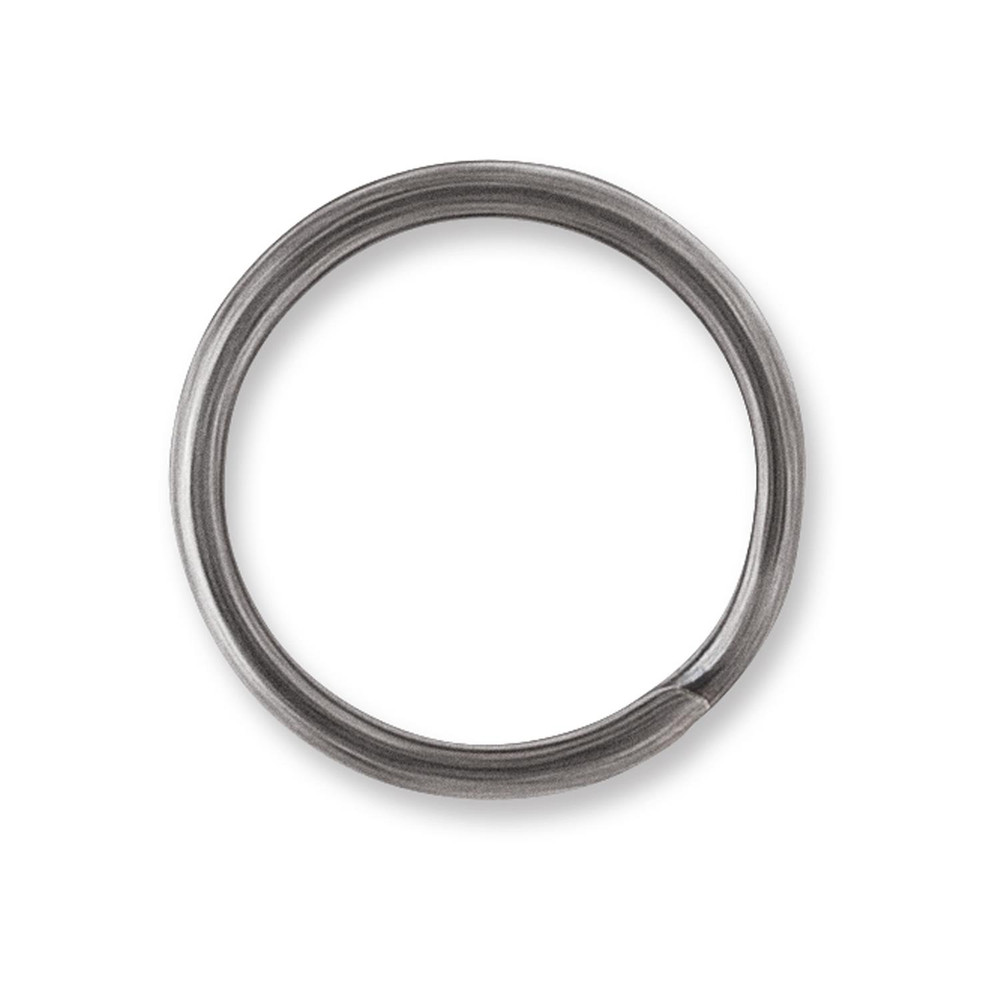
Split rings are the connection point between the bait’s hardware and the treble hook. A failed or deformed ring can cause the hook to rotate out of position — which both kills bait action and significantly reduces hookup percentage.
Use the same size as the factory ring. Split rings are sized by diameter — most 4–5 in jerkbaits use a size 4 ring. A ring that’s too small loads the hook incorrectly and reduces the gap angle at the hinge. A ring that’s too large adds weight and can shift the bait’s tail-down behavior. When in doubt, measure the factory ring diameter (usually 8–10 mm for walleye jerkbait applications).
Buy rings in bulk
Split rings cost almost nothing per unit when purchased in packs of 25–50. There’s no reason to run a suspect ring to save a few cents. Keep a few sizes in your tackle bag — sizes 3, 4, and 5 cover nearly every walleye jerkbait application.
The full hook and split ring swap takes 3–5 minutes per bait with the right tools. Here’s the sequence.
Check the bait float before fishing
After changing hooks, drop the bait in a bucket of water and confirm it still suspends level at rest. If it nose-dives or sinks tail-first, the replacement hook is heavier than the factory hook. Swap back down one hook size.
If you’re on the water without split ring pliers and need to swap a hook quickly:
The three items below cover both treble hook styles and split rings for walleye jerkbait applications.
Hook + Split Ring Upgrades
Replacement trebles and rings for walleye jerkbaits. Size 6 covers most 4–4.5 in baits.
Inspect hooks after every 4–6 fish and after any contact with rocks or hard cover. Replace when the point skates off your thumbnail without catching — a sharp hook should drag noticeably. On a full day of active fishing, it’s common to replace hooks once mid-session and again at the end. In cold water (under 48°F), hook sharpness matters even more because fish bite with less force and a dull point won’t set cleanly.
Match or go one size smaller than the factory hook. Most 4–4.5 in jerkbaits ship with size 6 trebles front and rear. Size 4 works on 5+ in baits. Going one size smaller (e.g., size 8 on a standard bait) is a short-strike fix — the longer exposed point hooks fish that nip the tail without fully committing. Never upsize — heavier hooks shift the bait’s neutral buoyancy and cause it to sink tail-first instead of suspending level.
A round-bend treble has three identical hooks arranged symmetrically — predictable, strong, and good for fish that fully commit. A hybrid treble combines a wide-gap hook on one side with two round-bend hooks — the wide-gap hook catches short-striking fish that only contact one side of the bait. In cold water where fish bite short and don’t fully engulf the bait, a hybrid treble converts more of those glancing strikes.
Yes. Replace front and rear trebles as a pair — even if only one looks dull. Mismatched hook ages lead to inconsistent hooksets (one hook buries, the other glances). While you’re at it, inspect the split rings too. The 5–10 minutes it takes to do both hooks is cheap compared to losing a fish to a dull point on the hook you skipped.
Replace split rings when: they’re visibly bent, twisted, or deformed; the hook can spin freely past the open gap (meaning the ring has stretched); or the bait suddenly starts running off to one side without a bill adjustment fixing it. A weak ring lets the rear hook rotate out of position, creating drag that pulls the bait off its swimming track. Inspect rings every time you change hooks — they’re inexpensive insurance.
Split ring pliers are strongly recommended — they have a small tooth that wedges the ring gap open, making hook removal safe and fast without cutting yourself. Needle-nose pliers work in a pinch but are slower and harder to control. Forceps or hook removers help with the old hook once the ring is open. You can do the job with just pliers, but split ring pliers pay for themselves on your first change.
Yes. In cold water, walleye inhale the bait softly and often reject it quickly. A sharp hook point penetrates the moment you load the rod on the hookset. A dull point slides across bone and cartilage without biting in, and by the time you feel the fish and swing, it’s already spit the bait. If you’re experiencing solid hookups that come unbuttoned after a second or two, test hook sharpness — it’s the most common overlooked cause.
Treble hook replacements are specific to jerkbaits and crankbaits. For walleye jigging, you’re replacing single-hook jig heads — typically a wide-gap hook sized to match the plastic trailer (a 2/0–3/0 wide-gap for most 3–4 in paddletails). Treble hooks are too small and poorly positioned for jig fishing. If you’re looking for jigging hook guidance, see our Spring Walleye Jigging Setup.
Hook Me Up!
Sign up for emails and texts to get exclusive updates and offers.
By providing your number above, you agree to receive recurring automated marketing text msgs (e.g. cart reminders) to the mobile number used at opt-in from FishUSA on 25043. Consent is not a condition of purchase. Msg frequency may vary. Msg & data rates may apply. Reply HELP for help and STOP to cancel. See Terms and Conditions & Privacy Policy