

Rod Length Guide: Casting Distance, Accuracy & Hookset
Rod Length Guide: Casting Distance, Accuracy & Hookset
Rod length quietly controls three things that decide your catch rate every single day: casting distance, accuracy, and hookset line pickup. This guide breaks it all down by technique, species, and platform so you can match length to how you actually fish.
Published: May 2026 · By: FishUSA Staff
Quick answer
For all-around freshwater, a 7′ spinning rod for finesse and a 7′1″–7′3″ casting rod for jigs/moving baits cover most scenarios. Go shorter (6′6″–6′10″) for tight quarters and longer (7′6″–9′+) for maximum distance, line pickup, and surf.
If you’re looking for a fishing rod length chart or wondering what length fishing rod is best for your style, you’re asking a smart question. Rod length quietly controls three things that decide your catch rate every single day: casting distance, accuracy, and hookset line pickup. Choose poorly and you’ll come up short on long casts, miss targets under docks, or fail to move enough line on the set. Choose well and everything gets easier — casts fly farther, skips tighten up, and hooks bury cleanly.
Rod Length 101 — Why Length Changes Performance
Length isn’t just a number on the label — it changes on-water physics:
- Casting distance: Longer rods create a wider casting arc and load more line, sending baits farther with less effort. That’s why surf and open-water anglers trend long.
- Accuracy & line control: Shorter rods keep the tip closer to your hands, improving roll casts, skips, and twitch cadence (jerkbaits/topwater) without slapping the water.
- Hookset leverage & line pickup: A longer rod moves more line per inch of handle travel — critical for slack-line techniques (Ned, dropshot) and deep presentations where stretch and water bow eat hookset energy.
- Fatigue & ergonomics: Length adds leverage, but also weight and swing radius. Match to your height, boat/kayak/bank platform, and handle length preference.
Fishing Rod Length Chart (Quick Picks by Technique & Species)
| Technique / Species | Recommended Length | Why It Works | Power/Action |
|---|---|---|---|
| Finesse spinning (Ned, dropshot) | 7′–7′2″ | Line pickup on slack, longer casts with 1/8–1/4 oz | ML / XF–F |
| Jigs & Texas rigs | 7′1″–7′4″ | Sweep leverage, accuracy + distance balance | MH / F |
| Chatterbaits / Spinnerbaits | 7′–7′3″ | Casting reach, controlled retrieve path | MH / MF |
| Jerkbaits | 6′8″–6′10″ | Tip stays off water, crisp cadence | M / MF |
| Crankbaits (shallow–mid) | 6′10″–7′2″ | Loading/cushion with trebles | M / M–MF |
| Topwater (walking) | 6′8″–7′ | Rod tip clearance + timing | M / MF |
| Frogs / Punching | 7′3″–7′6″ | Winch leverage in cover | H / F |
| Walleye jigging | 6′8″–7′ | Sensitivity + precise lift | ML / F |
| Steelhead float/centerpin | 9′6″–13′ | Mending, drift control, line pick-up | ML–M / MF–M |
| Inshore redfish/snook | 7′–7′6″ | Distance to spooky fish, line pick-up | M–MH / F |
| Catfish (bank/boat) | 7′6″–9′ | Cast sinkers, leverage surges | MH–H / MF–M |
| Surf / Jetty | 9′–12′ | Clear waves, launch heavy payloads | M–H / M–MF |
Distance vs Accuracy: Picking Length for Your Water
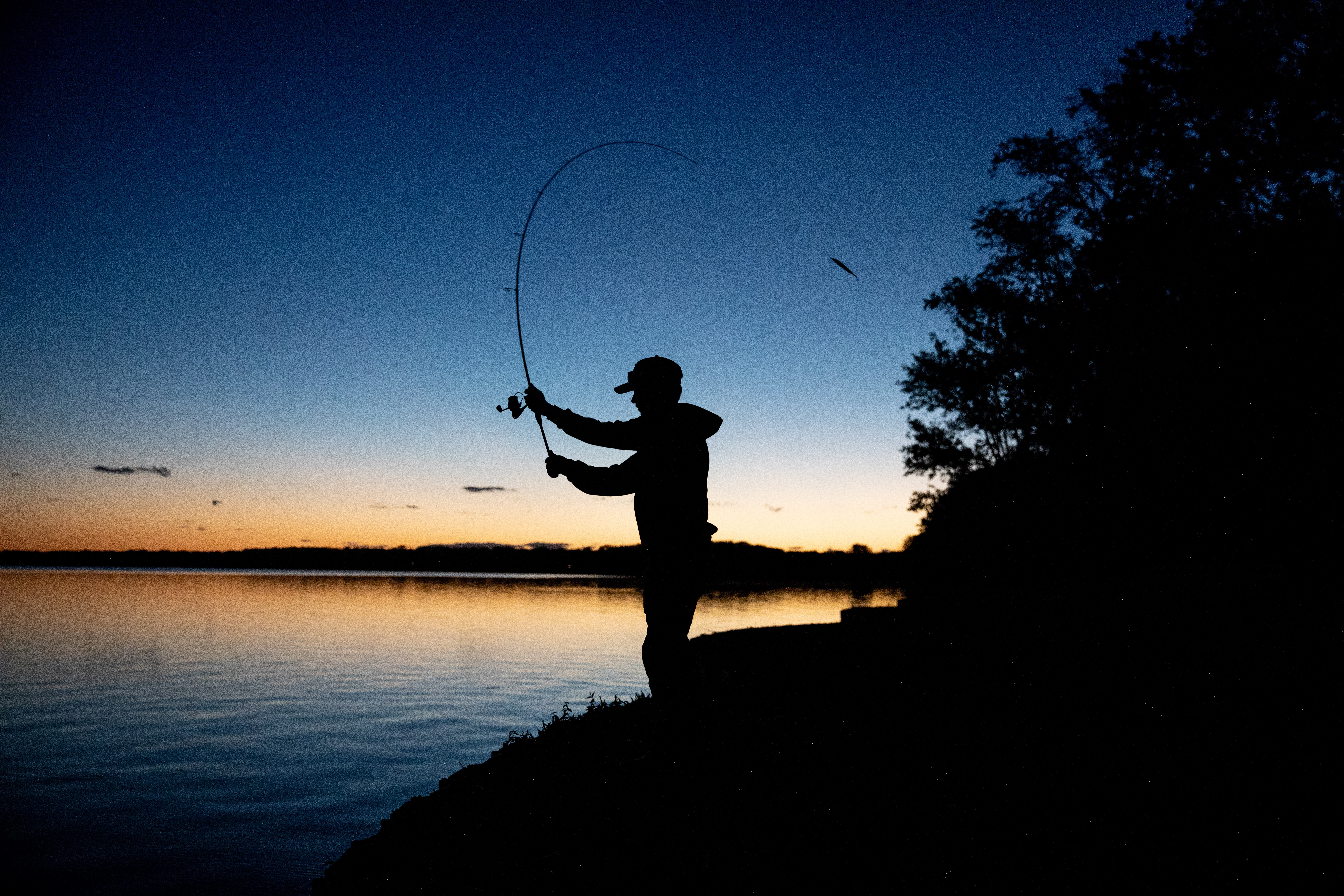
When Longer Rods Win (Open Water, Wind, and Weight)
Longer blanks excel whenever your goal is to cover water or maintain contact with a bait at range. On open flats and big water, a 7′3″–7′6″ rod increases the casting arc and stores more energy on the load, sending chatterbaits, spinnerbaits, and mid-size swimbaits noticeably farther with the same effort. That extra distance expands every fan cast, letting you intersect more roaming fish and keep moving baits in the strike zone longer.
In wind, the longer lever helps drive the lure on a lower, tighter trajectory so it doesn’t balloon, and the additional line pickup on the sweep keeps hooks pinned when a fish eats at the end of a long cast. Heavier payloads also reveal the advantage of length — rods 7′3″ and up load more efficiently with 3/8–1 oz rigs, translating lure weight into forward momentum instead of tip wobble.
Hardware matters too. A braid-friendly, high-frame guide train minimizes friction; line leaves the spool in cleaner coils and passes through the strippers without slapping the blank. Keep leader knots compact (FG or modified Alberto) so they pass through guides freely — a bulky knot or undersized stripper chokes the cast and erases the distance gained by going longer.
When Shorter Rods Shine (Tight Quarters & Cadence Baits)
Shorter rods come into their own wherever precision beats reach. Around docks, bushes, and overhangs, a 6′6″–6′10″ stick gives you tighter control of the tip and makes the rod easier to rotate inside confined spaces. That compact swing arc improves roll-cast accuracy and helps you load the blank like a slingshot for skip shots — crucial when you need to slide a bait under cross-braces or between pontoon floats.
Cadence-driven presentations also benefit from a shorter lever. With jerkbaits and walk-the-dog topwaters, keeping the tip off the surface preserves rhythm and prevents the line from grabbing water and killing the action. A shorter rod allows quicker, sharper inputs with less wrist fatigue, so your twitch–twitch–pause or walking cadence stays crisp throughout a long stretch.
From the bank, terrain often dictates length more than technique. Overhanging brush, riprap behind your heels, and awkward side-hill stances all reduce your effective swing. A slightly shorter blank lets you thread side-arm shots along the shoreline and pick your lanes without scraping branches on the backcast.
Actionable rule
If your average cast is a target shot inside 40 feet, go shorter. If it’s a coverage cast beyond 60–70 feet, go longer.
Hookset Science: Length, Line Pickup & Hook Type
A good hookset blends rod length (how much line you can move), action (how quickly the blank transfers force), line choice (stretch vs. no-stretch), and hook type/wire diameter. Two variables matter most: line pickup clears slack from wind, current, and bow; force delivery drives the point past the barb without tearing out. Longer rods pick up more line with the same sweep, but action and line decide whether that motion becomes penetration or just stretches the system.
Slack-Line Finesse (Ned / Dropshot)
Slack-line techniques create tiny, tentative bites and lots of loose line between you and the hook. A 7′–7′2″ ML/XF spinning rod gives you extra reach so the first sweep removes slack faster and turns into forward movement at the hook point. With braid-to-fluoro finesse setups, braid has virtually no stretch — once you’re tight, energy transfers immediately. The longer rod’s job is to get you tight sooner on a light bite and maintain steady pressure with a controlled sweep rather than a jab. Pair with a sharpened light-wire hook and a slightly lighter drag (start around 20–25% of line strength).
Deep Jigs & Carolina Rigs
Depth and distance multiply slack. Your line cuts a long catenary in the water, and fluorocarbon’s low stretch adds more give. A 7′1″–7′6″ MH/H Fast casting rod increases line pickup per degree of sweep and gives more lever arm to drive a thicker single hook home. With heavier jigs (3/8–1 oz), think long sweep set: reel until you feel solid pressure, then sweep through your ribcage while stepping back or rotating your hips. The longer blank keeps loading as you move, maintaining pressure through stretch, bow, and the fish turning.
Treble-Hook Lures (Cranks, Jerkbaits, Topwaters)
With trebles, action matters more than raw length. You’re not trying to punch a single heavy-gauge hook; you want multiple small points to stick and stay pinned during surges. A Moderate or Mod-Fast blank between 6′10″ and 7′2″ acts like a shock absorber, letting fish load the rod and lean into the hooks. Instead of a violent strike, think “reel set”: wind until the rod loads, then add a short sweep to bury points. Overly stiff rods or tight drags are the main reason trebles tear out at the net.
Line Synergy — Match Stretch to the Job
- Braid: Virtually no stretch — any movement translates fast. On trebles, pair with more moderate actions or a short mono/fluoro leader for forgiveness. In grass, braid plus a slightly longer rod is outstanding.
- Fluorocarbon: Low stretch and high density cuts bow and improves bottom contact. Coupled with a longer rod (7′+), creates excellent deep-water hooksets for jigs and Carolina rigs.
- Monofilament: Built-in cushion pairs beautifully with treble-hook baits and topwaters. You can often drop rod length slightly (mid-6′ to low 7′) because mono’s stretch prevents sudden shock from pulling hooks.
Practical hookset tips
- Get tight first: On any slack-line presentation, reel down until you feel the fish, then sweep. Swinging on pure slack only moves air — use length to take up line, not to guess.
- Sideways sweep: A sideways sweep keeps fish pinned better than straight up-and-down, especially near the boat. Side pressure maintains bend and reduces jump leverage.
- Drag & rod teamwork: For single hooks, start around 25–30% of line rating; for trebles, loosen slightly to keep the rod in its sweet bend through the fight.
Platform Picks: Kayak vs Bank vs Boat vs Surf
- Kayak (6′6″–7′2″): Short enough to swing seated, long enough to steer fish around bow/stern and pick up slack. Mind rear-grip length so it doesn’t snag your PFD. → FishUSA Flagship Elite Spinning Rods
- Bank (6′10″–7′6″): Match local cover; longer if you need distance across points or flats, shorter if you constantly dodge brush. → FishUSA Flagship Elite Spinning Rods
- Boat (6′10″–7′6″): Covers nearly everything; add specialty long rods for open-water casting or float/drift techniques. → FishUSA Flagship Elite Spinning Rods
- Surf/Jetty (9′–12′): Distance and wave clearance rule. Match blank power and rating to your lure + sinker payloads. → Okuma Rockaway SP Spinning Rod
Species & Technique Length Picks
Bass: From Finesse to Frogs
- Finesse spinning (Ned/dropshot): 7′–7′2″ ML/XF for line pickup and bite detection. → Shimano Expride Casting Rod
- Jigs/T-rigs: 7′1″–7′4″ MH/F for sweep leverage and long casts. → Daiwa Tatula Elite Casting Rod
- Chatterbaits/Spinnerbaits: 7′–7′3″ MH/MF for cast reach and bite retention. → FishUSA Flagship Bass Casting Rod
- Cranks/Jerkbaits: 6′8″–7′2″ M/M–MF (go shorter for jerkbaits to preserve cadence). → St. Croix Legend Tournament Bass Casting Rod
- Frogs/Punching: 7′3″–7′6″ H/F for winch power in vegetation. → Dobyns Champion XP Casting Rod (DC735C)
Crappie & Panfish
- Single-pole crappie jigging (cast/vertical): 6′6″–7′6″ L/UL, Fast — long enough to control depth and pick up slack on light-wire hooks. → FishUSA Ultralight Spinning Rods
- Livescope single-pole sniping: 7′–12′ L/ML, Fast — extra reach to place jigs precisely.
- Spider rigging / pushing & long-lining: 10′–16′ ML/M, Moderate — spreads baits and cushions surges on light tethers. → B&M Sam Heaton Super Sensitive Rod
- Dock shooting: 5′–6′ L/UL, Fast — short blank loads like a slingshot for accuracy under docks. → ACC Crappie Stix Spinning Rod
- Slip-float / corking: 8′–10′ L, Moderate-Fast — better line mending and hookset reach with small floats. → ACC Crappie Stix Spinning Rod
- Panfish (bluegill/perch): 6′–7′ UL/L, Fast — casts 1/64–1/8 oz and protects tiny hooks. → St. Croix Panfish Series Spinning Rod
- Ice panfish: 24″–36″ UL/L, Fast — short sticks for tight quarters, quick hooksets on up-bites. → FishUSA Flagship Ice Rod
Walleye, Steelhead/Trout, Inshore, Catfish & Surf
- Walleye jigging: 6′8″–7′ ML/F — light weight + precise lift. → FishUSA Flagship Walleye Spinning Rods
- Steelhead float/centerpin: 9′6″–13′ — drift control and mending. → FishUSA Flagship Salmon/Steelhead Centerpin Rods
- Inshore reds/snook: 7′–7′6″ M–MH/F — distance to spooky fish, strong sets. → St. Croix Avid Inshore Spinning Rod
- Catfish: 7′6″–9′ MH–H/MF–M — cast sinkers, keep pressure on circle hooks. → MadKatz Casting Rod
- Surf (stripers/drum): 9′–12′ — reach, wave clearance, line control in current. → St. Croix Avid Surf Casting Rod
Spinning vs Casting: Does Length Change the Choice?
- Spinning (light lures & wind): 7′–7′6″ helps cast 1/8–1/2 oz farther with fewer issues in crosswinds. Great for kayak/bank finesse.
- Casting (accuracy & power): 6′10″–7′4″ balances target accuracy with hookset authority for 3/8–1 oz. For bladed jigs, chatterbaits, and heavier plastics, 7′2″–7′4″ often feels just right.
Starter pair: 7′ ML/XF spinning + 7′2″ MH/F casting covers 90% of freshwater tactics. Add a 6′10″ M/MF for jerkbaits/topwater and a 7′3″ MH/MF composite for chatterbaits to round out the deck.
Length + Power/Action: Don’t Choose in a Vacuum
- Match the lure rating: Length helps you cast, but lure weight loads the blank. If you routinely throw 1/2–3/4 oz, a 7′2″–7′4″ rod rated for that window will outperform a 6′10″ built for 1/4–1/2 oz.
- Cover dictates backbone: Heavy grass/wood? Go longer + more power to steer fish. Tight cover or docks? Go shorter for precision.
- Hook style first, then length: Trebles → Moderate action (length for casting comfort). Single hooks → Fast/XF (length for line pickup and hookset leverage).
Reading a rod label fast
Example: “7′2″ MH/F • 10–20 lb • 3/8–1 oz”
7′2″ = distance + balanced accuracy. MH/F = backbone for single-hook baits; crisp sets. Line & lure ratings = practical casting/setting window — believe them. Note: one brand’s MH can feel like another’s M; the lure rating is the truest cross-brand constant.
Ergonomics & Angler Height (The Overlooked Fit)
- Under ~5′8″: 6′8″–7′ often feels better balanced and less tip-heavy.
- Over ~6′: 7′2″–7′6″ usually feels natural and efficient.
- Handle length: Longer rear grips boost sweep leverage for frogs and swimbaits; shorter handles speed up twitch baits and skipping.
- Balance check: If the combo is tip-heavy, it will feel longer and wear you out faster. Balance near the reel seat for all-day comfort.
Travel, Two-Piece & Telescopic Length Choices
- 2-piece 7′ spinning/casting is a versatile travel standard — modern ferrules maintain action well.
- Telescopic surf rods (9′–12′) pack smaller; check guide alignment and ferrule snugness often.
- For airlines and backpacks, 4-piece options paired with rod socks/tubes protect guides and ferrules on the road.
Final Thoughts
Choosing the right rod length instantly improves your fishing. Longer rods boost casting distance and pick up more line on the hookset — perfect for open water, surf, and deep or slack-line techniques. Shorter rods sharpen accuracy and cadence, ideal for threading casts under docks and overhangs or working jerkbaits and walk-the-dog topwaters.
Whatever you target, match length to your lure weight range, the cover you’re fishing, your platform (bank, boat, kayak, surf), and hook style (trebles vs. single) to get the best results every time out.
- Open water, long casts, deep presentations: Go longer — 7′3″ and up.
- Tight cover, cadence baits, skip shots: Go shorter — 6′6″–6′10″.
- All-around freshwater starter pair: 7′ ML/XF spinning + 7′2″ MH/F casting covers 90% of situations.
Fishing Rod Length FAQ
A 7′ medium-power rod is the friendliest all-arounder — long enough to cast, short enough to control, and compatible with many techniques. Best quick picks: 7′ M/F spinning for multi-species; 7′ M/F casting for bass bank or boat fishing.
Generally yes. An extra 3–6 inches can add meaningful distance with the same lure by increasing arc and line speed — especially noticeable with 3/8–1 oz payloads and braid.
Jigs/T-rigs: 7′1″–7′4″ MH/F for sweep leverage. Crankbaits: 6′10″–7′2″ M/M–MF (often glass or composite) for cast length and treble forgiveness.
6′6″–7′2″ balances seated casting, accuracy, and the ability to move fish around the bow and stern. Watch rear-grip length so it doesn’t snag your PFD.
6′6″–6′10″ typically wins for target accuracy and skipping; 7′+ wins for casting distance and line pickup. Pick by water type and lure weight.
9′–12′ rods launch farther and clear waves. Shorter surf rods (8′–9′) help with lure control around rocks and jetties but give up raw distance.
Spinning often stretches to 7′–7′6″ for light lures and wind; casting sweet spots cluster at 6′10″–7′4″ for accuracy with heavier rigs.
No single length is perfect, but a 7′ ML/XF spinning + 7′2″ MH/F casting covers 90% of freshwater tactics.
Taller anglers comfortably wield 7′2″–7′6″; shorter anglers often prefer 6′8″–7′ for control and a less tip-heavy feel.