
Best Crappie Fishing Line: A Complete Buying Guide
Best Fishing Line for Crappie
Monofilament, fluorocarbon, braid, and copolymer compared — with line weight, visibility, and technique recommendations for every crappie fishing situation.
Last updated: August 2026 · By: FishUSA Staff
Crappie are one of the most line-sensitive fish you can target. Their soft, paper-thin mouths mean that too much line resistance or stiffness can cause hook pulls on the fight; too little sensitivity and you miss the subtle tap that a biting crappie barely telegraphs. Add their preference for light jigs, tiny tubes, and small minnow rigs — and you quickly see why line selection matters more for crappie than for most other freshwater fish.
This guide covers the best crappie fishing lines across four categories: monofilament, fluorocarbon, braid, and copolymer. Each type has a distinct advantage depending on technique, water clarity, and the cover you’re fishing. We break down two top picks in each category, what makes each line effective for crappie, and which situations favor each type. For more on crappie tactics, see our guide to summer crappie fishing.
Quick-Look Comparison
| Line | Type | Best For | Recommended Test | Key Advantage |
|---|---|---|---|---|
| Maxima Ultragreen | Monofilament | All-around, near cover | 4–6 lb | Abrasion resistance, low visibility green |
| Berkley Trilene XL | Monofilament | Float fishing, beginners | 4–6 lb | Low memory, smooth casting |
| Seaguar InvizX | Fluorocarbon | Clear water, finesse jigging | 4–6 lb | Near-invisibility, superior sensitivity |
| Sunline Super FC Sniper | Fluorocarbon | Finesse techniques, heavy cover | 4–8 lb | Premium knot strength, ultra-sensitive |
| PowerPro Spectra | Braid | Spider rigging, dock shooting | 8–10 lb (+ leader) | Zero stretch, maximum sensitivity |
| K9 Crappie Braid | Braid | Ultralight crappie setups | Ultralight | Crappie-specific diameter and feel |
| P-Line Floroclear | Copolymer | General crappie fishing | 4–6 lb | Fluoro coating, low memory, versatile |
| Sufix Advance | Copolymer | Heavy cover, demanding conditions | 4–8 lb | High tensile strength, abrasion resistance |
Best Monofilament Fishing Lines for Crappie
Monofilament remains the most widely used line type in crappie fishing for good reason. Its natural stretch cushions the fight against crappie’s soft mouths, reducing hook pulls during head shakes. It casts lightweight jigs and floats smoothly, manages easily on ultralight spinning reels, and costs less than fluorocarbon or braid. In 4–6 lb test, monofilament is an excellent all-around choice for most crappie techniques.
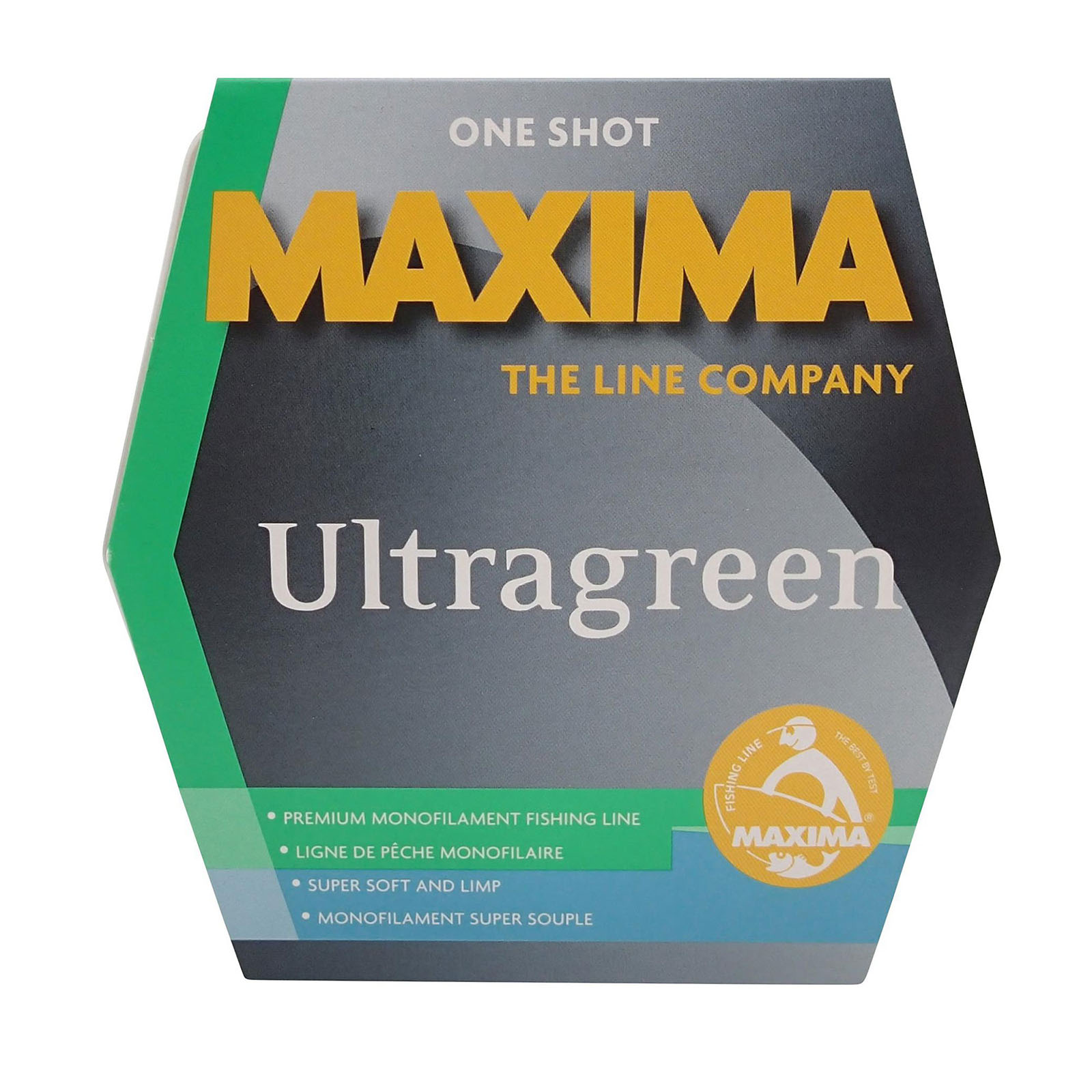
Maxima Ultragreen Monofilament Line
Best overall monofilament for crappie
Maxima Ultragreen Monofilament Line
2–25 lb test · Low-visibility green
The Maxima Ultragreen is one of the most respected monofilament lines in freshwater fishing, and it earns its reputation with crappie anglers through consistent knot strength and exceptional abrasion resistance. The green color blends naturally into most freshwater environments — stained ponds, timber-filled lakes, and weedy flats alike. Where cheaper monofilaments fray after scraping against brush piles and dock pilings, the Ultragreen maintains integrity through extended contact with structure. For anglers who spend their time around cover where crappie concentrate, that durability translates directly into fewer line failures and more fish landed.
- Abrasion resistance: Holds up against rocks, timber, and dock structure better than standard monofilament at the same pound test.
- Low-visibility green: Blends into natural freshwater environments; less conspicuous than clear or high-vis lines in clear to moderately stained water.
- Suppleness: Flexible enough to cast lightweight jigs and live minnow rigs smoothly on ultralight spinning gear without excessive line memory.
Berkley Trilene XL Monofilament Line

Best monofilament for float fishing & beginners
Berkley Trilene XL Monofilament Line
2–20 lb test · Clear or Solar Collector
The Berkley Trilene XL is the most forgiving monofilament on this list. Its XL (extra-limp) formula dramatically reduces line memory — the coiling tendency that causes tangles, reduces casting distance, and fights you on every cast. For crappie anglers using ultralight spinning reels where line management is already a challenge, the Trilene XL’s low memory means cleaner casts, fewer backlashes, and better lure presentation. It’s particularly well-suited for slip float fishing, where smooth line flow through the float stopper is critical to natural bait presentation.
- Low memory: XL formula stays straight and manageable on the spool, reducing tangles and improving cast consistency — especially valuable on ultralight spinning reels.
- Smooth casting: Supple construction allows lightweight jigs and tiny floats to carry farther and land softer than stiffer lines.
- Clear finish: Virtually invisible in clear to lightly stained water; Solar Collector (high-vis) option available for anglers who want to watch the line for bite detection.
Best Fluorocarbon Fishing Lines for Crappie
Fluorocarbon has a refractive index close to water, making it the most invisible line type available — a meaningful advantage when targeting finicky crappie in clear, pressured lakes. It sinks faster than monofilament, which improves jig action at depth and keeps your presentation in the strike zone longer. The trade-off is less stretch than mono, which requires a softer rod and lighter drag to protect crappie’s soft mouths. In 4–6 lb test, fluorocarbon is the best choice for clear-water crappie fishing and finesse jigging presentations.
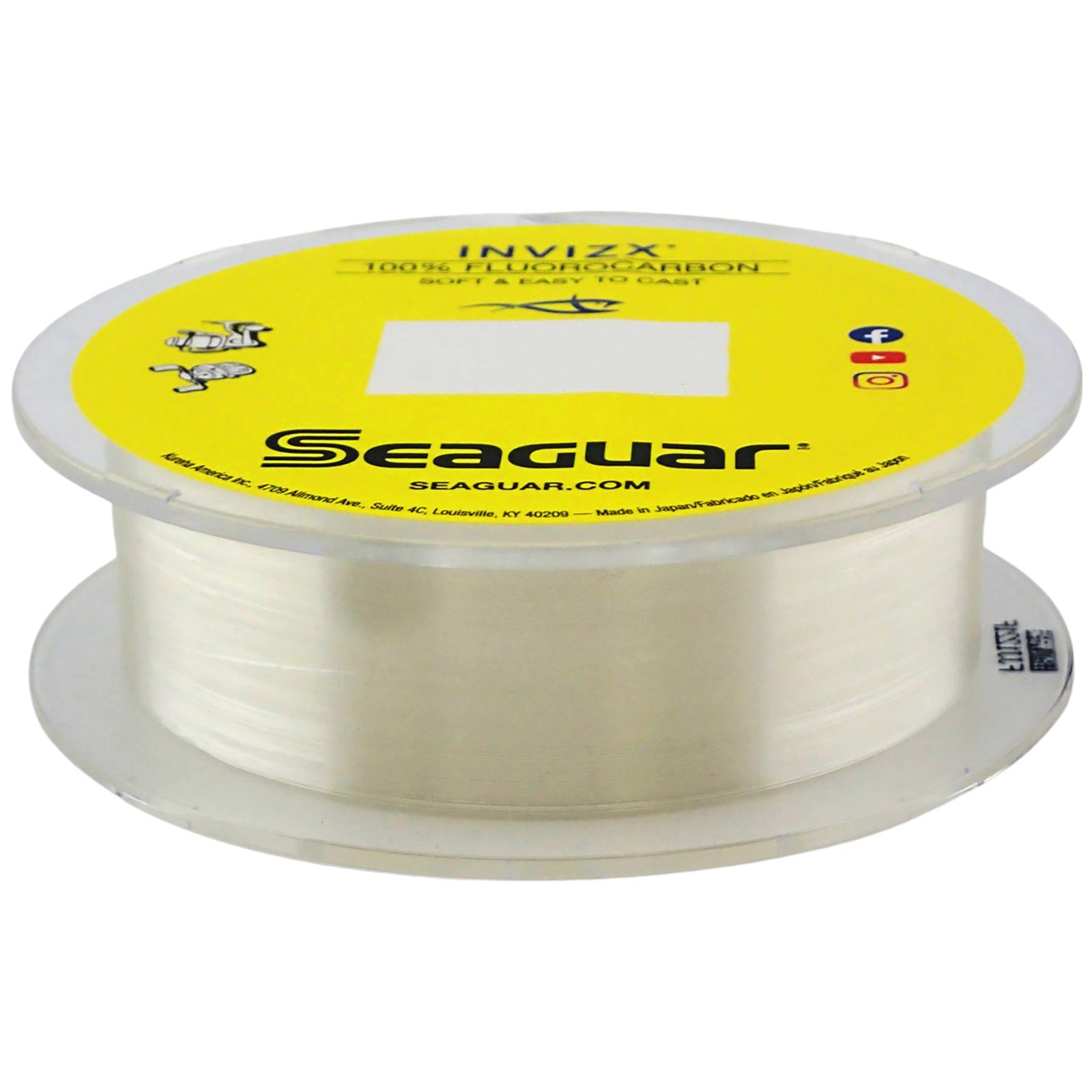
Seaguar InvizX Fluorocarbon Fishing Line
Best fluorocarbon for crappie
Seaguar InvizX Fluorocarbon Fishing Line
4–20 lb test · Nearly invisible underwater
The Seaguar InvizX is widely regarded as the best all-around fluorocarbon for light-tackle freshwater fishing, and it performs exceptionally well for crappie. InvizX is made from Seaguar’s double-structure fluorocarbon, which produces a softer, more manageable line than standard 100% fluorocarbon — a significant benefit for crappie fishing where you need tight loops on light jigs and smooth line flow. The near-invisibility underwater gives finesse presentations their best chance in clear lakes and reservoirs where crappie have been heavily pressured. Thin diameter enhances jig action on small tube baits and curly-tail grubs that lose lifelike movement when tied to bulkier lines.
- Near-invisibility: Double-structure fluorocarbon is as close to invisible as any line available — crucial in clear-water fisheries where crappie inspect offerings before committing.
- Sensitivity: High sensitivity telegraphs the subtle tap of a lightly biting crappie that mono or copolymer might not transmit clearly, especially in deeper water.
- Soft construction: More supple than standard fluorocarbon, reducing the line memory issues that make other fluorocarbons difficult to manage on ultralight spinning reels.
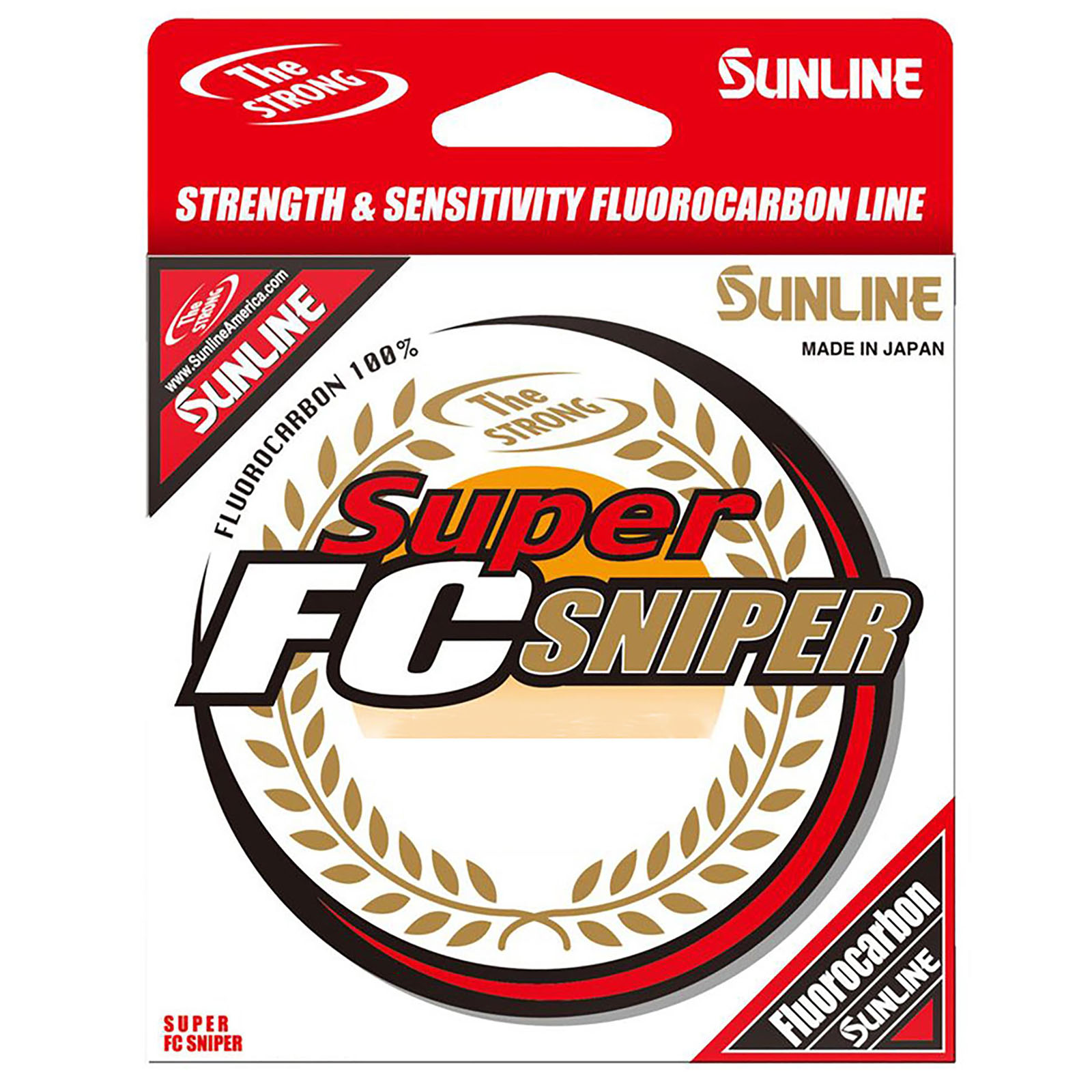
Sunline Super FC Sniper Fluorocarbon Line
Best premium fluorocarbon for crappie
Sunline Super FC Sniper Fluorocarbon Line
4–20 lb test · Triple-resin coating
The Sunline Super FC Sniper is a tournament-grade fluorocarbon that brings premium performance to crappie fishing. Its triple-resin treatment produces a line that is simultaneously softer and more abrasion-resistant than most fluorocarbons, addressing the main compromises of the category. For crappie anglers fishing near dock pilings, brush piles, laydown logs, and other abrasive structure, the Super FC Sniper maintains its strength through repeated contact that would nick and weaken lesser fluorocarbons. The result is a line you can trust on light jig heads around heavy cover — where crappie concentrate but line damage risk is highest.
- Triple-resin coating: Improves suppleness and castability without sacrificing the abrasion resistance needed for fishing near dock structure and brush piles.
- Knot strength: Superior knot integrity for light line connections — critical at 4–6 lb test where a poor knot is the most likely point of failure.
- Precision fishing: Tight diameter maintains jig action on the smallest presentations, making it the preferred choice for finesse techniques like small tube jigs and micro grubs.
Best Braided Fishing Lines for Crappie
Braided line has no stretch, which delivers maximum sensitivity for detecting the lightest crappie bites — especially when jigging at depth where mono or fluoro absorbs much of the strike signal. Braid also has a very thin diameter relative to its breaking strength, allowing you to pack more line on a small crappie reel and maintain lure action at depth. The main limitation is visibility: braid stands out in clear water, which is why most crappie anglers pair it with a short fluorocarbon leader of 18–36 inches between the braid and the jig. Braid excels for spider rigging, dock shooting, and jigging in stained or cover-heavy water.
PowerPro Braided Spectra Fiber Line

Best braid for crappie fishing
PowerPro Braided Spectra Fiber Line
5–150 lb · Moss Green or Hi-Vis Yellow
The PowerPro Braided Spectra Fiber Line is the most trusted braid in crappie fishing and one of the most widely used braided lines in freshwater fishing overall. For crappie, the key advantage is its Enhanced Body Technology (EBT) treatment, which gives the line a rounder, smoother profile that casts cleanly through guides and reduces the wind knots that plague lesser braids on ultralight spinning reels. At 8–10 lb test, PowerPro’s diameter is comparable to 2–4 lb monofilament — letting you maintain excellent jig sensitivity and action while adding the no-stretch bite detection that braid delivers. The Hi-Vis Yellow option is especially popular for spider rigging, where watching multiple lines simultaneously for bite indicators is essential.
- Zero stretch: Instant bite detection at depth — a crappie’s subtle inhale registers as a clear signal rather than a delayed soft pressure that mono absorbs.
- Thin diameter: 8 lb PowerPro has roughly the same diameter as 2 lb monofilament, preserving natural jig action and improving casting distance on light setups.
- Color options: Hi-Vis Yellow for line-watching techniques like spider rigging; Moss Green for presentations where you want reduced visibility above the waterline.
K9 Crappie Braid

The K9 Crappie Braid is engineered specifically for crappie fishing — not adapted from a bass or saltwater braid, but designed from the ground up for the ultralight setups, small jigs, and light-bite detection demands of crappie angling. Its extremely thin diameter is the defining characteristic: at equivalent strength to other braids, K9 Crappie Braid manages to maintain a smaller profile that interferes less with micro jig action and flows more smoothly through the light guides on ultralight crappie rods. The high-visibility color option makes it easy to watch for the subtle line movement that often telegraphs a crappie bite before you feel pressure on the rod tip.
- Crappie-specific design: Diameter, stiffness, and handling optimized for ultralight spinning setups and small jig presentations rather than adapted from heavier-duty braid.
- High strength-to-diameter ratio: Maximizes sensitivity and line capacity on small crappie reels without sacrificing the strength needed to pull fish from brush.
- High-visibility color: Allows anglers to watch the line for subtle bite telegraphs — especially useful when jigging vertically where the tap is often seen before it’s felt.
Best Copolymer Fishing Lines for Crappie
Copolymer lines blend two or more nylon polymers to combine the best traits of monofilament and fluorocarbon: lower memory than standard mono, better underwater invisibility than pure nylon, and more castability than stiff fluorocarbon. P-Line Floroclear adds a fluorocarbon coating to the mix, pushing the invisibility advantage further. Copolymers are an excellent choice for crappie anglers who want more performance than monofilament without the stiffness and cost of full fluorocarbon.
P-Line Floroclear Fluorocarbon Coated Line
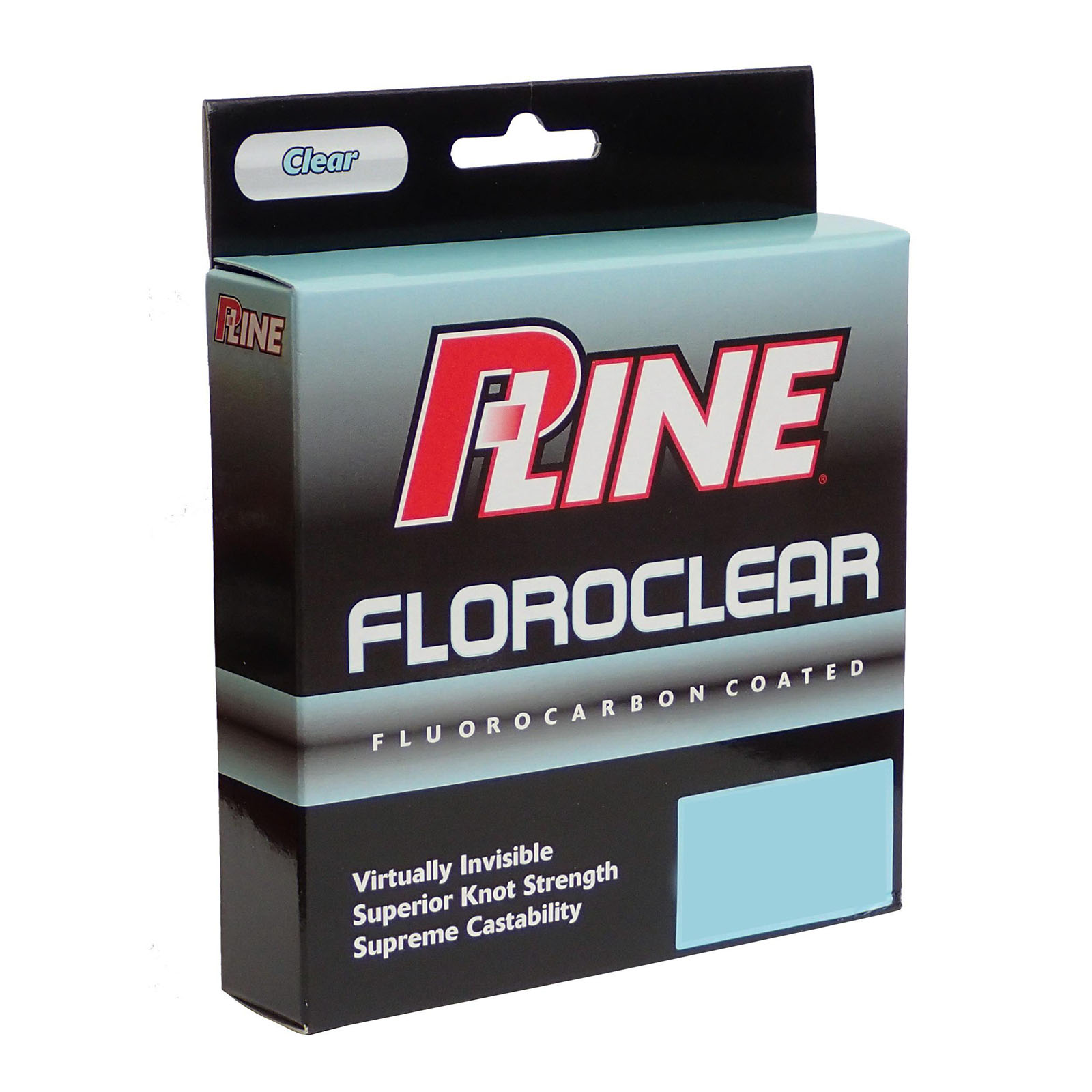
Best copolymer for crappie
P-Line Floroclear Fluorocarbon Coated Line
4–20 lb test · Clear, fluorocarbon-coated
The P-Line Floroclear is the best copolymer option for crappie fishing because it delivers the invisibility advantage of fluorocarbon through its outer coating while maintaining the manageability and softness of a copolymer core. Standard fluorocarbon is stiff — a meaningful drawback on ultralight crappie rods where you need a supple line to cast small jigs and detect subtle bites. The Floroclear’s copolymer core stays soft and manageable while the fluorocarbon coating reduces underwater visibility and adds a sensitivity advantage over pure nylon monofilament. It’s the closest thing to having both performance characteristics in one spool.
- Fluorocarbon coating: Reduces underwater visibility significantly compared to standard monofilament — approaches fluorocarbon performance at monofilament-friendly pricing.
- Low memory: Copolymer core stays limp and manageable on ultralight reels, reducing the line twist and coiling that makes some fluorocarbons difficult to fish with small jigs.
- Versatility: Handles float fishing, jigging, live bait rigs, and small spinners equally well — a true all-around crappie line that doesn’t require technique-specific line changes.
Sufix Advance Hyper Copolymer Line

Best copolymer for demanding conditions
Sufix Advance Hyper Copolymer Line
4–20 lb test · Low-visibility clear
The Sufix Advance is the most structurally robust copolymer on this list — the right choice when crappie are holding in heavy cover where abrasion and line failure are serious concerns. Its Hyper Copolymer construction produces tensile strength and abrasion resistance that exceed standard monofilament and most basic copolymers at the same pound test, meaning you can fish lighter line with less risk near dock pilings, brush piles, and submerged timber. The Advance also maintains excellent sensitivity for its line type, allowing bite detection that standard mono struggles to match, particularly in cooler water when crappie bites turn especially light.
- Tensile strength: Hyper Copolymer construction delivers above-average breaking strength for its diameter — fish lighter line around cover without sacrificing pullout strength.
- Abrasion resistance: Handles repeated contact with dock structure, brush piles, and rocky substrate better than monofilament at equivalent pound test.
- Sensitivity: More responsive than standard monofilament, especially in cold water when crappie bites are barely perceptible — a meaningful advantage when fish are lethargic.
Buying Guide: How to Choose the Right Crappie Line
Three factors determine the best line for your crappie situation: water clarity, technique, and cover type. Nail all three and you’ll have the right line for where and how you’re fishing. Here’s how to think through each one.
Match line type to water clarity
In clear water — the kind where you can see 4–6 feet down — fluorocarbon or copolymer with a fluorocarbon coating is the right starting point. Crappie in pressured, clear fisheries have learned to be wary of line, and reducing underwater visibility matters. In stained or off-color water where visibility drops to 18 inches or less, line color becomes less of a factor. Braid or monofilament are both effective, and you can focus on technique and presentation instead.
Match line type to technique
| Technique | Best Line Type | Recommended Setup |
|---|---|---|
| Slip float fishing | Monofilament | 4–6 lb mono; floats slightly, flows through float stopper smoothly |
| Vertical jigging, clear water | Fluorocarbon | 4–6 lb fluoro; invisible, sinks fast, high sensitivity |
| Spider rigging | Braid + leader | 8–10 lb braid; 2 ft fluorocarbon leader for stealth near the jig |
| Dock shooting | Braid or fluoro | 6–8 lb; zero-stretch braid or stiff fluoro for skipping precision |
| Live bait under a cork | Monofilament or copolymer | 6 lb; stretch prevents hook pulls; floats naturally with a minnow |
| Deep jigging (15+ ft) | Braid + leader | 8 lb braid + 18 in fluoro leader; zero stretch at depth for bite detection |
Match line strength to cover
Open water or light structure: stay at 4 lb test to maximize jig action and sensitivity. Near dock pilings, brush piles, and heavy timber: step up to 6–8 lb and choose an abrasion-resistant option (Maxima Ultragreen, Sufix Advance, or braid). The goal is the lightest line you can confidently fish in the cover present — crappie don’t pull hard enough to require heavy line in most situations, but cover does create the need for abrasion resistance.
Leader tip: When fishing braid for crappie, always use a fluorocarbon leader. An 18–36 inch section of 4–6 lb fluorocarbon between the braid and your jig gives you braid’s sensitivity and zero-stretch bite detection while keeping an invisible connection at the business end. Connect with a double uni knot or an Alberto knot for the best braid-to-fluoro junction.