


/
/
River salmon fishing can be as frustrating as it is rewarding. One morning the fish are everywhere and every cast counts. The next day the same run is packed, and almost no one hooks up. The difference is almost never luck — it’s approach, water reading, and presentation.
Last updated: August 2026 · By: FishUSA Staff
River salmon fishing can be one of the most exciting and frustrating forms of freshwater fishing. One day the fish are everywhere and nobody can miss. The next day, that same run looks full of salmon and almost no one hooks up. That inconsistency is exactly why serious tributary anglers focus on fish behavior, water conditions, presentation, and positioning — not on luck.
To consistently catch salmon in rivers, you need more than a handful of favorite baits. You need to understand how migratory fish move, where they feel comfortable, and what makes them react. The ten tips below are built around real-world tributary tactics that separate productive anglers from frustrated ones.
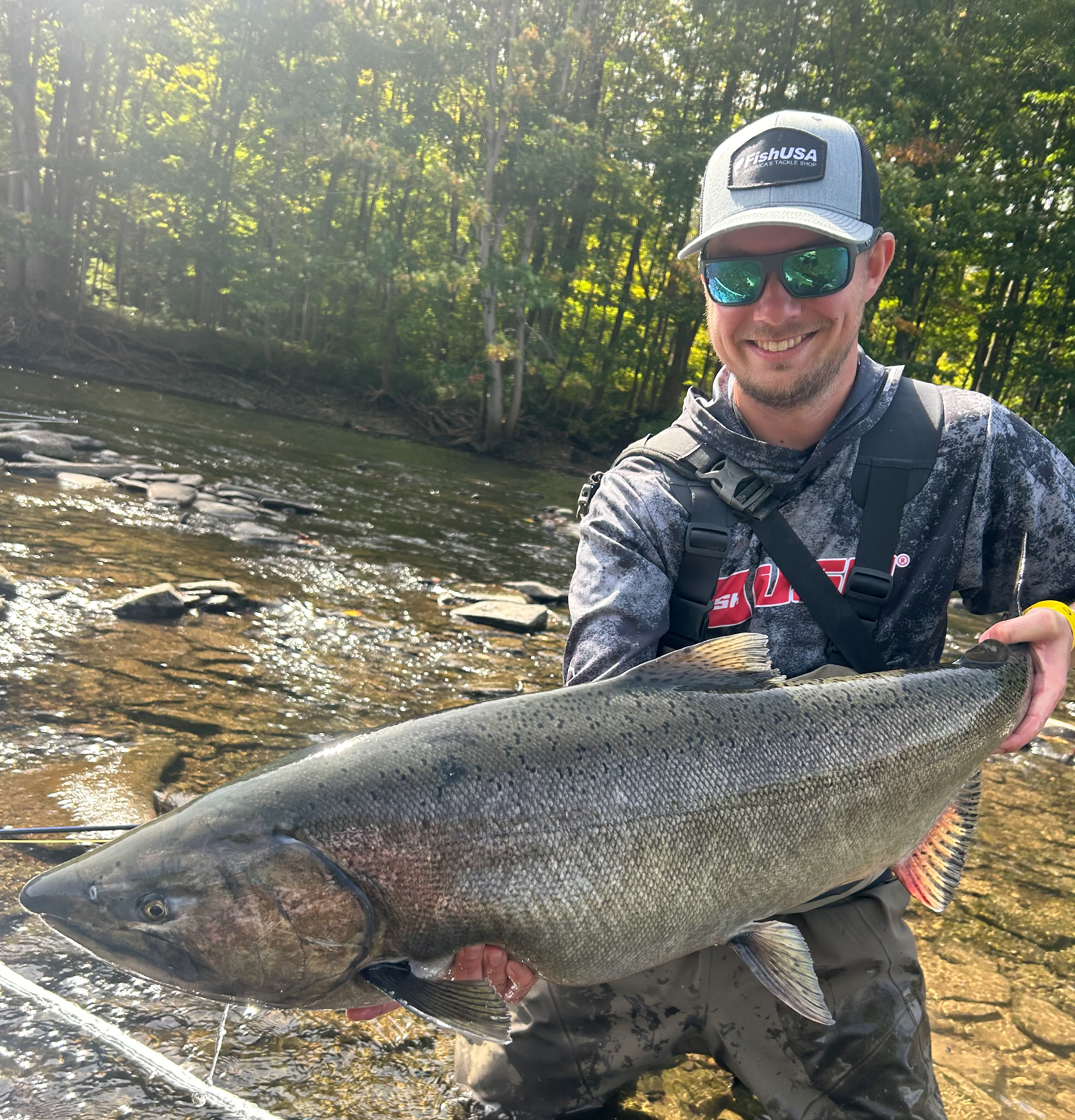
The most common mistake in tributary salmon fishing is forgetting that salmon still behave like fish. They’re aggressive, territorial, and powerful — but they also spook. March into the river, wade right on top of them, and drop a heavy rig on their heads, and you’ve already made your job much harder before the first cast.
A better mindset is to approach river salmon the same way you would approach wary trout in clear water. Stay back. Watch the current. Make controlled casts and let your presentation drift naturally through the lane instead of forcing it straight down onto the fish. Many anglers claim salmon “don’t bite,” but pressured fish in shallow or flat water often stop reacting because the angler is too close, too loud, and too aggressive.
When you fish from farther back and give your drift a clean, natural run through the lane, you immediately separate yourself from most of the crowd. That single adjustment — just giving the fish a little space — can be the difference on a tough morning.
Most anglers crowd into large, slow, obvious pools because they can see salmon stacked there. The problem is that visible fish in flat water are often the hardest fish to catch. They’re exposed, heavily pressured by every angler who walked by that day, and in many cases just resting — not actively moving or reacting.
If you want active fish, focus on water that most anglers walk past:
Think “bubbles and green water” rather than “big flat pool.” Broken current gives salmon security and oxygen, and it also hides your presentation better than glassy, calm water does. Deep pockets near current transitions are especially productive because fish can hold comfortably while still being positioned to slide into prime travel lanes with fresh push of water.
Tailouts — the shallow, slowing water at the bottom of a pool where fish accelerate out and back into current — are another overlooked spot. Salmon moving through will pause at a tailout before committing to the next run upstream, making it a short but productive window.
A lot of anglers use leader material that’s far heavier than necessary because salmon are large and strong. That logic makes sense on the surface, but overly heavy leaders cost you bites — especially in clear water or on pressured tributaries where fish have seen every presentation possible.
You don’t need rope to land a salmon. In most tributary situations, 10–15 lb fluorocarbon is plenty. Fluorocarbon in particular gives you several real advantages over heavier monofilament:
The tradeoff is that lighter leader demands better drag settings and smoother fish-fighting technique. You have to let the rod and drag do the work rather than muscling fish. That’s a worthwhile skill to develop — and when your hookups increase on the same water, it’s clear evidence the leader change was the difference.
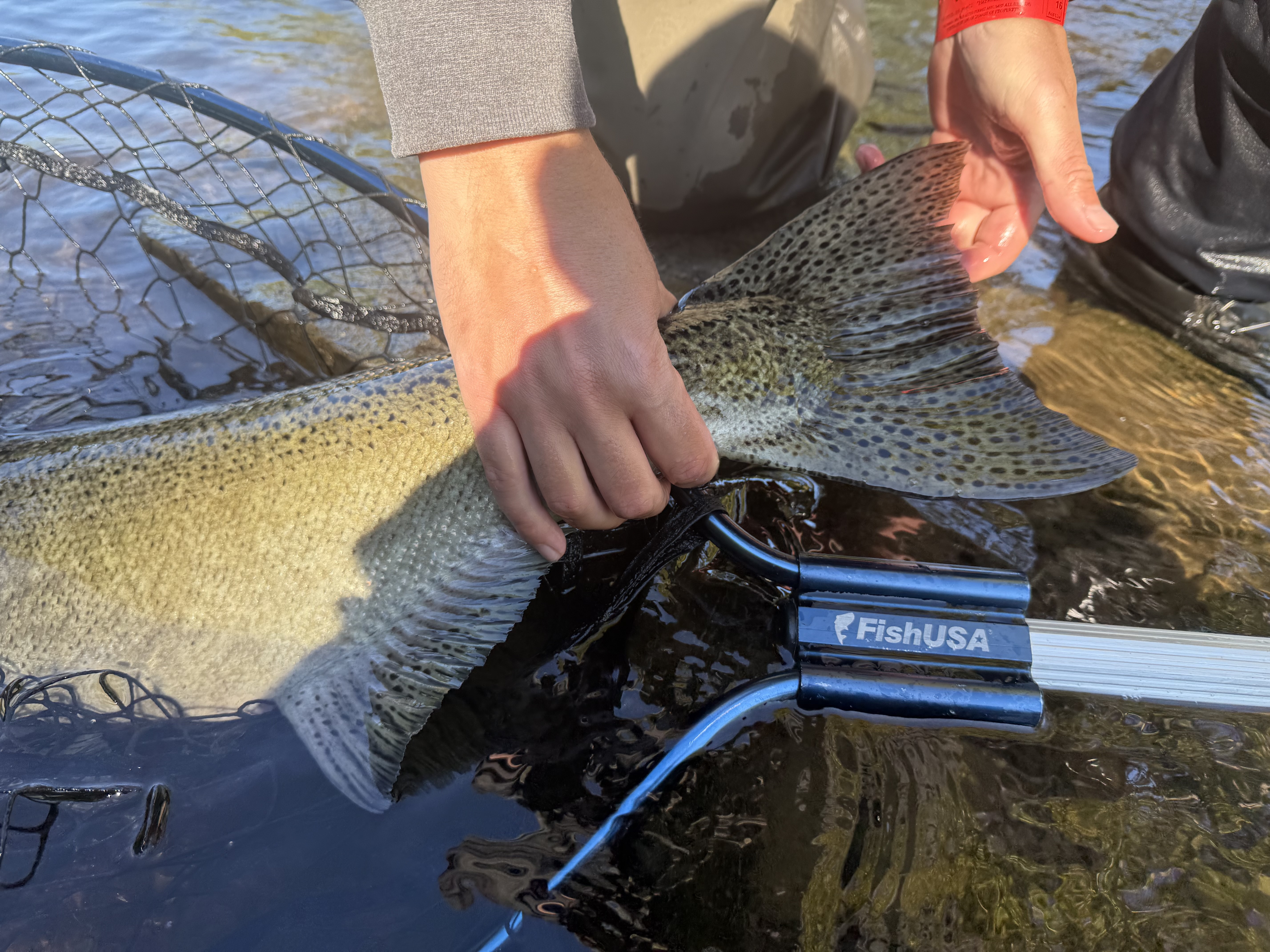
River salmon aren’t feeding the way they do in open water, but they absolutely react to color. Fresh fish can be genuinely aggressive, and on a good morning one color will outproduce everything else by a wide margin. The problem is that color changes by the day, by the run, and by water clarity — and the only way to find it is to rotate.
Smart anglers don’t lock into one pattern. They rotate through bright and subtle options until fish respond:
Water clarity is the most reliable starting point. In muddy or high water, louder colors help fish find your presentation from a distance. In clear tributaries, something restrained and natural feels less threatening to a fish that can see every detail. When you’re not getting bit, don’t just cast longer — change colors and make the fish tell you what they want before you move.
With so many anglers swinging flies, drifting beads, and running soft eggs, natural skein can still be a major producer — and in the right conditions, it outperforms everything else. If you’re fishing deeper tributaries, higher water, or a system where eggs are a traditional staple, float fishing cured skein deserves a serious look.
Float fishing eggs works well for several reasons:
The key is curing the eggs right. Firm, well-colored roe that holds on the hook for multiple drifts is a completely different bait than soft, hastily cured skein. Take the time to cure your eggs overnight and the quality of the presentation shows in the results. And there is something genuinely satisfying about catching a big king on eggs you processed yourself.
This tip sounds obvious, but it matters more than most anglers admit. Crowded holes are often the least productive water on the river, even when they’re stacked with fish. Salmon in heavily pressured runs become edgy, stop moving naturally, and eventually refuse to react to anything. When ten anglers are casting directly on top of visible fish from both banks, your odds of a clean hookup are low regardless of what you’re throwing.
If you’re willing to walk, explore, and fish less obvious water, you’ll consistently find salmon that are calmer and far more responsive. That doesn’t always mean hiking miles from the access point. Sometimes moving one or two runs upstream or downstream from the obvious crowd is enough to find fish that haven’t been beaten on all morning.
Undisturbed water consistently produces fish for two reasons: the salmon are more relaxed, and the presentations they see are less repetitive. A fish that hasn’t watched forty consecutive drifts go by is a fish that’s much more likely to react to yours.
When you start using lighter fluorocarbon leaders, equipment quality matters more. Salmon run hard and surge unpredictably, and a sticky reel drag or a rod without the right action can cost you fish at the worst possible moment. A cheap setup may not fail every time, but it will fail you on enough fish that it becomes genuinely frustrating.
A quality salmon setup doesn’t have to be expensive, but it needs to deliver on the basics:
Good gear pays you back in landed fish, fewer break-offs, and less time retying. If you’re serious about tributary salmon fishing, a reliable rod-and-reel combination is one of the most practical investments you can make.
One of the most overlooked river salmon tips is simply this: fish move. If the lower river was stacked yesterday, there’s a real chance those same fish pushed upstream overnight. Anglers who stay locked in one location often miss the next phase of the run entirely while wondering why the bite shut off.
Successful tributary anglers think in terms of movement, not just spots. If you hit a strong push of fresh fish one day and conditions don’t suggest another big wave entering overnight, consider moving upstream the next morning to intercept the same group of fish as they continue their migration.
This matters especially when conditions stay consistent:
Moving even a couple of miles upstream can put you back on the same wave of fresh, reactive fish. This mobility is one of the biggest practical differences between anglers who consistently produce on migratory fish and anglers who treat salmon like resident trout sitting in a fixed hole.
Migratory salmon fishing is a different game than chasing resident trout or bass. Fish are here today, moved on tomorrow, and river conditions shift fast. Clear water becomes stained. Water rises or drops. What was working this morning may not work this afternoon. The learning curve is real, and there are no shortcuts around on-the-water time.
That said, respectful questions can save you hours. If someone is consistently hooking up near you, there is nothing wrong with politely asking what they’re using or what section of the run has been most productive. Some anglers will help. Some won’t. Keep asking when it feels appropriate and keep absorbing what you learn.
Hiring a guide for a day is the fastest way to compress the learning curve on a new system. A good river guide can show you:
One good guide day on a new system is often worth more than a full season of trial and error on your own.
One of the best salmon fishing tips has nothing to do with bait or tackle. Tributary fishing gets crowded, and nothing ruins the experience faster than poor etiquette. Give other anglers room, don’t cut through active drifts, and don’t crowd into a pool someone else is already fishing effectively. Ask for the same in return when needed.
Respect extends to the resource too:
Better river etiquette leads to better fishing culture, cleaner tributaries, and more open access for the long term. Salmon runs are a shared resource that depend on anglers who take that responsibility seriously. The rivers that produce the best fishing are almost always the ones where the community of anglers takes care of them.
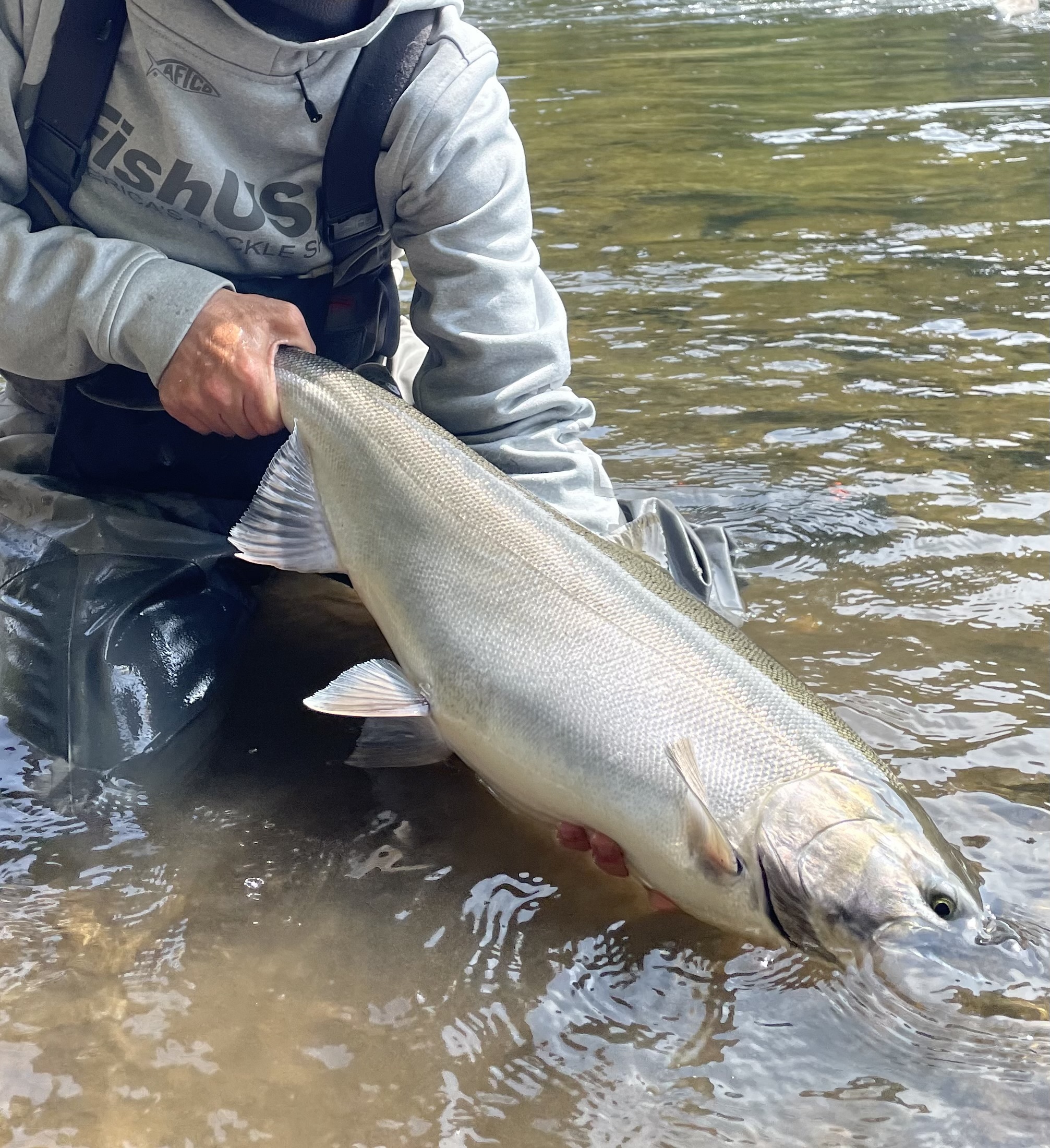
There is no single best bait for every tributary, but skein eggs, beads, flies, soft eggs, and properly presented drift rigs all catch river salmon. In deeper or slightly colored water, cured skein under a float is hard to beat. In lower, clearer conditions, beads and flies often outproduce bait. Carry multiple presentations and let the conditions and the fish tell you what they want on any given day.
Most tributary anglers do very well on 10–15 lb fluorocarbon. Heavy leaders land fish, but they reduce bites — especially in clear water and pressured tributaries. Lighter fluorocarbon creates a more natural drift, sinks faster, and is nearly invisible underwater. The tradeoff is that lighter leader demands a smooth drag and controlled fish-fighting technique, which is a worthwhile skill to develop.
Yes. River salmon are not feeding the same way they do in open water, but they absolutely strike — out of aggression, territorial behavior, and ingrained feeding instinct. Clean presentation, a low-pressure approach, and positioning your bait in active travel lanes rather than flat, crowded pools will consistently produce strikes. Most anglers who say salmon “don’t bite” have been fishing pressured fish in poor water with too-heavy leader.
Focus on fast seams, green water, bubble lines, and deep pockets below chutes rather than casting at visible fish in slow, flat pools. Fish in flat pools are often resting and heavily pressured — the hardest to catch on the river. Moving water with broken current gives salmon security, oxygen, and cover. Fish holding in current are usually more active and less wary than fish baking in a calm pool all day.
Color depends on water clarity, light conditions, and how much pressure the fish have seen. In stained or high water, bright colors — hot pink, chartreuse, orange — help fish find your presentation. In clear, low conditions, natural and subtle tones often work better. Rotating colors is the first adjustment to make when bites slow. Fresh, unpressured fish tend to be more aggressive toward bright offerings; fish that have been in a pool for days often respond to something they haven’t seen.
Timing varies by region and species. Chinook (king) salmon typically run late summer through fall in Great Lakes tributaries and in spring and fall on Pacific Coast rivers. Coho (silver) salmon run primarily in fall. Pink salmon run on odd years in Pacific drainages in late summer. The peak of any run — when fresh fish are actively moving through the system — is the most productive window. Fresh fish are far more likely to strike than fish that have been sitting in a pressured pool for days.
For drift fishing and float fishing in tributaries, a 9–10.5 ft medium-heavy spinning rod with a quality reel and smooth drag is the standard. The longer rod controls your float or drift at distance and manages line on long downstream runs. Use 20–30 lb braid as your main line with 10–15 lb fluorocarbon leader. For larger systems or bigger fish, step up to 15–20 lb fluoro leader. A smooth, reliable drag is non-negotiable — salmon run hard and will punish sticky or inconsistent drag systems at the worst moment.
The biggest takeaway from all ten tips. Fish smarter, not closer. Stay off the fish, target better water, lighten your leader, rotate colors, and move with the run as it pushes upstream. Those adjustments may sound straightforward, but together they consistently separate productive tributary anglers from frustrated ones. River salmon reward the anglers who pay attention to fish behavior, current, water color, pressure, and timing — and adapt to what they find rather than what they expected.
Looking for more salmon fishing resources? Check out the best salmon lures guide for trolling and casting recommendations, or the best fish attractants guide for scents and cures that improve your egg presentations.
Hook Me Up!
Sign up for emails and texts to get exclusive updates and offers.
By providing your number above, you agree to receive recurring automated marketing text msgs (e.g. cart reminders) to the mobile number used at opt-in from FishUSA on 25043. Consent is not a condition of purchase. Msg frequency may vary. Msg & data rates may apply. Reply HELP for help and STOP to cancel. See Terms and Conditions & Privacy Policy