

Bait Finesse System vs. Spinning Gear: Which Setup Do You Need?
Bait Finesse System vs. Spinning Gear: Which Setup Do You Need?
BFS is not a replacement for spinning gear — it never was. Both systems have situations where one clearly outperforms the other. This guide cuts through the collector hype and breaks down exactly where each tool makes you a more efficient angler.
Last updated: August 2026 · By: Jason Sealock
At a Glance: BFS vs. Spinning
One of the biggest questions I get asked about when it comes to fishing gear is why choose a bait finesse system over spinning gear for light lures. It’s a fair question. BFS has its advantages over spinning in certain situations — and spinning has clear advantages over BFS in others. The key is understanding which is which, because BFS should never be viewed through the lens of replacing spinning gear. That was never its intended purpose.
Where BFS makes sense is when the following are critical to a good presentation: casting accuracy, stealth, heavier line management, and tight quarters. Outside of those scenarios, spinning gear is often the more efficient tool. The table below maps it out.
| Situation | BFS | Spinning |
|---|---|---|
| Precision casting to small targets | Best | Good |
| Tight quarters / minimal backcast room | Best | Moderate |
| Quiet, stealthy lure entry | Best | Good |
| Water depth under 10 ft | Best | Good |
| Treble hook lures | Best | Good |
| Line weight 4–12 lb | Best | Good |
| Lure weight 1/16–1/2 oz | Best | Good |
| Forward-facing sonar presentations | Best | Good |
| Water depth over 10 ft | Good | Best |
| Long-distance casting | Good | Best |
| Vertical jigging | Limited | Best |
| Line weight under 4 lb | Limited | Best |
| Lures under 1/32 oz | Limited | Best |
How Bait Finesse Started
Like most finesse techniques in use today, the bait finesse system was developed in Japan as a way to get small lures in and around cover on lighter lines — coaxing wary, pressured fish into biting in the clear lakes and rivers where heavy gear simply doesn’t work.
A gentleman named Yukihiro Sawamura is widely credited as the father of BFS in Japan. He owns a company called Karil Tuned Factory (KTF) and began tinkering with shallower spools and modified reels in the early 2010s to solve a specific problem: he wanted to fish smaller jigs precisely, in tight spots, without sacrificing line strength. The shallower spool required far less startup inertia to get spinning — which meant lighter lures could actually launch it without backlashing.
BFS began trickling into the US market around 2015. By 2017, dedicated BFS reels like the Shimano Aldebaran BFS were hitting the US market, and the technique started gaining traction among freshwater finesse anglers. It was quickly adopted by Japanese trout anglers fishing mountain streams — tight quarters, no room for a backcast, targets as small as a coffee cup opening in the rocks and brush. In those conditions, the single-handed flick and quiet entry of a BFS setup is simply better than anything a spinning rod delivers.
Modern BFS in the US has drifted from those roots somewhat — you’ll find BFS setups being used for everything from schooling fish to topwater. That’s fine, and we’ll cover where it works and where it doesn’t. But understanding the intended purpose helps you make better decisions about when to reach for it.
What Is a Bait Finesse System?
At its core, a bait finesse system is a scaled-down baitcasting setup: a lighter rod paired with a shallow-spool, low-inertia baitcasting reel that can handle lures and lines lighter than a conventional baitcaster can manage. The shallow spool is the key — with less line mass on the spool, less startup force is required to get it spinning, which is what unlocks casting with lighter lures.
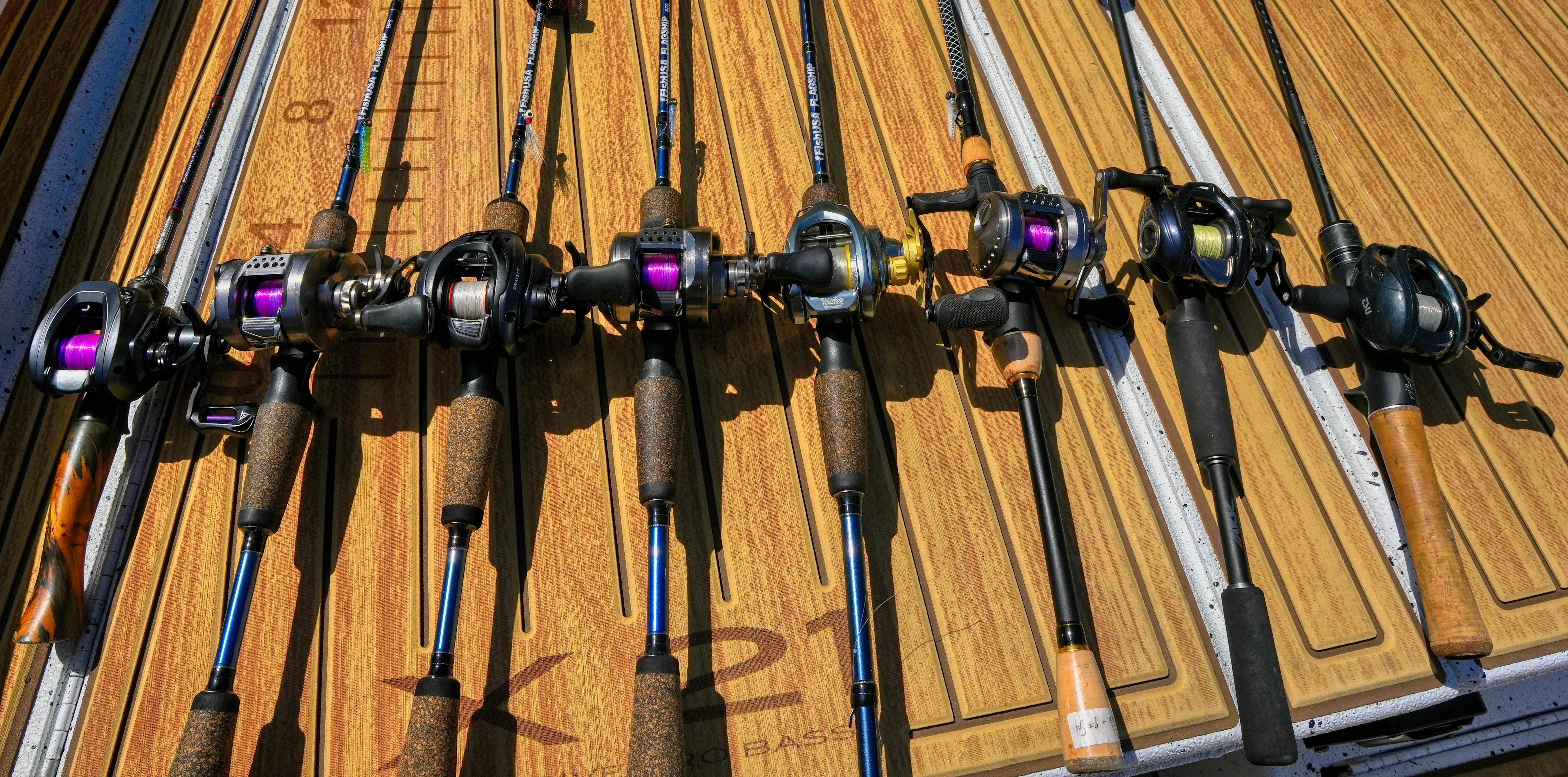
What BFS is not is a one-tool replacement for spinning gear. The casting mechanics are fundamentally different. A spinning reel pays line off a fixed spool; a BFS reel pays line off a rotating spool. That difference determines nearly every performance trade-off between the two systems — casting precision, depth efficiency, line range, and entry stealth all follow from it.
This became extremely apparent when Japanese trout anglers adopted BFS for mountain stream fishing. With limbs above, behind, and next to you — no room for an efficient backcast and targets often as small as a coffee cup opening in the rocks and brush — BFS excels for precision casting into the smallest of openings. A simple flick of the wrist, an up-down rod action, or a backhand roll cast launches a lure effortlessly to the target with a subtle, quiet entry that doesn’t spook shallow, on-guard fish. That’s where BFS outshines spinning gear most clearly.
For a full breakdown of BFS gear — reel types, rod specs, and how to build a BFS setup from scratch — see the BFS Fishing: Complete Setup Guide.
Where BFS Gear Excels
Casting Accuracy and Precision
This is the defining advantage of BFS over spinning gear. Because the angler controls spool speed directly with their thumb, a BFS setup allows precise feathering of the cast that a spinning rod simply can’t replicate. You can stop the lure mid-flight, drop it exactly into a small opening, and kill the entry the moment it hits the water. For targeting specific pieces of structure — a particular rock, a shadowed corner under a dock, a gap in the brush — BFS casts land where you aim them.
Tight Quarters and Short Backcasts
In situations where a standard overhead cast isn’t possible — limbs overhead, vegetation behind, a low dock above the water — BFS shines. A simple wrist flick, up-down rod motion, or backhand roll cast can launch a light lure effortlessly into the smallest of openings. On spinning gear, managing that same cast requires feathering with your off hand and coordinating both hands awkwardly. On a BFS reel, it’s a single-handed motion.
Quiet, Stealthy Entry
A BFS lure arriving on a feathered cast enters the water with far less disturbance than the same lure arriving on a spinning rod — especially in the tight quarters where BFS is used most. In clear, shallow water with wary fish, that quiet entry is a genuine advantage. It’s a big part of why BFS was developed for pressured fish in Japan’s clear streams and lakes, and why it works in the same conditions stateside.
Running Heavier Line Than Equivalent Spinning Setups
In the early days of BFS in Japan, anglers were using 10 to 15-pound line pitching smaller baits into cover with shallow-spool reels. They didn’t have to sacrifice line strength because the spool spun effortlessly even with heavier line and a much lighter lure. The lighter rod let them work small lures at distance; the heavier line gave them the power to pull fish out of cover. That combination — light lure, heavier line — is something spinning gear struggles to deliver efficiently.
On a spinning reel, every coil of line coming off the fixed spool generates friction. As the lure reaches distance, that friction increases and casting performance with larger-diameter lines drops off significantly. A BFS reel doesn’t have that problem — the spool unwinds as needed, limited only by inertia. That means you can run 8, 10, or even 12-pound monofilament or 15-pound braid and still cast a light lure effectively. To match that on spinning gear, you’d need to step down to lighter line — and give up some fish-fighting power in the process.
Treble Hook Lures
Treble hook lures — small crankbaits, jerkbaits, topwaters — fish better on BFS most of the time than on spinning gear. The casting is way more precise, and you can upsize your line to 8 to 12-pound mono or even 15-pound braid and still cast well on BFS gear, because the spool handles the line rather than relying on the pull of the lure alone. On spinning gear, you’re often forced onto ultralight rods and super light line to match the setup — which makes getting treble hooks to bite harder and can make the fight more tense. Similar to a deep-diving crankbait on conventional baitcasting gear, the rod loads under the treble hook lure and keeps tension without tearing hooks free. Experience shows that treble hook lures just seem to seat better on load on BFS setups than on spinning setups.
Forward-Facing Sonar Presentations
Casting to roaming fish on forward-facing sonar benefits from the precise casting, line control, and ability to upsize line that BFS provides. You can fish a lure very slowly and even create momentary stalls and pauses by slowing your reeling down and lifting the rod simultaneously — a technique that’s more natural on a baitcasting reel than a spinning setup. You can also step up to 10 or 12-pound line to stay above fish in the water column more easily than you can on a comparable spinning outfit.
Depth cutoff: BFS is most efficient in water shallower than 10 feet. Once you’re fishing deeper than that, spinning gear starts becoming the more productive tool for most finesse applications.

BFS Reels
Shop BFS Baitcasting Reels
Shallow spool · Low inertia · Precision casting for light lures
Where Spinning Gear Excels
Deep Water Finesse (Over 10 Feet)
This is where spinning gear takes over cleanly. When a lure needs to sink quickly into deeper water, a spinning reel pays line straight off the fixed spool without resistance — the lure drops fast and stays in the strike zone longer. A BFS reel has to overcome spool inertia on the drop, which slows the descent and makes depth management less efficient. For deep drop-shotting, deep ned rigs, and vertical presentations in general, spinning is the more productive system.
Ultralight Lines and Very Light Lures
Spinning gear does better with ultralight lines. 1 and 2-pound test lines often perform better on ultralight spinning setups than on BFS gear. To me, BFS really shines in the 4 to 8-pound range. Below 4-pound, and when I want to throw lures 1/32 oz or less, I’m reaching for a spinning rod.
I have some BFS setups that will throw 1/32 oz lures well. But my 2-pound ultralight will throw a 1/64 oz jig twice as far as my BFS setup throws a 1/32. If micro-jigging, tiny drop-shots, or ultra-finesse panfish presentations are the goal, the fixed spool wins on both distance and consistency at those lure weights.
Distance Casting
This is also why I’ll often reach for a spinning rod when chasing schooling fish. Most of my BFS setups have about 100 to 150 feet of line — roughly 30 to 50 yards — dialed to be ultra-precise out to about 60 to 70 feet. When I want to throw a small bait 120 feet to schooling fish, I’m reaching for a spinning rod. If I want to throw a bigger topwater, I’m picking up my conventional baitcaster with 40-pound braid and sending it out there 150 feet or more. Techniques where I want distance and depth with small lures, a spinning rod is the more efficient tool.
Vertical Jigging
Jigging straight down off the side of the boat is a spinning-rod application. The fixed spool pays line freely on the drop, which gets the bait down fast and keeps the presentation direct. A BFS reel is not designed for that kind of deployment, and there’s no efficiency advantage to using one for it.
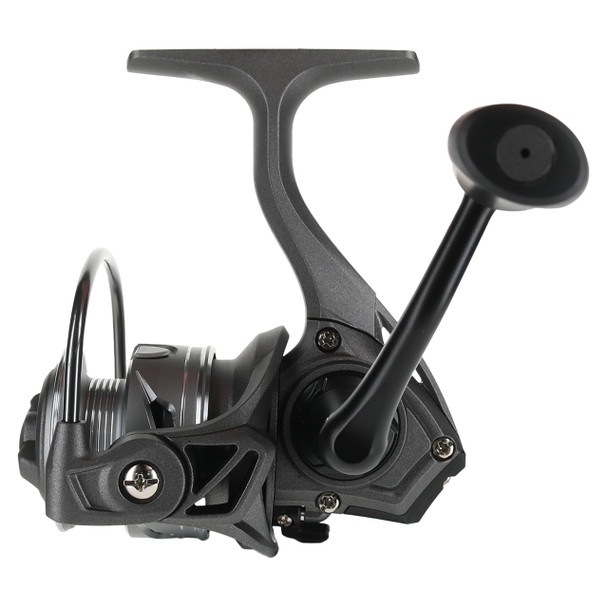
Spinning Reels
Shop Ultralight Spinning Reels
Fixed spool · Light line · Deep water finesse applications
Which System Should You Choose?
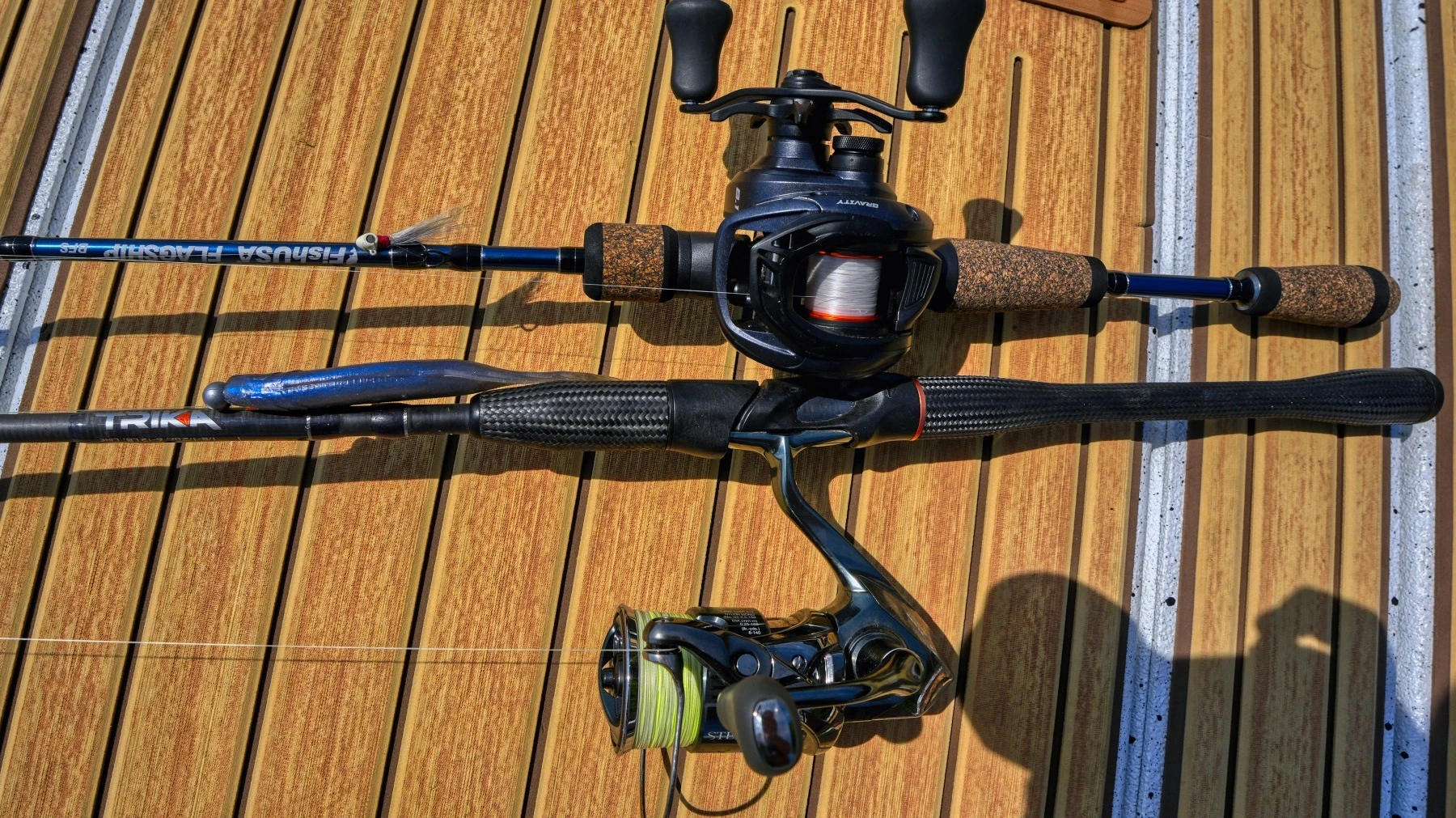
The short answer: fish both. Most serious finesse anglers who use BFS don’t replace their spinning rods with it — they add BFS to the arsenal and reach for it in specific situations. If you fish shallow, structure-heavy water where casting precision and stealth matter most, BFS earns a spot. If you fish deep, open water with ultralight presentations, your spinning rod stays the primary tool.
Can you use a BFS setup to throw 1/32 oz stuff? Sure. But an ultralight spinning rod with 2-pound test will do it better. Can you hit a small target at distance with a spinning rod and not much room to cast? Absolutely — but you have to sacrifice precision and quiet entry, or manage the splash by grabbing the line with your off hand and feathering it with both hands, more awkwardly than the single-handed efficiency of a BFS reel and rod.
There are a lot of ultralight anglers who will only use spinning gear — because that’s what they love, because they don’t like baitcasting gear, or because they prefer the hardest fights on the lightest line. Same for the BFS crowd. A lot of anglers love throwing tiny baits on their BFS setups, or bombing topwaters out there as far as they can on ultra-refined gear. They have a great time testing their setups to the limit and pushing their casting to the extremes. And sometimes that’s exactly what makes fishing fun — overcoming the challenges of the environment to improve your fishing.
The great part of fishing is that there are no hard rules about what can or can’t be done. Hopefully this guide sheds some light on the intended uses and maximum efficiencies of BFS versus spinning gear — and helps you choose the right tool for the situation in front of you.
BFS vs. Spinning FAQ
A BFS reel is a lightweight, shallow-spool baitcasting reel engineered to cast very light lures — typically 1/16 to 1/2 oz — on relatively light lines. The shallow spool requires less startup inertia to begin spinning, which is what allows it to cast small lures that would backlash a conventional baitcaster. BFS reels prioritize casting precision and line control over raw casting distance, making them ideal for targeting pressured fish in tight, technical cover.
Yes — bass fishing is one of the primary BFS applications in the US market. BFS excels for pitching light jigs into tight cover, working small crankbaits and jerkbaits around shallow structure, and fishing forward-facing sonar presentations where precision and slow retrieves matter. It performs best in water shallower than 10 feet. For deeper bass fishing with finesse techniques, spinning gear is generally the more efficient choice.
The BFS sweet spot is 4 to 12-pound monofilament or 8 to 15-pound braid. The shallow spool handles those diameters efficiently even with light lures. Below 4-pound test, ultralight spinning gear handles the line better. Above 15-pound braid, a conventional baitcasting setup is the more appropriate tool.
Reach for spinning gear when fishing deeper than 10 feet, throwing lures lighter than 1/32 oz, using lines lighter than 4-pound test, casting long distances to schooling fish, or vertical jigging. Spinning gear’s fixed spool pays line straight down without restriction, making it faster and more efficient at depth. It also handles ultralight lines and tiny lures more consistently than most BFS setups.
Most BFS setups cast lures in the 1/32 to 1/4 oz range most efficiently. Some high-end reels can handle 1/32 oz, but below that — 1/48 or 1/64 oz — a quality ultralight spinning rod with 2-pound test will cast farther and more consistently. For the smallest micro lures, spinning gear is simply the more efficient tool.