

Best Ways To Store Fishing Tackle
Best Ways to Store Fishing Tackle
Options for storing fishing tackle abound these days — quite literally hundreds of options for keeping your favorite gear organized, protected, and accessible. This guide breaks down the types of storage, how to choose the right box or bag, and how a modular system can make your whole fishing life more efficient.
Last updated: August 2026 · By: Jason Sealock
Options for storing fishing tackle abound these days, with quite literally hundreds of options for keeping your favorite fishing gear organized, protected, and accessible. But it helps to understand what options exist and then set up a storage solution that works for how you fish. This often revolves around a modular approach to storing tackle.
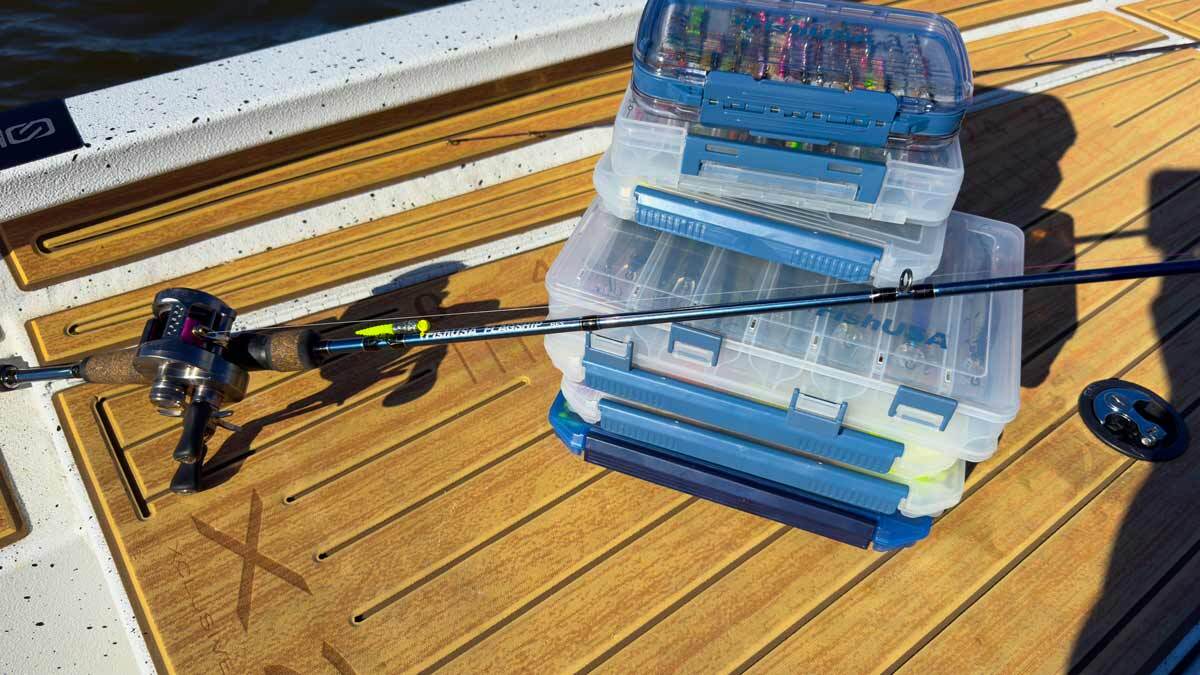
If you’re a bass angler, you need ways to store lots of different kinds of lures for lots of different techniques. If you’re a crappie angler, you need ways to carry tons of color and size options of your favorite styles of jigheads and plastics. If you’re a trout angler, you might have stuff for conventional fishing and stuff for fly fishing — and even some stuff that crosses over between the two — and ways to store all of it.
How to Store Your Fishing Tackle
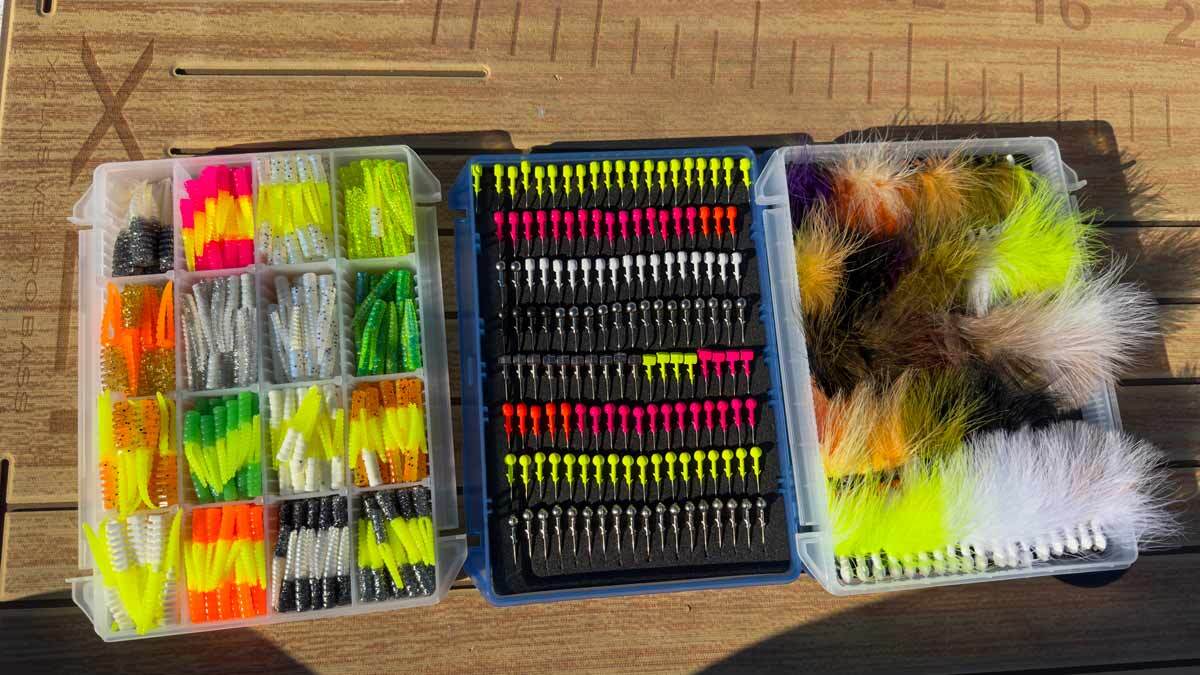
There are a few aspects to storing fishing tackle to consider when choosing a tackle box. Organization obviously tops the list. But equally important can be protection from water, and more importantly, rust. As well as protection from damage if you were to drop the box of your prized gear.
And one final consideration is simply size. If you want to carry your tackle with you on your person, then the boxes should probably be smaller. While if you have a boat or a ton of any one type of lure, you might need some larger bulk storage options.
The main thing is choosing the system you want to use to store tackle. That could be a series of similar boxes, a tackle bag with boxes inside of it, or just simply a “hodgepodge” of bags and boxes in all different sizes to handle all the variations of your fishing tackle.
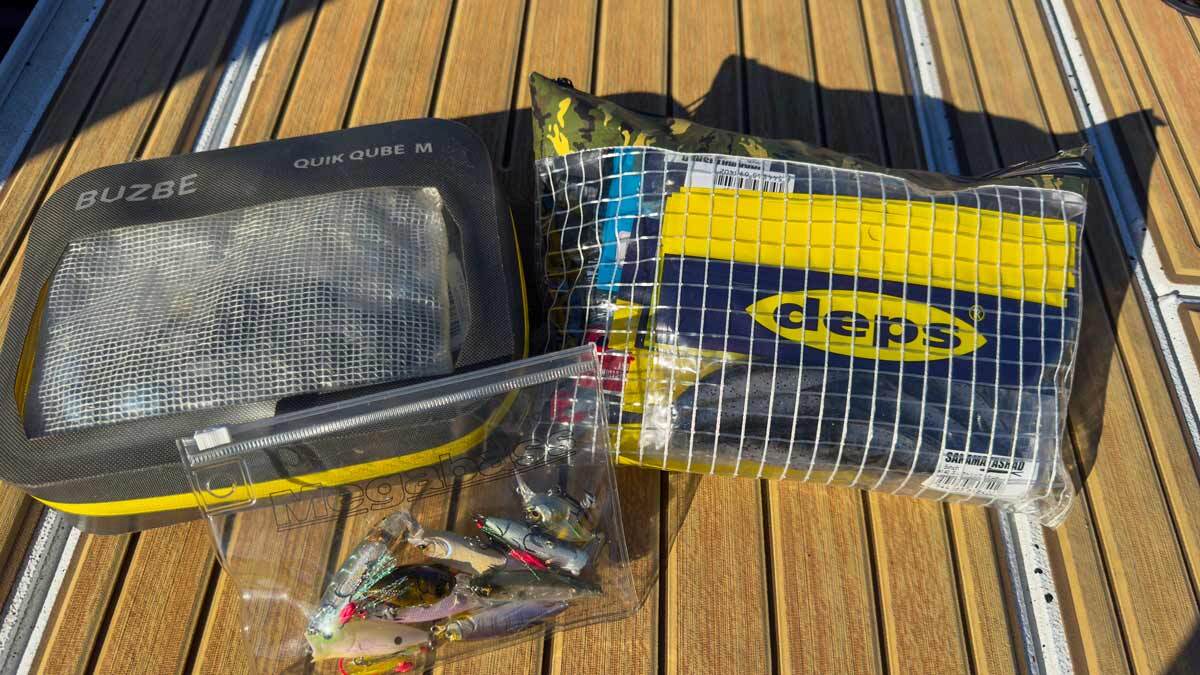
This is also where a modular approach to storing tackle should be seriously considered to be most efficient with your fishing tackle organization. We’ll discuss that further in a moment.
| Storage Type | Best For | Key Advantage | Limitation |
|---|---|---|---|
| Hard box with gasket | Boat, garage, bulk home storage | Best waterproof & impact protection | Bulky; less flexible for backpacks |
| Soft tackle bag | Wade fishing, travel, foot trips | Flexible; holds original packaging | Less waterproof than sealed hard boxes |
| Specialty lure box | Premium lures, treble-hook baits | Keeps lures separated; easy access | Holds fewer lures per box |
| Foam slit box | Jigs, jigheads, hooks, Chatterbaits | Clean organization; hook-point protection | Not ideal for treble hook crankbaits |
| Open compartment box | High-volume storage | Holds the most lures per box | Treble hooks tangle; less organized |
Choosing the Right Tackle Box for Fishing
Choosing the right box is partially preference and partially related to the lures or gear you plan to store or organize. Obviously, a huge box is not ideal for very small lures and vice versa. And sometimes a bunch of big, bulky hard boxes are not convenient to store in something like a sling pack or backpack while on foot.
Knowing where you are going to store your tackle — like a garage, boat, or tackle bag — will give you a place to start and then go from there based on the volume and size of the gear you need to store.
Hard boxes can offer better waterproof protection if they have sealed rubber ring liners in them. Soft bags can allow you to leave lures and tackle in their original bags and throw them easily, all in one convenient pack.
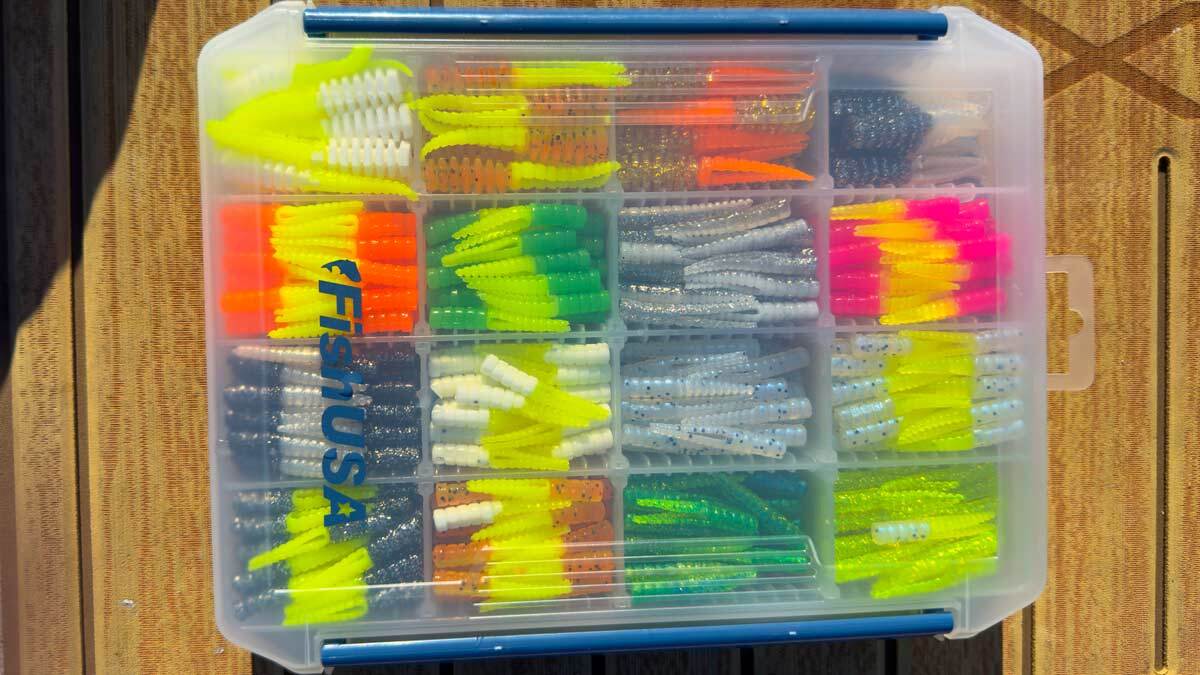
Open boxes with fewer modular compartments mean things like treble hook lures will be hung up a lot more on each other, but you can usually fit a lot more baits in a single box. Whereas specialized boxes will often hold a lot fewer lures, but they will be evenly separated and easy to access quickly on the water.
Quick rule of thumb: If you fish with a lot of treble hook baits, choose specialty lure boxes or compartmented boxes that keep lures separated. If you fish primarily with single-hook jigs and plastics, foam slit boxes are far more efficient and easier to use on the water.
The Modular Tackle Storage Approach
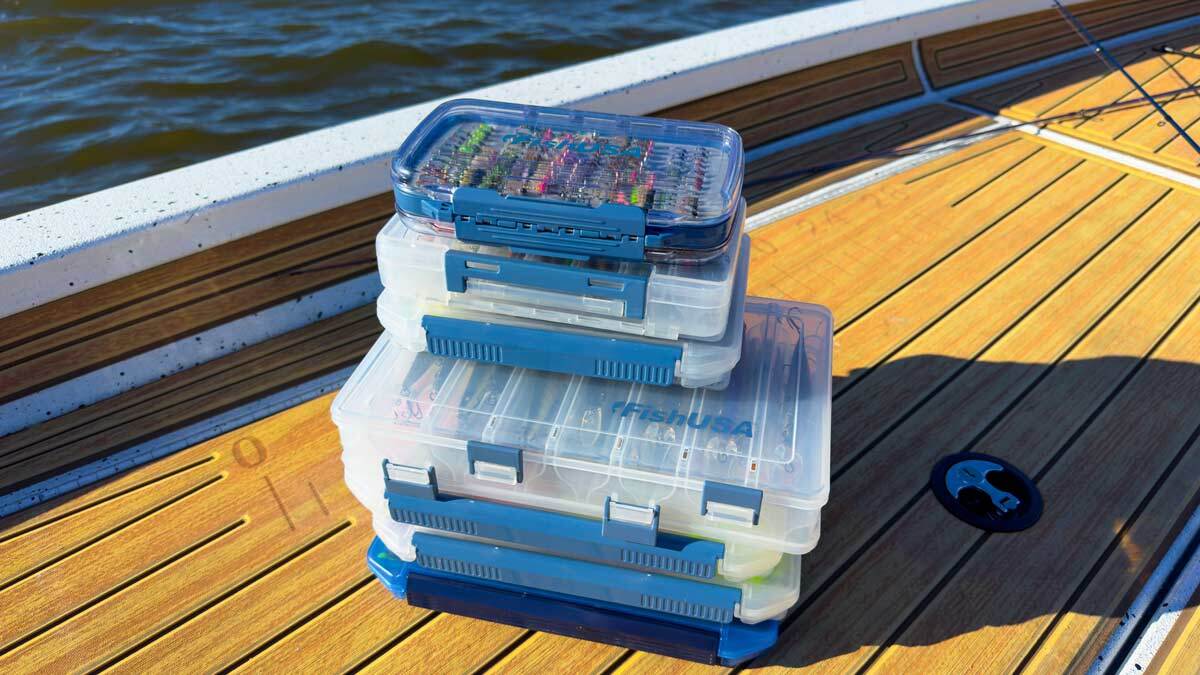
Once you understand what you want to organize and where you plan to store it, you can be very flexible by adopting a modular approach to storing fishing tackle. Often, anglers who own a ton of fishing tackle will have bulk storage options that could just be large bins holding a lot of boxes and bags. Then from there you can move what you need for that day or season into smaller boxes to take in the boat, or throw in a bag if on foot, that offer a selection of your full collection for the current fishing situations.
For example, I have shelves of big bulk boxes of crankbaits. From those, I will grab out a selection in some different colors and depths and throw them in a smaller box to keep in my boat or throw in my backpack on my travels — baits relevant to that season and the depth I’ll be fishing.
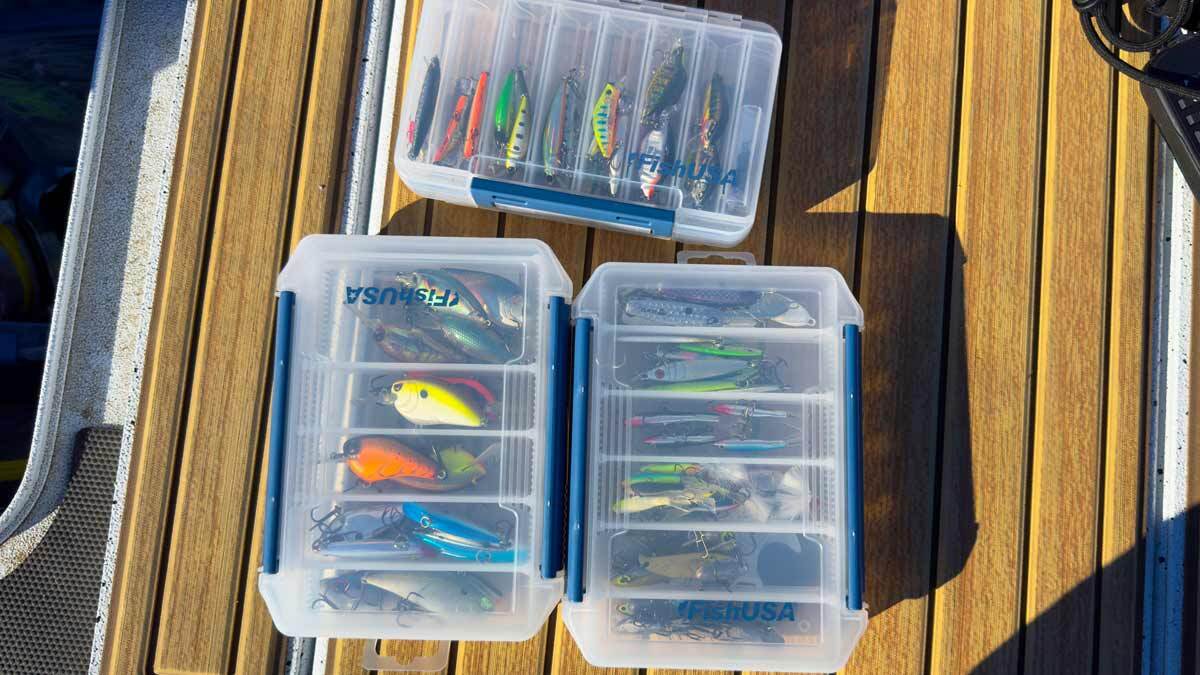
I also have smaller boxes that I call day boxes or go-boxes. I have a smattering of various baits from my middle boxes that I’ll throw in a smaller tackle box — what I intend to use that day or for the next couple of weeks — that I know are the baits I normally catch fish on or have been catching them on recently. Often these boxes will fit in a pocket, and I can literally change colors and baits quickly and easily, and keep fishing more and digging around in my tackle less.
The 3-tier modular system:
- Tier 1 — Bulk storage: Large bins or shelves at home holding your full collection
- Tier 2 — Season boxes: Mid-size selection pulled for the current season; lives in the boat or bag
- Tier 3 — Go-box: Pocket-sized box with only the baits you expect to fish today
Best Tackle Boxes for Storing Fishing Tackle
A bunch of great brands offer lots of unique and efficient ways to store a wide variety of fishing tackle. Brands like FishUSA, Plano, Meiho, SPRO, Lakewood, FishMore, Rapala, and many more offer storage options that cover every range of lures imaginable. Storing tackle definitely depends on personal preference as well as the fishing gear each angler has to organize. But here’s a breakdown of the options by category.
Specialty Lure Boxes
If you really want to keep your baits separated and organized, there are several good specialty tackle storage options to choose from. Some have slotted compartments sized to house specific baits while others have literally foam cutouts in the exact shape of certain popular lures. These are great options if you have a handful of really quality lures you know work and want to keep stored very organized and separated — so you can get them out quickly on the water, tied on and fishing without fighting to untangle from everything else.
- FishUSA Flagship Stickbait Box
- Plano EDGE Spinnerbait Box
- Fishmore T3 Pro Megabass Vision ONETEN Jr Box
- Plano Spoon Box
Foam Slit Boxes
Another very effective and clean way to store things like jigs and terminal tackle — hooks in particular — is with foam slit boxes. Several different options exist in this type of tackle storage, and if you are an OCD angler like us, you will love these boxes for storing your favorite jigs, Chatterbaits, jigheads, and hooks.
- Rapala RapStack 3600 Open Foam Tackle Tray
- Gamakatsu Slit Foam G-Box
- FishUSA Flagship Slit Foam Jig Box
- Eurotackle Euro-Locker Jig Box
Bulk Tackle Boxes and Bags
For storing larger items — like lots of bags of soft plastics — both bulk bags and boxes serve this purpose well. Some large boxes can hold lots of smaller boxes as well. In my own house, I have a tackle shelf that stores bulk bins full of tackle and tackle boxes that I pull from to fill bags for trips based on seasons. It’s part of my modular system — larger bins and boxes with smaller bags and boxes that I transfer or pull from these bigger boxes.
- FishUSA Flagship Large Deep Waterproof Tackle Box
- Rapala RapStack 3700 Deep Open Tackle Tray
- Plano ProLatch XL StowAway Tackle Box
- SPRO Soft Sided 3700 Bag
These are just a sampling of the hundreds of options for storing and organizing fishing tackle. Regardless of how you fish, organizing tackle doesn’t have to be difficult or done one certain way. Figure out where you plan to store your tackle, how much you have to organize, and how you can create a modular system to store at home, in the boat, and in a go-bag for your fishing trips on foot or in other people’s boats — and you’ll spend a lot more time fishing and a lot less time looking for and untangling your gear on the water.
Fishing Tackle Storage FAQ
The best approach is a modular system with three tiers: bulk storage at home holding your full collection, a mid-size season box for the boat or bag stocked for the current time of year, and a small go-box loaded with only the specific baits you expect to use that day. This lets you stay organized without digging through everything on the water.
Both have advantages. Hard boxes with sealed rubber gaskets offer the best waterproof and impact protection. Soft bags are more flexible — you can throw in lures still in their original packaging, and they fit more easily into a sling pack or backpack. Many anglers use both: hard boxes for home storage and boat use, soft bags for walk-in or travel fishing.
Foam slit boxes are ideal for single-hook lures and terminal tackle — jigs, Chatterbaits, jigheads, weedless hooks, and anything with an exposed hook point. The foam holds each lure upright and separated, which prevents hooks from tangling and makes it easy to find a specific color or size at a glance. They’re less practical for treble hook lures like crankbaits, which tangle easily in foam.
Choose hard boxes with sealed rubber gaskets to keep moisture out. Rinse any lures before storing them and let them dry completely before sealing them in a box. Some anglers add silica gel desiccant packs to tackle boxes to absorb residual humidity. For long-term storage, VCI (vapor corrosion inhibitor) pouches or papers can protect bare hooks from oxidizing.
A modular system means you organize your tackle in tiers rather than one big pile. The top tier is bulk storage — shelves or large bins at home holding your complete collection. The middle tier is seasonal boxes — a curated selection in smaller boxes that live in your boat or bag for the current time of year. The bottom tier is your go-box — a pocket-sized box holding only the specific baits you plan to fish that day. This system minimizes time spent digging for gear and maximizes time spent fishing.