

Understanding and Reading Current for Steelhead on Lake Erie Tributaries
Understanding and Reading Current for Steelhead on Lake Erie Tributaries
Steelhead don’t spread out evenly across a tributary. They concentrate in specific water types based on flow, clarity, pressure, and time of day — and learning to recognize those features is what separates productive anglers from ones who fish hard and blank.
Last updated: August 2026 · By: FishUSA Staff
If you’ve spent a full morning on a Lake Erie tributary without a touch, there’s a good chance the problem had nothing to do with your bait or fly. The most common mistake in tributary steelhead fishing isn’t a presentation issue — it’s a location issue. Most blank days happen because the angler spent the morning covering water that didn’t hold fish, or fish that weren’t willing to react.
Lake Erie tributaries see heavy pressure throughout the season, and steelhead don’t spread evenly across every run. They stack in specific water types based on flow, clarity, temperature, and pressure — and that concentration can shift significantly from one day to the next, or even from morning to afternoon. The anglers who consistently produce aren’t making more casts. They’re making smarter decisions about which water deserves their time.
Quick Answer: How to Read Current for Steelhead
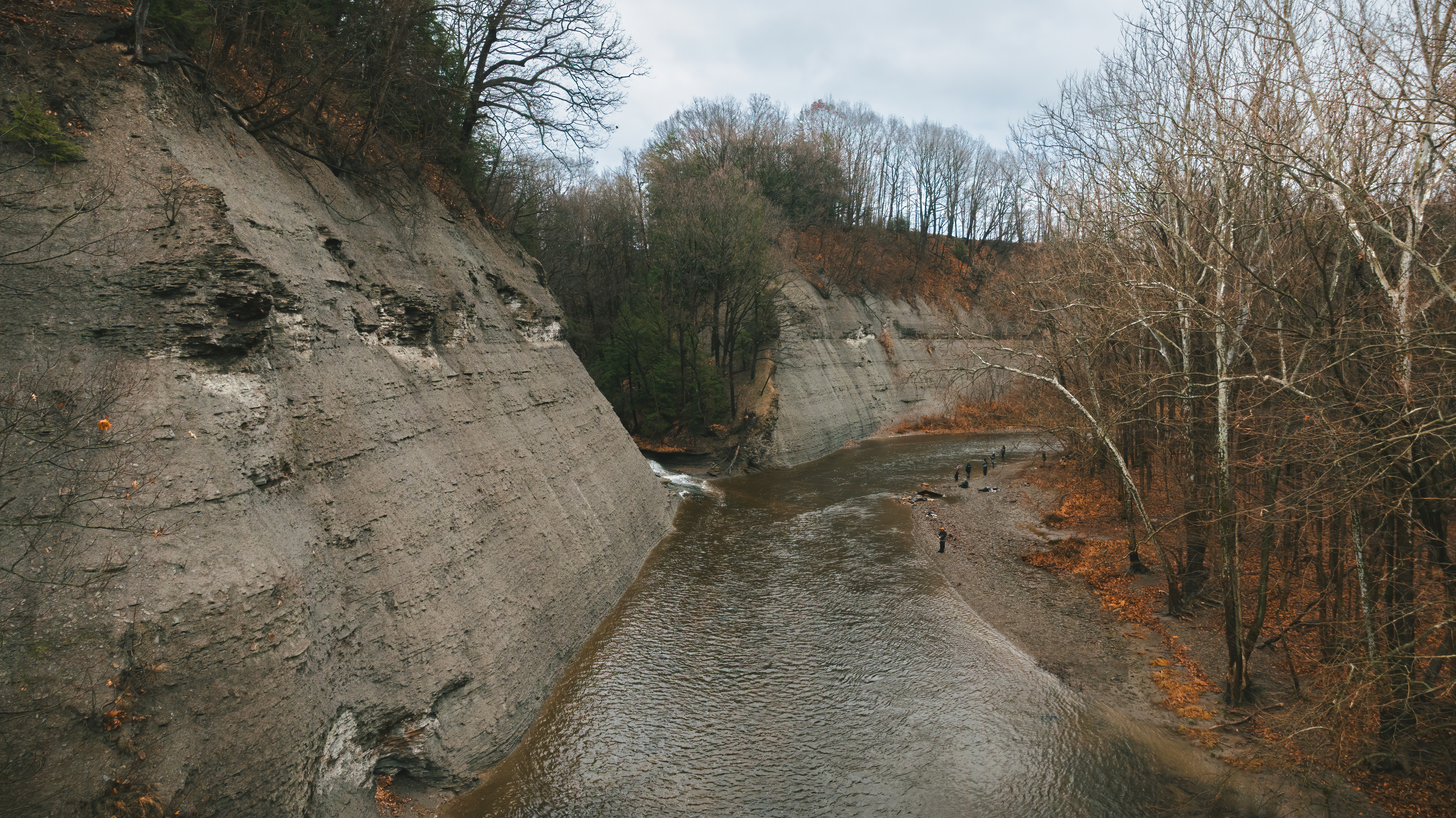
Reading current for steelhead means finding places where fish can hold with minimal energy while staying close to a food lane: seams, current breaks, eddies, rock pillows, depth changes, and cover. Current is generally fastest at the surface and slowest near the bottom, but structure creates micro-currents — and even reverse flows — that fish actively use. Learn to identify those features and you’ll locate pods faster and drift presentations more naturally through the strike zone.
Related reading: Float Fishing for Steelhead · Clear Water Steelhead Tactics · Back Bouncing for Steelhead
Why Finding Fish Is the Hardest Part (Especially on Lake Erie Tributaries)
On pressured Erie tributaries, conditions change fast. A pod can push into a run overnight, shift to a deeper pocket by mid-morning, and tuck under cover once the sun clears the ridge. That’s why you can fish hard all day on what looks like perfect water and still never connect.
The most common trap is over-fishing water that simply doesn’t hold fish. A spot that produced last weekend may be empty today because flows dropped, the pod moved upstream, or pressure pushed fish into tighter, less obvious lies. Steelhead are efficient animals — when they feel exposed or threatened, they move.
The most common mistake: over-fishing unproductive water
A lot of anglers lock in on water that “looks like a steelhead hole” and grind it for hours. Sometimes it produces. But most of the season, fish are concentrated in specific water types that match current conditions — and if those conditions don’t match what you’re standing in, you’re covering dead water. The best tributary anglers aren’t just fishing harder. They’re eliminating unproductive water faster and spending their time in front of fish that are actually willing.
Understanding Current (What Most Anglers Miss)
Most anglers know fish face upstream. That’s true in the broadest sense, but it’s not enough to find steelhead consistently. Current behaves differently at different depths, around structure, and along banks — and those details determine exactly where fish sit and how your bait or fly needs to travel to reach them.
Current speed changes through the water column
The surface layer moves fastest because it has the least friction with the riverbed. Near the bottom, friction with rocks and substrate slows the flow significantly. Steelhead regularly use that slower bottom layer to conserve energy — especially in cold water or during high flows when holding near the surface would burn them out. That’s why a presentation that’s drifting correctly at the surface may be moving two or three times faster than the fish are holding in.
Current is not one direction everywhere
Rocks, wood, banks, bends, and depth transitions all create micro-currents that can push in unexpected directions — sometimes circular, sometimes actually moving upstream. That’s why you’ll occasionally find steelhead facing what looks like downstream. They’re not facing downstream to be unusual — they’re facing into the current created by a swirl, back-eddy, or reverse seam. When you see a subtle swirl line or reverse surface flow, that almost always means fish are using that water. It’s one of the more reliable visual cues on any Erie tributary.
Seams, Eddies, and Pillows: Steelhead “Addresses”
If there’s one practical shortcut to finding fish on Lake Erie tributaries, it’s learning to hunt current breaks. Steelhead want to rest without leaving the food lane, and certain features do exactly that — they create a pocket of slower water adjacent to moving current. Think of these as addresses: places a fish can hold for hours or even a full day depending on conditions.
Seams: where currents meet
A seam is the line where faster and slower water meet. It’s sometimes obvious — a foam line, a string of bubbles, a sharp transition from choppy to smooth surface — and sometimes subtle. Steelhead use seams because they can rest in the soft side and slide into the fast lane to intercept drifting food with minimal effort. If you see a foam line on a Lake Erie tributary, that’s almost always worth a thorough drift before you move on.
Eddies behind objects
The eddy behind a rock, log, or root ball is the most widely understood holding spot in tributary fishing. Flow wraps around the object and creates a protected pocket of slower water. In higher flows especially, these eddies become disproportionately valuable — fish can hold with almost no energy expenditure while fish in open water are fighting the current constantly.
The pillow in front of objects — the overlooked one
Most anglers fish the eddy behind a boulder and move on. What they miss: there’s also a soft pillow of compressed, slower water on the upstream face of that same rock. As current hits the object, it slows, compresses, and diverts around it. Steelhead will nose into that pillow and hold with surprisingly little effort. When the back-eddy is already turbulent or has anglers fishing it, the pillow in front is often completely clean and unmolested. It’s one of the more consistently productive overlooked spots on any Erie tributary.
Reading Water: Holding Water vs Wasted Water
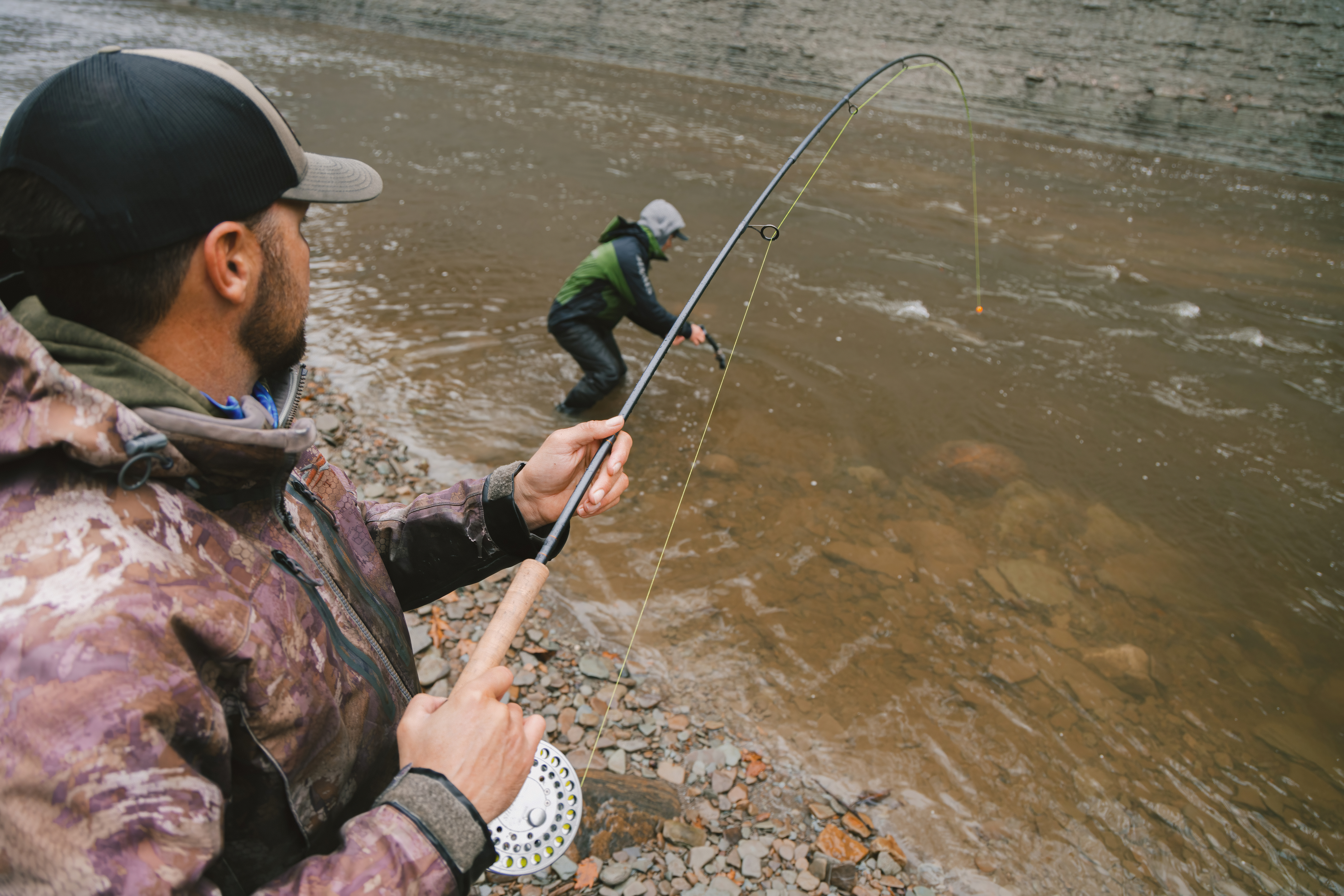
Once you understand how structure creates current breaks, you can read a run like a map — identifying where fish are likely concentrated before you ever make a cast. You’re looking for three ingredients: energy savings (current breaks), security (depth and cover), and access to a food lane. Runs that provide all three deserve your time. Runs that provide none of them don’t.
Current breaks are the foundation
Steelhead are strong, but they’re also efficient. They prefer to hold where they can maintain position without constant effort. That’s why boulders, wood, undercuts, and seams produce consistently across different systems and conditions — they create holding structure in a way that flat, featureless runs simply don’t.
Depth changes and subtle depressions
On pressured Erie PA creeks and similar tributaries, steelhead often tuck into harder-to-see lies: a slight depression in a flat, a darker bottom patch, or a shallow shelf that drops into a slot. These aren’t obvious spots. If you can’t confirm there are no fish in a piece of subtle water, it’s usually worth two or three quality drifts before moving on.
Bottom composition: gravel as a clue
Gravel and cobble create friction against the current and micro-breaks that make holding easier. They also provide visual cover. When steelhead get pressured, they shift into spots that are harder to see from the bank — thicker substrate, shadows, and depth — for the same reason any prey animal uses heavier cover when danger increases. A section of gravel and cobble in an otherwise sandy run is worth slowing down on.
Bank cover: brush, wood, and undercuts
Isolated brush piles and wood along the bank hold fish that haven’t been drifted twenty times already. These spots can cost you flies or rigs, but the payoff is often worth it. Start with casts slightly away from the cover, then work closer as you get a feel for where fish are sitting and how they’re reacting. A cold, unmolested pod tucked against a root ball is a completely different fish than one that’s been watching presentations all morning.
Matching Your Drift to the Current
Finding holding water is step one. Step two is making your bait or fly move like everything else drifting naturally through that lane. Steelhead see a constant parade of particles, leaves, and food items pass through their zone. A presentation that looks or moves wrong gets ignored — or spooks fish that were otherwise catchable.
Use surface debris to read direction and speed
Before you cast, watch the bubbles and foam. Do they slide straight through? Do they stall and spin? Do they peel toward a bank? That surface movement is telling you what your bait should do. If the seam pulls slightly toward the inside edge, your drift should follow. If there’s a swirl, your presentation needs to stay in the seam and not swing across it.
Common drift mistakes
- Dragging bottom constantly: looks unnatural and snags constantly — reduce weight or change angle
- Too much weight for the current speed: presentation ticks like a plow instead of drifting
- Wrong casting angle: ends up swinging across the seam too quickly
- Ignoring reverse flows: drifting “down” while the micro-current moves “up”
Adjustments that fix most problems
- Change weight in small steps until you tick bottom occasionally — not constantly
- Open your casting angle slightly upstream to lengthen time in the strike zone
- Lengthen fluorocarbon leader when fish are spooky in clear water; shorten for more control in fast water
- Use quality line and leader for better feel and a more natural, weighted drift
High Water vs Low Water: Where Steelhead Hold on Erie Tributaries
One of the most important adjustments you can make is matching your approach to current conditions. Steelhead positioning shifts dramatically with flow and clarity — and using a single “default” approach regardless of what the river is doing is one of the most reliable ways to blank on a fishable day.
High water: travel lanes and strong current breaks
- Fish travel more during rising and elevated flows, especially at night and in low light
- Focus on inside edges, soft bank water, and eddies behind major structure
- Your priority is getting your presentation into the slower “rest lanes” adjacent to the main flow — not blasting it through the torrent
Low and clear water: stealth and micro-holding lies
- Fish become extremely sensitive to pressure and disturbance
- Focus on depth slots, undercuts, and dark bottom patches that are harder to see from the bank
- Downsize, lengthen drifts, and stay out of the water as much as possible
- A run that’s been stomped on by wading anglers will often push fish to the nearest cover or into lies that are nearly impossible to drift to
The “green water” sweet spot
The most productive days on Lake Erie tributaries often happen in between those two extremes: water with enough color to make fish comfortable and secure, but not so much color or flow that drifting becomes a battle. That window — slightly tinted, controlled current, dropping or steady gauge — is when aggressive fish are most catchable and most willing to react to a good presentation.
Steelhead Movement on Lake Erie Tributaries (Run Dynamics)
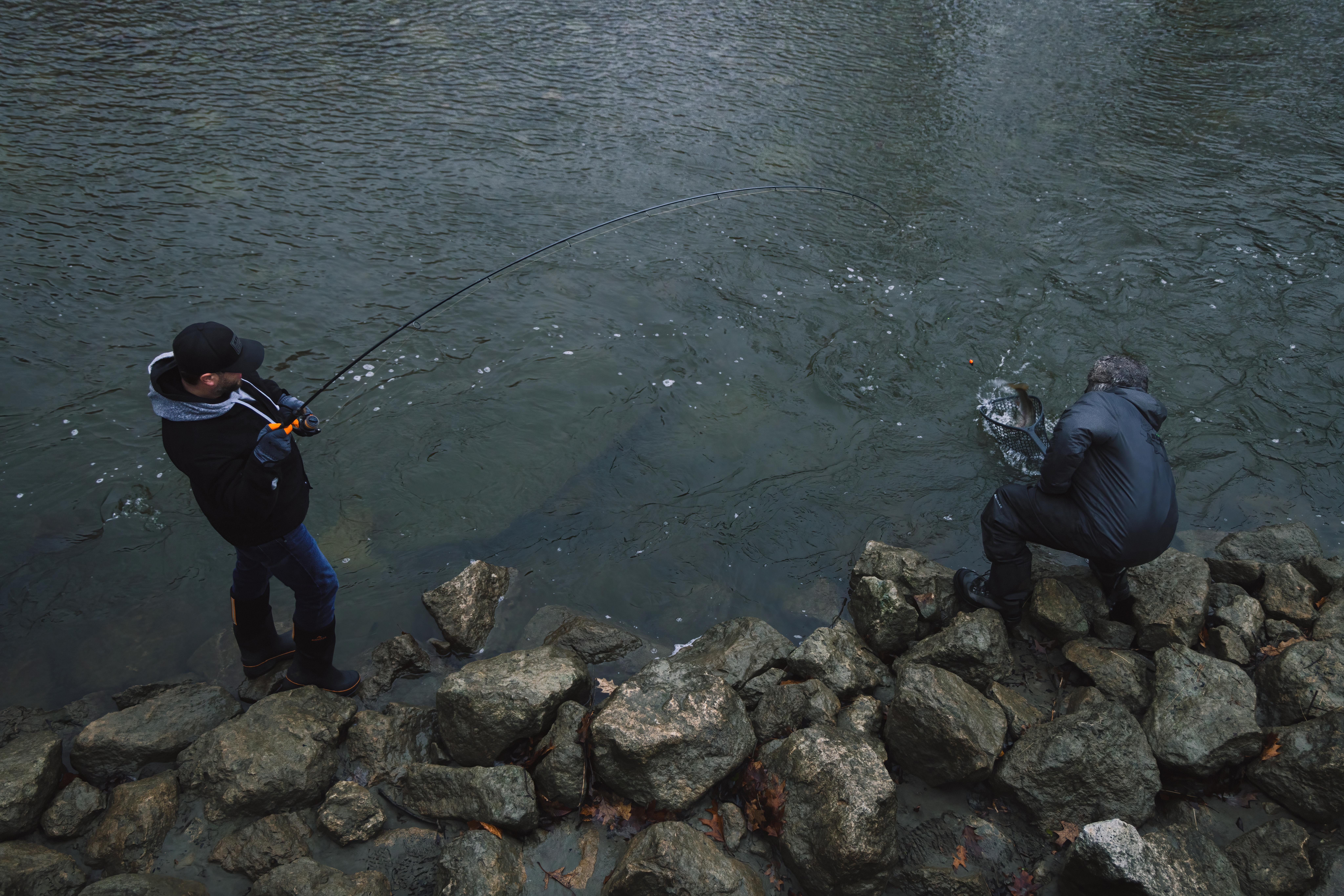
Steelhead don’t move upstream in a straight line on a fixed schedule. They travel in stages — push upstream, rest in a run, reposition, push again — and their biggest moves typically happen during high-water events and at night when they feel safest from pressure and predators.
Time of day matters
Within a single day, fish can shift significantly. Fish that were holding in exposed seams early morning often slide into deeper, more covered lies by mid-morning as light increases and angling pressure builds. If you’re fishing midday on a heavily pressured trib, your best water is usually the harder-to-fish stuff: tight against structure, in subtle seams, or in depth pockets that require a precise drift and a lot of patience. The fish are still there — they’re just not in the obvious open lanes anymore.
Use flow data to anticipate movement
Watching stream gauges helps you anticipate where fish are in their movement cycle. Rising water means fish are moving — they’re active and covering distance. Dropping or steady water means they’re settling, stacking in runs and resting. The USGS Water Data site gives real-time gauge readings on most Erie tributaries. Combined with what you know about the system, that data helps you decide where to be on any given morning — lower sections to intercept traveling fish, or upper sections where a fresh push has already settled.
Build a Pattern Faster (Stop Guessing, Start Eliminating Water)
Every fish you hook is data. Three fish from the same type of seam, at the same depth and drift speed, is a pattern — and that pattern should guide where you spend the rest of the day, not random coverage. The anglers who put together big days on Erie tributaries are almost always building and refining a pattern rather than wandering from run to run hoping something happens.
A simple steelhead pattern framework
- Current speed: soft-edge seam, pillow, back-eddy, or open current?
- Depth: mid-slot, deep bucket, tailout trench, or undercut?
- Cover: rock, wood, brush, dark bottom, or none?
- Conditions: low/clear vs green vs high/dirty?
When you find fish in a specific combination — say, soft-edge seams adjacent to large boulders in four feet of water on dropping-green flow — that’s your target feature for the rest of the day. Hunt it repeatedly and stop wasting time on water that doesn’t match.
Log what works so you improve faster each season
Logging productive spots and conditions, even just in your phone’s notes app, accelerates the learning curve dramatically. What felt like a lucky hookup two years ago often turns out to be a repeatable situation — same flow range, same water type, same time of season. That kind of pattern recognition is what separates experienced Erie tributary anglers from ones who stay stuck at the same level year after year.
5-Minute Pool Scan Checklist (Before You Cast)
Use this before you commit time to any run. The goal isn’t perfection — it’s efficiency. Invest your fishing time in water that deserves it.
- Is there a seam? Foam line, bubble trail, or visible speed change?
- Is there a current break? Rock, log, undercut, or soft inside edge?
- Is there depth? A bucket, trench, or depression fish can rest in?
- Is there cover? Wood, brush, rocks, or shadows that provide security?
- What’s the micro-current direction? Watch bubbles for swirls or reverse flows.
- Can you drift naturally through the lane? If not, reposition before you cast.
- Does this match today’s conditions? High/dirty favors big current breaks; low/clear favors subtle lies and stealth.
If a pool checks most of those boxes, fish it thoroughly. If it’s flat, shallow, exposed, and uniform — especially in clear conditions — move on and find water that deserves your time.
FAQs: Understanding and Reading Current for Steelhead
Look for current breaks — seams, eddies, pillows, and depth changes — where steelhead can hold with minimal effort while staying near a food lane. Watch how surface bubbles and foam travel before you cast. That movement tells you exactly where your drift should go and how fast. Structure creates micro-currents and even reverse flows that fish actively use, so pay attention to any subtle swirl or speed change at the surface.
In most conditions, steelhead hold near seams, deep pockets, tailouts, and cover like boulders and wood — anywhere they can rest out of the main current while staying close to a food lane. In high water, focus on inside edges, eddies, and soft lanes adjacent to the main flow. In low, clear conditions, steelhead tuck into depth slots, undercuts, and subtle depressions that are harder to see from the bank.
Steelhead face into current, not necessarily upstream. Around and behind structure, micro-currents can swirl or actually reverse, and fish orient into those flows. A steelhead that appears to be facing downstream is almost always positioned into a back-eddy or reverse seam. It’s one reason why fishing both the eddy behind structure and the pillow in front of it regularly produces fish that other anglers walk past.
High water triggers movement — fish travel more during rising and elevated flows, especially at night. They also shift toward protected lanes: inside edges, slack water behind major structure, and eddies where they can rest without fighting the main current. In dirty high water, getting your presentation into those slower rest lanes adjacent to the main flow matters far more than covering water in the center of the river.
Scan for four things: a seam or speed change, a current break from structure or depth, fishable depth, and cover. If the pool checks most of those boxes, fish it thoroughly. If it’s flat, uniform, shallow, and exposed — especially in clear, low conditions — move on faster. Spending twenty minutes carefully fishing empty water is one of the most common reasons tributary anglers blank on days when fish are stacked elsewhere on the same river.
The best drift moves at the same speed as the natural current at the depth steelhead are holding — usually near the bottom, ticking occasionally but never dragging. For most Erie tributary situations that means float fishing or drift fishing with a fluorocarbon leader, weight adjusted to current speed, and a casting angle that keeps your presentation in the strike zone as long as possible. Watch surface debris before you cast to confirm drift direction, then match it.
Early morning is consistently the most productive window on Lake Erie tributaries, especially on pressured runs. Fish that moved at night have settled, and they haven’t seen hours of angling pressure yet. The first two hours after first light are the highest-percentage time in most conditions. Evening low-light periods can also produce when flows are up and fish are actively moving. Midday sun on low, clear water is the toughest combination — fish become spooky and tight to cover.
Final Takeaway: Read Current, Find Pods Faster, Catch More Steelhead
Steelhead success on Lake Erie tributaries is about location before presentation. Learn to identify seams, pillows, eddies, depth changes, and cover, then adjust your drift to match what the micro-current is actually doing. Spend less time hoping and more time presenting naturally to fish that are willing to bite.
Action plan for your next trip
- Scan each pool for seams, depth, and cover before casting.
- Fish high-probability lanes thoroughly, then move quickly if nothing reacts.
- Adjust weight and angle until your drift ticks bottom occasionally — not constantly.
- Log productive water types and conditions to build patterns faster across the season.
Looking for more steelhead tactics? See the float fishing for steelhead guide for a deep dive on presentation, or clear water steelhead tactics for low-flow scenarios. Chasing Pacific salmon in rivers uses many of the same water-reading principles — catching salmon in rivers covers the overlap.