


Blade Baits for Cold Water: How to Fish Them for Smallmouth & Walleye
When the water drops into the 40s, few lures pack as much vibration and flash into such a small, fast-sinking package as a blade bait. Here is how to pick the right size, work the lift-drop, set up your rod and line, and find the smallmouth and walleye that stack up in cold water.
Last updated: November 2026 · By: FishUSA Staff
A blade bait looks like almost nothing: a thin, fish-shaped metal blade with a weighted belly, a couple of treble hooks and a few holes along the back. But pull one through the water and it comes alive with a hard, tight vibration you can feel all the way to the rod handle. That is exactly what cold, sluggish fish respond to.
From late fall through ice-up and again in early spring, blade baits account for a lot of big smallmouth and walleye in rivers, reservoirs and the Great Lakes. They sink fast, cast a mile, stay in the strike zone and trigger reaction bites from fish that ignore slower, quieter baits. This guide covers how to choose, rig and fish them so you can stay on the bite as the water gets cold.
What a Blade Bait Is and Why It Works in Cold Water

A blade bait is a flat metal body with lead molded into the lower front, a line tie on the back and hooks hanging from the belly and tail. The weight sits low and forward, so the bait sinks nose-down quickly. When you pull it forward, water pressure on the flat sides makes it shimmy side to side rapidly, producing a tight vibration and a lot of flash from a compact profile.
That combination is what makes blades so good in roughly 38 to 50 °F water:
- Small profile, big signal. Cold fish feed on smaller meals, but they still respond to vibration they can sense through their lateral line, even in stained water.
- Fast to the bottom. In winter, smallmouth and walleye often hold tight to the bottom on deep structure. A blade gets down quickly and stays there, even in wind and current.
- Reaction trigger. The sudden burst of vibration on the lift, followed by a fluttering fall, triggers strikes from fish that are not actively hunting.
- Efficiency. You can cover a deep break, a river hole or a school on your graph quickly, then slow down once you find fish.
Cold water does not stop the bite, it changes it. If you want the bigger picture on how temperature affects bass, see our guide on how cold is too cold to catch bass.
Blade Bait Sizes and Weights by Depth
Most blade baits come in weights from about 1/8 oz to 1 oz, with 1/4 to 3/4 oz covering nearly all cold water smallmouth and walleye fishing. Weight matters more than length because it controls how fast the bait gets down and how well you stay in contact with the bottom. Use the lightest blade that still lets you feel bottom on every drop.
| Weight | Typical Depth | Best Situations |
|---|---|---|
| 1/4 oz | About 5–15 ft | Calm water, shallow flats and rock, small rivers, finicky fish |
| 3/8 oz | About 10–25 ft | Mid-depth points and breaks, light current, light wind |
| 1/2 oz | About 15–35 ft | The all-around size: deep breaks, river holes, Great Lakes smallmouth |
| 3/4 oz | 30 ft and deeper | Heavy current, strong wind, deep vertical fishing, big water |
These ranges overlap on purpose. Current and wind are as important as depth: a 1/2 oz blade that works perfectly in 20 feet of still water may never touch bottom in a strong river seam, so step up a size whenever you lose bottom contact. In very clear water or with pressured fish, a smaller blade fished a little slower often draws more bites.
The Lift-Drop Cadence: Short Hops vs Big Rips
The basic blade bait retrieve is simple: let it hit bottom, lift until you feel it vibrate, and let it fall back. What separates a good day from a slow one is how big that lift is and how you control the fall.
Short Hops for the Coldest Water
In the low 40s and upper 30s, keep lifts short, often just 6 to 18 inches. Raise the rod tip smoothly until you feel the blade start to buzz, then stop and lower the rod on a semi-slack line so the bait flutters back down. Pause on the bottom for a second or two between hops. Short hops keep the bait in a small strike zone near the bottom, where cold smallmouth and walleye are sitting, and they snag less.
Bigger Rips for Active Fish
In the upper 40s and low 50s, or whenever fish are clearly feeding, a sharper lift of 2 to 3 feet can trigger more aggressive strikes. Snap the rod up crisply, then follow the bait down. This also helps you cover water faster when searching.
Watch the Fall
Most blade bait strikes happen on the fall. If you drop the rod tip too fast and throw a lot of slack, you will miss them. Lower the rod at about the speed the bait sinks, keeping just enough slack for it to flutter. Watch the line where it enters the water. A tick, a jump or the line going slack early are all bites. When you feel weight or anything different on the next lift, set the hook.
Lift With the Rod, Not the Reel
Make the lift with the rod and take up slack with the reel only as you drop the rod back down. This gives you consistent, controllable hops. Many anglers lift from about the 9 o'clock to 11 o'clock position, which keeps the rod in a good position to set the hook.
Snap Holes: Tight vs Loose Vibration
Most blade baits have two or three holes along the back. Where you clip in changes how the bait behaves:
- Front hole: a tighter, faster, subtler vibration that starts with very little rod movement. A good choice for very cold water, short hops and vertical fishing.
- Middle hole (if present): a balanced, all-purpose action.
- Rear hole: a wider, slower, more pronounced wobble that needs a little more lift to start. Useful when fish are more active, in stained water, or on a steady casting retrieve.
Always use a small, strong snap or a split ring rather than tying directly to the blade. A snap lets the bait move freely and makes it easy to change holes during the day. The sharp edges of a blade's line tie can also nick line tied directly to it, which is another reason to use a snap. Avoid snap swivels; they add weight and hardware in front of the bait and can foul the hooks.
Rod, Reel and Line Setup

The right setup lets you feel every vibration and every tick on the fall. That sensitivity is what makes blade bait fishing effective.
Rod
A medium or medium-heavy rod in the 6'6" to 7' range with a fast action is ideal. It needs a sensitive tip to transmit vibration and enough backbone to drive treble hooks home in deep water. Spinning gear is the most common choice and handles lighter blades well. A casting setup works well with 1/2 and 3/4 oz blades, for long casts and for anglers who prefer the control of a baitcaster. See our guides to the best spinning rods and best casting rods for options.
Line
Thin braid in the 10 to 15 lb class is the best main line for blade baits. It has almost no stretch, so you feel the bait's vibration and the bite clearly, even in 30 feet of water. Tie on a 2 to 4 foot fluorocarbon leader of 8 to 12 lb test for abrasion resistance around rock and lower visibility in clear water. Straight fluorocarbon also works, especially for vertical fishing in moderate depths. Our breakdown of braid vs mono vs fluoro covers the tradeoffs in more detail.
Cold Weather Line Tips
Braid holds water and can freeze in rod guides when air temperatures fall below freezing. Keep your hops slow, dip the rod tip in the water to clear ice, and consider a guide de-icer paste on the coldest days. A spinning reel with a smooth, light drag also helps you play fish on light leaders.
Where to Fish Blade Baits in Cold Water

As water cools, smallmouth and walleye move toward deeper, more stable water and tend to group up. Find one fish and there are often more nearby.
River Current Seams and Holes
In rivers, look for deeper holes, the slower water behind current breaks, and the seams where fast and slow water meet. Walleye and smallmouth slide into these areas to rest out of the main current. Cast upstream or across and bounce the blade back with the current, or hover over a hole and fish it vertically. Our guide to the best lures for river fishing covers more ways to fish moving water.
Great Lakes Breaks and Rock
On big water, cold smallmouth often stack on rock and gravel breaks, humps and the deeper edges of reefs. Walleye use similar structure and deep basin edges. Use your electronics to find fish, then hold over them or cast past them. For more on how walleye anglers approach this kind of water, see our guide to jigging vs trolling on Lake Erie.
Reservoirs and Natural Lakes
In reservoirs, focus on steep bluff banks, channel swings, main-lake points that drop into deep water, and rock piles near the old river channel. In natural lakes, look for steep breaks and deep rock or gravel near the deepest basin. Baitfish schools on your graph are a strong clue.
Vertical Fishing vs Casting
Fishing Vertically
When you can see fish on your graph, or you are in a river hole, fishing vertically is extremely efficient. Drop the blade straight down to the bottom, take a turn or two of the reel, then work short lifts right under the boat. Use your trolling motor or a slow drift to keep your line vertical. This is a classic way to catch cold water walleye in rivers in late fall and early spring, and it works just as well for deep smallmouth.
Casting
Casting lets you cover more water and reach fish that spook from the boat in clear, shallow water. Cast out, let the blade sink to the bottom on a tight line, then work it back in a series of lifts and drops. Count it down on the first few casts so you know how long it takes to hit bottom. A slow, steady retrieve just fast enough to feel the vibration is another option, especially over flats or when fish are suspended.
Both approaches have a place. Many anglers search by casting, then switch to vertical once they find a school. If you also fish other cold water walleye presentations, our cold water walleye jerkbait setup is a strong complement to the blade.
Hook Upgrades and Snag Tips
Blade baits fall nose-down onto hard bottom, so snags come with the territory. A few adjustments reduce them and help you land more fish.
- Upgrade hooks. Many anglers replace stock trebles with sharper, stronger premium trebles. Sharp hooks matter more in cold water, where bites are often light.
- Consider removing a hook. Taking off the front or rear treble reduces snags. Some anglers run a single treble on the tail, or a single hook at each position.
- Keep hops short. Big rips over rock send the bait crashing into crevices. Shorter, controlled hops snag less.
- Pop it free. When you snag, give some slack and let the line go loose, or move the boat so you can pull from the opposite direction. Short, sharp shakes with a slack line often free the bait.
- Check your leader. Rock wears fluorocarbon fast. Run your fingers along it after snags and fish, and retie when it feels rough.
Blade Bait Colors
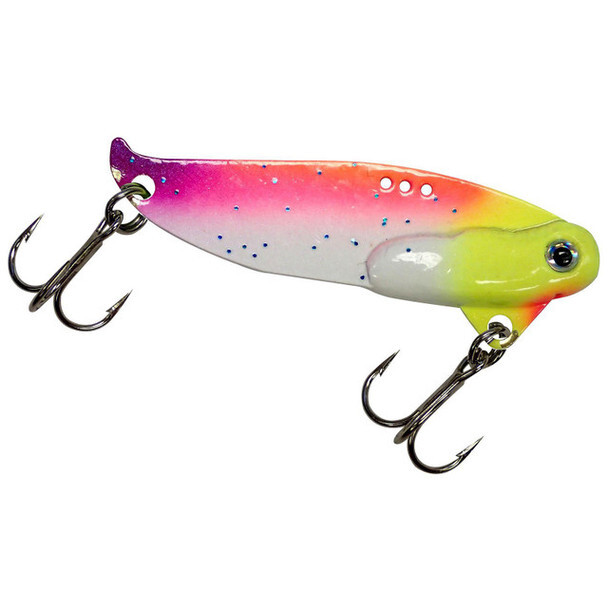
Because vibration does so much of the work, color is not as critical as size and cadence. Still, a few choices cover most conditions:
- Silver, chrome or gold: maximum flash. Good all-around choices, especially on sunny days and in clear to slightly stained water.
- Natural shad and baitfish patterns: best in clear water when fish get a good look at the bait.
- Firetiger, chartreuse and orange: high-visibility options for stained or muddy water, low light, and walleye.
- Dark colors: black or dark patterns produce a strong silhouette in stained water or on overcast days.
A simple approach: start with a metallic or natural pattern in clear water and a bright pattern in stained water, then let the fish tell you if they want something different.
Blade Baits to Try
These proven blade baits cover the sizes and actions most cold water anglers need.
The Classic: Silver Buddy Blade Bait

The Silver Buddy has been catching cold water bass and walleye for decades. It is available from 1/4 oz up to 1 oz, which makes it easy to match weight to depth and current, from shallow river runs to deep Great Lakes structure.
Best for Tuning the Action: Damiki Vault
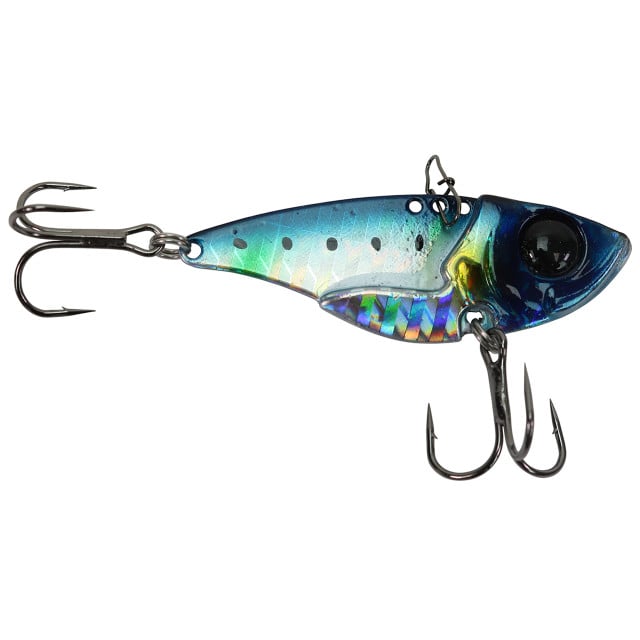
The Vault offers three settings for attaching your line, so you can switch from a tight, subtle buzz to a wider wobble without changing baits. Its small profile is a good match for finicky smallmouth in clear, cold water.
Best for Flash and Range of Sizes: Reef Runner Cicada

The Cicada's concave blade and holographic sides put out a lot of flash and vibration. It comes in a wide range of sizes, from tiny 1/16 oz models up to 3/4 oz, and works for casting, vertical jigging and even ice fishing, which makes it a favorite with walleye anglers.
Best for Long Casts: Heddon Sonar

The Sonar is a long-time favorite that casts a long way and has three line-tie holes for adjusting vibration. It is a good choice for covering large flats and breaks when you are searching for schools of fish.
Best Compact Shad Profile: Berkley ThinFisher

The ThinFisher updates the original Johnson ThinFisher while keeping its compact shad-shaped profile. Lighter sizes like 3/16 and 1/4 oz are well suited to shallower water, smaller rivers and walleye that want a smaller bait.
Best Heavy-Duty Option: SteelShad Original
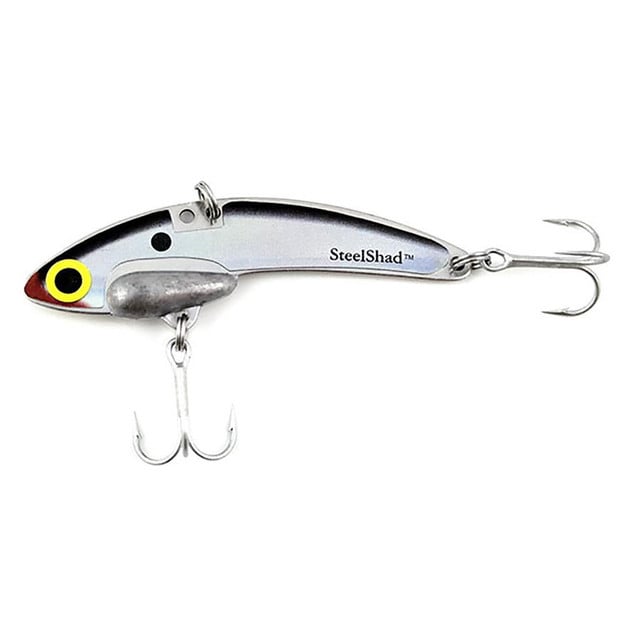
SteelShad blade baits are built tough and have a strong following among smallmouth and walleye anglers. The Original is a versatile choice for casting and vertical fishing on deep structure.
Frequently Asked Questions
Blade baits shine in cold water, roughly from the low 50s down into the upper 30s Fahrenheit. In that range smallmouth bass and walleye group up on deeper structure and will not chase fast lures far, and a blade bait delivers strong vibration and flash in a small, compact package that you can work slowly right in front of them.
Match the weight to depth and current. A 1/4 oz blade works in roughly 5 to 15 feet of calm water, 3/8 oz covers about 10 to 25 feet, 1/2 oz is the most versatile choice from about 15 to 35 feet, and 3/4 oz is for 30 feet and deeper, heavy current or wind. Use the lightest blade that still lets you feel the bottom and keep contact.
Let the blade sink to the bottom on a tight line, then lift the rod tip until you feel the bait start to vibrate, usually 6 to 18 inches in cold water, and let it fall back on a controlled semi-slack line while watching the line for a tick. Reel up the slack and repeat. Most strikes happen as the bait falls.
The holes on the back of a blade bait change how it vibrates. Clipping a snap into the front hole gives a tighter, faster vibration that starts with very little rod movement. The rear hole gives a wider, slower, more pronounced wobble that needs a bit more lift to start. Many anglers start in the front hole in very cold water and move back if fish want more action.
A thin braid in the 10 to 15 lb class lets you feel every vibration and tick, which makes blade baits much easier to fish. Add a 2 to 4 foot fluorocarbon leader of about 8 to 12 lb test for abrasion resistance and lower visibility in clear water. Straight fluorocarbon also works for shorter casts and vertical fishing.
Keep hops short and controlled, avoid letting the bait free-fall into rock crevices, and fish it on a tight enough line to feel when it lands. Some anglers remove the rear treble or replace both trebles with single hooks or slightly lighter wire hooks that can bend free. When you do snag, letting the line go slack or pulling from the opposite direction often pops it loose.
Yes. Blade baits are a proven cold water walleye lure in rivers, reservoirs and the Great Lakes. They are especially effective vertically jigged in river holes and current seams in late fall and early spring, and cast or snap-jigged along deep breaks where walleye group up. Smaller, shorter lifts usually work best for walleye.
Final Thoughts
When the water drops into the 40s, a blade bait is one of the most reliable ways to keep catching smallmouth and walleye. Pick a weight that keeps you in touch with the bottom, start with short hops and a controlled fall, clip into the front hole when it is coldest, and fish it on braid with a fluorocarbon leader so you feel every tick. Focus on deep breaks, river seams and holes, and slow down once you find fish.
Stock up on a few weights and colors and you will be ready for the cold water bite from late fall through spring. Find everything you need in our blade baits shop at FishUSA.