

Best Lures for River Fishing
Best Lures for River Fishing
Rivers reward anglers who understand how current shapes fish behavior. This guide covers the seven most effective river fishing lure types — what they do, when to use them, and which specific picks to reach for first.
Last updated: August 2026 · By: FishUSA Staff
How River Conditions Determine Lure Choice
Rivers present fishing variables you won’t encounter in lakes: current, changing depth, and a consistent flow of food that positions fish in predictable ways. Understanding those variables before picking a lure saves time and puts more fish in the net.
| Condition | What It Means | Best Lure Types |
|---|---|---|
| Strong current | Fish hold behind structure; lures race through too fast if too light | Heavy jigs, weighted spoons, deep-diving crankbaits |
| Slow pools & eddies | Fish suspend or cruise; slower presentations work | Soft plastics, jerkbaits, topwater |
| Clear water | Fish are wary; natural colors, subtle action | Jerkbaits, natural-color soft plastics, silver spoons |
| Stained / murky water | Fish locate by vibration and contrast | Bright spinners, chartreuse crankbaits, noisy topwater |
| Rocky structure | Bass and smallmouth hold tight to bottom | Jigs, craw-style soft plastics, square-bill crankbaits |
| Current seams | Food funnels through; fish stage on the slow side | Spinners, crankbaits cast across the seam |
The most consistent river anglers pick their lure based on these three questions: How fast is the water? How clear is it? What species am I targeting? The sections below break down each lure type with that framework in mind.
Crankbaits

Crankbaits are one of the most versatile river lures because their built-in diving lip lets you control depth, and their wobbling action generates reaction strikes even from inactive fish. The square-bill design is particularly effective in rivers — when the bait deflects off a rock or submerged log, the sudden change in direction triggers fish that have been following without committing.
How to fish them: Cast upstream or across the current and retrieve downstream. Let the current add action to the lure naturally. Target the downstream side of rocks and current breaks where fish hold waiting for food to pass.
River tip: Vary retrieval speed on the downstream swing. A sudden pause lets the bait rise and dart, mimicking a baitfish losing its balance in the current — a trigger that bass and walleye rarely ignore.
Jerkbaits

Jerkbaits are slender, minnow-shaped lures that excel when fish are holding in clearer water. The erratic, dart-and-pause action during retrieval convincingly mimics a disoriented baitfish — exactly what triggers predatory species like bass, walleye, and pike. They’re also one of the best cold-water lures, since the long pause between twitches gives lethargic fish time to react.
How to fish them: Cast near structure edges, submerged logs, or deeper pools and work with a jerk-jerk-pause cadence. The pause is critical — most strikes come when the bait is suspending motionless. Adjust pause length based on water temperature; longer pauses in cold water.
Spinners
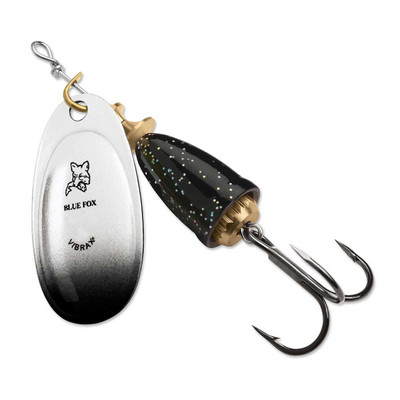
Inline spinners are among the most reliable river lures available. The rotating blade generates flash and vibration simultaneously, attracting fish by both sight and sound — two detection systems working at once. They’re especially effective in rivers because the current itself keeps the blade spinning even on a slow retrieve, giving you a natural, consistent presentation without complicated technique.
How to fish them: Cast across or slightly upstream of current seams and retrieve at a pace that keeps the blade spinning. Slow down near the downstream side of rocks and pools where fish hold. Trout and bass both stage along the edges where fast and slow water meet — work those transitions.
Blade color: Silver blades outperform gold in clear water and bright conditions. Gold blades work better in stained water, overcast days, and early morning or evening. When in doubt, silver is the safer default for most river situations.
Soft Plastics
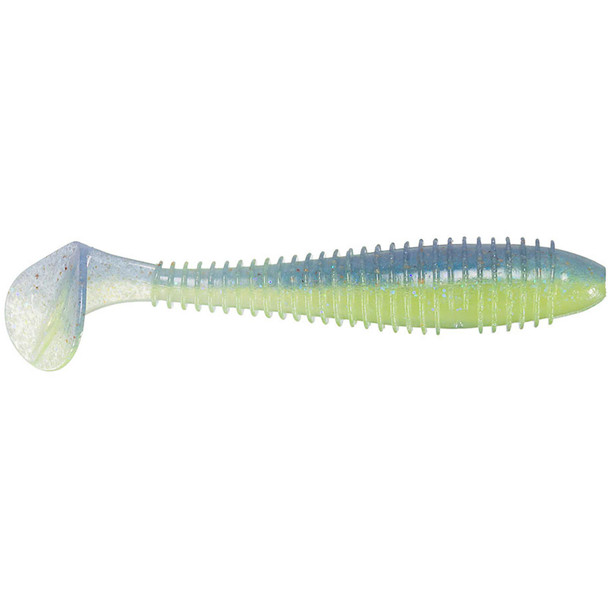
Soft plastics cover an enormous range of presentations — worms, craws, swimbaits, flukes, and creature baits — and can be rigged in multiple ways to match what fish are feeding on. They’re particularly effective in pressured rivers where fish have seen standard hard baits repeatedly, and in clear water where realistic texture and subtle action outperform flash.
How to fish them: On a jig head for bottom bouncing along rocks and current breaks. Texas-rigged for working through wood and debris without snagging. On a drop shot or Neko rig in deeper pools and eddies where fish suspend. The key is keeping the bait near the bottom, where most river fish feed.
Jigs

Jigs are the go-to lure for fishing deep holes, rocky pockets, and areas where current pushes fish tight to the bottom. The weighted head sinks quickly and maintains contact with the bottom even in strong current, putting your bait exactly where fish hold. Pair a jig with a soft plastic trailer — a craw or chunk — and you have one of the most effective bottom presentations in river fishing for bass, walleye, and smallmouth.
How to fish them: Bounce and drag along rocky bottom, using the current to create a natural drift. Hop the jig over rocks and let it fall into gaps and depressions where fish lie in ambush. In fast current, go heavier than you think you need — a jig that tumbles uncontrolled is less effective than one that ticks bottom with each bounce.
Topwater Lures
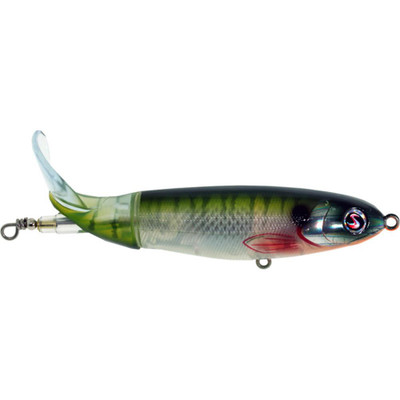
Topwater lures produce some of the most exciting strikes in river fishing. They work best during low-light windows — early morning, late evening, and overcast days — when bass push shallow and actively hunt along banks, beneath overhanging vegetation, and around fallen timber. In rivers with calm pools and back eddies, topwater can be productive even midday in summer when fish are feeding near the surface.
How to fish them: Cast close to cover — logs, overhanging branches, dock pilings — and work the bait along the edge. Walk-the-dog side-to-side action, steady churning retrieves with a prop or paddle-tail bait, and pause-and-go cadences all produce depending on the lure. Give fish time to find the bait after each pause before moving it again.
Spoons

Spoons are one of the oldest and most proven river lures, particularly for trout and salmon. Their curved body creates a wobbling, flashing action that reflects light and mimics a dying baitfish. In rivers, the current itself does a lot of the work — cast upstream, let the spoon flutter down through a pool, and the swing at the end of the drift often produces the most strikes.
How to fish them: Cast upstream or at a 45-degree angle across the current. Let the spoon sink and flutter as it drifts downstream, then retrieve as it swings across and below you. Vary the retrieve speed to change the depth and action. Heavier spoons handle stronger current; lighter spoons work better in slower pools. In clear water, silver and gold finishes outperform painted colors.