


/
/
The right rod, reel, line, and terminal tackle make crappie easier to find, hook, and land. Here's how to build a crappie setup that works from a boat, the bank, or through the ice, plus the three rigs every crappie angler should know.
Last updated: October 2026 · By: FishUSA Staff
Setting up your gear correctly is essential for successful crappie fishing. With the right rod, reel, line, and terminal tackle, you can effectively target black and white crappie and adapt to clear or stained water, shallow spring fish, or suspended summer schools. This guide will walk you through the best setups for crappie fishing, whether you're a beginner or a seasoned slab hunter, and whether you're fishing from a boat, shore, or ice.
| Component | Recommended Spec |
|---|---|
| Rod | 6–7 ft light or ultralight spinning (10–14 ft for spider rigging) |
| Reel | Size 1000–2500 spinning reel with a smooth drag |
| Line | 2–6 lb mono or fluoro, or light braid with a fluoro leader |
| Hooks | Aberdeen or octopus, sizes 4–8 |
| Jigs | 1/32–1/8 oz |
| Floats & Weights | Slip bobbers and small split shot |
A light or ultralight spinning rod is ideal for crappie fishing. Rods in the 6- to 7-foot range provide a good balance of casting distance, sensitivity, and control. For specific techniques like spider rigging, longer rods (10 to 14 feet) are better for reaching deeper water and spreading your bait presentation.
Check out our recommendations: Best Crappie Rods, Best Spider Rigging Rods for Crappie
Pair your rod with a crappie spinning reel designed for light line. Look for a reel with a smooth drag system. A size 1000 to 2500 reel is perfect for crappie fishing. Gear ratio is not a crucial factor for a crappie fishing setup, as quick retrieves are not usually necessary. In fact, a slow retrieve can even aid in not pulling hooks on skin-hooked fish.
Use a light line in the 2- to 6-pound test range. Monofilament is a versatile option for most situations, while fluorocarbon offers low visibility and increased sensitivity. Light braided line is also a great option as it offers high visibility, no stretch, and no memory. A fluorocarbon leader is recommended with braided line so that the line tied to your bait is not visible to the fish.
Learn more about choosing a fishing line for crappie.
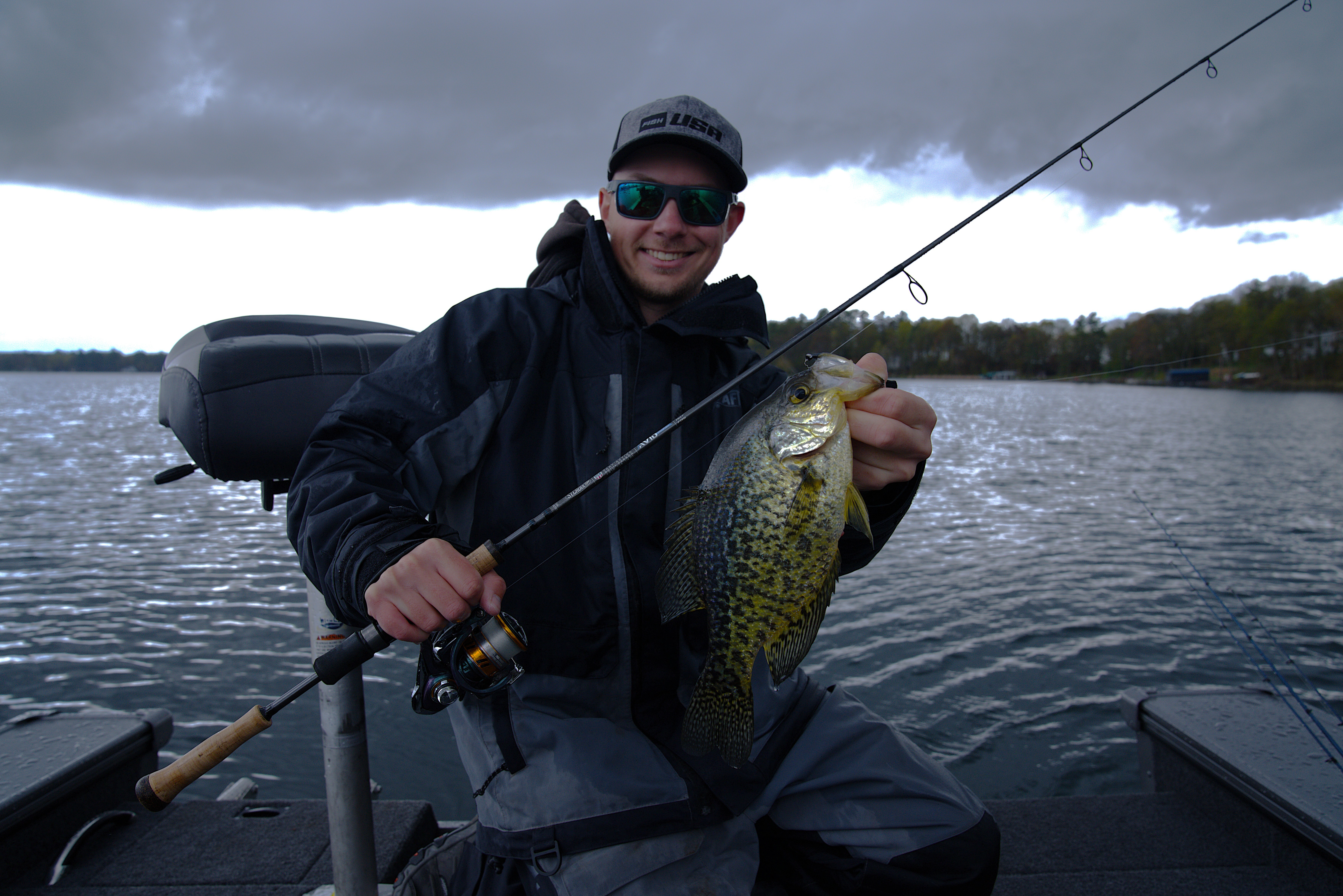
Crappie are highly responsive to both live and artificial bait. Popular options include:
Shop the best crappie lures, jigs, and bait! To get the most out of a jig once it's tied on, see our guide on how to jig for crappie.
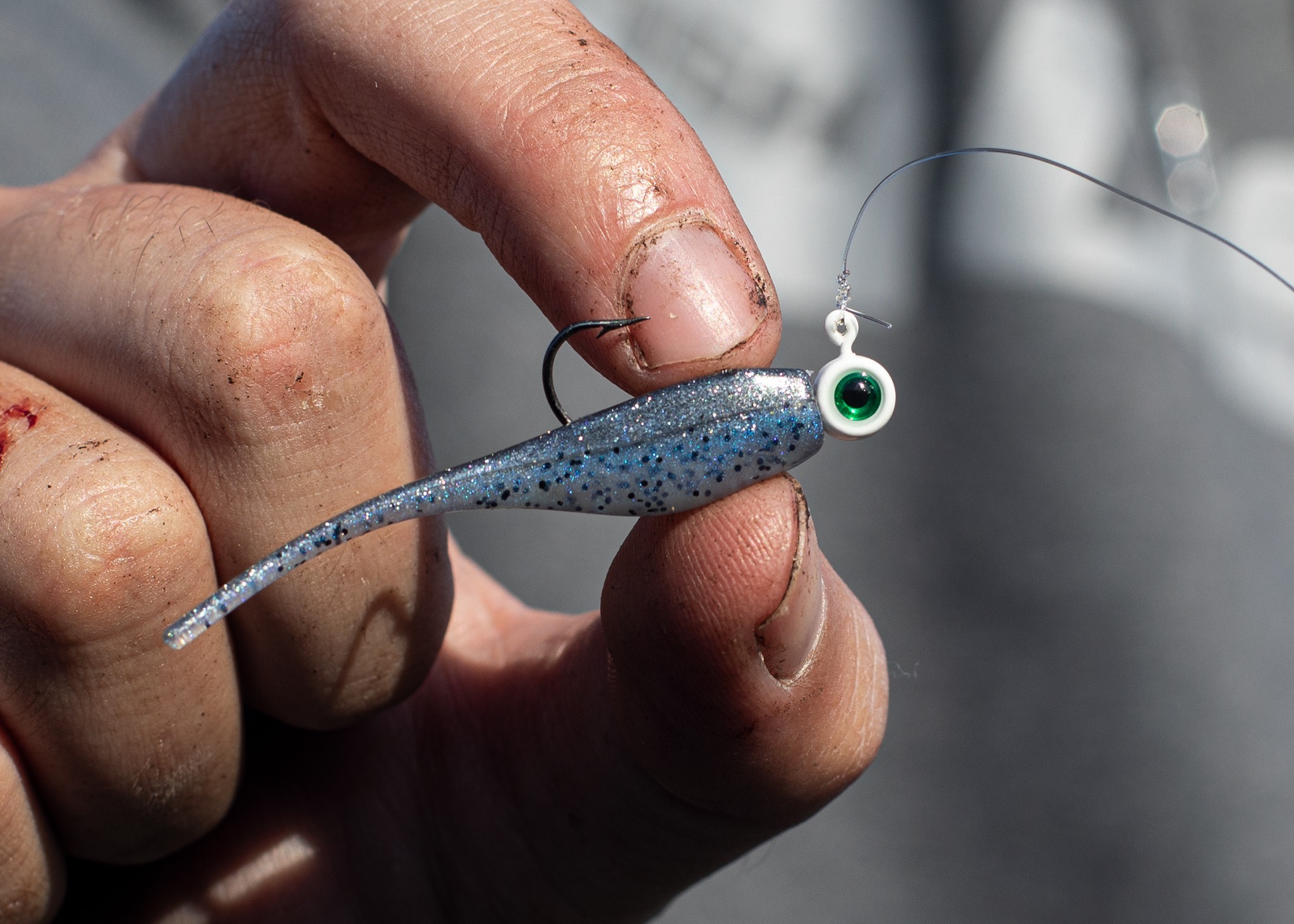
The slip bobber rig is perfect for targeting crappie at specific depths. Here's how to set it up:
For a deeper look at float sizes, depth settings, and bait choices, read our guide to crappie fishing with slip floats.
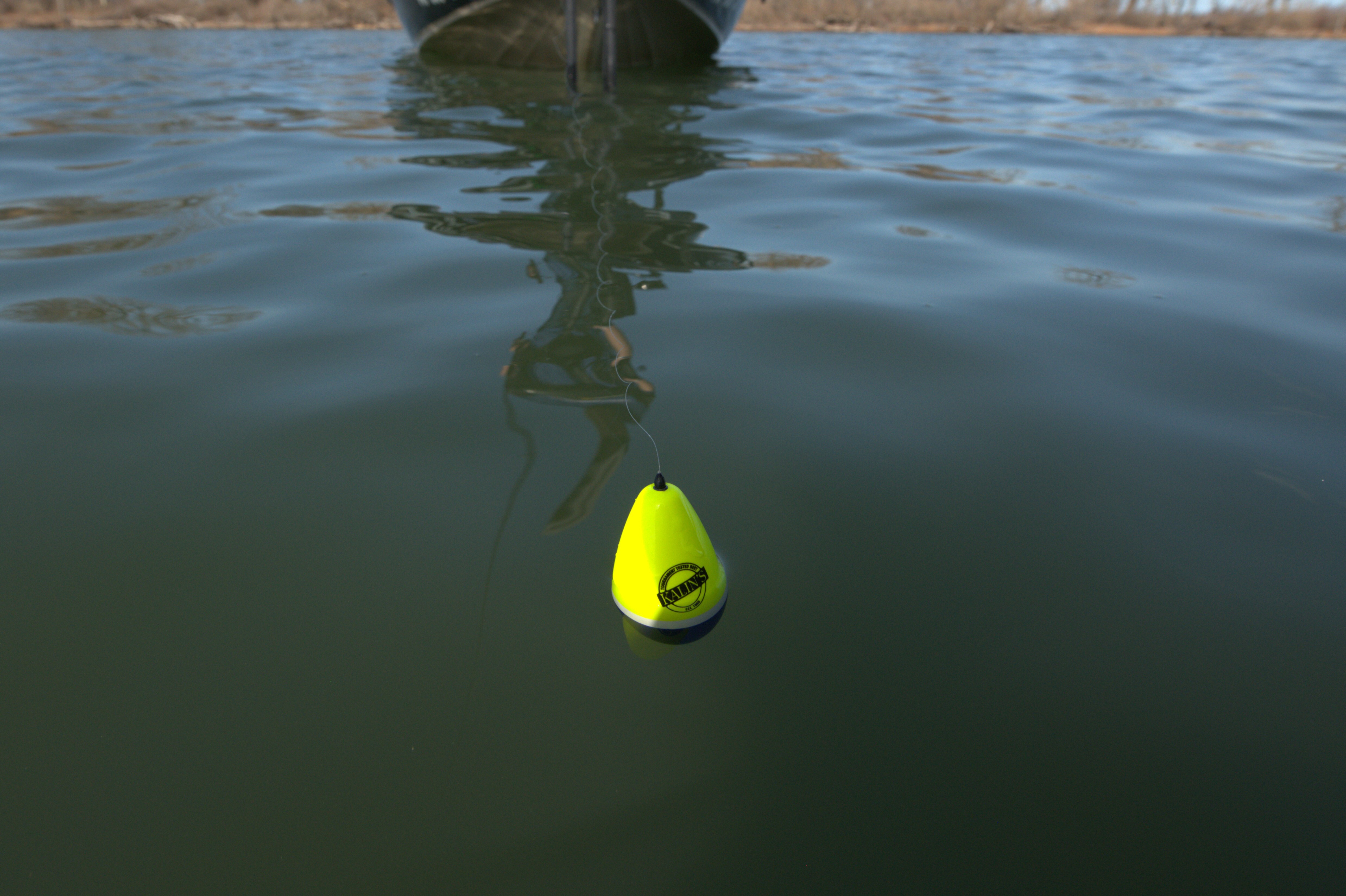
This rig allows you to present two jigs at different depths. Here's how to set it up:
The drop shot rig is effective for vertical presentations near structure. Here's how to set it up:
The drop shot also shines on suspended fish over open water. Learn more in our guide to drop shotting crappie.
Use lighter setups in clear, calm water and heavier gear in murky or windy conditions. Lighter line and smaller jigs look more natural to wary fish, while a slightly heavier jig keeps you in contact with your bait when the wind picks up.
Crappie are visual feeders, so try different jig colors to see what works best in the current conditions. A double jig rig is an easy way to test two colors at once.
A fish finder can help locate crappie schools and determine their depth, saving you time and improving your setup. Once you know the depth, set your bobber stop or count your jig down to that level.
Keep your line tight and your rod tip slightly raised to detect subtle bites and set the hook quickly. Crappie often bite on the fall, and slack line is the most common reason anglers miss them.
Crappie move shallow in spring and slide to deeper structure as the water warms, so your rig choice should follow them. A slip bobber is hard to beat around spawning crappie, while vertical jigging and drop shots work best on deeper summer crappie.
A 6- to 7-foot light or ultralight spinning rod paired with a size 1000 to 2500 spinning reel is the best all-around crappie setup. It casts small jigs well, is sensitive enough to feel light bites, and has a soft enough tip to keep hooks from tearing out of a crappie's thin mouth.
Line in the 2- to 6-pound test range is best for crappie. Use 4-pound test as a starting point, drop to 2-pound in very clear water, and go up to 6-pound around heavy brush or timber. Monofilament is the most versatile choice, fluorocarbon is less visible, and light braid with a fluorocarbon leader offers maximum sensitivity.
Use Aberdeen or octopus hooks in sizes 4 to 8 for crappie. Thin-wire Aberdeen hooks are especially popular because they hold a live minnow without killing it and will bend free from brush snags under steady pressure.
Jigs from 1/32 to 1/8 ounce cover most crappie fishing. Use 1/32 or 1/16 ounce for shallow or suspended fish and slow falls, and 1/8 ounce for deeper water, wind, or current. Bright colors like chartreuse, pink, and white work in murky water, while natural colors work best in clear water.
Spider rigging rods are typically 10 to 14 feet long. The extra length spreads baits farther apart and away from the boat, letting anglers cover more water and present multiple baits at different depths while slow trolling.
The slip bobber rig is the easiest and most effective crappie rig for beginners. Slide a slip bobber onto the line, add a bobber stop above it to set the depth, tie on a small hook or jig head, and add a split shot if needed. It suspends a minnow or jig right at the depth where crappie are holding.
Gear ratio is not a crucial factor for crappie fishing because fast retrieves are rarely needed. A smooth drag matters far more. A slower retrieve can even help land crappie that are lightly hooked in their thin mouth membrane.
Setting up your gear for crappie fishing is straightforward and highly rewarding. By choosing the right rod, reel, line, and tackle, you can adapt to various fishing scenarios and increase your chances of success. Whether you're fishing from the shore, a boat, or through the ice, the setups and tips in this guide will help you catch more crappie and enjoy your time on the water.
Build your setup with crappie and panfishing spinning rods, spinning reels, and crappie jig heads from FishUSA.
Hook Me Up!
Sign up for emails and texts to get exclusive updates and offers.
By providing your number above, you agree to receive recurring automated marketing text msgs (e.g. cart reminders) to the mobile number used at opt-in from FishUSA on 25043. Consent is not a condition of purchase. Msg frequency may vary. Msg & data rates may apply. Reply HELP for help and STOP to cancel. See Terms and Conditions & Privacy Policy