


/
/
Lure choice is only half the equation. The real difference-maker is how you move that lure — your cadence, speed, pauses, and deflections. Raise a squarebill two inches, extend a jerkbait pause by two seconds, or rip a lipless free from grass a beat sooner and you’ll watch followers turn into biters.
Last updated: August 2026 · By: FishUSA Staff
If you’re dialing in the best bass fishing retrieval methods, you already know lure choice is only half the equation. The real difference-maker is how you move that lure — your cadence, speed, pauses, and deflections. Raise a squarebill just two inches, extend a jerkbait pause by two seconds, or rip a lipless free from grass a beat sooner and you’ll watch followers turn into biters.
This guide translates vague advice like “slow down” into precise, repeatable retrieves organized by lure type and real-world conditions — season, water clarity, wind, grass, wood, and current. Along the way, you’ll dial in line and IPT (inches per turn)/gear ratio so you can command speed, depth, and action — and leave the lake with a pattern you can repeat.
Cadence is your rhythm. Think of the difference between twitch–twitch–pause and a steady grind; both can be right, but only one matches the fish’s mood at a given moment. Cadence includes how sharply you move the rod tip, how often you interrupt motion, and how long you let the bait hang or fall. Subtle changes — one extra twitch, a longer stall, a softer sweep — often flip neutral fish into biters.
Speed isn’t simply “fast or slow.” It’s governed by your reel’s inches-per-turn (IPT), spool fill, and how quickly you rotate the handle. Cold water and pressured fish generally want slower presentations; active summer fish and wind-driven shad schools can demand a bursty, accelerated retrieve. Standardizing speed by IPT lets you reproduce what worked.
Depth control is a function of countdown time, rod-tip angle, line choice (braid floats, fluoro sinks, mono stretches), and the lure’s natural buoyancy. You can run the same bait at distinctly different layers by adjusting those variables — and the fish will tell you which layer is right when your bait starts getting checked or eaten.
Deflection and contact is the strike trigger most anglers underuse. Ticking stalks, grinding rock, and glancing off wood send a shock into the bait that looks like a fleeing or wounded prey item. Plan your contact points on each cast, then build a tiny stall or speed-up immediately after each deflection to convert curiosity into commitment.
Pro move: Open a new area with a neutral, steady retrieve for a minute to establish a baseline. Then run a stop-and-go, a burn-and-kill, and a sweep-and-fall in sequence. One of those three almost always gives you the first honest read on fish mood that day.
Cold & clear (late winter): Start with a jerkbait on a deliberate twitch–twitch–long pause of five to fifteen seconds. The pause is the bite — watch the line and resist the urge to move too soon.
Cold & stained: Swap to vibration and presence. Slow-roll a spinnerbait until you can feel each blade thumping, or run a squarebill to deliberately bump cover and stall for a heartbeat after each deflection.
Post-spawn shad spawn: Keep a swim jig crawling just above the grass with a measured slow roll while a walking topwater gets short, crisp stalls any time it crosses a bait flicker or shade seam.
Summer grass (mid-day): With a chatterbait, let the blade tick grass and rip it free — most bites happen as it surges forward. Over holes and lanes, a frog that short-walks in place is deadly.
Fall shad blitz: Match fleeing bait with a lipless burn-and-kill — two seconds fast, half a second dead. Mid-depth cranks shine on a steady retrieve punctuated by micro twitches.
Muddy after rain: Choose thump. Colorado-blade spinnerbaits and chatterbaits on a patient slow roll excel. In skinny water, squarebills that collide with cover and pause are hard to beat.
Bluebird post-front: Downsize and finesse. A Ned rig doing an almost-do-nothing drag, a dropshot with a slack-line quiver, or a glide bait that stalls near shade can coax conditioned fish.
Windblown banks: Use the chop to your advantage. Burn a spinnerbait near the surface to ride the push, and shorten jerkbait pauses so the lure maintains tension in pushy water.
Current seams: Retrieve with the flow to keep a natural angle, stall in the eddy pocket, then sweep across the seam. A chatterbait that tracks across the divide often triggers the dominant fish holding the best lie.
The squarebill’s superpower is controlled chaos. Grind it steadily into shallow wood or rock until it glances off, then stall for one to two beats to mimic a stunned baitfish. In stained water, add a touch more speed to increase vibration but preserve the stall — it’s the moment when tracking bass overrun the bait. Pair with a M/MF glass or composite rod and a 5.3–6.6:1 reel; use mono for more float or fluoro to pin it slightly deeper. Shop Squarebill Crankbaits →
At mid-depth, the most consistent producer is a smooth, even pull punctuated by tiny rod-tip ticks every five to eight handle turns. Those micro twitches interrupt the cadence just enough to suggest a nervous, living target. When your bill starts kissing a hard spot or transitions from clay to rock, briefly kill the bait and then resume the steady pace. Ten to twelve-pound fluoro adds depth without overwhelming the lure’s action.
Big-billed divers like pressure. Sweep the rod to load the bill and drive the lure down, then slow-roll with the handle to maintain contact along ledges or shell beds. When you feel a lip, ridge, or unusually hard patch, pause cleanly and reengage. Deep divers pair well with composite or moderate-action rods that keep trebles pinned during long fights. Shop Deep Diving Crankbaits →
On grass flats, the classic is a yo-yo: let the bait fall on semi-slack line, rip it free as soon as it ticks grass, and watch the line for jumps on the drop. During shad chases, burn the bait to make the school panic, then kill it abruptly — predators often crush it in the vacuum the stop creates. Shop Lipless Crankbaits →
Tip: If you’re losing fish mid-fight on trebles, soften the system — go to a M/MF composite rod or add a short mono leader to reintroduce a bit of stretch.
In frigid, transparent water, pause length decides everything. Work a deliberate twitch–twitch–pause and let the bait hang five to fifteen seconds. Fish that follow and stare need even longer hangs. Eight to ten-pound fluoro helps true suspenders maintain depth and keeps the nose down between twitches.
As stain and temperature rise, shorten the pauses and sneak in a single handle turn after your twitches so the bait creeps forward. On windblown points, fish are already primed; quicken the cadence slightly to keep the bait from drifting slack and to provoke swatting strikes.
In warm water, get loud. Slash the bait with three sharp twitches, give it a short breath, and repeat. Add speed bursts when you see bait skipping ahead of the lure. If your bait is a slow riser, avoid long pauses that let it float out of the strike window — keep it moving and aggressive.
Buoyancy check: True suspenders reward patience; slow risers prefer shorter rests so they don’t climb out of the zone. Know your bait’s behavior at rest and fish the pause accordingly.
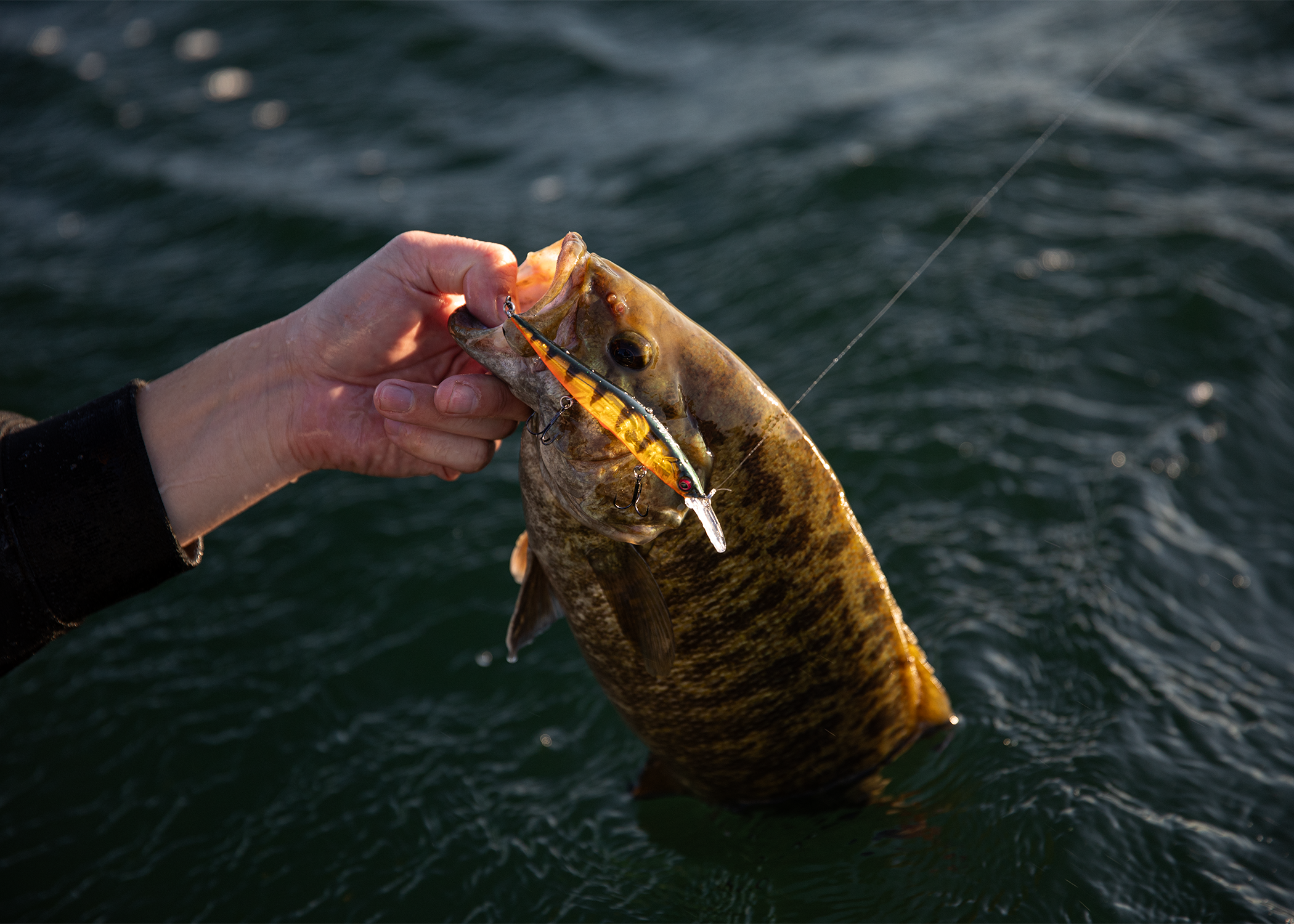
When the water is cold or stained, slow roll until you can feel each blade thumping — keep the lure just over bottom where fish relate to the contour. In windy fall conditions or around shad schools, burn the bait just under the surface and kill it at ambush points like dock corners and bush tips. Along steep banks and timber, let the bait helicopter on a controlled fall; many eats happen on that descent, so keep a finger on the line and set at any tick. Shop Spinnerbaits →
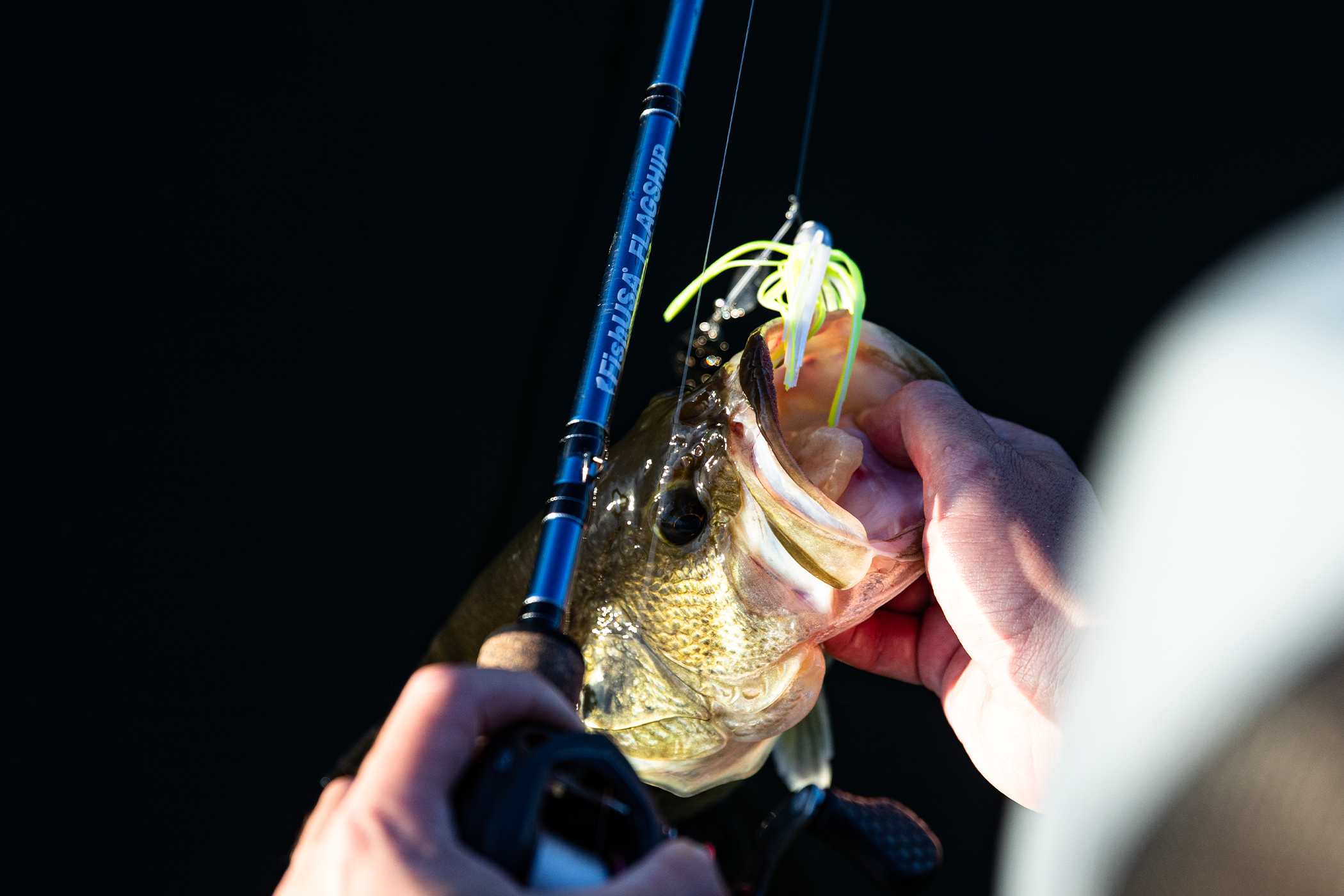
In grass lanes, let the blade tick a strand and rip it free — the sudden surge is the primary trigger. Over stumps and isolated wood, keep a steady pace but add rod-tip pops to change the vibration signature, then kill the bait after a bump. The trailer makes a real difference here: a boot-tail lifts and slows the bait for a thumpy profile, while a thin split tail lets you speed up with tighter vibration to match more active fish. Shop Chatterbaits →
Gear: Chatterbaits excel on a MH/Mod-Fast composite that cushions surges; spinnerbaits feel great on a MH/F. A 6.8–7.3:1 reel gives you both the slow roll and the quick burn in a single setup.
Count down to the desired depth, then slow roll just fast enough to keep the tail working and the head tracking true. Over gravel and shell, a bottom-crawl — steady with occasional six- to twelve-inch lifts — keeps you in contact while suggesting a feeding baitfish. Across submerged grass, a burn-and-kill draws ferocious reaction strikes at the exact moment you kill the bait above a hole or lane.
Most glides shine on a slow S-curve that’s barely fast enough to hunt. Add a half-turn pop to dart off center, then stall in shade or near wood to give followers a window to eat. Finish each retrieve with an “L-turn” at the boat to convert trailers that won’t commit mid-retrieve. Shop Glide Baits →
On points and ledges, a lift-and-fall approach keeps the bait in the strike zone without racing past neutral fish. If they track but won’t commit, dead-stick momentarily — many big bites happen when the bait appears to falter and die. Match your rod power to the bait’s weight, and consider slightly more moderate actions with mono or a short leader on treble-rigged swimbaits to avoid tearing hooks free on the bite. Fluoro helps paddletails stay down in the column.
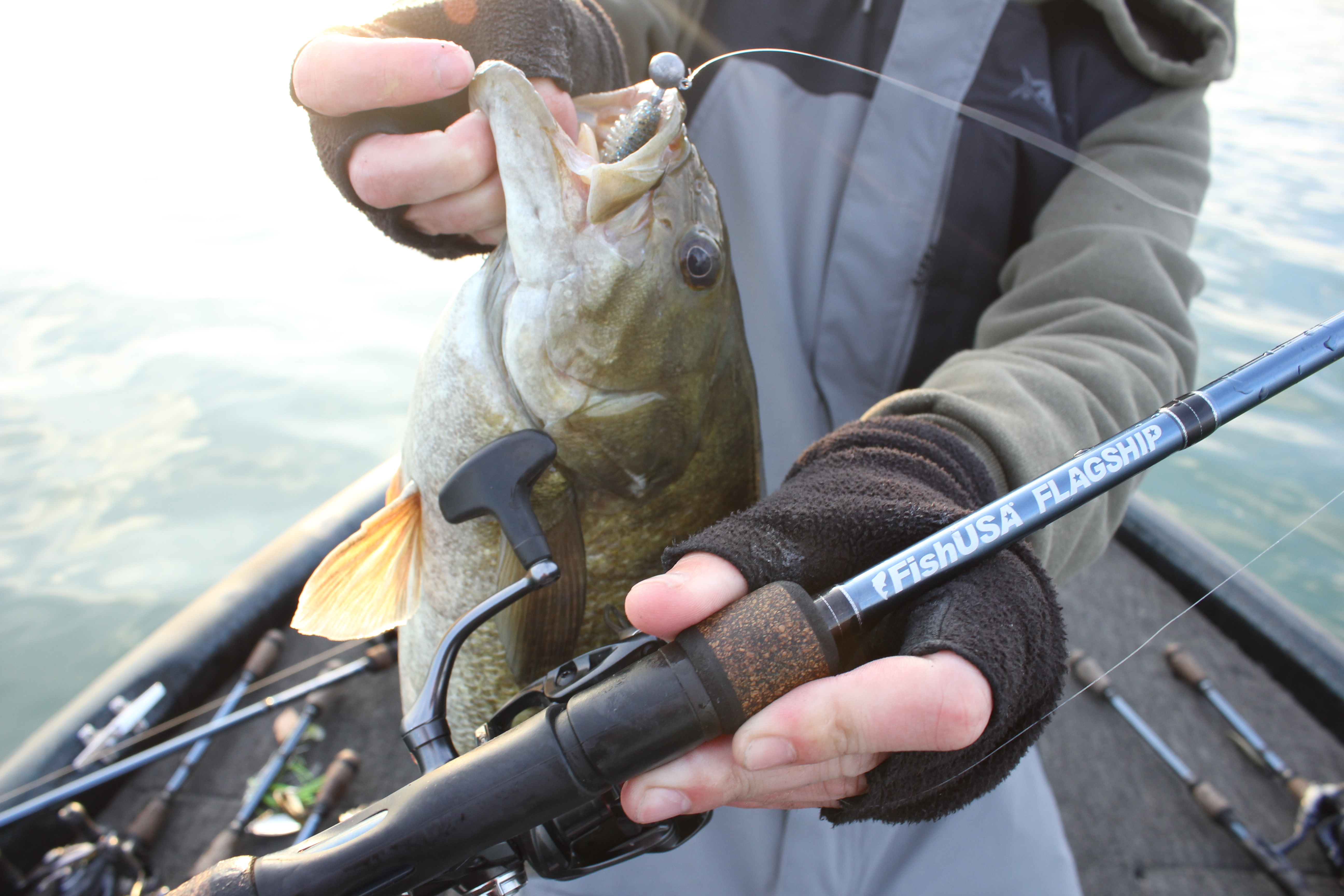
Drag until you feel the jig tick a hard spot, then give a short hop to relocate and reanimate the trailer. Use sweep sets on pressure fish — don’t jerk. In current, present quartering to the flow and let the jig walk down the line while you guide it with rod-leading sweeps that keep you in contact through the drift.
Pitch, let the bait fall naturally, then shake in place before a controlled double hop. Many fish sit on the first two to three feet of bottom near cover, so don’t rush the pickup — work that short zone thoroughly before re-pitching to the next target.
Through sparse grass, a swim-and-glide keeps you above snags while still presenting a natural fall through openings. On vertical timber, lift and drop on the sunny side first, then trace the shaded edge — bass often pin prey against the trunk. Light pegging keeps the cone weight tight to the bait in grass so your fall is predictable and the hook doesn’t separate on the drop.
Use a long, patient sweep, then reel to catch up and feel for bottom changes. Pause on shell or where a soft bottom gives way to gravel — that transition is almost always your strike zone. Heavy leaders and buoyant plastics can keep the bait hovering temptingly just off bottom as the lead drags through the transition.
Gear: Choose MH/H-Fast rods with 7.1–8.1:1 reels for quick line pickup on the hookset. Fluoro maximizes feel; in heavy grass, braid with a leader maintains control on the rip and the fight.
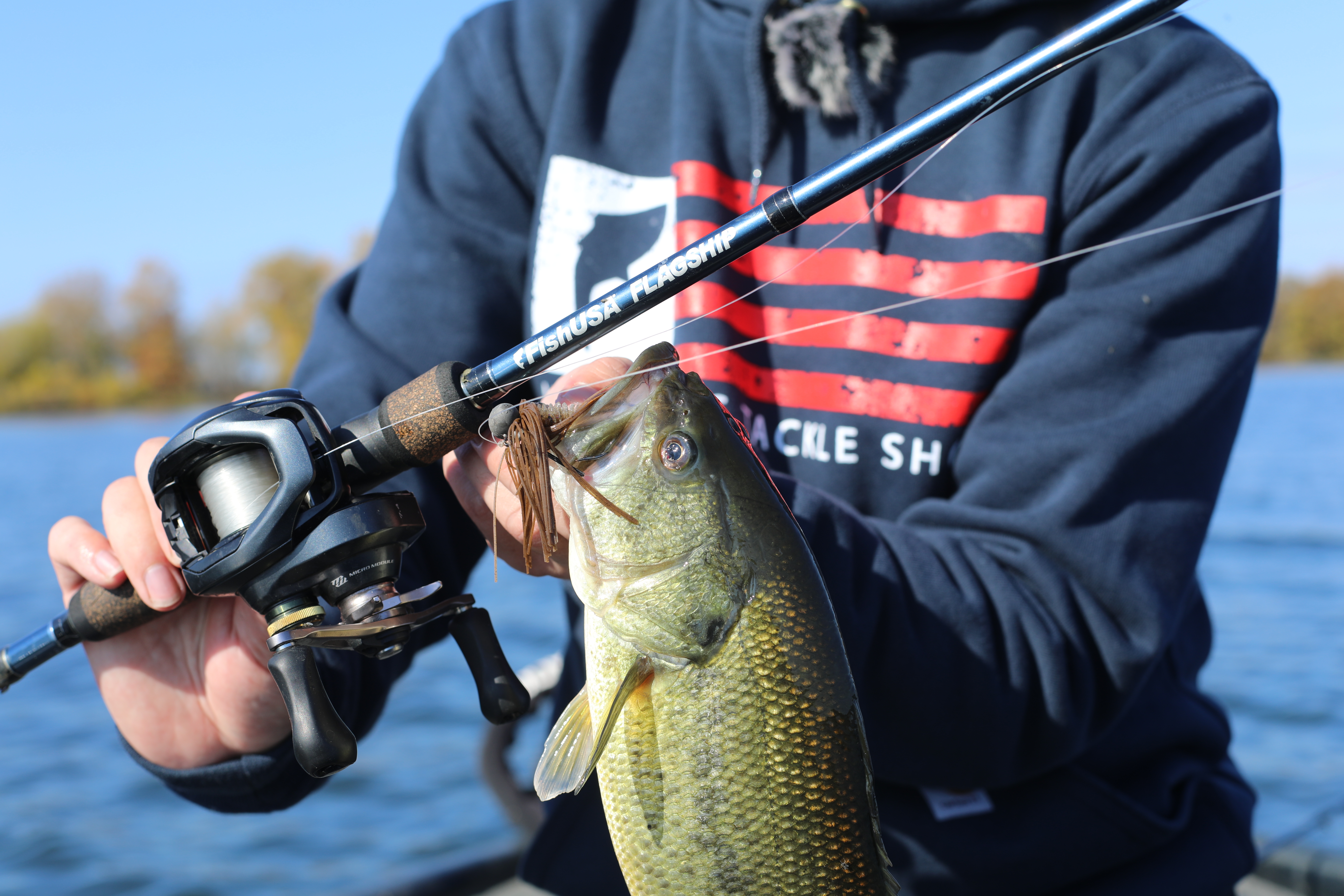
In calm water, a wide, unhurried walk punctuated by stalls near bait flickers or shade lines is devastating. Around schooling fish or in wind, tighten the walk and speed up, then kill the bait after a missed blowup to give the fish a second shot — they almost always come back if you resist moving the bait immediately.
On slick mornings, work a distinct pop–pause with two- to five-second rests; the pause lets rings radiate and sells the illusion of vulnerability. With a light chop, use pop–pop–pause to maintain presence without overwhelming the surface texture. Shop Popper Lures →
Post-spawn, short chugs and long stalls around bluegill beds and shade lines tease defensive bass. The props add flash without forcing you to move the bait far, letting you milk high-percentage targets that are locked to a specific piece of structure.
Begin reeling before the bait lands so it planes instantly, then maintain a steady wake. If a fish follows to the boat without striking, kill the bait and let it sink a beat — many finally commit on that flutter fall. Shop Buzzbaits →
Line: Mono or braid with a mono leader adds just enough cushion to keep trebles and single hooks pinned on the surge. A MF (Moderate-Fast) rod helps prevent pull-outs when fish crash hard at the surface.
Across cheese mats, a steady crawl keeps the bait visible and moving, but the magic happens over holes and lanes where you can short-walk in place and tempt fish hiding below. After a missed blowup, kill the frog, wait for a tick, then offer tiny twitches — the bass often circles back and crushes the stationary bait. Shop Hollow-Body Frogs →
Run a straight, fast retrieve along edges to trigger ambush strikes; pause briefly in lanes or gaps to let fish locate the sound and close the distance. A lighter wire hook and high-floating plastic can help the bait plane quickly in tight lanes where a standard frog hook might drag. Shop Toad Lures →
Efficiency wins in thick matted cover. Punch through, let the bait fall on a tight line, give it a single shake to reanimate, then pick up and re-drop. High repetition across multiple holes is more productive than overworking any single pitch — move fast and cover water.
Gear: Use H/XH rods, 50–65 lb braid, and 7.3–8.1:1 reels. Keep the rod tip high when walking a frog across a mat; set the hook on feel, not the splash — wait until you feel the fish move away before swinging.
A true do-nothing drag — literally letting the bait stroll forward while you maintain light tension — often outfishes more active presentations when fish are under pressure or in post-front conditions. When they sulk, add a shake-and-dead-stick or a swim-glide-shake to alter posture without overworking the bait. During cold fronts, smaller hops and longer rests outproduce flashy motions by a wide margin.
Think in centimeters, not feet. A tight-line shake keeps the bait quivering in place; a nose-down hover mimics a feeding fish. For deep fish that you can see on sonar, keep the lure at their eye level and use a slack-line quiver to make the plastic breathe without moving horizontally — the escape cue of a bait that suddenly darts away is often all it takes.
Don’t rush the fall — the shimmy on the way down is the strike trigger. After the initial drop, lift once to reanimate the bait and then dead-stick near shade or dock cables. Many bites feel like simple added weight; lean into the fish and reel before swinging to make sure the hook is loaded.
Hover the bait just above the fish you see on sonar, introduce a micro quiver, and slowly pull away when they stare. That escape cue — a small bait suddenly trying to flee — often forces a commitment from fish that have seen everything else.
Gear: Pair ML/XF spinning with light braid and a fluoro leader for direct feel and sensitivity. Favor a slower IPT spinning reel to maintain precise control over these subtle, centimeter-scale presentations.
Current seams: Present with the flow to keep a natural angle; pause in eddies where fish rest, then sweep across the seam to trigger a reaction. Keep the rod leading so you feel the bait track the seam edge and don’t drift into dead water.
Muddy water after rain: Choose thump and presence. Slow-roll a spinnerbait or chatterbait so fish can find the bait by feel, and use a squarebill to make deliberate, audible collisions with shallow cover followed by a short stall. The bite is usually closer to the cover than you think.
Bluebird post-front: Downsize profiles and dead-stick more than feels comfortable. Alternatively, grind a super-slow roll along first breaks with a bladed bait — the subtle thump can coax bites when nothing else penetrates the lockjaw. Target the deepest adjacent structure to where you were catching them before the front.
Let your sonar dictate retrieve style. Suspended arcs respond to glide-and-pause or a bait that rises and stalls in their lane; fish pinned to bottom want a drag or short hop that stays in contact. On the surface, watch wind lanes, birds, and bait dimples — when life gathers, switch to burn-and-kill or stop-and-go retrieves that imitate a panicked school.
Use a simple 10-cast test: change only one variable — speed, pause, or rod action — every ten casts. Track what earns follows versus eats and iterate toward the latter. The fish will dial you in faster than any formula if you’re paying attention and changing only one thing at a time.
Your rod’s action should mirror your hook style. Treble-hook baits belong on Moderate/Mod-Fast actions that cushion surges and keep small hook points buried; single-hook presentations need Fast/Extra-Fast to drive steel home with authority on the hookset.
Line choice fine-tunes presentation behavior: braid rips baits free of grass and shines on topwater walking (add a mono/fluoro leader for cushion); fluoro adds sensitivity and depth control for bottom contact; mono offers stretch that protects trebles and enhances surface action on walking baits and poppers.
Match reel speed to task: 5.3–6.6:1 for controlled cranking and treble-hook baits, 6.8–7.3:1 as the versatile all-around middle ground, and 7.5–8.5:1 when you need to vacuum slack instantly for jigs, frogs, and punching. Standardize your IPTs for favorite cadences and you can reproduce a productive bite window on any body of water.
Too many follows: The fish want a clearer kill window. Insert a longer stall, change trailer buoyancy to alter the hover on the pause, or downsize the profile to reduce intimidation on wary fish.
Short strikes: This almost always signals an overly stiff system. Soften your rod or add a short mono leader and slow the cadence so the bait stays in their mouth longer before load transfers to the rod tip.
Grass constantly fouling: Raise the rod tip to skim the tops, rip the bait free sooner before grass loads up on the hooks, and consider thinner braid or a more compact lure that slices stalks cleanly rather than bulldozing through them.
Choose thump and presence: spinnerbaits on a slow roll, chatterbaits with steady rod-tip pops, and squarebills that deflect and stall on shallow cover. The key move is increasing vibration while slowing down — bass locate the bait by feel, not sight, in muddy conditions.
Start at 5–10 seconds and extend to 15 on followers or in ultra-clear water. If fish nip and leave, shorten the pause slightly so the bait doesn’t feel completely dead — they still want a hint of motion, just very slow motion.
When shad are up and wind is pushing bait, burn near the surface and kill around ambush points like dock corners and laydowns. In calm or stained conditions, slow roll along deeper contours and let the blade telegraph bottom.
Use tick-and-rip: let the blade kiss a strand of grass, snap it free, and stay ready — the bite almost always comes as the bait surges forward after the rip. If they’re short-striking, add a brief pause right after the rip to give them a cleaner window.
Lower ratios (5.3–6.6:1) add control and load for treble-hook baits; mid-range (6.8–7.3:1) covers most presentations; high-speed (7.5–8.5:1) vacuums slack instantly for jigs, frogs, and punching. Match IPT to your target cadence and you can reproduce a productive retrieve reliably from trip to trip.
Yo-yo across warming grass flats: let the bait fall on semi-slack line, then rip it free the moment it ticks vegetation. During shad-driven chases, a burn-and-kill across points — two seconds fast, half a second dead — can be especially productive.
On thick mats, use a steady crawl and short-walk in place over holes and lanes where fish can look up through the canopy. On open edges and grass points, walk with longer stalls near shade seams and current breaks to give fish time to locate the bait and commit.
Maintain a slow S-curve, deliver a half-turn pop to dart off center, and stall near shade or wood. Finish with a boatside L-turn to convert trailers that won’t commit during the main retrieve — the sudden direction change often triggers a reaction bite.
Often yes — the fall triggers lethargic fish that won’t chase a steady retrieve. If they still refuse, try a slow, steady roll just above the grass tops with an occasional pause. Cold bass sometimes respond better to constant subtle vibration over erratic yo-yoing.
Go finesse: a Ned rig do-nothing drag or a dropshot slack-line quiver are the highest-percentage moves after a front in clear water. Alternatively, grind a super-slow roll along first breaks with a bladed bait — the subtle thump can coax bites when aggressive presentations fail completely.
The best bass fishing retrieval methods shift with water temperature, clarity, and cover, but the framework never changes: match cadence to fish mood, speed to season, and contact/deflection to the cover you’re fishing. Begin neutral, test three cadences quickly, and let bites — and even sniffs or follows — steer small adjustments in pause length, IPT, and rod action. Do that consistently and you’ll turn “just follows” into fish in the net.
More bass fishing reading: Best Topwater Lures for Bass · Best Dropshot Setup for Bass
Hook Me Up!
Sign up for emails and texts to get exclusive updates and offers.
By providing your number above, you agree to receive recurring automated marketing text msgs (e.g. cart reminders) to the mobile number used at opt-in from FishUSA on 25043. Consent is not a condition of purchase. Msg frequency may vary. Msg & data rates may apply. Reply HELP for help and STOP to cancel. See Terms and Conditions & Privacy Policy