


/
/
The dropshot catches largemouth, smallmouth, and spotted bass year-round — but only when the setup is dialed in. Major League Fishing pro Matt Becker breaks down the exact rod, reel, line, and terminal tackle he relies on, and why every component matters.
Last updated: August 2026 · By: FishUSA Staff
There’s no technique in bass fishing that produces more consistently across more conditions than the dropshot. Deep offshore structure, shallow dock edges, weed lines, spawning flats — it works everywhere, all year, for every bass species. Matt Becker keeps a dropshot rigged and ready in his boat every single day he’s on the water.
The key is having the right setup for the technique. A dropshot rod needs a specific action to work properly. The line system — braid to fluorocarbon leader — has to be built right. And the terminal tackle has to be matched to the finesse nature of the presentation. Here’s exactly what Matt runs.
| Component | Matt’s Pick | Key Spec |
|---|---|---|
| Rod | FishUSA Flagship Elite “The Shotter” | 7’3″ Medium Moderate Fast |
| Mainline | Seaguar JDM PEX8 Lure Edition | 21 lb braid |
| Leader | Seaguar Tatsu Fluorocarbon | 10–15 lb (condition-dependent) |
| Hook | Trokar Light Wire Finesse Worm Hook (TK180) | Light wire, finesse |
| Weight | Epic Baits Tungsten Drop Shot Weight | 1/4 oz |
| Reel | Spinning reel | 3000 size |
| Bait | Roboworm Straight Tail Worm | “Morning Margarita” color |
Watch Matt walk through his complete dropshot setup:
The dropshot rod is probably the most misunderstood component of the setup. Many anglers grab whatever spinning rod is handy and wonder why they’re missing fish or breaking off on the hookset. The dropshot technique requires a specific rod action — and it’s different from most other bass fishing applications.
Most bass rods are fast or extra-fast action, meaning only the top 20–30% of the blank bends under load. A dropshot rod needs a moderate-fast taper, where more of the rod flexes through the fight. This matters for three reasons:
Length matters too. A 7’3″ rod gives you the reach for long casts out to deep offshore structure while still being accurate enough to pitch a dropshot to a dock piling or weed edge at close range.
Matt Becker runs the FishUSA Flagship Elite “The Shotter” in 7’3″ Medium Moderate Fast — a rod built from the ground up for dropshot fishing. The name is a direct nod to the technique, and the action is dialed to handle everything from light shaking in deep water to fighting a big smallmouth that’s running for the weeds. This rod never leaves Matt’s boat regardless of where he’s fishing.

Matt Becker’s pick
FishUSA Flagship Elite “The Shotter”
7’3″ · Medium Power · Moderate Fast Action · Spinning
Looking at more options? See our full roundup of the best dropshot rods covering a range of budgets and fishing styles.
A dropshot fished at any real depth requires sensitivity to detect bites and feel what the weight is doing on the bottom. That’s where braid becomes essential. Unlike monofilament or fluorocarbon, braid has virtually zero stretch — vibration travels directly from the bait to your hand with almost no signal loss.
Matt Becker runs the Seaguar JDM PEX8 Lure Edition in 21 lb as his dropshot mainline. PEX8 is an 8-carrier braid built to Seaguar’s Japanese market standards — tighter weave, smoother surface, and better castability than many domestic braids. The 21 lb size gives Matt the strength for big fish on light tackle while keeping the line diameter thin enough for maximum sensitivity and long casts.

Matt Becker’s pick · Mainline
Seaguar JDM PEX8 Lure Edition
21 lb · 8-carrier braid · JDM construction · High sensitivity
Braid is essential on the mainline, but you never want braid touching your hook on a dropshot. The leader — a length of fluorocarbon tied between the braid and the hook — is what the fish actually sees, and it does three jobs that braid can’t.
Leader length on a dropshot controls how far above the weight your bait suspends. Matt adjusts his leader based on where he’s fishing:
| Situation | Leader Length |
|---|---|
| Fish tight to the bottom (rocky points, deep grass) | 6–12 inches |
| General all-around dropshot fishing | 12–18 inches |
| Fish suspended higher in the water column | 18–36 inches |
Seaguar Tatsu is Matt’s fluorocarbon of choice for the dropshot leader. He adjusts the pound test based on conditions: 10 lb in clear water or when fish are finicky, 12 lb as his standard mid-range choice, and 15 lb when fishing heavier cover or targeting bigger fish. Tatsu’s dual-structure build gives it the softness and manageability needed to knot easily to braid and fall naturally below the hook.
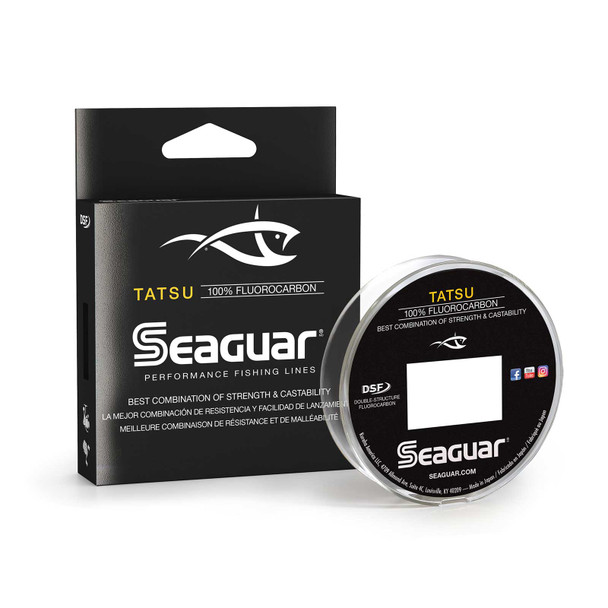
Matt Becker’s pick · Leader
Seaguar Tatsu Fluorocarbon Line
10, 12 & 15 lb · Near-invisible · Dual-structure construction
Connecting braid to fluoro: The FG knot is the strongest and most popular braid-to-fluorocarbon connection for dropshot fishing. It has a very slim profile that passes through rod guides smoothly and holds near 100% of the line’s rated strength. The Double Uni knot is an easier alternative that works well for most situations.
Hook selection for a dropshot rig is straightforward but important. You need a light-wire hook small enough to let the bait move freely, with a gap wide enough to expose the point cleanly on the hookset.
Light wire is the key spec. Heavy-wire hooks require more force to drive through a bass’s mouth, and with a moderate sweep hookset on light line, you can’t generate the same power as a hard flip hookset. Light wire penetrates with less resistance, which means more fish stay on. The trade-off is that light wire can bend on a big fish — which is why the rod and drag have to be dialed in to prevent sudden shock loads.
Hook size for a dropshot typically runs from size 1 to 2/0, depending on bait size. For a standard 4–5 inch straight-tail worm like the Roboworm, a size 1 or 1/0 is the most common match.
Matt Becker uses the Trokar Light Wire Finesse Worm Hook (TK180). Trokar’s chemically sharpened points are among the sharpest available, requiring minimal pressure to penetrate — exactly what you need on a subtle dropshot hookset. The light wire gauge keeps bait action natural while the hook shape holds thin-body worms securely when nose-hooked.

Matt Becker’s pick
Trokar Light Wire Finesse Worm Hook
TK180 · Chemically sharpened · Light wire construction
The dropshot weight lives at the very bottom of the rig, below the hook and bait. Its job is to maintain contact with the bottom and anchor the presentation while the bait suspends above it on the leader. Tungsten is the only material worth using.
Tungsten’s density means a 1/4 oz tungsten weight is physically much smaller than a 1/4 oz lead weight — it falls faster, generates less drag in current, and produces a sharper, more defined bottom feel. That sensitivity lets you read bottom composition (gravel, rock, mud, sand) through your rod and adjust your presentation accordingly.
Weight selection by situation:
| Depth / Conditions | Weight |
|---|---|
| Shallow water (1–10 ft), calm conditions | 3/16 oz |
| Mid-depth (10–20 ft), light current or wind | 1/4 oz |
| Deep water (20+ ft) or moderate current/wind | 3/8–1/2 oz |
Matt Becker uses the Epic Baits Tungsten Drop Shot Weight in 1/4 oz as his standard. The 1/4 oz covers the widest range of everyday dropshot scenarios and is the best starting point if you’re new to the technique.
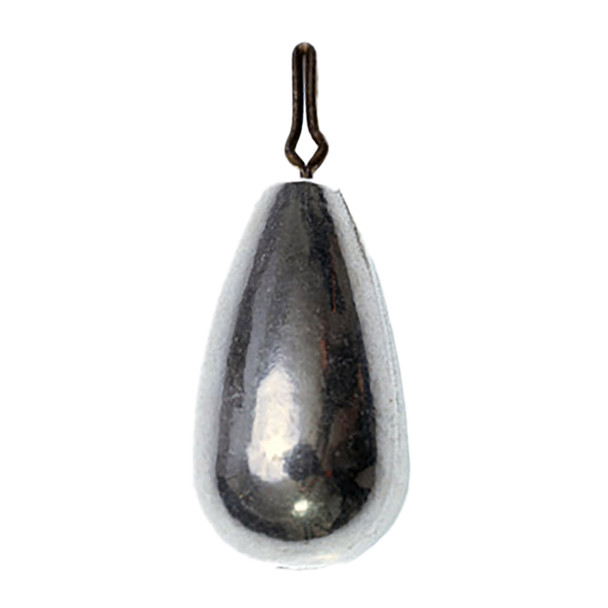
Matt Becker’s pick
Epic Baits Tungsten Drop Shot Weight
1/4 oz standard · Multiple sizes available · Compact tungsten profile
A spinning reel is non-negotiable for dropshot fishing. The dropshot relies on light line, small hooks, and finesse presentations — all of which require the smooth, consistent drag and light-line casting ability that only a spinning reel provides. Baitcasting reels are simply not suited for the technique.
Matt Becker runs a 3000-size spinning reel paired with his Flagship Elite Shotter rod. The combination casts well, balances the rod, and gives him the drag performance needed to protect light fluorocarbon leaders on hard-fighting fish.
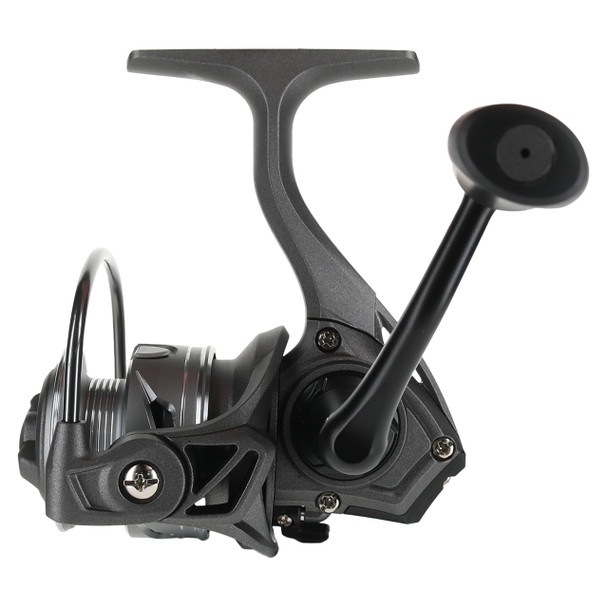
2500–3000 size spinning reel
Spinning Reels for Dropshot Fishing
Smooth drag · Light-line capable · 2500 or 3000 size
No dropshot setup is complete without the right bait. The Roboworm Straight Tail Worm is one of the most consistent tournament-proven dropshot baits ever made. Its thin body nose-hooks easily and produces a natural, subtle quiver on the lightest shake — the kind of action that gets reluctant bass to commit. Matt Becker specifically recommends the “Morning Margarita” color, which has a translucent green-pumpkin tint that works across a wide range of water clarity conditions.
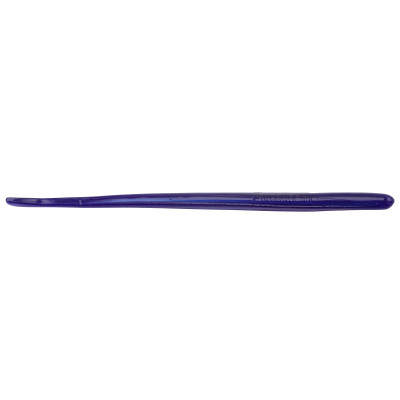
Don’t sleep on “Morning Margarita”
Roboworm Straight Tail Worm
Dropshot staple · Natural fall action · Multiple colors available
Want to go deeper on bait selection? See our complete guide to the best dropshot baits for a full breakdown of colors, sizes, and profiles that produce across different conditions and seasons.
The Palomar knot is the standard for tying a dropshot hook. Here’s the key difference from a standard Palomar: after passing the hook through the loop, leave a long tag end (12–24+ inches depending on your desired leader length) instead of trimming it. That tag end becomes your leader, and you tie the weight to the end of it with a simple overhand knot or a clip. The hook sits perpendicular to the line, hook point up, ready to catch a nose-hooked bait perfectly.
Run the hook point in through the very tip of the worm’s nose and out again about 1/8–1/4 inch back. Do not run the hook through the body — nose-hooking allows the bait to hang freely below the hook and flutter naturally on any movement. A worm rigged through the body will bunch up and lose action.
The dropshot works in more situations than almost any other bass technique:
The dropshot hookset is a sweep, not a power set. When you feel the bite, reel down any slack and sweep the rod to the side or upward with steady pressure. A hard snap hookset with a light wire hook and 10 lb fluoro leader is a recipe for a pulled hook or broken line. Let the rod load and sweep — the light-wire Trokar hook will penetrate with minimal force required.
Pro tip: One of the most effective dropshot presentations is “dead sticking” — casting out, letting the rig sink to the bottom, and doing nothing. No shaking, no movement. Just let the bait hang there for 10–30 seconds. In clear water or on heavily pressured fish, a bait that just sits still and waves slightly from line tension can outfish anything else you throw.
A 7’2″–7’4″ medium-power, moderate-fast action spinning rod is the standard for dropshot fishing. The moderate-fast taper lets more of the rod bend during the fight, protecting light-wire hooks and fluorocarbon leaders from sudden shock loads. Matt Becker uses the FishUSA Flagship Elite “The Shotter” in 7’3″ Medium Moderate Fast — a rod built specifically for the dropshot technique.
A quality spinning reel in the 2500–3000 size range is ideal for most dropshot applications. The most important reel feature for dropshot fishing is a smooth, consistent drag — light leader line and small hooks mean you can’t muscle fish, and a drag that stutters or sticks will cost you fish. Matt Becker uses a 3000-size reel, which balances well on a 7’3″ rod and has enough line capacity for long casts.
A braid-to-fluorocarbon leader setup is the best approach. Braided mainline (Matt uses 21 lb Seaguar JDM PEX8) provides sensitivity and thin diameter for long casts. A fluorocarbon leader of 10–15 lb (Matt uses Seaguar Tatsu) connects to the hook — fluoro is nearly invisible in water and abrasion resistant where the rig contacts structure. Connect braid to fluoro with an FG knot or Double Uni knot.
Leader length controls how far above the bottom your bait suspends. Use 6–12 inches when fish are tight to the bottom, 12–18 inches for all-around fishing, and 18–36 inches when fish are suspended higher in the water column. Start with 12 inches and adjust based on where you’re marking fish on your sonar.
A light-wire finesse hook in size 1 to 2/0 is standard for dropshot rigs. Light wire penetrates more easily on the subtle sweep hookset used with the dropshot, requiring less force to drive through a bass’s mouth. Matt Becker uses the Trokar Light Wire Finesse Worm Hook (TK180). Nose-hook your bait by running the point in and out through the very tip of the worm’s nose.
A 3/16–1/4 oz tungsten weight covers most everyday dropshot situations. Go heavier (3/8–1/2 oz) in deeper water, strong current, or windy conditions where you need to maintain bottom contact. Always use tungsten over lead — it’s denser (smaller profile), falls faster, and transmits more sensitivity. Matt Becker uses a 1/4 oz Epic Baits Tungsten Drop Shot Weight as his standard.
Straight-tail worms in the 4–5 inch range are the most consistent dropshot baits. Their subtle, natural action on a nose hook mimics a small baitfish or worm suspended in the water column. The Roboworm Straight Tail Worm is one of the most popular dropshot baits on the tournament circuit — Matt Becker specifically recommends the “Morning Margarita” color. Other effective options include small finesse craws, shad-profile baits, and small creature baits rigged nose-hooked.
A dropshot rig ties the hook to the line above the weight, suspending the bait at a precise height off the bottom while the weight rests on the lake floor. Use it when bass are finicky and not responding to power fishing, when fish are suspended over structure at depth, or any time you need to slow down and present a finesse bait with precision. The dropshot works year-round for largemouth, smallmouth, and spotted bass across the country.
Hook Me Up!
Sign up for emails and texts to get exclusive updates and offers.
By providing your number above, you agree to receive recurring automated marketing text msgs (e.g. cart reminders) to the mobile number used at opt-in from FishUSA on 25043. Consent is not a condition of purchase. Msg frequency may vary. Msg & data rates may apply. Reply HELP for help and STOP to cancel. See Terms and Conditions & Privacy Policy