


/
/
Redear sunfish and bluegill share the same waters, eat some of the same food, and look similar enough that plenty of anglers lump them together as “bream.” Once you know what separates them, you’ll identify each one reliably and target them far more effectively.
Last updated: August 2026 · By: FishUSA Staff
If you spend any time chasing panfish, you’ve probably asked yourself a simple question: what’s the real difference between a redear sunfish and a bluegill? On the stringer they look similar, they hit many of the same baits, and they share the same waters. Plenty of anglers lump them together as “bream” and call it a day — and that approach will catch fish.
But understanding what separates redear sunfish (shellcrackers) from bluegill will make you better at both. You’ll identify each one reliably, target them more deliberately based on depth and structure, match your bait to what they’re actually eating, and manage private water more effectively if that’s relevant to you. This guide covers identification, habitat, diet, size, seasonal behavior, fishing tactics, table fare, and conservation for both species.
The redear sunfish (Lepomis microlophus) is a member of the sunfish family native to the southeastern United States, now widely stocked in ponds, lakes, and reservoirs across much of the country. Anglers call them shellcrackers because of their habit of crushing snails and small mussels with specialized pharyngeal teeth at the back of the throat — a capability no other common sunfish shares to the same degree.
Redear typically live a little deeper than bluegill, relating to firm bottoms, shell beds, and offshore structure. In good water they grow to impressive sizes — 2-pound shellcrackers are achievable in fertile lakes with strong snail populations, and they hit hard on ultralight gear.
The bluegill (Lepomis macrochirus) is the most widely recognized freshwater panfish in North America. Native to much of the eastern and central U.S., bluegill have been introduced throughout the continent and thrive in farm ponds, natural lakes, reservoirs, and slow rivers. They’re extremely adaptable, eager biters, and the classic first fish for generations of anglers.
Bluegill are more likely to be found shallow than redear — around weeds, docks, and downed timber in particular — but they’ll use offshore structure and deeper basins in larger lakes, especially as seasons change.
Both share the classic sunfish body shape: deep, laterally compressed, and rounded. They often school together, use similar spawning areas, and respond to similar baits. Once you know the ear flap color, you’ll never confuse them again — but at a glance, especially with small fish, they can look nearly identical to someone who hasn’t learned the tell.
In broad strokes both species look similar, but there are reliable visual clues:
Color varies with water clarity, spawning phase, and local genetics — don’t rely on color alone. The ear flap is the definitive field mark.
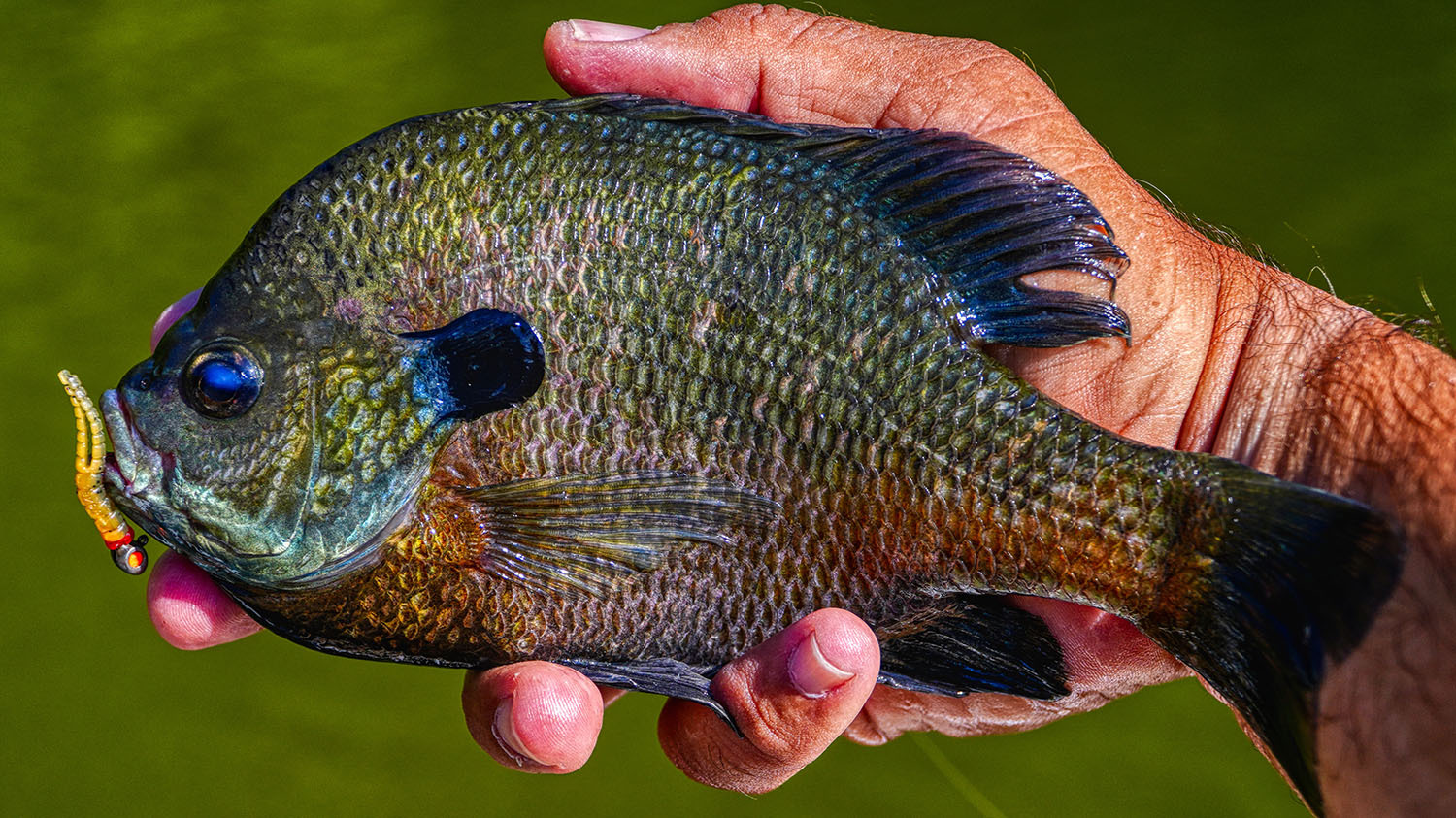
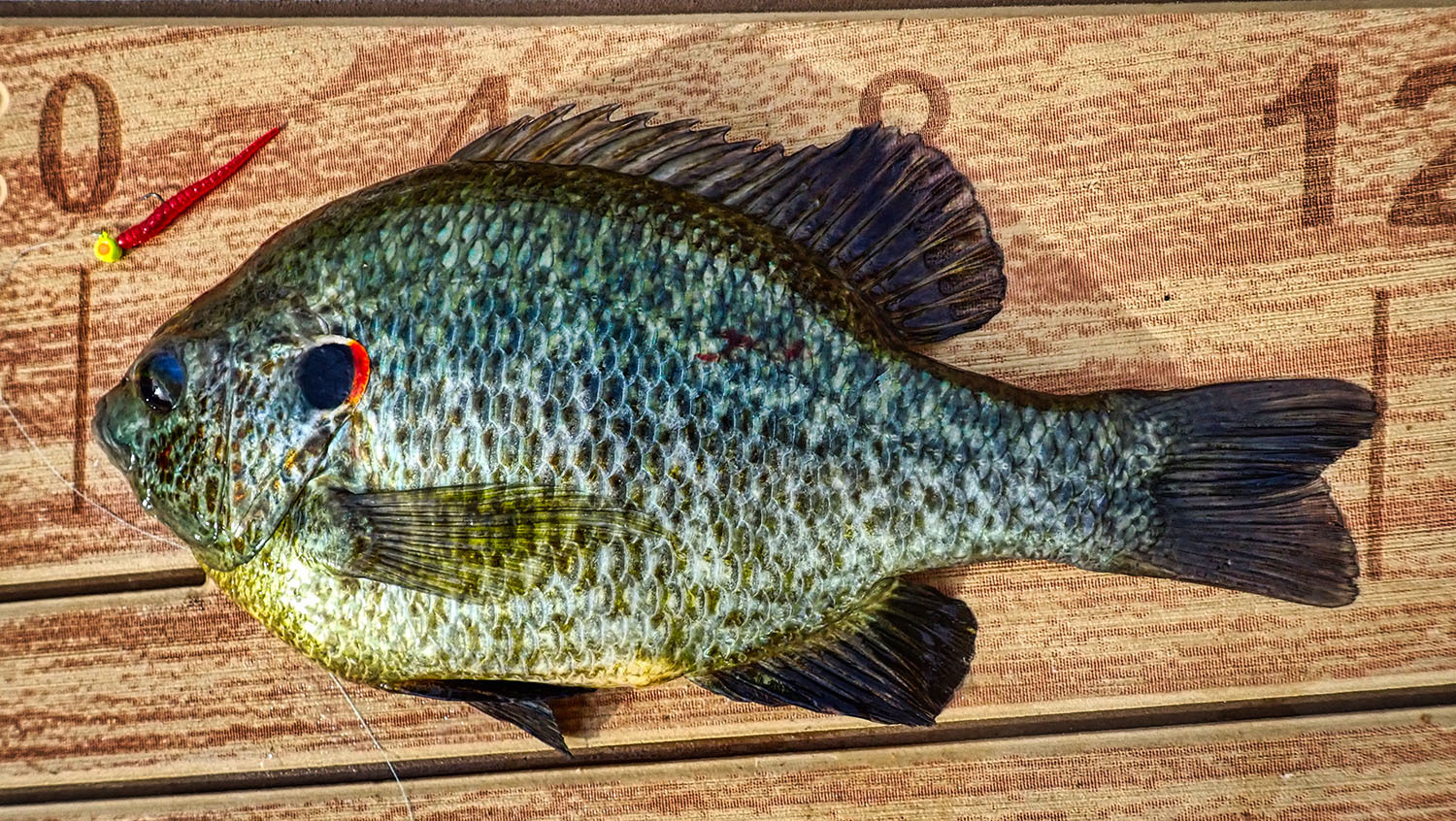
The most reliable field mark is the opercular flap — the “ear” just behind the eye on the gill plate:
If you see a clear red or orange rim on the ear flap, you’re holding a redear — or a hybrid with strong redear influence. This check takes two seconds and works on nearly any fish large enough to examine.
Redear have a slightly larger mouth than bluegill. Their jaw and throat structure are built to crush snails and hard-shelled invertebrates, while bluegill mouths are smaller and better suited to picking insects, larvae, and small invertebrates. In practical terms:
Young fish are harder to identify — juvenile redear and bluegill often share vague markings and muted colors. Sunfish also hybridize readily, producing fish with mixed features that can confuse even experienced anglers. When you’re faced with a tricky fish:
A fish that looks like a genuine mix of both is probably a hybrid, which is common in highly populated panfish lakes.
Bluegill have an enormous native range across much of the eastern and central U.S. and have been widely stocked throughout the continent and beyond. If there’s a warm-water pond or lake in your area, there’s a good chance it holds bluegill.
Redear originated in the southeastern U.S. but have been introduced into reservoirs and ponds across a much broader area as a desirable sport and management species. They’re especially common in waters with good clarity and hard-bottom areas that support snail populations.
Within the same water body, redear and bluegill tend to use different zones:
Both species adjust depth with the seasons, but as a rule of thumb: if you’re catching fish shallow they’re more likely to be bluegill; if you’re marking fish on offshore hard bottom they’re more likely to be redear.
In most lakes and ponds that hold both species, they coexist without issue. Bluegill tend to dominate the shallow weedy zones while redear hold deeper, especially where snails are available. Your catch ratio can shift dramatically just by fishing a few feet shallower or deeper — which is one reason it pays to know the difference.
Redear earned the shellcracker name because they’re genuinely built to eat hard-shelled prey. Their pharyngeal teeth — positioned at the back of the throat rather than the jaw — crush shells that would be completely inaccessible to other sunfish. Their primary diet includes:
In some waters, redear play a useful management role by controlling snail populations, which in turn reduces certain fish parasites that use snails as intermediate hosts.
Bluegill are generalists and will eat almost anything they can fit in their mouth. Their diet includes insect larvae and nymphs, dragonflies and damselflies, small crustaceans and zooplankton, and occasionally small minnows or fry. They feed throughout the water column and respond well to a wide range of baits and lures — which is part of why they’re so popular with beginning and experienced anglers alike.
Diet is the most practical thing to understand when targeting each species:
In many waters bluegill are more abundant and commonly caught, but redear often win on weight:
Both species can live several years, with growth strongly influenced by forage availability, water quality, and how well the predator-prey balance is managed.
Fast-growing bluegill and redear both need abundant food, a balanced predator population keeping sunfish numbers in check, and good water quality with habitat variety. For pond owners, managing both species together — alongside largemouth bass — typically creates excellent fishing and a healthier overall ecosystem than stocking either species alone.
Both redear and bluegill are spring and early summer spawners, typically when water temperatures break into the upper 60s and low 70s°F. In warmer climates, bluegill may spawn multiple times through the warm season, while redear usually spawn once, possibly twice in the most favorable years.
Both species are colonial nesters — males fan out saucer-shaped beds in clusters, often in the same coves they use year after year:
During the spawn, aggressive males guard nests and will hammer small jigs, worm pieces, and soft plastics presented directly over or around the colony. This is one of the most reliable times to target both species, often in the same general area.
After the spawn:
Target shallow beds for both species in spring, then gradually work deeper structure as summer progresses if you want to stay on redear specifically.
Because redear focus on bottom-dwelling prey, bottom-oriented presentations consistently outperform float rigs:
Let the bait rest on or just off bottom, occasionally dragging or gently hopping it to mimic natural forage. In clear water, lighter line and subtle presentations are especially important. Related: Shellcracker 101: How to Catch Redear Sunfish
Bluegill will eat almost anything small enough, which makes them a great species for beginners and a genuine challenge on ultralight gear for experienced anglers. Top producers include:
A classic setup is a small hook, split shot, and a float set just above the depth where bluegill are holding around weeds, docks, or downed trees. Related: Best Bluegill Baits & Lures
Light tackle maximizes both sensitivity and fun on either species:
As a starting rule:
Don’t be rigid about it. In cool water or high-pressure situations, bluegill can stack deeper and a tight-line bottom approach will outfish a float. And during the spawn, a jig dropped straight down over a redear bed will get hammered. Let the fish tell you what they want.
Ask ten anglers and you’ll get eleven answers, but the general consensus is clear: both redear sunfish and bluegill are excellent table fish. Both offer mild, sweet, flaky white meat that fries up beautifully. Some anglers claim redear have slightly firmer fillets or a richer flavor from their snail-and-shellfish diet, but the difference is subtle enough that most people won’t notice it on the plate.
Panfish are small, so efficiency matters:
Both species are hard to beat with simple preparation:
Whatever you choose, don’t overcook. The goal is tender, flaky fillets — a couple minutes per side in a hot pan is usually plenty.
Bag limits and size regulations for bluegill and redear vary by state and sometimes by specific water body. Before keeping a cooler of panfish, check your local regulations through your state fisheries or natural resources agency website. Regulations can change from year to year, and some waters carry specific sunfish rules that differ from the statewide default.
For pond owners, both species play distinct roles in a healthy ecosystem:
A balanced pond typically includes largemouth bass, bluegill, and redear, with stocking ratios adjusted for local forage availability and goals. Consult your state fisheries agency or a pond management specialist before stocking new water.
To protect quality panfish fishing over the long term:
| Feature | Redear Sunfish | Bluegill |
|---|---|---|
| Also Known As | Shellcracker, Georgia bream | Bream, sunperch |
| Ear Flap | Black with red/orange rim | Solid black, no colored rim |
| Body Markings | Mottled/olive-bronze, faint bars | Bold vertical bars, blue-green hues |
| Typical Habitat | Deeper water, shell beds, hard bottom | Shallow cover, weeds, docks, timber |
| Primary Diet | Snails, mollusks, bottom larvae | Insects, larvae, zooplankton |
| Average Size | Similar length, often heavier-bodied | 6–8” typical keepers |
| Trophy Potential | 2+ lb in fertile water | 10–12” fish; highly prized |
| Best Presentation | Bottom rigs near shell beds & structure | Float rigs around shallow cover |
| Best Baits | Worm pieces, bottom jigs, soft plastics | Worms, crickets, micro jigs, spinners |
| Table Fare | Excellent — mild, flaky white meat | Excellent — mild, flaky white meat |
No. They’re closely related members of the sunfish family, but they differ in ear flap color, diet, preferred habitat, and growth patterns. The fastest way to tell them apart is the ear flap: redear have a red or orange rim on the back edge of the black ear flap; bluegill have a solid black ear flap with no colored margin.
Yes. “Shellcracker” is a common regional nickname for redear sunfish, referring to their specialized pharyngeal teeth and their habit of crushing snails, mussels, and other hard-shelled prey. You’ll also hear them called “Georgia bream” in parts of the South.
Both can grow large, but redear frequently reach heavier weights at similar lengths. Trophy shellcrackers over 2 pounds are achievable in fertile lakes with strong snail populations. Bluegill can grow very large too — 10 to 12-inch fish are genuine trophies in most waters — but pound for pound, big redear are often harder to find and more impressive on the scale.
Both fight hard for their size on ultralight tackle. Many anglers describe big redear as more bulldog-like and stubborn, especially given their heavier body weight and tendency to run for deeper structure. Bluegill are quick and erratic. Either species on a 4-foot ultralight rod with 4-pound line is outstanding sport.
Yes, and they commonly do. Stocking both species together can improve fishing variety and benefit pond health — redear help control snail populations, which reduces certain fish parasites that use snails as intermediate hosts. A well-managed pond with largemouth bass, bluegill, and redear offers excellent mixed-bag panfishing.
Absolutely. Both species offer mild, sweet, flaky white fillets that fry up beautifully. Some anglers claim redear have slightly firmer or richer meat from their shellfish-based diet, but the difference is subtle. Both rank among the best-tasting freshwater panfish available, and most people can’t tell them apart on the plate.
For redear, focus on worm pieces and bottom-oriented presentations near hard bottom, shell beds, and offshore structure — small nightcrawler sections, red worms, or tiny soft plastics worked slowly along the bottom are all effective. For bluegill, worms, crickets, and micro jigs under a float around shallow weeds, docks, and downed timber are the standard approach. Bluegill will feed throughout the column; redear prefer to stay low and slow.
There’s no real need to pick a winner in the redear vs bluegill debate. Both are excellent sport fish, both taste great, and both reward anglers who understand what separates them. Check the ear flap to identify what you’re holding. Target redear with bottom rigs near hard structure and shell beds; target bluegill with float rigs around shallow cover. Learn those two patterns and you’ll catch more of each, whether you’re fishing a small farm pond or a large reservoir.
More panfish reading: Best Bluegill Baits & Lures · Shellcracker 101: How to Catch Redear Sunfish · Spring Spawning Bluegills
Hook Me Up!
Sign up for emails and texts to get exclusive updates and offers.
By providing your number above, you agree to receive recurring automated marketing text msgs (e.g. cart reminders) to the mobile number used at opt-in from FishUSA on 25043. Consent is not a condition of purchase. Msg frequency may vary. Msg & data rates may apply. Reply HELP for help and STOP to cancel. See Terms and Conditions & Privacy Policy