


/
/
Bluegill and panfish can be caught on artificial lures in every season — but the right tackle makes a big difference. This guide covers the best jig heads, soft plastics, hard baits, and retrieves for consistently catching quality bluegill, red ear sunfish, and other panfish without live bait.
Last updated: August 2026 · By: Jason Sealock
Panfish — bluegill, red ear sunfish, pumpkinseed, and goggle eyes — are some of the most enjoyable freshwater fish to target on artificial lures. Anyone can catch them on earthworms and crickets, but consistently taking quality-sized fish, especially the larger 9-inch-plus specimens, takes the right artificial tackle and presentation. Here’s what works.
| Lure Type | Best Season | Best Technique | Hook / Size Range |
|---|---|---|---|
| Tungsten jig + 1″ soft plastic | Year-round | Hop-and-drop or slow roll | Size 6–10, 1/64–1/16 oz |
| Float + jig | Spring, fall | Slow pulse, pause-and-settle | Size 6–10, 1/32–1/16 oz |
| Inline spinner | Spring–fall | Steady retrieve | Size 0–2 blade |
| Small hard bait (minnow, crankbait) | Summer, fall | Twitch-and-pause or slow roll | 1″–2″ body |
| Fly / popper | Spring, summer | Surface presentation | Size 10–14 |
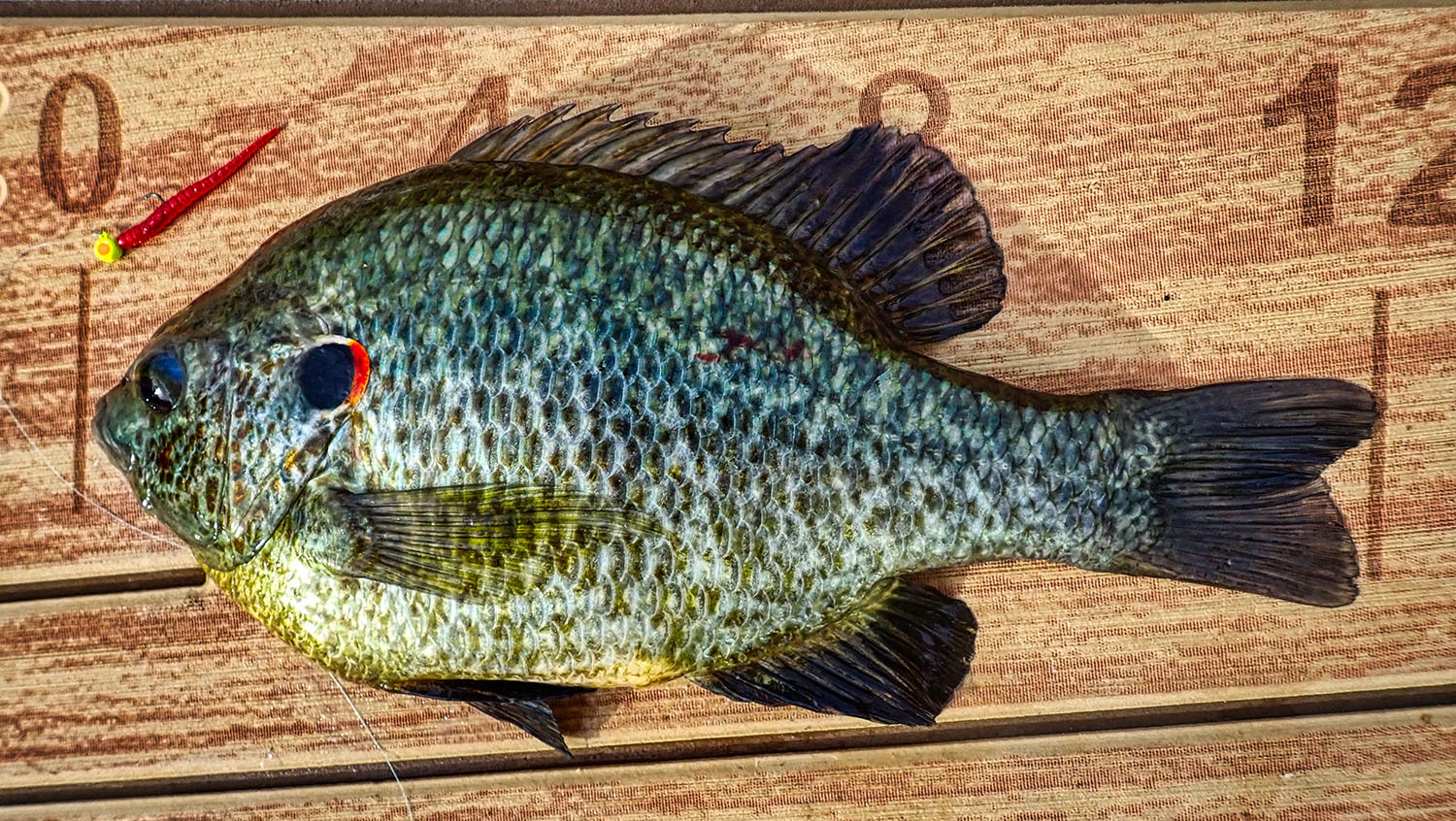
Bluegill and other panfish feed on a wide variety of food sources — snails, chironomids, bug larvae, small crawfish, worms, terrestrial insects, and small baitfish. That broad forage base means they can be caught on many different lure types throughout the year. Understanding where they are by season is what turns occasional bites into consistent catches.
| Season | Where Fish Are | Best Approach |
|---|---|---|
| Spring | Shallow spawning colonies when water exceeds 70°F | Targeted casts to visible nests, float + jig |
| Summer | Deep cover (humps, brush piles, points) during the day; shallow on evening bug hatches | Jigs worked near bottom structure; float presentations at dusk |
| Fall | Back in shallow, calm pockets feeding aggressively before winter | Any presentation works; high-percentage time for big fish |
| Winter | Deep flats, main basin structure, river channels (below 60°F) | Slow jigs, use electronics to locate concentrated schools |
Anglers often target bluegill in spring when they spawn in large honeycomb colonies — dozens of nests clustered together — and that’s when they’re most aggressive. After the spawn, they move out to deeper structure first, relating to stumps and brush piles on points and humps leading to deep water. They adopt a more nocturnal feeding pattern through summer, coming back shallow in windows during evening bug hatches.
Fall is often underrated. Huge groups of fish move back into shallow, calm pockets to sun and feed before winter — and this window can rival or outperform the spring bite. As water temperatures drop below 60°F, fish migrate to their deep winter holding areas on main basin flats and river channel edges. Winter fishing is productive but requires locating those concentrations with a lake map or electronics; once you find them, the fishing can be excellent with slow-moved jigs.
The jig head is the most important piece of the panfish puzzle. Most crappie jigs are built on No. 2 hooks, which are too large for the small mouths of most bluegill. For consistent hookups, use jig heads with size 6 to 10 hooks. Tungsten heads are preferred over lead at the same weight — tungsten is denser, so a 1/16 oz tungsten head is physically smaller than a 1/16 oz lead head, which creates a more natural presentation while still sinking at the same rate.
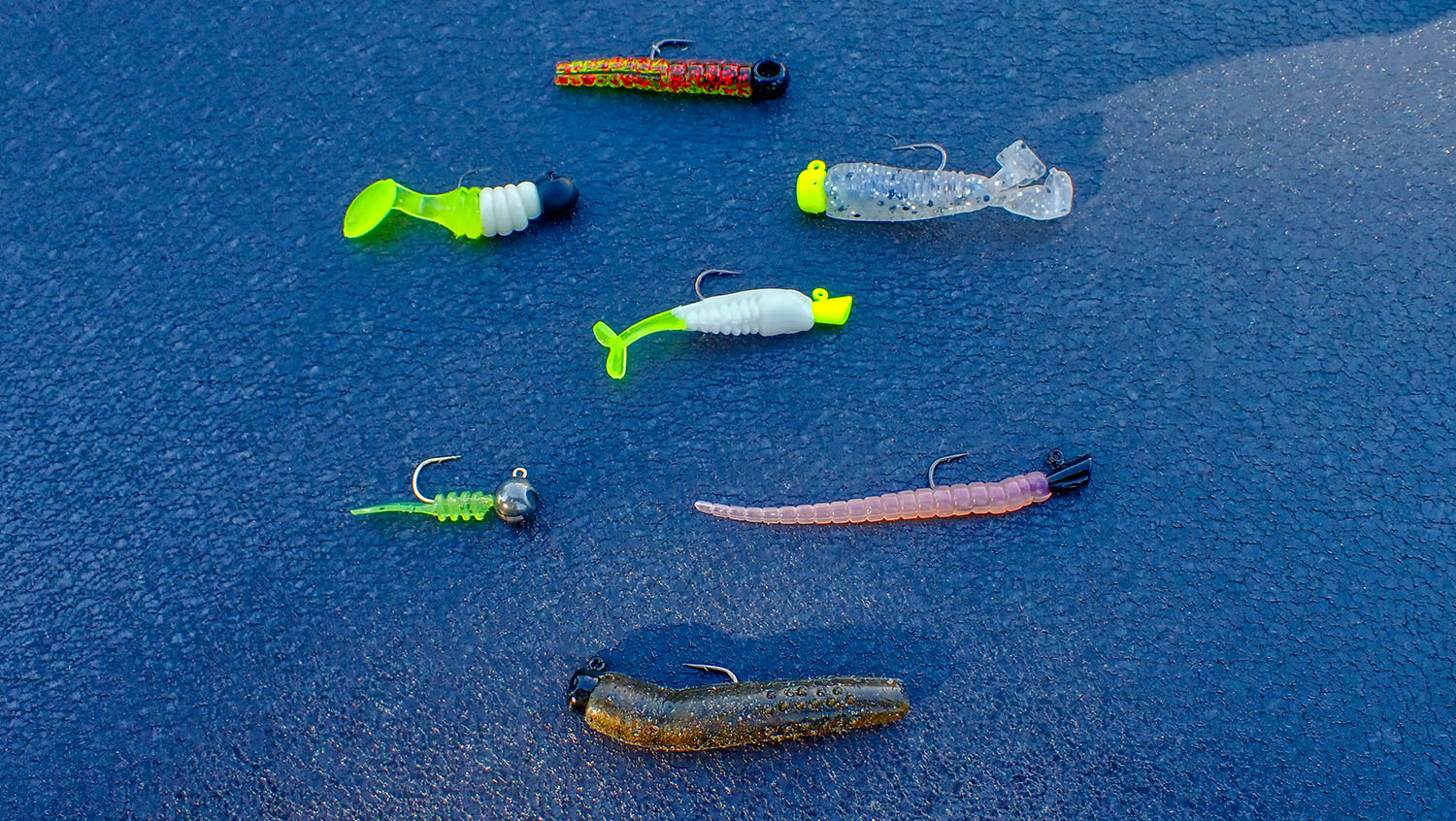
Top jig head picks for bluegill and red ear:
The same scaling principle applies to soft plastics. While bluegill will eat 2-inch crappie baits — and sometimes swallow them entirely — downsizing to 1-inch or smaller baits dramatically improves your landing rate. Smaller baits fit the bluegill’s mouth naturally, which means more solid hooksets and fewer short strikes.
Look for plastics with action that works on a slow retrieve or with minimal movement — curly tails, small paddle tails, and multi-appendage bugs all generate motion at the kind of ultra-slow speeds you need for finicky panfish.
The premise is simple: keep the jig moving where the fish are feeding, whether that’s on the bottom, near the surface, or somewhere in between. The right retrieve changes with the fish’s mood, and bluegills can shift from active to stubborn between casts.
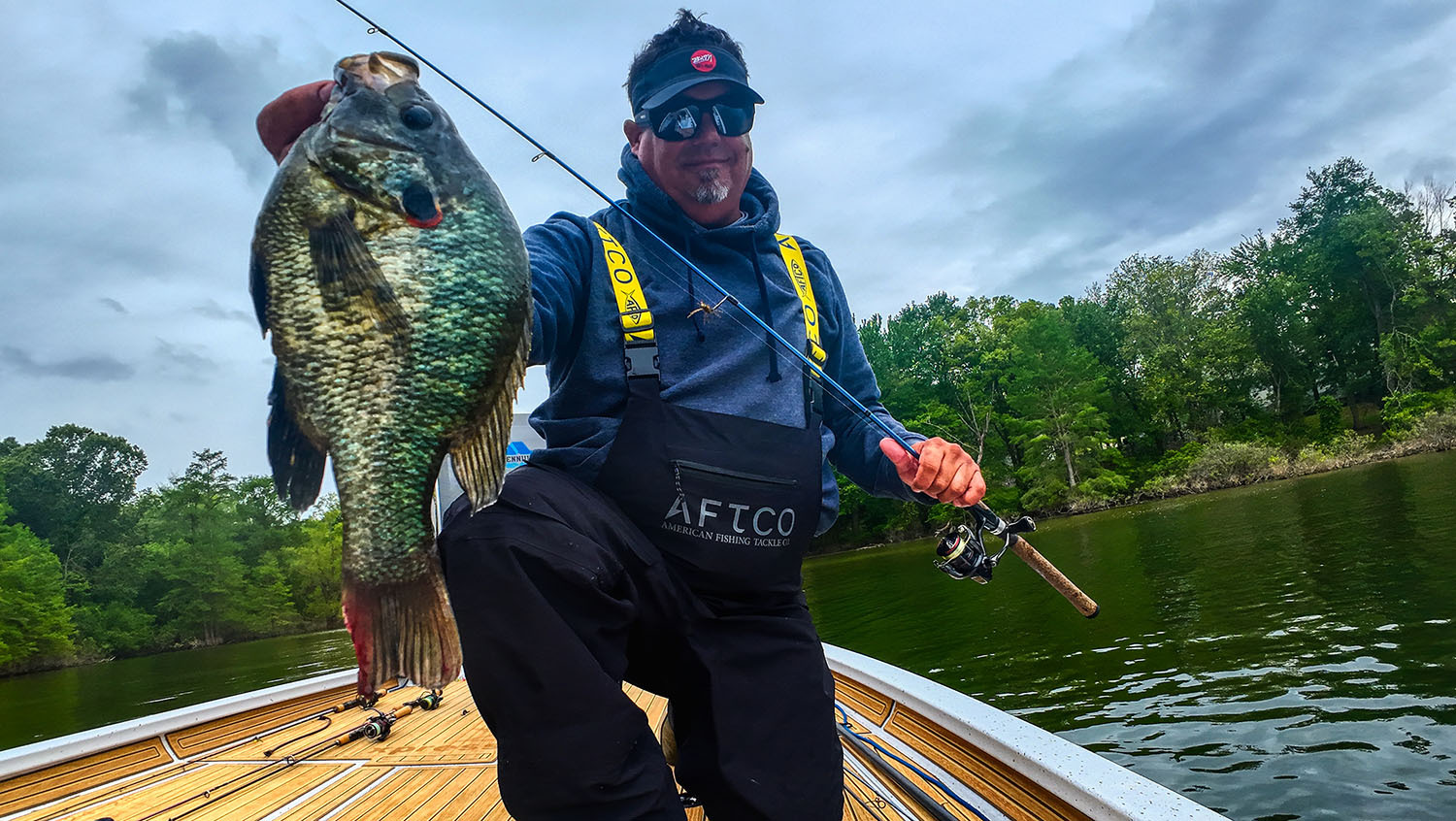
Begin by casting out and letting the bait sink for a moment, then reel in slowly. A jig with an undulating or kicking tail works well on this style of retrieve. If that doesn’t generate bites, let the bait sink lower — or all the way to the bottom — and crawl it back slowly just above the substrate. This is often more effective in deeper water or when fish are holding tight to structure.
If a steady retrieve doesn’t produce, switch to a subtle hop-and-drop. Bluegill are notorious for ignoring a steadily moving bait but reacting instantly to something that jumps and falls. Big bluegill in particular are territorial and impulsive — they want to react to something that invades their space and moves erratically. The key word is subtle: lift the bait just a few inches, then let it fall. A 2–3 foot hop is too much; a 2–3 inch lift is just right.
A panfish float adds a different dimension to jig fishing. It suspends the bait above weeds or wood where bluegill are staging, and it gives you a visual strike indicator. Instead of just reeling slowly, try pulling the float a foot and letting it settle, then pulling again. That pulse-and-pause action keeps the jig moving through the strike zone while giving fish a moment to commit. This is one of the most effective methods for shallow spring and fall fish.
Ultralight tackle matters. A light or ultralight spinning rod in the 5’6″ to 7’ range with 2–4 lb monofilament or fluorocarbon lets you feel subtle bites and work the lightest jig weights effectively. The sensitivity of an ultralight rod also makes hooking fish significantly easier — you can feel when a big bluegill just mouths the bait and set the hook before it spits it.
Jigs are the backbone of artificial panfishing, but hard baits, spinners, and even fly patterns round out the arsenal — and can produce some of the biggest fish of the year in the right conditions.
Small hard baits shine in summer and fall when bluegill are actively feeding in open water or near shallow cover. They’re also the most entertaining way to target bigger fish — a surface blow-up on a tiny crankbait or popper is something different.
Fly fishing for bluegill is one of the best ways to spend a summer evening. When fish are feeding on bug hatches near the surface, a small popping bug or foam spider draws explosive strikes. A size 12 or 14 Stimulator or a black Wooly Bugger in size 10 are hard to beat for volume fishing. DIY patterns like the Gill Getter or Bully Spider — leggy, buggy imitations — also work exceptionally well for larger fish.
Bluegill and panfish are highly scent-oriented, and tipping a jig or adding scent pellets at the hook eye consistently produces more bites — especially in cold water or when fish are pressured. Scent additives are most impactful in winter when fish metabolisms are slow and they need more incentive to commit.
With an ultralight rod and reel, light line, and a pocket full of properly-sized jigs and plastics, you have everything needed to catch quality bluegill and panfish consistently throughout the year. The biggest fish tend to respond best to artificial lures with a reactive presentation — and not having to keep live bait alive makes the whole system easier to manage on the water.
Small tungsten jigs paired with 1-inch soft plastics are the most consistently effective lures for bluegill. Tungsten sinks faster at the same physical size as lead, keeping the presentation natural. Plastics in the 1-inch range — like the Trout Magnet or Z-Man Micro TRD — fit a bluegill’s small mouth better than larger crappie-sized baits, resulting in more solid hookups. Jig hooks in the size 6–10 range are essential.
Use jig heads in the 1/64 to 1/16 ounce range with size 6 to 10 hooks. Most crappie jigs are built on No. 2 hooks, which are too large for bluegill until the fish approach 10 inches. Lighter jigs (1/64–1/32 oz) are ideal for shallow, slow presentations; heavier jigs (1/16 oz) get down faster for fish holding deeper in summer and winter.
Yes — bluegills can be caught on artificial lures in every season. Spring spawning fish are aggressive and easy to locate. Summer fish move deeper during the day but feed shallow on evening hatches. Fall brings them back into the shallows in large, active groups. Winter fish school up in deep water where they can be located with electronics and caught consistently on slow-moved jigs.
Larger bluegill respond especially well to artificial lures fished with an active, reactive presentation. Small jigs with a hop-and-drop retrieve are particularly effective on big fish, which are territorial and impulsive. Hard baits like the Rebel Crickhopper and Rapala CountDown CD1 also produce trophy-class bluegill in warmer months. Adding scent to any jig presentation helps coax bites from larger, more cautious fish.
Size 6 to 10 hooks are best for most bluegill fishing. Size 6 is a good all-around choice for fish in the 7–9 inch range. Size 8 and 10 are better for smaller fish or when fish are short-striking. Avoid No. 2 crappie hooks for bluegill — they’re too large to hook reliably in most bluegill mouths.
Yes — small hard baits like the Rapala CountDown CD1, Rebel Crickhopper, and Strike King Bitsy Minnow are effective on bluegill and can produce some of the biggest fish of the year. These lures work best in summer and early fall when bluegill are actively feeding in open water or near shallow cover. Inline spinners like the Worden’s Rooster Tail are also productive throughout the warmer months.
For ultralight panfish fishing, 2–6 lb monofilament or fluorocarbon is standard. A 4 lb line is a good all-around choice — strong enough for bigger fish, light enough to keep tiny jig presentations natural. Some anglers use light braid (4–8 lb) with a short fluorocarbon leader to improve casting distance with the lightest jig weights. Match it to a light or ultralight spinning rod in the 5’6″ to 7’ range.
Yes — bluegill and panfish are highly scent-oriented, and adding scent to jigs or soft plastics consistently produces more bites, particularly in cold water or when fish are finicky. Scent pellets that hook directly to jig eyes (like Crappie Magnet Slab Bites), attractant gels, and spray attractants are all effective. Scent is especially useful in winter when fish metabolisms are slow and they need more incentive to commit to a bite.
Hook Me Up!
Sign up for emails and texts to get exclusive updates and offers.
By providing your number above, you agree to receive recurring automated marketing text msgs (e.g. cart reminders) to the mobile number used at opt-in from FishUSA on 25043. Consent is not a condition of purchase. Msg frequency may vary. Msg & data rates may apply. Reply HELP for help and STOP to cancel. See Terms and Conditions & Privacy Policy