


/
/
Bluegill, redear sunfish, and crappie make deliberate food choices — and those choices change with the season. Understanding what panfish are actually eating, and why, is the fastest path to bigger fish more consistently. Here’s how to match your artificial lures to their diet from ice-off to freeze-up.
Published: July 2026 · By: Jason Sealock
Panfish are assumed to be easy to catch all year because of how common they are. But catching bigger panfish consistently — bluegill, redear sunfish, and crappie worth keeping or pursuing for the fight — requires a more deliberate approach. The key is understanding what panfish are eating, when, and why. Match that to the right artificial lure, and the results are dramatically better than guessing.
The diet of panfish has been an ongoing area of study, including sampling with fisheries biologists like Dr. Michael Flynn of Murray State University, and the correlations between their seasonal diet preferences and lure selection are real, measurable, and fishable. This article lays out what we’ve learned and how to apply it.
Panfish make deliberate choices about what they eat — and those choices shift across the year based on availability, energy expenditure, and survival. Recognizing the three forces that drive their diet decisions is the foundation of effective lure selection.
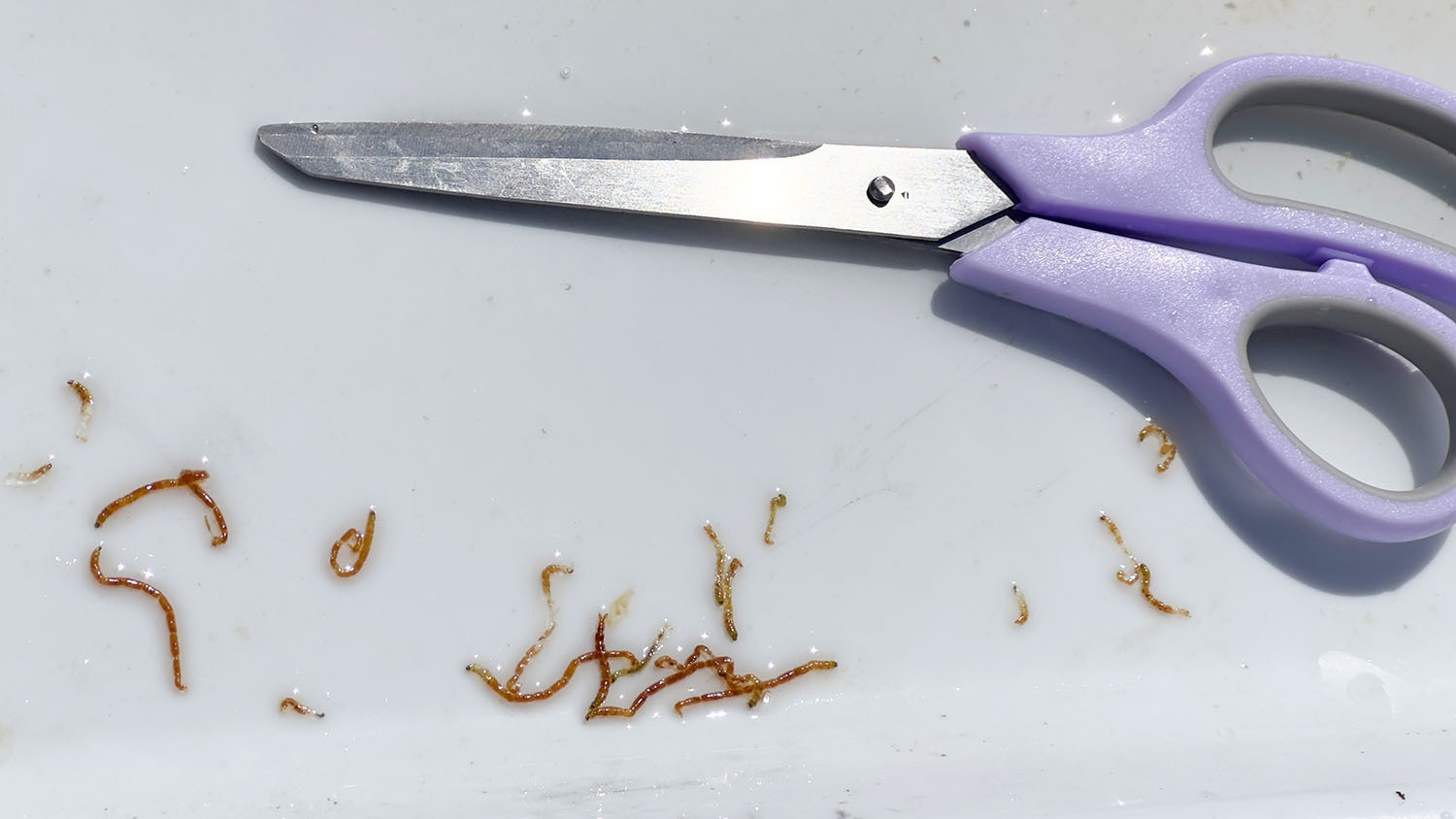
In cold water, panfish metabolism slows significantly. Rather than chasing fast-moving prey, they shift toward food that requires minimal effort to acquire. That’s why winter stomach samples are often loaded with chironomids — midge larvae they can pluck from moss on the lake bottom with almost no energy cost. This has direct lure implications: slower, smaller, and more stationary presentations outperform anything that requires the fish to chase.
Panfish will abandon preferred shallow feeding zones when predation pressure gets too high. Research shows they sometimes move offshore to eat zooplankton and other microorganisms, completely changing their diet as a survival response to heavy pressure from bass, pike, gar, catfish, or musky. When you can’t find fish on the banks, they may not have left — they may have just moved deeper to stay off the menu.
Certain foods become dramatically more available at specific times of year: bug larvae moving toward hatches in spring, worms flushing into the system during spring floods, small forage activity during shad and minnow spawns, and the burst of insect life during emerging mayfly hatches in summer. Learning what’s abundant on your specific water and when is one of the biggest advantages a serious panfish angler can build.
Seasonal Diet at a Glance
| Season | Primary Food Source | Best Lure Match |
|---|---|---|
| Winter | Chironomids, macroinvertebrates | Tiny jigs, slender worms, small spoons |
| Spring (pre-spawn) | Baitfish, hatching larvae | Sinking crankbaits, jigs (larger sizes) |
| Spring (spawn/post) | Opportunistic / aggressive | Jigs, flies, spinners, underspins |
| Summer | Insects, hatches | Topwater bugs, fly rod poppers, dropper jigs |
| Fall | Snails, larvae, small forage | Cranks, jigs, spinners, underspins |
The range of panfish lures has expanded dramatically, and anglers can now target big bluegills and redears with spoons, spinners, sinking crankbaits, hand-tied jigs, flies, topwater bugs, and more. The key isn’t owning all of them — it’s knowing which category fits what panfish are eating at a given time. There are moments when one type of lure completely outclasses the others because it happens to match what’s on the menu that day. Here’s a breakdown of the proven categories and what food source each one mimics.
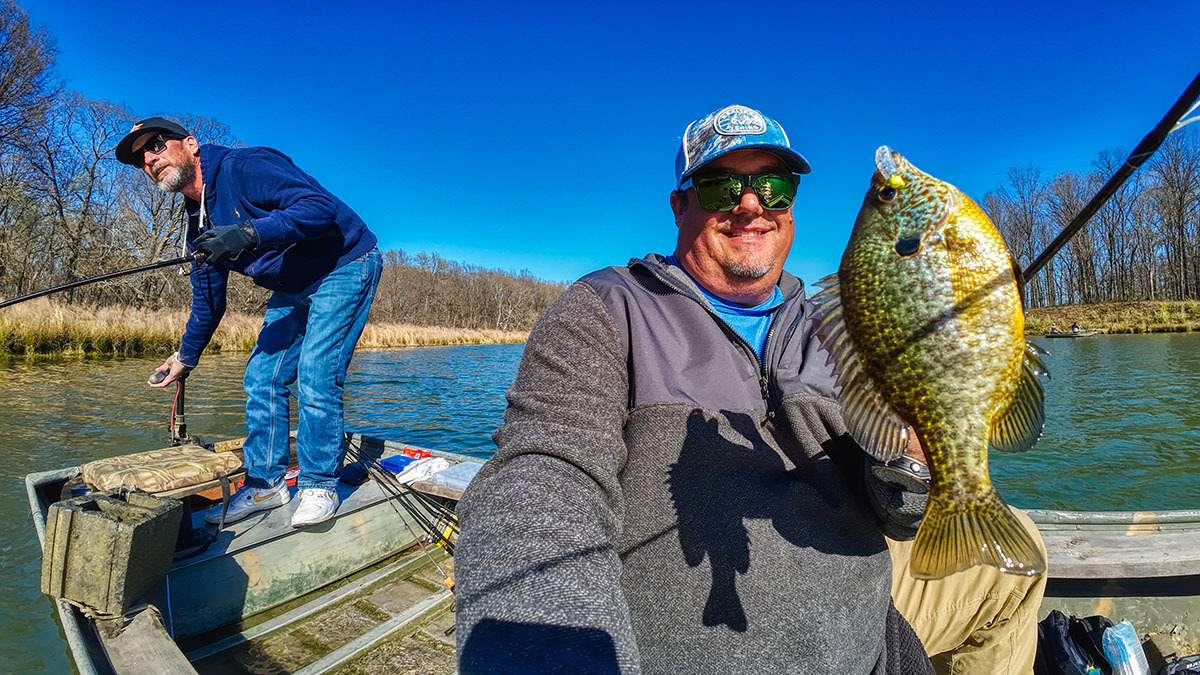
Jigs and plastics are the most versatile starting point for panfish because a single thin plastic body on a small jighead can mimic shrimp, baitfish, larvae, worms, chironomids, and aquatic invertebrates — nearly everything panfish eat regularly. A slow cast-and-retrieve with gentle twitches mimics a struggling invertebrate; a float and jig setup mimics suspended forage. Both work because both are real things panfish eat.
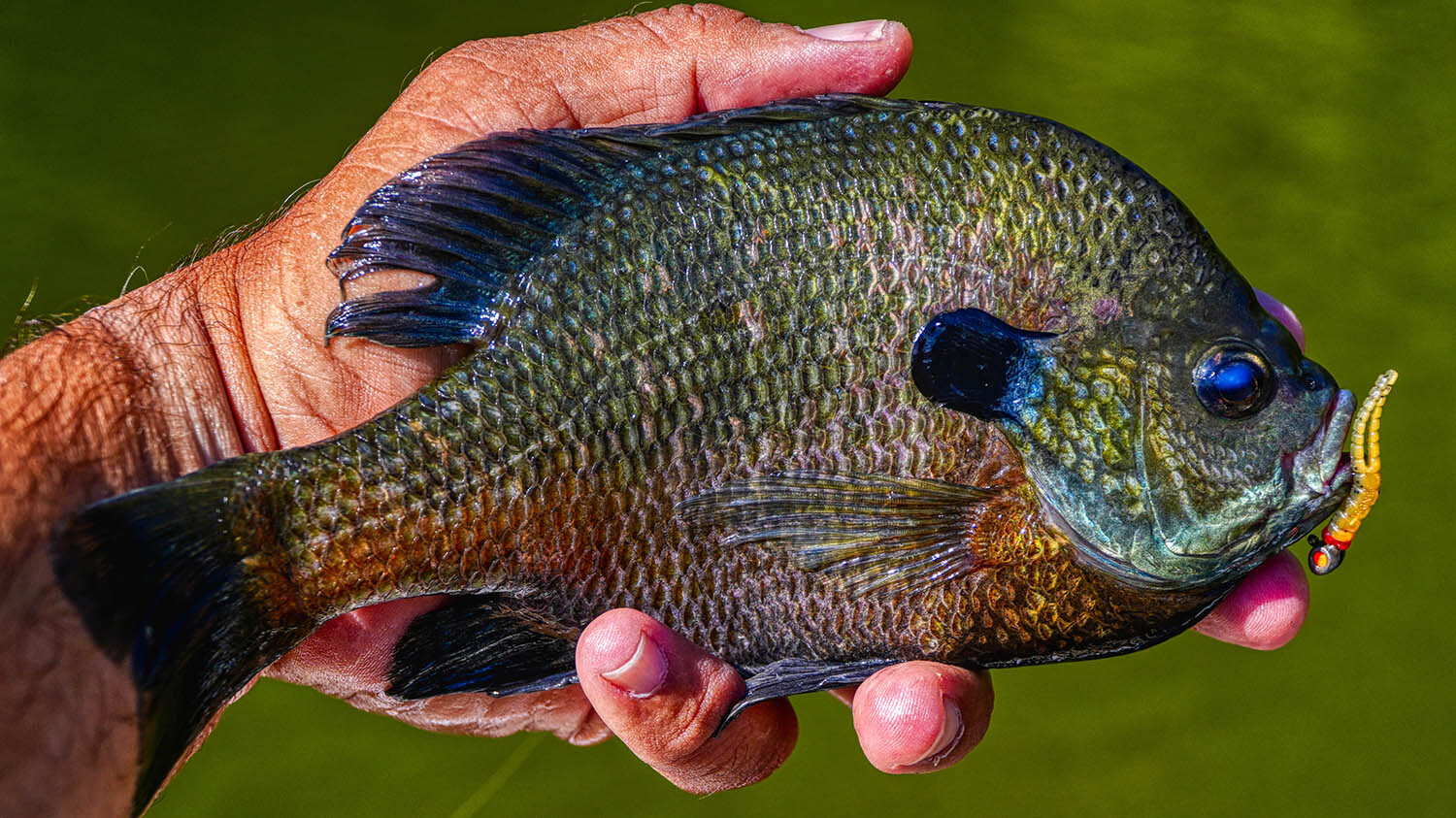
Put them under a small float like the Leland’s E-Z Panfish Float to control depth precisely. Or cast them out on 2–4 lb line on an ultralight setup and reel back slowly with slight twitches and hops of the rod tip. Stick with plastics in the 3/4–1 1/4 inch range for panfish.
Size Range Matters
Keeping plastics in the 3/4–1 1/4 inch range is intentional — it puts your hook closer to the bite point and matches the small invertebrate size panfish are used to targeting. Going larger can still catch fish, especially in prespawn, but smaller is the right default for year-round consistency.
Shop all panfish soft plastics →
Use jigheads with No. 8–12 hooks in 1/64–1/16 oz sizes:
Catching bluegill on a fly rod is one of the most entertaining forms of fishing available — and it directly matches their insect-based diet in a way no conventional lure fully replicates. Topwater flies (foam ants, popping bugs, foam spiders) are the main event in summer, but a floating attractor with a smaller nymph or spider pattern below it is often the dynamite combo. The surface fly draws the fish up; the dropper closes the deal on fish that look but won’t break the surface.
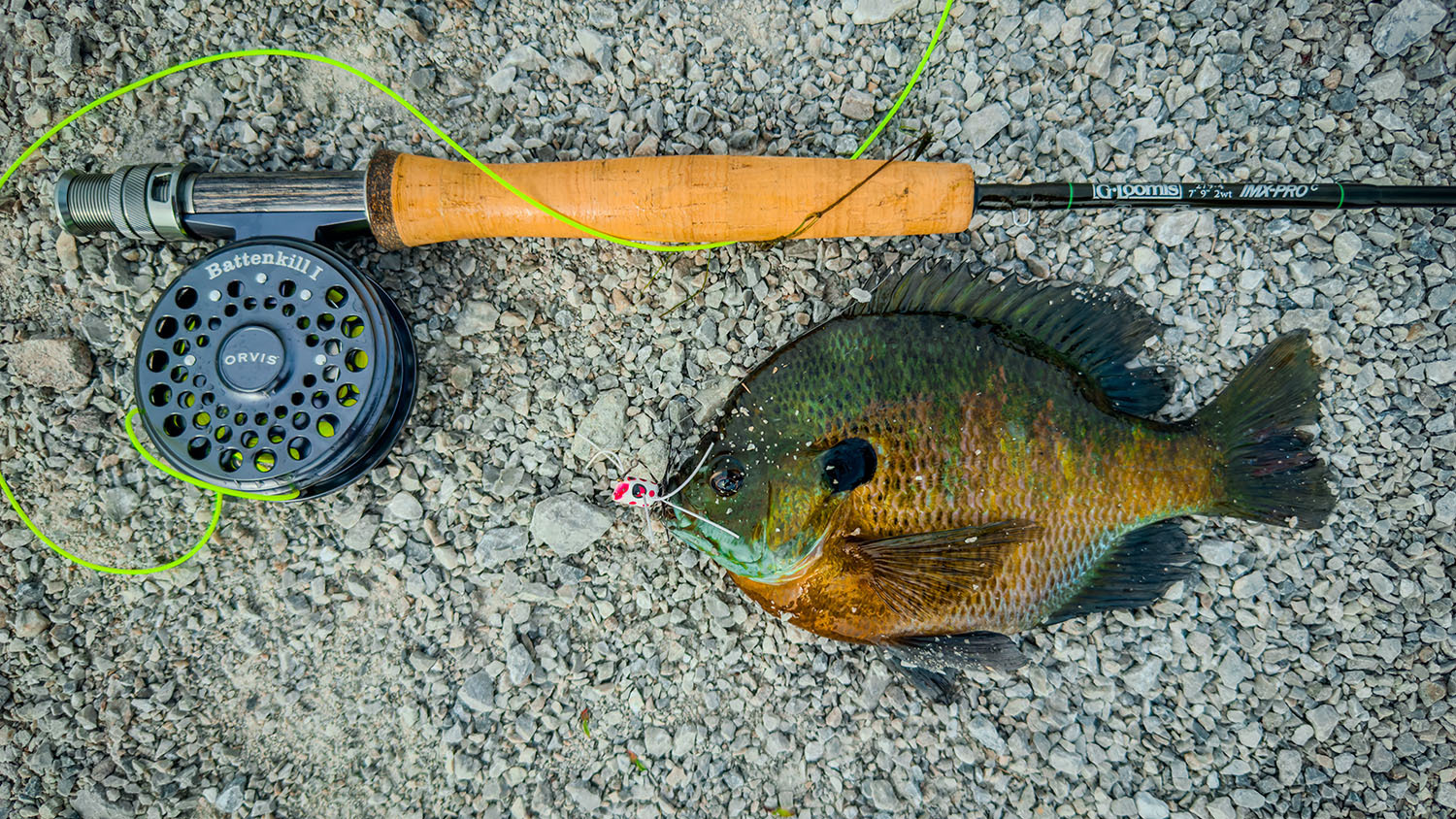
For those who tie, patterns like foam ants, grasshopper imitations, bully spiders, and woolly buggers are all productive bluegill flies. Here are some starting points:
Micro topwater hard baits — cicada imitations, cricket and grasshopper plugs — directly mimic the terrestrial and aquatic insects panfish key on in summer. They can be fished on conventional spinning gear, and they consistently trigger aggressive surface strikes from big bluegill when the timing is right. Go with the smallest sizes available.
Pro Tip: Trailer a Dropper Jig
Trail a small jig off the rear hook eye of a hard topwater. The surface bait acts as an attractor; fish that come up to investigate but won’t break the surface often take the trailing jig instead. It’s one of the most effective double-duty rigs for big panfish in summer, and it works on conventional spinning tackle.
When bluegill and redear sunfish push shallow in the prespawn and again in fall, forage-imitating crankbaits work exceptionally well. A slow, steady retrieve just above the bottom or cover mimics a small baitfish or shrimp moving through the area. The retrieve speed and lack of pause give panfish the impression of something alive and worth chasing.
The Rapala Countdown 1 is an all-time favorite — it’s been producing big bluegills across a range of fisheries for decades, and its slow-sinking profile keeps it in the strike zone longer than a floating crankbait. The Yo-Zuri Snap Bean is another strong option: easy to cast on light line with a tight, realistic wobble on slow retrieves.
When to Reach for a Crankbait
Sinking crankbaits are most effective when panfish are feeding actively in shallow zones (prespawn and fall), when you need to cover water to locate a school, and when fish are responding to baitfish movement rather than invertebrate hatches. If jigs are getting short strikes, a crankbait often triggers harder commitments.
Flash baits — spinners, underspins, and spoons — are best when panfish are actively feeding on swimming prey like grass shrimp, small baitfish, or high-energy forage. These are search baits that cover water efficiently and trigger strikes from fish that are already aggressive. Use them in prespawn and post-spawn when fish are chasing, in summer to locate schools, and in fall when fish are feeding up before winter.
Knowing which lure categories exist is only half the equation. Knowing when to reach for each one is what separates consistent big-fish anglers from those who get lucky. Here’s how the diet-to-lure match plays out across the four seasons.
Slower metabolisms, fewer hatching bugs, and smaller available forage define the winter panfish diet. Stomach sampling on Kentucky Lake in February found bluegill bellies loaded with chironomid larvae — midges they were plucking out of moss on the lake bottom with minimal effort. That energy-conservation behavior is the key insight: winter panfish prefer food that doesn’t require chasing.
Small jigs and slender plastics like the Trout Magnet Cross Worm are the best larvae imitations for this period. Fish them slowly, drop them to the bottom, and barely move them. Small spoons can also tempt deeper gills in winter when worked with a slow snap-and-fall retrieve.
Prespawn is when panfish shift into a higher gear. Bug larvae are starting to move toward hatches, baitfish are moving toward warmer shallows and cover, and panfish are actively feeding up for the spawn. This is the best time of year to go slightly larger with jigs and plastics, and it’s also prime time for sinking crankbaits.
A Rapala Countdown cast into shallow feeding zones and slowly swum back is one of the most consistent prespawn approaches for big bluegill and redear. The slow sink and steady retrieve keeps it in the target zone without blowing past fish that are investigating but not fully committed.
During the spawn, panfish compress into defined areas and become territorial. The approach shifts from “match the diet” to “keep the lure in their zone long enough to antagonize a bite.” Flies on a fly rod, jigs fished over spawning flats, and presentations under small floats all work well because they stay in place.
As the spawn winds down, spinners and underspins shine. Post-spawn panfish are hungry and moving, feeding aggressively to recover, and the flash and swimming action of an underpin or inline spinner matches active forage chasing. This is one of the few times all year when a faster retrieve outperforms a slow one.
Bug hatches are the defining feature of summer panfish feeding, and topwater is the most fun way to capitalize on it. Whether that’s a popping fly on a fly rod, a foam ant, a hopper pattern, or a small cicada topwater with a dropper jig, matching the surface hatch in summer consistently produces big fish — especially bluegills.
The Last 30 Minutes
The bite often peaks dramatically in the last 30 minutes before dark in summer — when gills shift their attention fully upward to emerging insects. Catch rates have been measured going from around 10% an hour before dark to 90% in that final half-hour. If you’re only panfishing in the afternoon, you’re leaving the best window on the table. Stay until you can barely see, and have a topwater or dropper rig ready.
Offshore structure also holds fish in summer — high spots off deeper creek channels with wood cover and structure breaks. A drop-shot rig with a jig above the weight, or a heavier tungsten jighead fished vertically, puts bites on fish that have moved off the bank. A small spoon is consistently overlooked but effective here.
Fall brings panfish back shallow to feed heavily before winter. Big schools pack onto high spots in bays and shallow pockets to feed on snails, larvae, and small forage. The lure selection matters less in fall than finding the feeding schools — but covering water efficiently with cranks, spinners, and underspins is how you find them. Once located, jigs and plastics close the deal.
Some of the biggest and most active panfish schools happen in fall in less than 2 feet of water. When you find one, the fishing can be almost non-stop until they move. That’s the payoff for reading the season correctly.
Panfish are available 12 months of the year, in almost every body of water in the country, and pound for pound they pull as hard as almost anything in freshwater. The difference between catching a few small ones and consistently finding big gills is understanding what they’re eating and matching your artificial lure to that diet.
The lure categories covered here — jigs and plastics, flies, topwater bugs, sinking crankbaits, spinners, and spoons — each have a season and a food source they’re built to imitate. Match your gear to your lure, scale down your line, and fish at the right time of day. The pursuit of big panfish is a legitimate, year-round challenge that rewards anglers who put in the time to learn their fishery.
In winter, bluegill rely heavily on chironomid larvae (midge larvae), small macroinvertebrates, and other organisms they can pick off the bottom with minimal energy expenditure. Their metabolism slows in cold water, so they choose low-effort food sources. Small jigs, slender plastics like worm-style soft baits, and small spoons are the most effective artificial matches.
The best lure for big bluegill depends on the season and what they’re eating. In winter and early spring, small jigs on micro jigheads (1/64–1/32 oz) are reliable. In prespawn and fall, sinking crankbaits like a Rapala Countdown work well over shallow feeding zones. In summer, topwater bugs and dropper jigs fished in the last 30 minutes of daylight consistently produce the biggest fish.
The last 30 minutes before dark is prime time for big bluegill in summer. As light levels drop, gills shift their attention upward toward emerging insects on the surface. Catch rates can shift from around 10% an hour before dark to 90% in that final window. Topwater flies or small hopper and cicada lures with a dropper jig are the best approach.
Panfish will abandon preferred shallow feeding zones when predation pressure from bass, pike, catfish, musky, or gar becomes too high. They move offshore and switch to feeding on zooplankton and microorganisms as a survival response. During these periods, lures that target deeper fish — jigs on heavier tungsten heads, spoons, or drop-shot rigs — are more effective than shallow presentations.
Yes — insects are a significant part of the panfish diet, especially in spring and summer. Panfish key on bug hatches including mayflies, midges, and chironomids, and their feeding activity intensifies around emerging insects. In summer, topwater flies, foam ant patterns, hopper imitations, and small cicada-style topwater lures directly match this feeding behavior.
Hook Me Up!
Sign up for emails and texts to get exclusive updates and offers.
By providing your number above, you agree to receive recurring automated marketing text msgs (e.g. cart reminders) to the mobile number used at opt-in from FishUSA on 25043. Consent is not a condition of purchase. Msg frequency may vary. Msg & data rates may apply. Reply HELP for help and STOP to cancel. See Terms and Conditions & Privacy Policy