


/
/
On big water, “the spot” is measured in miles and the ice can move under you. This advanced guide covers offshore safety, pre-season mapping, reading reefs and basin edges, and species tactics for walleye, lake trout, whitefish, and burbot on the Great Lakes and large reservoirs.
Last updated: October 2026 · By: FishUSA Staff
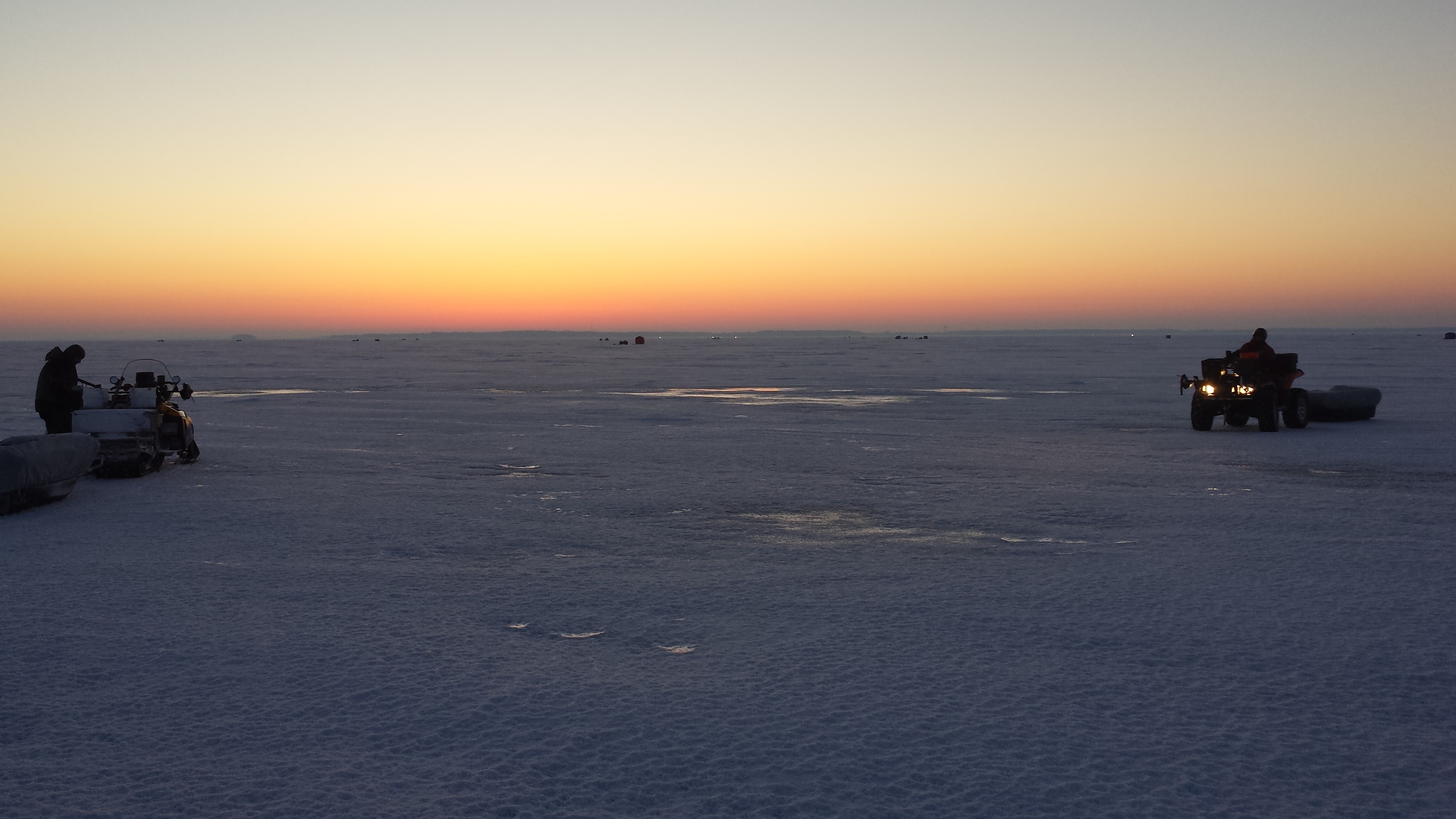
So you’ve mastered small inland lakes and you’re ready to step up. Now the question becomes: how do you take everything you know and apply it to Great Lakes ice fishing or massive reservoirs where “the spot” is measured in miles instead of yards? Big water offers huge walleyes, giant lake trout, roaming whitefish, and burbot—along with ice that can move, crack, and drift in ways that surprise even experienced anglers.
This advanced guide is built for anglers who already understand basic ice fishing and want serious big lake ice fishing tips specific to the Great Lakes and large reservoirs. We’ll talk through big-water safety (without sugarcoating the risks), mapping and pre-season scouting, reading offshore structure, species-specific tactics, deep-water electronics, and how to stay mobile without getting reckless.
If you want to level up from “I catch fish on my local lake” to “I can pattern walleyes and lake trout on big water all winter,” this is your blueprint.
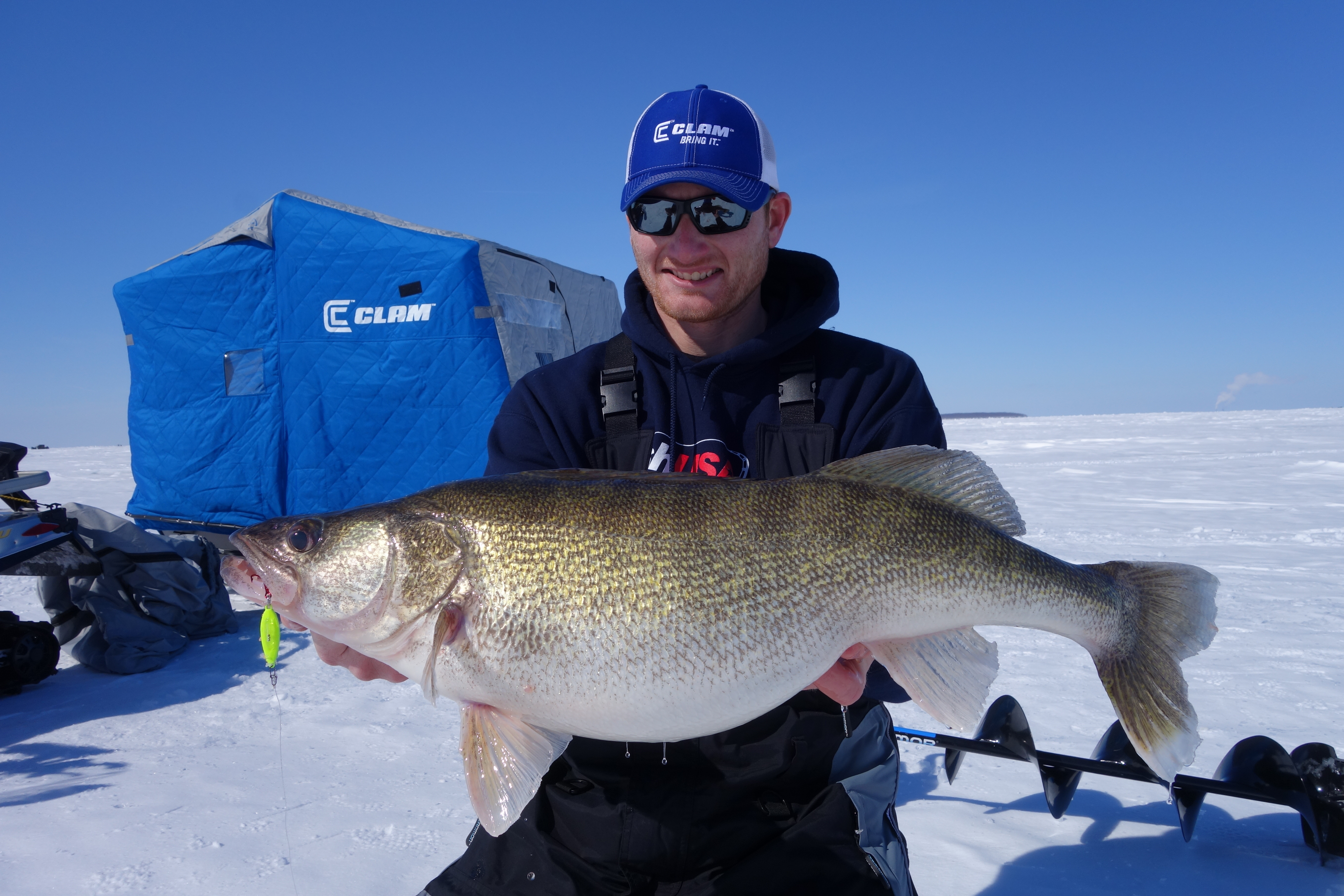
On a 100-acre inland lake, “structure” might be one main point, a weed flat, and maybe a basin edge. On a Great Lake or massive reservoir, that same structure type can run for miles. Fish can—and do—use that whole complex, not just the little corner you happen to be parked on.
This is the first major mindset shift for great lakes ice fishing:
The good news? When you figure out how fish are using a big reef complex or basin edge, that pattern can hold over a huge area and across multiple access points.
Big water doesn’t freeze like a farm pond. Wind, fetch, and current can:
This complexity is why offshore ice fishing safety on the Great Lakes is a different animal. You’re not just asking, “Is there 5 inches of ice here?” You’re asking, “What happened to this ice yesterday and what could it do if the wind switches?” We’ll circle back to big-water safety shortly, because it underpins every other decision you make.
On big water, fish behavior is heavily influenced by weather, forage shifts, and large-scale structure. Successful anglers:
If you’re not already documenting each outing, start now. Every season you fish big water without a log is a season of expensive experience you can’t fully use later.
Before we talk about dialing in advanced big lake ice fishing tips, we need to make sure you come home. Big water can be unforgiving.
Currents—whether from rivers, deep-water inflows, or wind-driven circulation—thin ice from below. Pressure ridges form where ice sheets collide. Both are normal on big water, but you need to approach them with caution:
Before each trip, check your state’s fish and wildlife agency or DNR for ice advisories and closures, and consult marine forecasts for wind direction and strength.
On big water, your minimum safety kit should include:
Travel systems—ATVs, snowmobiles, or tracked machines—should be maintained and outfitted for big water: spare belt, plugs, tow strap, and extra fuel. For a full checklist, see our Ice Fishing Safety Gear and Tips guide.
A simple rule: don’t let the fishing be better than your judgment. For big-water ice fishing:
It’s better to fish closer to shore on a questionable day than to ride heroically offshore and end up on the wrong side of a broken sheet at dark.
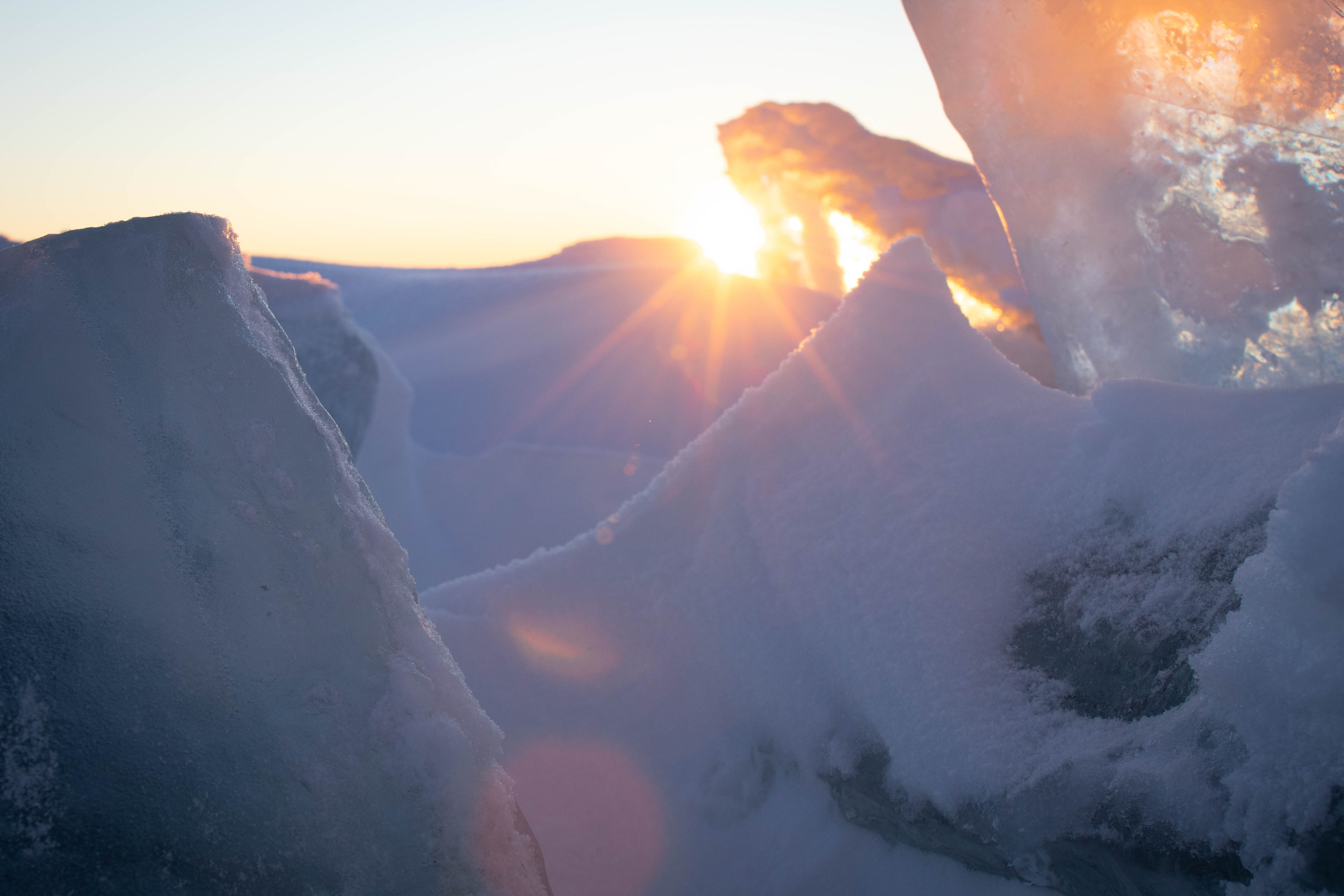
The best big-water ice anglers treat open-water season as a scouting trip for winter. When you’re trolling, casting, or jigging:
Come winter, those waypoints form the skeleton of your Great Lakes ice fishing “milk run.” You’re not guessing where the reef is—you already fished it in October.
Modern mapping is a cheat code if you know how to use it:
Instead of one miracle waypoint, build a network:
Over seasons, you’ll refine which parts of each complex produce in specific conditions. Your big-water logbook becomes more valuable than any social media “hot tip.”
On big water, reefs and shoals are walleye and lake trout magnets. Think of them as underwater islands with different “zones” to fish:
Rather than camping on one depth, use your mapping and sonar to cycle through these zones until you locate where fish are traveling that day.
What looks like a flat may hide subtle changes that matter:
On big lakes, those gentle slopes and transitions often hold more fish than the obvious, “cartoon” structures everyone else hammers.
Large reservoirs add another layer: submerged river channels, secondary channels, roadbeds, and flooded points. For large reservoir ice fishing:
If you already log open-water reservoir fish, you’re halfway to a good ice plan.
Walleyes on big water behave differently than on small lakes. Instead of hugging one weedline, they often roam vast flats and reef systems following bait. Key concepts:
Related: Ice Fishing for Walleye: Expert Techniques, Gear, and Strategies
Lake trout might be the ultimate big-water ice target. On Great Lakes and large reservoirs, they often relate to:
Effective presentations include heavy white tubes, swimbaits, large spoons, and dead bait rigs. With modern electronics, many anglers play a “cat-and-mouse” game—pulling lakers 30–40 feet up off bottom with aggressive jigging, then pausing to trigger the strike.
Related: Ice Fishing for Lake Trout: Techniques, Gear, and Tips
Big water also offers whitefish, burbot (eelpout), and other species that rarely get targeted on small lakes:
These species are perfect for advanced anglers who’ve already checked “walleyes and lakers” off the list and want something different.
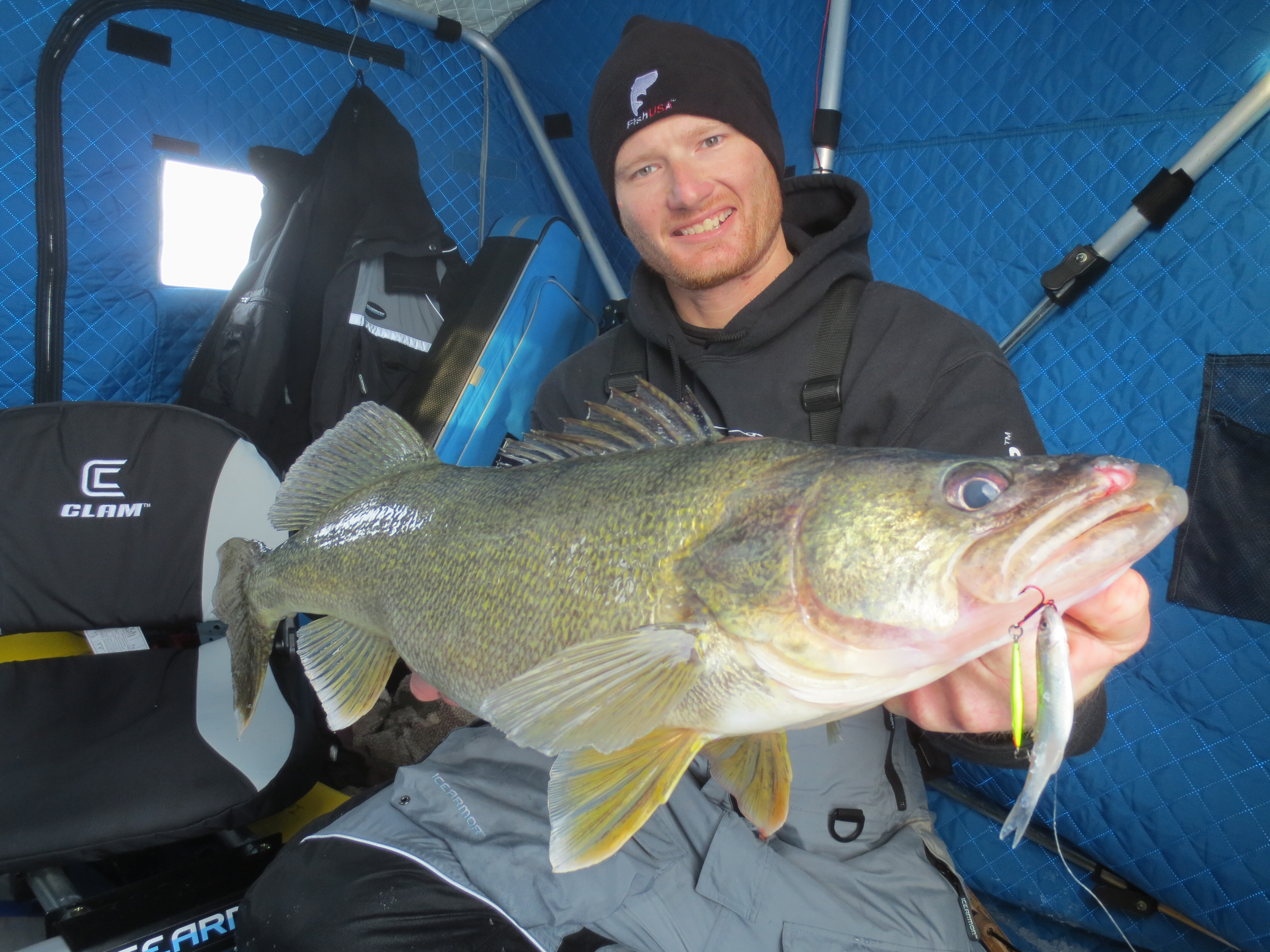
On big water, your gear has to handle deeper water, larger fish, and sometimes heavy current:
Your sled and shelter setup are part of your big-water system. Effective approaches:
On the Great Lakes, you’re often fishing wind-swept, open ice. Don’t skimp on tie-downs and anchor points.
Electronics are non-negotiable if you’re serious about Great Lakes ice fishing:
Guides and advanced anglers often use sonar to “see” fish 60–100 feet away, then only drill where they see life. To build those skills, start with our guide to the Best Ice Fishing Flashers and Sonars, then compare options in Sonar vs Underwater Cameras.
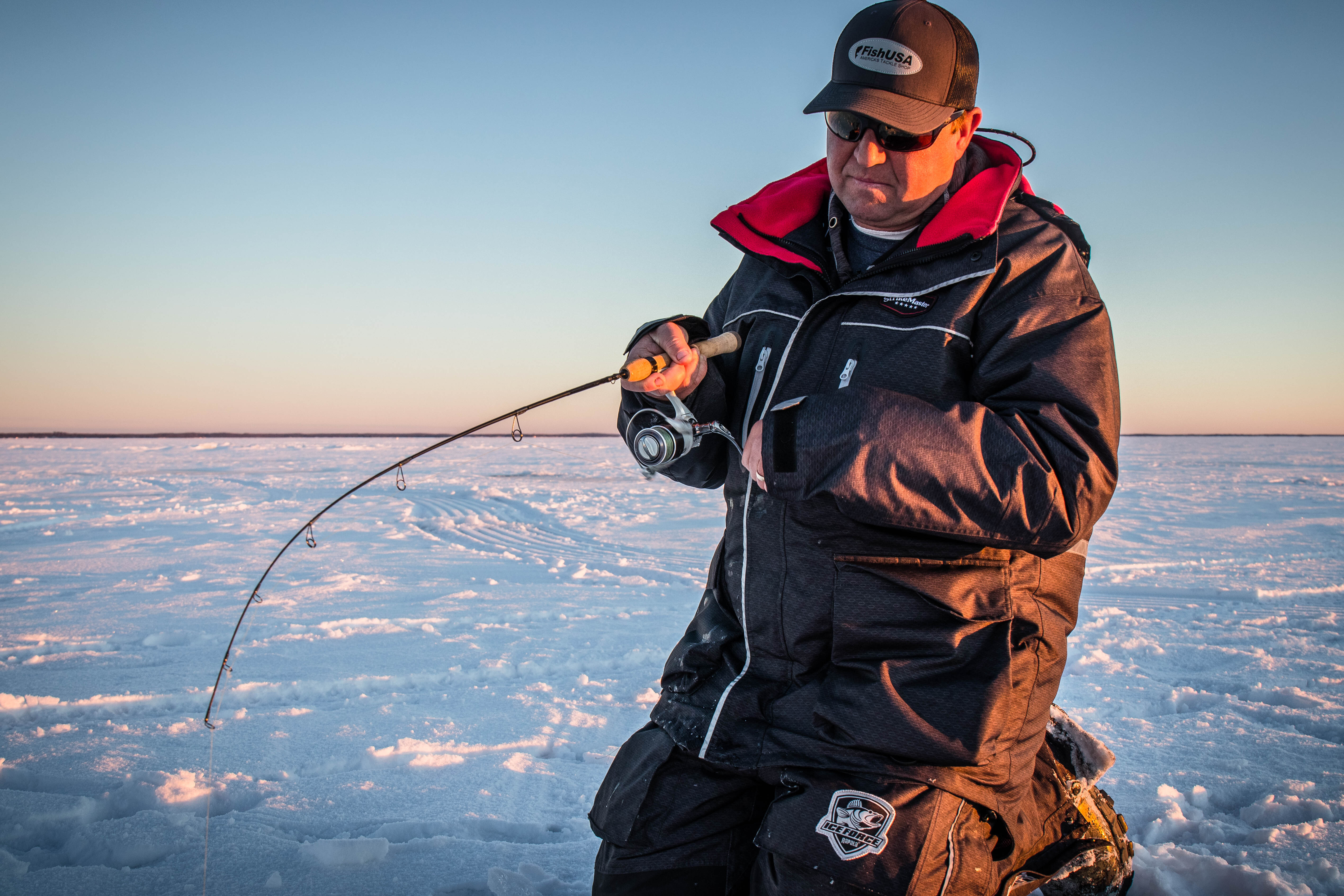
On big water, you need a plan before you ever fire up the auger. Effective patterns include:
Don’t burn yourself out drilling randomly. Use your map and sonar to make every hole part of a deliberate search pattern.
Big-water efficiency multiplies when you fish with partners:
This approach covers more water quickly without each angler taking on risky distances alone.
Advanced anglers avoid both extremes: they don’t abandon a good area too quickly, but they also don’t grind unproductive water all day. Simple guidelines:
On big lakes and reservoirs, seasonal progression can be summarized as:
Your strategy for great lakes ice fishing should adapt to these shifts—even if that means changing access points or target depths. For more on timing, see The Best Time to Ice Fish.
Wind direction and speed can:
Barometric pressure matters less than many anglers think—but major, rapid changes do influence fish behavior. The real key on big water is tracking consistency vs chaos in weather patterns over several days.
Advanced anglers understand that “no trip” is sometimes the best decision. If wind, ice reports, and local intel all say “iffy,” trust that.
Classic mistake: sitting stubbornly on a tiny “spot” on a reef, because that’s what worked back home on a 200-acre lake. On big water, you must:
Another common error is treating big-water ice like a static platform. It isn’t. Anglers get in trouble by:
Without a log, every season starts from scratch. For big-water success:
Patterns emerge—by month, weather, and lake section—that can’t be “Googled.” They have to be earned.
It can be, but the margin for error is small. If you’re new to big water, go with partners or a guide, especially at early or late ice. Always carry safety gear, share your plan, and stay within a conservative distance of shore.
It varies by lake and year, but many anglers favor the heart of the season—once ice has stabilized and before late-ice runoff complicates conditions. Early ice can be phenomenal if you’re cautious and know the lake, while late ice often brings aggressive pre-spawn fish and improved bite windows.
There’s no one-size rule, but many experienced anglers look for well over the minimum walking thickness (often 4+ inches) before venturing far offshore, and more for machines. Test often with a spud and rely on local knowledge—thickness alone doesn’t account for current and structural hazards.
At minimum, a flasher or ice sonar and GPS mapping. On vast water, mapping and waypoints are as important as real-time sonar. Forward-facing or down-imaging live sonar isn’t mandatory, but it’s extremely useful on big flats and deep structure.
Start with digital maps and focus on obvious reefs, bars, and basin edges. Use your first season to “scout” under ice with mapping and sonar, logging every fish-holding area you find. You can also study open-water reports and lake surveys from your state agency for clues.
For walleyes: spoons, rattle baits, glide baits, and jig/minnow combos. For lake trout: heavy tubes, large spoons, swimbaits, and deadbait. On big water, size and weight matter—you need baits that reach depth quickly and stay in the zone.
“Safe” depends on conditions, ice history, and experience. Some anglers feel comfortable several miles out under stable conditions; others never leave sight of shore. The key is conservative judgment, current information, and an honest assessment of your gear and skill level.
Not necessarily. Reservoirs often have fluctuating water levels, strong currents near dams, and complex channels. They may be smaller than a Great Lake, but they can still be dangerous if you treat them casually. The same big-water mindset and safety practices apply.
Great Lakes ice fishing and big-reservoir hardwater aren’t just bigger versions of the local pond—they’re a different discipline. When you understand macro-structure, respect the ice, leverage mapping and electronics, and tailor your gear and tactics to deep, roaming fish, you unlock a fishery that can change your idea of what winter fishing even is.
Start by building a conservative, safety-first approach. Add pre-season scouting and detailed logging so each trip improves your understanding of the lake. Then layer on species-specific tactics for walleyes, lakers, whitefish, and burbot, backed by thoughtful mobility and efficient spreads. Over time, the chaos of big water turns into a system you can read and exploit.
If these big lake ice fishing tips helped you see big water differently, share this article with a partner you trust on the ice.
Hook Me Up!
Sign up for emails and texts to get exclusive updates and offers.
By providing your number above, you agree to receive recurring automated marketing text msgs (e.g. cart reminders) to the mobile number used at opt-in from FishUSA on 25043. Consent is not a condition of purchase. Msg frequency may vary. Msg & data rates may apply. Reply HELP for help and STOP to cancel. See Terms and Conditions & Privacy Policy