


/
/
Night shore fishing is one of the most underrated ways to connect with walleye — no boat required. Here's how to time it, where to cast, and which lures to throw after dark.
Last updated: October 2026 · By: FishUSA Staff
Fishing for walleye at night from shore is one of the most underrated and accessible ways to connect with these elusive predators. Whether you're wading a rocky point, casting from a pier, or working a river bank, nighttime presents a prime opportunity — especially in spring and fall — when walleye push shallow to feed. This guide covers essential strategies and gear for success after dark and will help you confidently target walleye without the need for a boat.
Walleye are low-light predators. Their eyes are built to detect contrast and movement in low-visibility environments, giving them a feeding advantage after sunset. As daylight fades and boat traffic dies down, baitfish move into shallow water to feed on algae and microorganisms — and walleye follow close behind. This behavior is especially pronounced during spring and fall, when water temperatures range from 45–65°F.
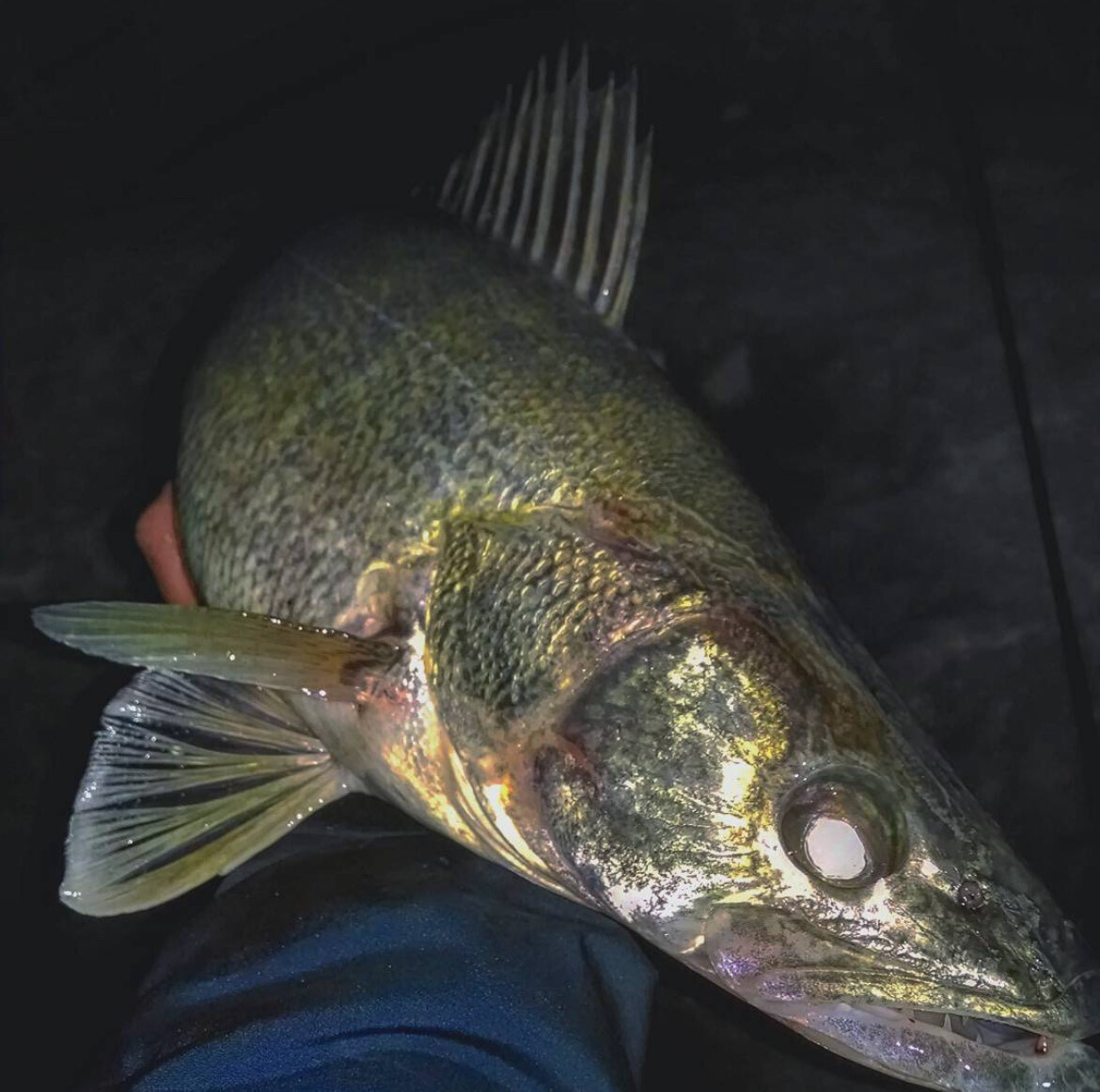
The ideal water temperature for nighttime shore casting is typically between 50°F and 60°F, though walleye can be caught in cooler or slightly warmer water as well. In spring, pre-spawn walleye move shallow as early as ice-out. In fall, dropping temps push baitfish back into shoreline areas, triggering another feeding frenzy. Prime bite windows often occur in the first 2–3 hours after sunset and again just before sunrise.
Walleye don't roam randomly — they move along predictable structure and current breaks that funnel baitfish. Focus your casting efforts on:
A 6'6" to 7' medium or medium-light spinning rod with fast action is a great starting point. The fast tip helps detect subtle strikes while maintaining casting accuracy. Match it with a quality 2000–3000 size spinning reel for smooth drag and control. Check out the FishUSA guide to the best walleye rods for specific recommendations.
Use 6–10 lb test monofilament or fluorocarbon for abrasion resistance, or braid with a fluorocarbon leader for added sensitivity and distance. Water clarity plays a role — go lighter in clear water and heavier in stained conditions.
Stickbaits are the go-to for nighttime walleye casting. Their long profile and subtle action perfectly imitate struggling baitfish. Top picks include:
Stick with natural or dark color patterns like black/silver, gold/black, or firetiger — these offer strong silhouettes and flash in low light. For bigger fish, use larger lures (5"–7") to mimic large prey items like perch or juvenile shad. See also: Best Walleye Crankbaits.

Experiment with different retrieve styles to find what the fish want on a given night:
Pro Tip: Let your bait occasionally tick bottom, especially near drop-offs or depth transitions. This imitates foraging behavior and can trigger reaction strikes from walleye holding tight to structure.
Walleye are sensitive to light. Keep your headlamp angled away from the water and avoid shining a flashlight near the shoreline. Use a red-lens light or low-output beam when tying knots or handling fish. If wading, always wear a PFD and bring a wading staff. Walk slowly and shuffle your feet to maintain footing on slippery or uneven bottoms.
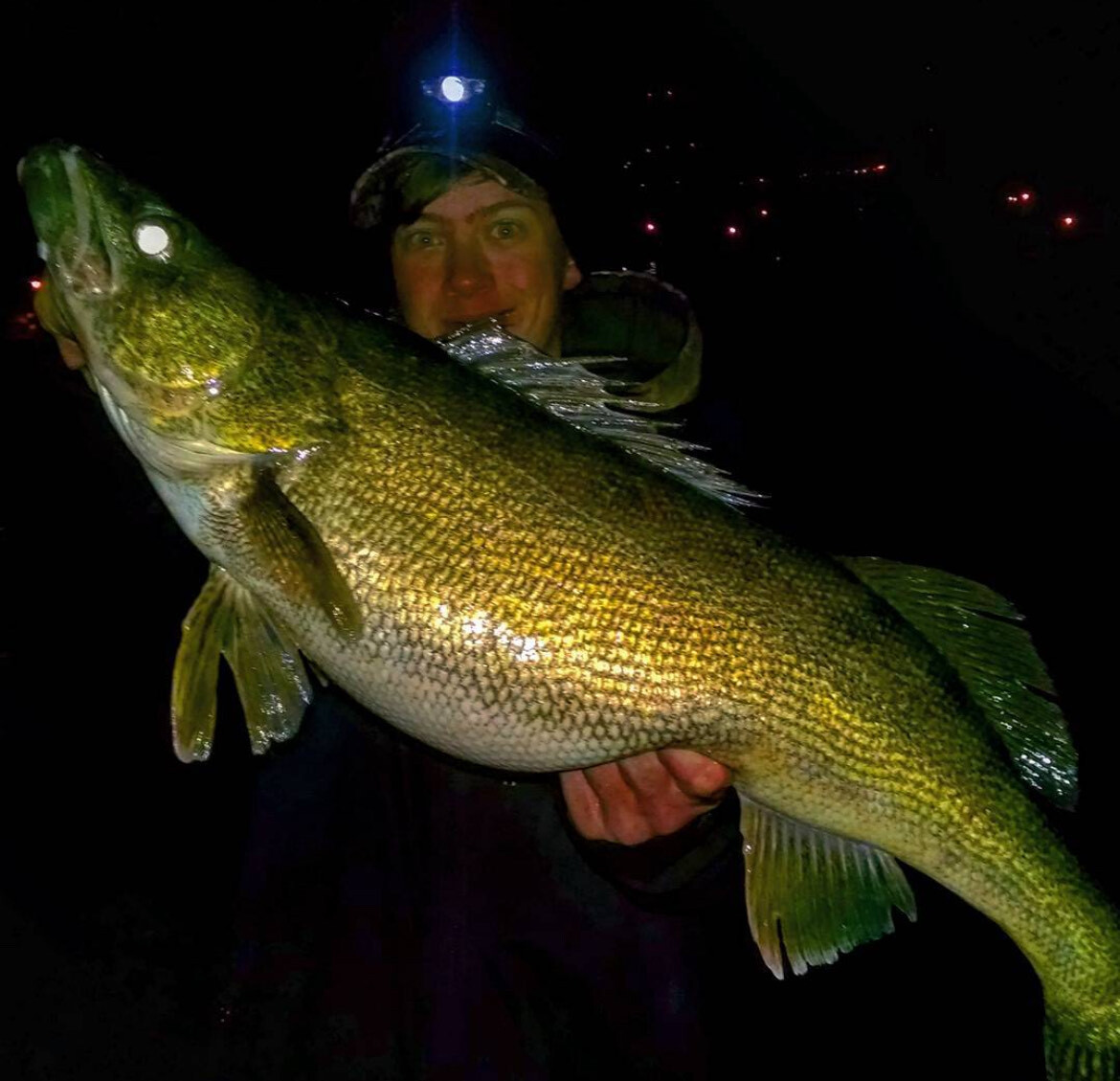
Many states close walleye seasons during the spawn. Check local regulations before heading out, especially in spring. Use barbless hooks or flatten the barbs to aid in catch-and-release. Always practice ethical fishing and avoid disturbing actively spawning fish — their successful reproduction is what sustains the populations shore anglers depend on year after year.
The first two to three hours after sunset and the hour before sunrise are typically the most productive windows. Walleye are active low-light feeders, and these transitional periods coincide with baitfish moving into the shallows. In spring and fall, water temperatures of 50–60°F amplify the bite significantly, making those seasons the most reliable for night shore fishing.
Stickbaits and jerkbaits are the most effective nighttime walleye lures for shore casting. The Bomber Long A, Rapala Original Floater (F13 or F18), Smithwick Rogue, and Rapala Husky Jerk are proven producers. Choose dark or natural color patterns like black/silver, gold/black, or firetiger for strong silhouettes in low light. Larger profiles (5"–7") can attract trophy-class fish.
A 6'6" to 7' medium or medium-light spinning rod with fast action paired with a 2000–3000 size spinning reel is the standard setup. Use 6–10 lb mono or fluorocarbon, or braid with a fluorocarbon leader for sensitivity and distance. Fast-action tips improve strike detection and help maintain casting accuracy in the dark.
Focus on structure and transition zones: rocky points, sandbars, creek mouths, riprap banks, and the first major drop-off from shore. Current seams near river mouths are particularly productive in spring. Walleye follow baitfish, so any area that concentrates forage will concentrate walleye after dark.
Yes, with proper preparation. Wear a fitted PFD, use a wading staff on uneven or slippery bottoms, and shuffle your feet when moving to detect changes in footing. Use a red-lens headlamp for tying knots and handling fish without spooking walleye near shore. Let someone know your location before heading out after dark.
No. Shore fishing at night is one of the most productive and overlooked walleye strategies, especially during spring and fall when walleye push shallow to feed. Rocky points, piers, bridges, and current seams accessible from shore can all produce quality fish — sometimes outperforming boat-accessible zones that walleye learn to avoid during high-traffic daytime hours.
Casting for walleye from shore at night is an efficient, inexpensive, and productive way to fish. With minimal gear, a small tackle box, and the right location, it's possible to hook into quality fish under the stars. Focus on timing, structure, lure selection, and stealth to turn nighttime into prime time. Whether filling the freezer or chasing a personal best, this technique is well worth exploring.
Stay safe, stay sharp, and good luck out there.
Hook Me Up!
Sign up for emails and texts to get exclusive updates and offers.
By providing your number above, you agree to receive recurring automated marketing text msgs (e.g. cart reminders) to the mobile number used at opt-in from FishUSA on 25043. Consent is not a condition of purchase. Msg frequency may vary. Msg & data rates may apply. Reply HELP for help and STOP to cancel. See Terms and Conditions & Privacy Policy