


/
/
Whether you’re finesse fishing with small paddle tails or launching giant glide baits in search of a trophy bass, the right swimbait rod makes all the difference. This guide breaks down the best finesse spinning rods and big-bait casting rods available at FishUSA — with specs, comparisons, and a clear decision guide to help you choose.
Last updated: August 2026 · By: FishUSA Staff
Swimbait fishing covers a wider range of rod requirements than almost any other bass technique. A finesse paddle tail on 10 lb fluorocarbon demands a completely different rod than a 6-inch glide bait on heavy braid. Using the wrong rod for your bait size costs you casting distance, bait action, hookup percentage, and control on big fish. Getting it right makes the whole presentation work.
This guide covers the best swimbait rods for both ends of the spectrum — finesse spinning rods for lighter baits and heavy baitcasting rods for big swimbaits and glide baits — along with a clear breakdown of how to match the rod to the technique. For help picking the right bait to pair with your rod, see our guide to the best swimbaits for bass.
The ideal swimbait rod depends heavily on the size and type of bait you’re throwing. Here are the key specs to evaluate before buying:
Power is the most important spec for swimbait rods because it directly determines which lure weights the rod can handle. Use medium to medium-heavy power for finesse swimbaits under 1/2 oz — enough backbone to fight fish without overpowering small baits. Step up to heavy or extra-heavy for big swimbaits and glide baits in the 1–3+ oz range, where you need the muscle to cast heavy lures long distances and pull big bass away from structure.
Moderate to fast action is the sweet spot for swimbait fishing. Fast action provides a crisp tip for detecting bites and enough power in the lower blank for solid hooksets on treble-hooked hard baits. Moderate action bends more throughout the rod, which protects light hooks and leader on finesse presentations and keeps fish pinned during the fight. Avoid extra-fast action — the stiff, unforgiving blank can pull treble hooks and reduces the rod’s ability to absorb a big fish’s runs.
Longer rods (7’4″–8’) improve casting distance with heavy swimbaits and glide baits, and give you more leverage to control large fish on the surface. Shorter rods in the 7’–7’3″ range offer better accuracy and feel for finesse presentations around visible cover. Most swimbait rods fall in the 7’4″–7’11″ range as a versatile middle ground for both casting and fighting fish.
Sensitivity matters most with finesse swimbaits. When a bass inhales a small paddle tail on a light line, the bite can be a very subtle change in tension — not the thump you feel with a jig. A high-modulus graphite blank transfers that signal to your hand so you can react. For big swimbaits, sensitivity is less critical because strikes are more aggressive, but it still helps you feel the bait’s action and detect when it’s fouled.
| Bait Size | Rod Type | Power | Action | Length |
|---|---|---|---|---|
| Under 1/2 oz (finesse) | Spinning | Medium–Medium Heavy | Moderate Fast–Fast | 7’–7’3″ |
| 1/2–1 oz (mid-size) | Casting | Medium Heavy–Heavy | Moderate–Fast | 7’4″–7’8″ |
| 1–3+ oz (big baits) | Casting | Heavy–Extra Heavy | Moderate–Moderate Fast | 7’8″–8’+ |
Finesse swimbait rods are spinning rods built for baits under 1/2 oz — small paddle tails, shad-profile soft baits, and underspin rigs on light fluorocarbon or braid-to-fluoro setups. The following rods deliver the sensitivity, casting accuracy, and fighting ability needed for finesse swimbait fishing.

Best finesse swimbait spinning rod
G. Loomis NRX+ Spinning Rod
852S JWR · 7’1″ · Medium Light · Fast
The G. Loomis NRX+ is widely regarded as one of the best finesse spinning rods ever built, and the 852S JWR is a standout for swimbait applications. The NRX+ blank uses Loomis’s proprietary high-modulus graphite layup to achieve exceptional sensitivity at extremely low weight — it transmits the subtle tick of a strike on a small paddle tail with clarity that few rods can match. The fast tip loads cleanly for accurate casts with lightweight baits, while the strong spine handles hard pulls from big fish on light line. If you prioritize performance and sensitivity above everything else, this is the top finesse swimbait rod in the category.
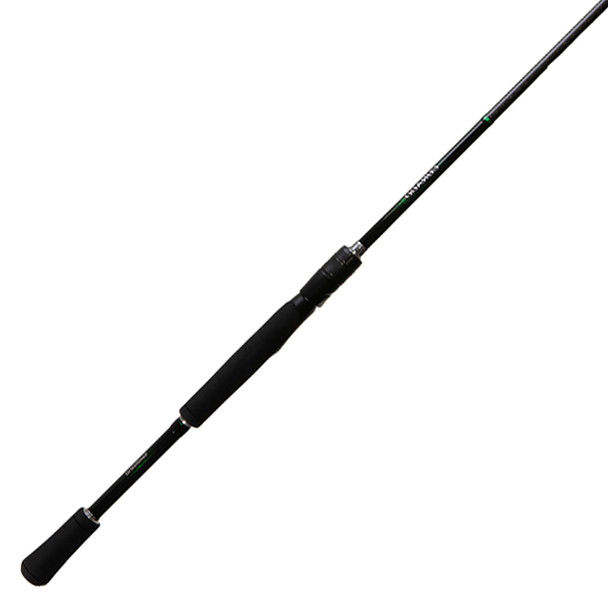
Balanced reliability for finesse swimbaits
Shimano Curado Spinning Rod
CDS70MA · 7’ · Medium · Moderate Fast
The Shimano Curado Spinning Rod brings the trusted Curado name’s balance of reliability and performance to a finesse spinning blank. The 7’ moderate-fast action is well-suited for light swimbaits — it has enough flex in the tip to load on short casts and maintain bait action during the retrieve, while the blank provides the stiffness needed to detect strikes and control fish. This rod is a strong choice for anglers who want a proven, all-around finesse swimbait rod at a competitive price point, with the responsiveness to handle a variety of light bait styles from paddle tails to small shad.
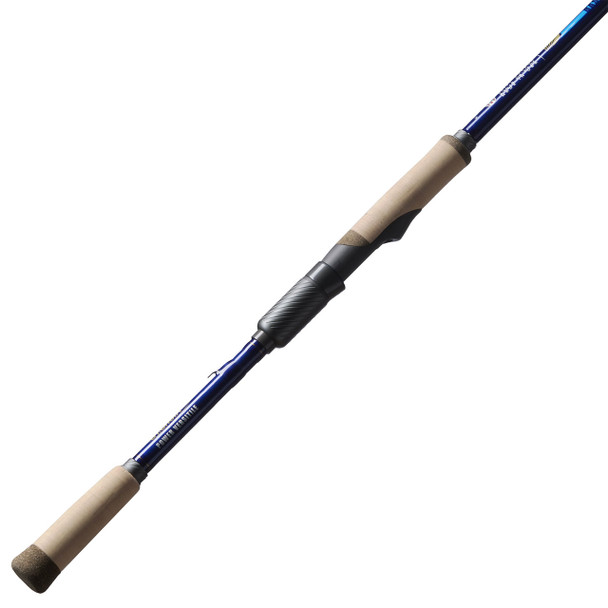
Tournament-proven precision for soft swimbaits
St. Croix Legend Tournament Bass Spinning Rod
LBTS71MF · 7’1″ · Medium · Fast
St. Croix’s Legend Tournament Bass series is built for tournament anglers who demand precision, and the LBTS71MF is an excellent match for soft swimbait presentations. The fast tip loads accurately on casts and gives you a clear feel for the bait’s action during the retrieve, while the smooth backbone absorbs runs and keeps hooks pinned through the fight — a critical quality when fighting fish on the light fluorocarbon typically used with finesse swimbaits. The 7’1″ length gives you extra reach and casting range without sacrificing the feel needed for subtle presentations.

Extra-fast power for cover fishing with finesse baits
Douglas LRS Spinning Rod
LRS SC724XF · 7’2″ · Medium Heavy · Extra Fast
The Douglas LRS is built on Douglas’s proprietary low-resin blank technology, producing a rod that is extremely sensitive, light, and strong. The extra-fast action makes it a good choice when you’re pitching small swimbaits to dock edges, laydowns, or other visible cover where precision and a quick hookset matter — the stiff tip telegraphs exactly where the bait is at all times. The medium-heavy power rating steps up from the other finesse options, giving you more authority to move fish when they bury in cover after the bite. A natural complement to the G. Loomis NRX+ if you need a second finesse rod with a different casting feel.
Big swimbait rods are baitcasting rods built to handle lures from 1/2 oz to 3+ oz — hard swimbaits, large soft plastics on swimbait hooks, and glide baits. These rods need the power for long casts with heavy lures, a backbone that can drive large treble hooks, and enough length to control big fish on the surface. Pair them with a quality baitcasting reel spooled with 15–20 lb fluorocarbon.
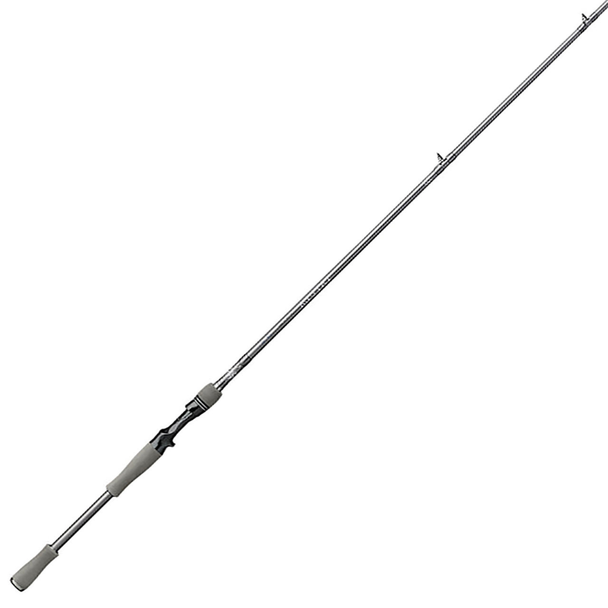
Versatile big swimbait casting rod
Daiwa Tatula Elite Casting Rod
TTEL741MHRB · 7’4″ · Medium Heavy · Moderate Fast
The Daiwa Tatula Elite was designed in collaboration with tournament pros specifically for swimbaits, and the TTEL741MHRB is the most versatile option in the lineup. The 7’4″ length gives you plenty of reach for long casts while keeping the rod manageable for all-day use, and the medium-heavy moderate-fast taper bridges the gap between mid-sized swimbaits and smaller glide baits. The moderate-fast action loads smoothly on the cast and provides the flex needed to keep treble hooks pinned through the fight — a common point of failure with stiffer swimbait rods. A top pick for anglers throwing hard swimbaits and mid-sized glide baits in the 1–2 oz range.

Mid-size to full big-bait power
Dobyns Champion XP Casting Rod
DC706CB (7’ H Mod Fast) · DC795SB (7’9″ H Mod) for big glide baits
Dobyns offers two distinct options in the Champion XP lineup for swimbait fishing, covering both ends of the big-bait spectrum. The DC706CB (7’ Heavy Moderate Fast) handles mid-sized swimbaits in the 3/4 to 1-1/2 oz range with excellent balance and casting accuracy. For serious big-bait anglers throwing large glide baits and 6–8 inch multi-jointed swimbaits, the DC795SB (7’9″ Heavy Moderate) is one of the top dedicated big-swimbait rods available — its extra length maximizes casting distance and gives you the leverage to surface-steer giant bass. Both rods are known for their exceptional balance that reduces fatigue during a full day of casting heavy lures.

Best one-rod option for mid-to-big swimbaits
Douglas ERA Casting Rod
ERA C745F · 7’4″ · Heavy · Fast
The Douglas ERA C745F is built on Douglas’s advanced carbon fiber blank technology and stands out as a genuinely versatile casting rod that can handle mid-sized swimbaits through moderately large glide baits without a major compromise in either direction. The fast action gives you a crisp, accurate cast and a sensitive tip that lets you feel the bait’s action throughout the retrieve. The heavy power rating provides enough backbone for solid hooksets on large single hooks and trebles alike. If you want one quality casting rod that bridges the gap between hard swimbaits in the 1/2 oz range and larger glide baits up to 2 oz, the ERA C745F is the strongest single-rod answer on this list.
The single most important question when choosing a swimbait rod is: how heavy are the baits you’re throwing? Everything else — power, action, spinning vs. casting — follows from that answer.
| Your Situation | Best Pick |
|---|---|
| Finesse swimbaits under 1/2 oz, light line, spinning gear | G. Loomis NRX+ 852S or Shimano Curado CDS70MA |
| Finesse swimbaits around visible cover, need extra authority on hookset | Douglas LRS SC724XF |
| Mid-size hard swimbaits and smaller glide baits (1/2–2 oz) | Daiwa Tatula Elite TTEL741MHRB |
| Large glide baits and full-sized big swimbaits (2–3+ oz) | Dobyns Champion XP DC795SB |
| One casting rod that handles a wide mid-to-big-bait range | Douglas ERA C745F |
If you’re just getting into swimbait fishing and want to start with one rod, choose based on where most of your fishing falls. Anglers who primarily fish finesse techniques and add the occasional swimbait should start with a quality finesse spinning rod like the Shimano Curado. Anglers focused on targeting big fish with big baits should go straight to a heavy casting rod. And if you plan to build out a full swimbait program over time, budget for both a finesse spinning rod and a dedicated big-bait casting rod — they serve different purposes and there’s no single rod that does both well.
Don’t overlook the reel: The best swimbait rod will underperform on a reel with a poor drag or inconsistent spool. Pair your rod with a quality spinning or baitcasting reel matched to the line weight and bait size you’re throwing. See our guide to the best baitcasting reels for bass for casting reel recommendations.
A medium-power, fast-action spinning rod in the 7’–7’4″ range is ideal for finesse swimbait fishing with baits under 1/2 oz. The G. Loomis NRX+ 852S JWR and the St. Croix Legend Tournament Bass LBTS71MF are two of the top options available. They offer the sensitivity to detect subtle bites and enough backbone to fight fish on light line without overpowering small baits.
A heavy-power baitcasting rod in the 7’4″–8’ range is best for throwing large swimbaits and glide baits. Top picks include the Dobyns Champion XP DC795SB for maximum big-bait power and the Daiwa Tatula Elite TTEL741MHRB for versatility with mid-to-large swimbaits. These rods have the backbone and hook-setting power needed to control heavy baits and land big bass.
Match rod power to bait size. Use medium to medium-heavy power for finesse swimbaits under 1/2 oz. Step up to heavy power for swimbaits in the 1–2 oz range. For large glide baits and multi-jointed swimbaits over 2 oz, extra-heavy power is appropriate. Using too light a rod for heavy baits reduces casting distance and control; using too heavy a rod for finesse baits kills bait action.
Spinning rods are better for finesse swimbaits under 1/2 oz — they handle light line well and allow precise casts with small baits. Baitcasting rods are better for swimbaits 1/2 oz and heavier, providing the power for long casts with heavy lures and the backbone to control big fish on heavier line. Most serious swimbait anglers own one of each to cover the full bait-size range.
Swimbait rods typically run from 7’ to 8’. Longer rods (7’4″–8’) improve casting distance with heavy lures and give leverage to control big fish at the surface. Shorter rods (7’–7’3″) offer better accuracy for finesse presentations around cover. Most dedicated swimbait rods fall in the 7’4″–7’11″ range as a versatile middle ground.
Moderate to fast action is ideal for most swimbait applications. Fast action provides sensitivity and hookset power for hard-baited presentations. Moderate action bends more through the blank, which protects light hooks and leader during the fight and keeps treble hooks pinned on hard-running fish. Avoid extra-fast action — the stiff, unforgiving blank can pull treble hooks and reduces fish-fighting ability.
Not ideally — the power requirements are too different. A finesse spinning rod for 1/8–3/8 oz baits can’t handle the load of a 2 oz glide bait, and a heavy casting rod will kill the action of a small paddle tail. However, a medium-heavy casting rod like the Douglas ERA C745F can bridge the gap, handling mid-sized swimbaits in the 1/2 to 1 oz range on both ends of the spectrum.
For finesse swimbaits on a spinning rod, 8–15 lb fluorocarbon or a braid-to-fluoro leader is standard. For hard swimbaits and glide baits on a casting rod, 15–20 lb fluorocarbon is most common — it sinks and stays nearly invisible, which matters when fish get a close look at suspending baits. For topwater or wake-style swimbaits where buoyancy matters, monofilament is worth considering for its float rate.
Hook Me Up!
Sign up for emails and texts to get exclusive updates and offers.
By providing your number above, you agree to receive recurring automated marketing text msgs (e.g. cart reminders) to the mobile number used at opt-in from FishUSA on 25043. Consent is not a condition of purchase. Msg frequency may vary. Msg & data rates may apply. Reply HELP for help and STOP to cancel. See Terms and Conditions & Privacy Policy