


/
/
Winter bass fishing presents unique challenges, but with the right approach you can still land quality fish even in the coldest months. This guide covers how bass behave in cold water, the best lures and techniques for slow presentations, and the gear you need to stay productive on the water all winter long.
Last updated: October 2026 · By: FishUSA Staff
Winter bass fishing presents unique challenges, but with the right approach, you can still land quality fish even in the coldest months. The largest bass of the year are even taken during the winter in some states. As water temperatures drop, bass metabolism slows down, making them less aggressive and more selective about when and where they feed. To consistently catch bass in winter, you need to focus on proper lure selection, location strategies, and presentation techniques. This guide will cover everything you need to know, including where to find bass, the best winter lures, effective fishing techniques, and essential cold-weather gear.
Before choosing your gear and lures, it's important to understand how bass behave in cold water. Unlike the warmer months when bass are more active and chase down prey, winter bass slow down and often suspend in deeper water or hold tight to structure on the bottom. They look for stable temperatures, easy access to food, and protection from harsh conditions.
As the water temperature drops below 50°F, bass metabolism decreases significantly. This means they do not need to feed as often and are less likely to chase fast-moving lures. Presentations need to slow down dramatically — any lure that requires active pursuit from a lethargic bass will be ignored.
Bass move to deep water structures where temperatures are more stable. Key locations include:
In deep lakes and reservoirs, bass often suspend at mid-depths, making them harder to target. A good fish finder can help locate suspended bass and adjust your presentation accordingly. Forward-facing sonar has changed the way we target fish, and now allows these suspended bass to be found and targeted much easier than ever before.
Since bass are less aggressive in cold water, it's essential to use lures that require minimal effort for them to strike. The best winter lures mimic slow, easy prey and stay in the strike zone for a longer period.
Jigs are one of the most effective lures for winter bass fishing. They closely resemble crawfish, which remain active in cold water and are a key food source for bass.
Blade baits produce a tight vibration that mimics dying baitfish. They work very well at triggering bites in cold water.
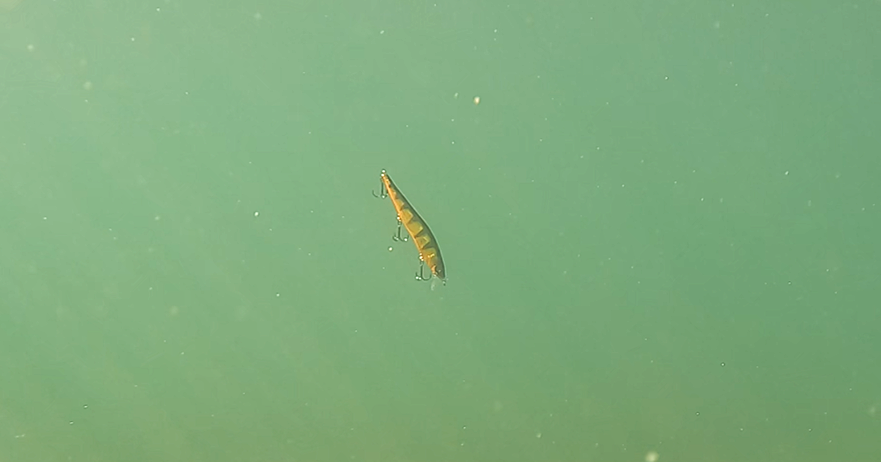
Jerkbaits are highly effective in winter because they mimic struggling baitfish. The key is using long pauses between twitches.
Browse suspending jerkbaits for options that maintain their depth through extended pauses in cold water.
The drop shot rig is one of the best finesse techniques for winter bass. It allows you to keep the bait right in front of a lethargic fish without much movement.
Browse drop shot baits for the finesse soft plastics that produce best in cold water.
Paddle tail swimbaits are excellent for wintertime bass, offering the ability to be fished slow and the natural look needed to entice lethargic winter fish.
The jighead minnow technique has exploded in popularity thanks to forward-facing sonar. Cast it at fish spotted on your live sonar and work it above their heads, using small shakes of the rod to roll the bait. This is especially effective for suspended bass.
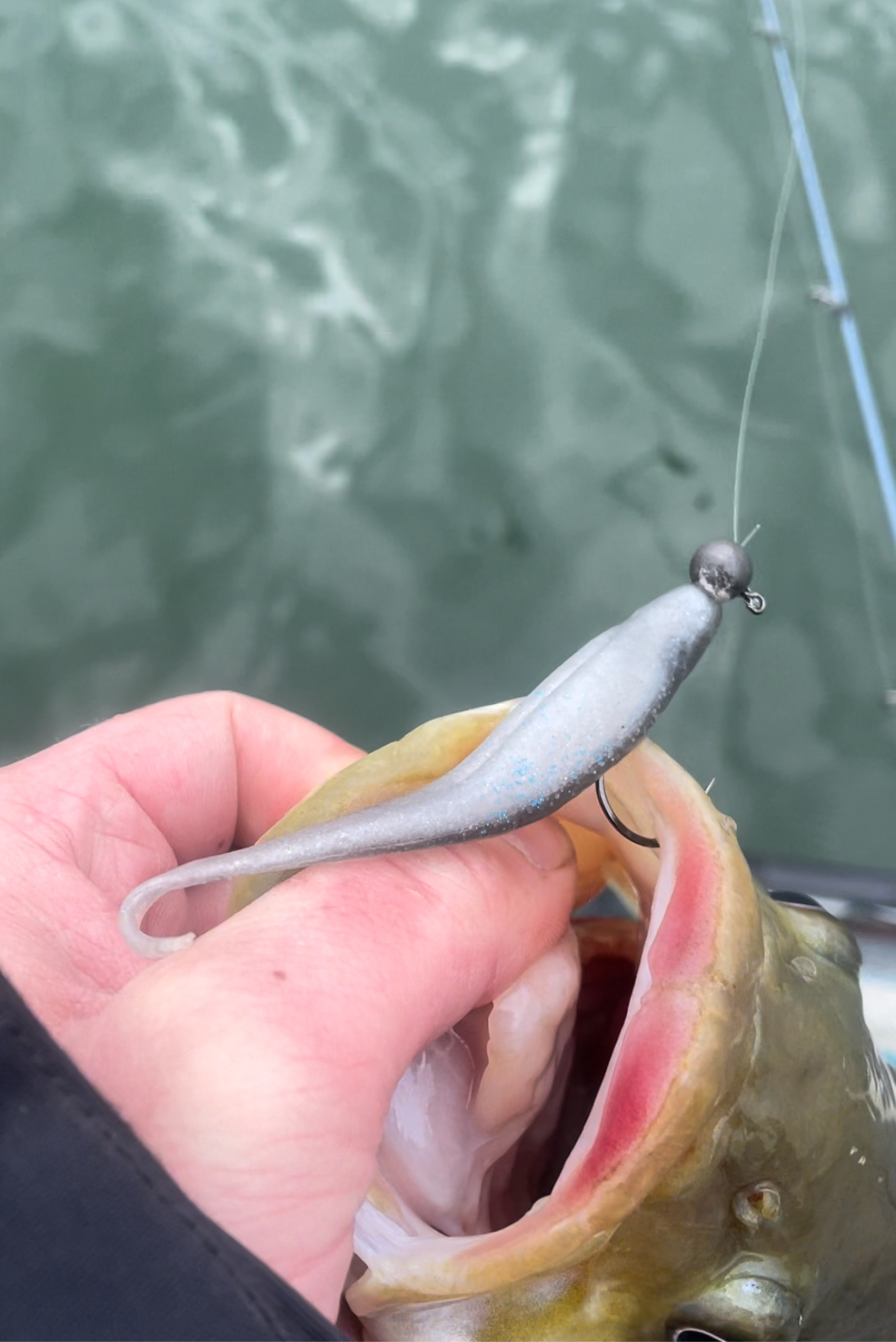
Because bass are less aggressive in winter, your fishing technique should emphasize slow and controlled movements. Here are the most effective winter fishing techniques:
Since bass won't chase fast-moving prey in cold water, use a slow, steady retrieve. Drag jigs and blade baits along the bottom as slowly as you can, holding them by pieces of structure you feel along your drag. The key is maintaining bottom contact and keeping the bait moving at a crawl — slower than feels natural is often the right speed.
One of the most effective tricks for winter bass fishing is using extended pauses with jerkbaits. After each twitch, let the bait sit still for 5–10 seconds before moving it again. In extremely cold water, some anglers pause for 15–20 seconds. The bite often comes during the pause, so be ready for a subtle tick or simply a feeling of added weight on the line.
If bass are holding deep or suspending, use a vertical jigging approach with blade baits, spoons, or a jighead minnow. This allows you to keep the bait in front of the fish longer. Position the boat directly over the fish — as shown on your electronics — and work the bait with subtle, short lifts and controlled drops.
Bass are more active when the sun has had time to warm the water. Focus on fishing midday to late afternoon when the temperature is at its highest for the day. Unlike summer fishing where early morning produces best, winter bass fishing peaks when the surface water has absorbed several hours of solar heat.
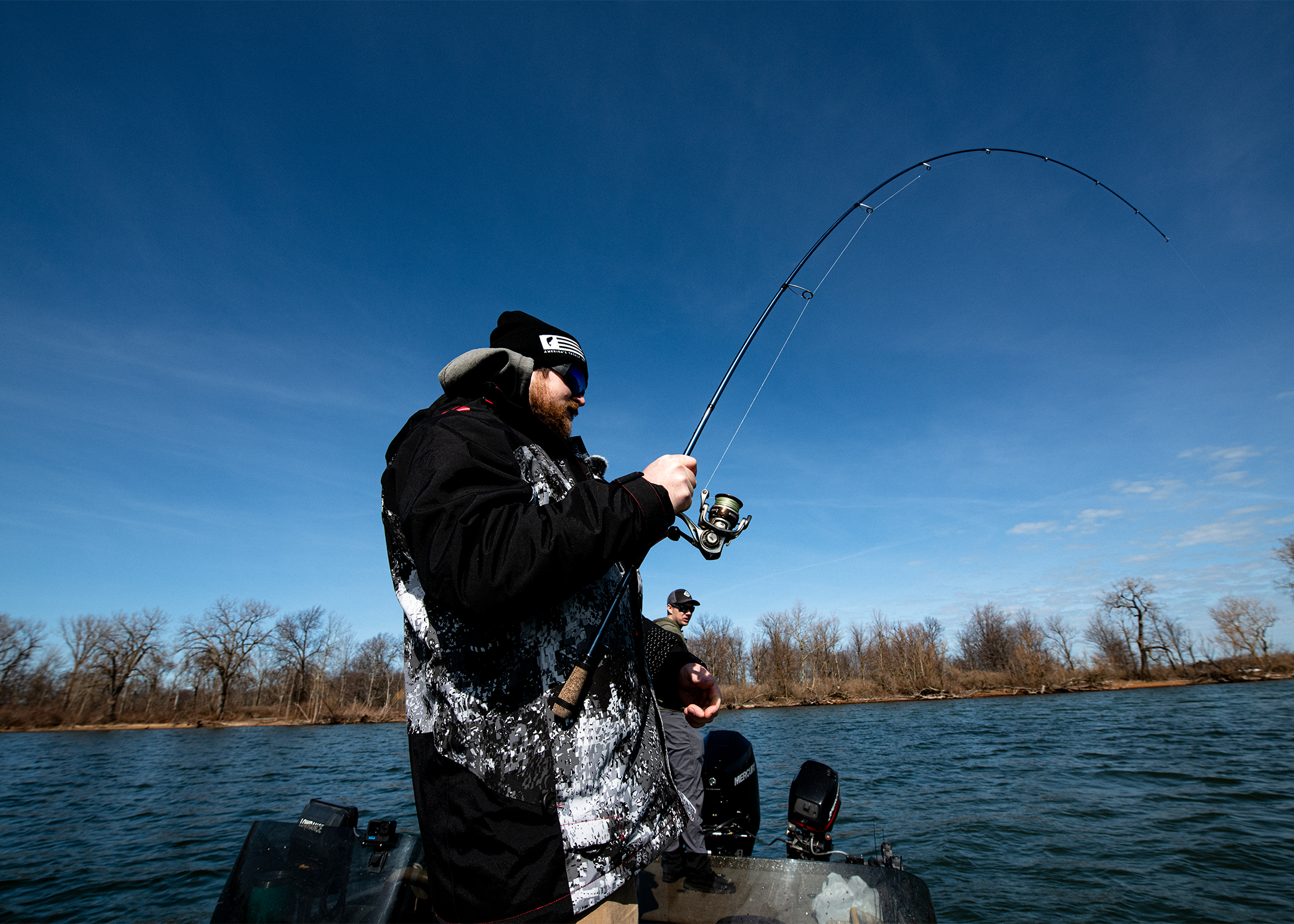
Fishing in winter requires not only the right lures but also proper gear to stay warm and comfortable. An angler who is cold and uncomfortable makes poor decisions and fishes less effectively — dressing for the conditions is part of the strategy.
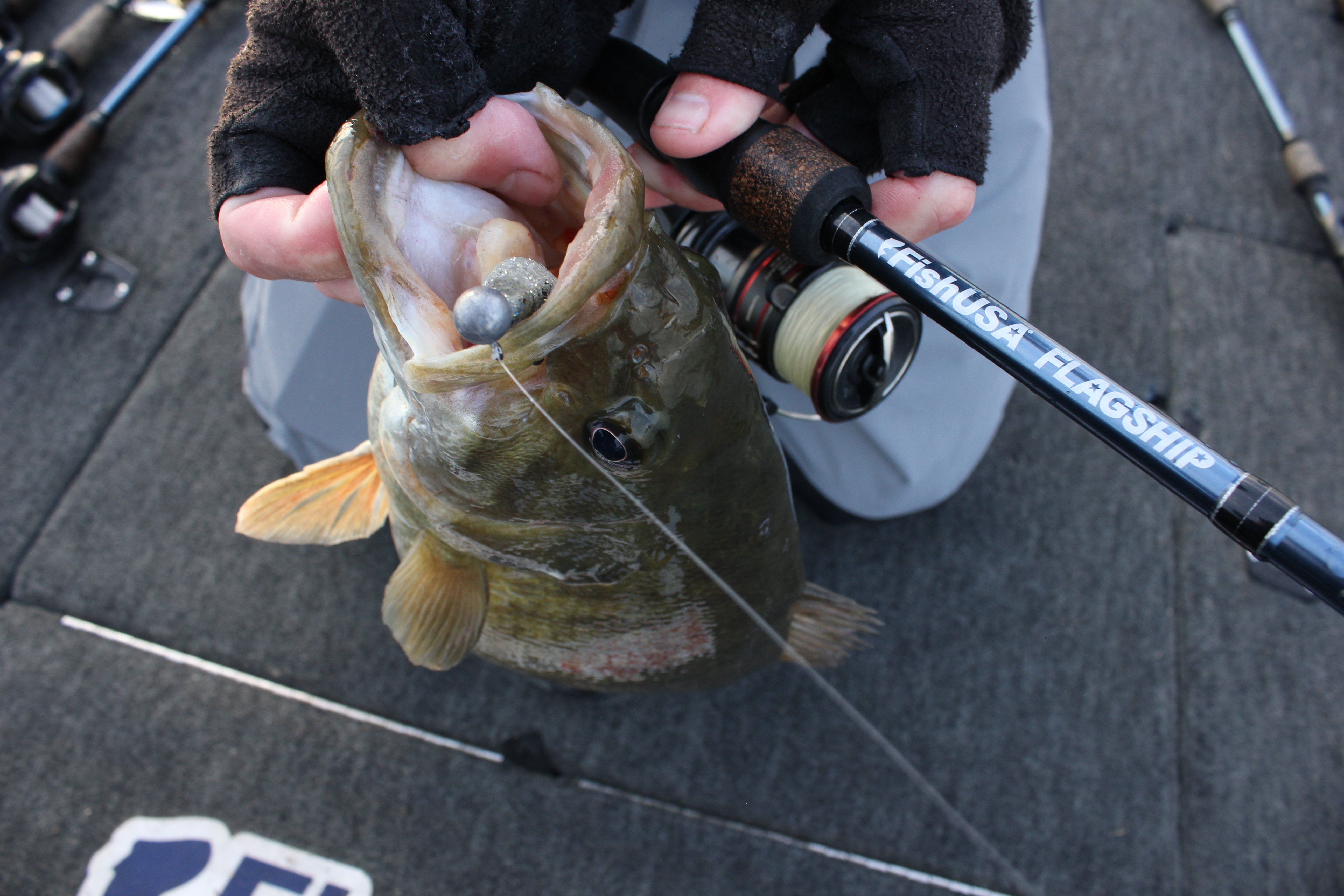
Staying warm is just as important as your tackle when fishing through winter. Proper layering lets you fish longer and more effectively:
In winter, bass move to deeper water where temperatures are more stable. Key locations include deep ledges and drop-offs, rocky areas that retain heat, creek channels that serve as underwater highways, and submerged trees and brush piles that provide cover. In deep lakes, bass often suspend at mid-depths rather than holding on the bottom.
Jigs, blade baits, suspending jerkbaits, and drop shot rigs are consistently the most effective lures for winter bass. These presentations are designed to be fished slowly and kept in the strike zone longer, which is critical when bass metabolism has slowed and they are unwilling to chase fast-moving prey.
Bass never completely stop biting, but their activity level drops significantly when water temperatures fall below 50°F. Below this threshold, their metabolism slows dramatically and they feed less frequently. Finesse presentations fished slowly near deep structure can still produce bites even in very cold water.
Midday to late afternoon is generally the best time to fish for bass in winter. As the sun warms the water throughout the day, bass become more active and are more likely to feed. Unlike summer when early morning and evening are prime, winter bass fishing peaks when daily water temperatures hit their highest point.
Yes, lighter line is often more effective for winter bass fishing, especially in clear water. Fluorocarbon in the 8–15 lb range is an excellent choice because it is nearly invisible underwater and sinks naturally. For finesse techniques like drop shot and jighead minnow, a braided mainline with a 6–8 lb fluorocarbon leader provides the best sensitivity with minimal visibility.
Use a fish finder or forward-facing sonar to locate bass on deep structure — ledges, points, creek channel edges, and rock piles in 15–30 feet of water. After finding fish, position your boat directly over them or at a casting distance and use slow presentations like jigs, drop shots, or blade baits to target them without spooking them off the structure.
Winter bass fishing requires patience, a slower presentation, and the right gear. By targeting deep structures, using slow-moving lures, and fishing during warm periods of the day, you can consistently catch bass in cold water. The key is resisting the urge to fish quickly — in winter, the angler who slows down the most wins.
Focus on finesse presentations like jigs, drop shots, and suspending jerkbaits worked painfully slowly near deep structure. Fish the warmest hours of the day and use fluorocarbon or a braid-to-fluorocarbon leader to stay invisible in clear winter water. Follow these tips, and you'll increase your success rate even in freezing temperatures.
Gear up with bass casting rods, spinning rods, and quality bass baits and lures from FishUSA to be ready for your next winter bass trip.
Hook Me Up!
Sign up for emails and texts to get exclusive updates and offers.
By providing your number above, you agree to receive recurring automated marketing text msgs (e.g. cart reminders) to the mobile number used at opt-in from FishUSA on 25043. Consent is not a condition of purchase. Msg frequency may vary. Msg & data rates may apply. Reply HELP for help and STOP to cancel. See Terms and Conditions & Privacy Policy