


/
/
If you troll with Dipsy-style divers, you’ve probably heard both sides of the debate: “color doesn’t matter, it’s just a tool to get down” versus “color matters a ton.” The real answer: diver color often matters enough to change your bite — because a diver is frequently the first part of your presentation a fish sees.
Last updated: June 2026 · By: FishUSA Staff
The 60-second version
Most trolling anglers already accept that flasher color and spoon finishes matter. If color didn’t matter, we’d all own one flasher and one spoon pattern and call it a day. But we don’t — because conditions and fish mood change. The same logic applies to your diver.
In many diver setups, the diver runs ahead of your lure by several feet. That means fish may see the diver first, then follow the “team” back to the bait. If your diver is too subtle, it may not pull fish from distance. If it’s too loud for conditions, it can spook neutral fish — especially in clear water and bright sun.
The most useful mindset is this: your diver has a job. Sometimes that job is to be nearly invisible and simply deliver your lure. Other times the diver’s job is to create interest — flash, contrast, or glow — so fish slide into your spread and commit.
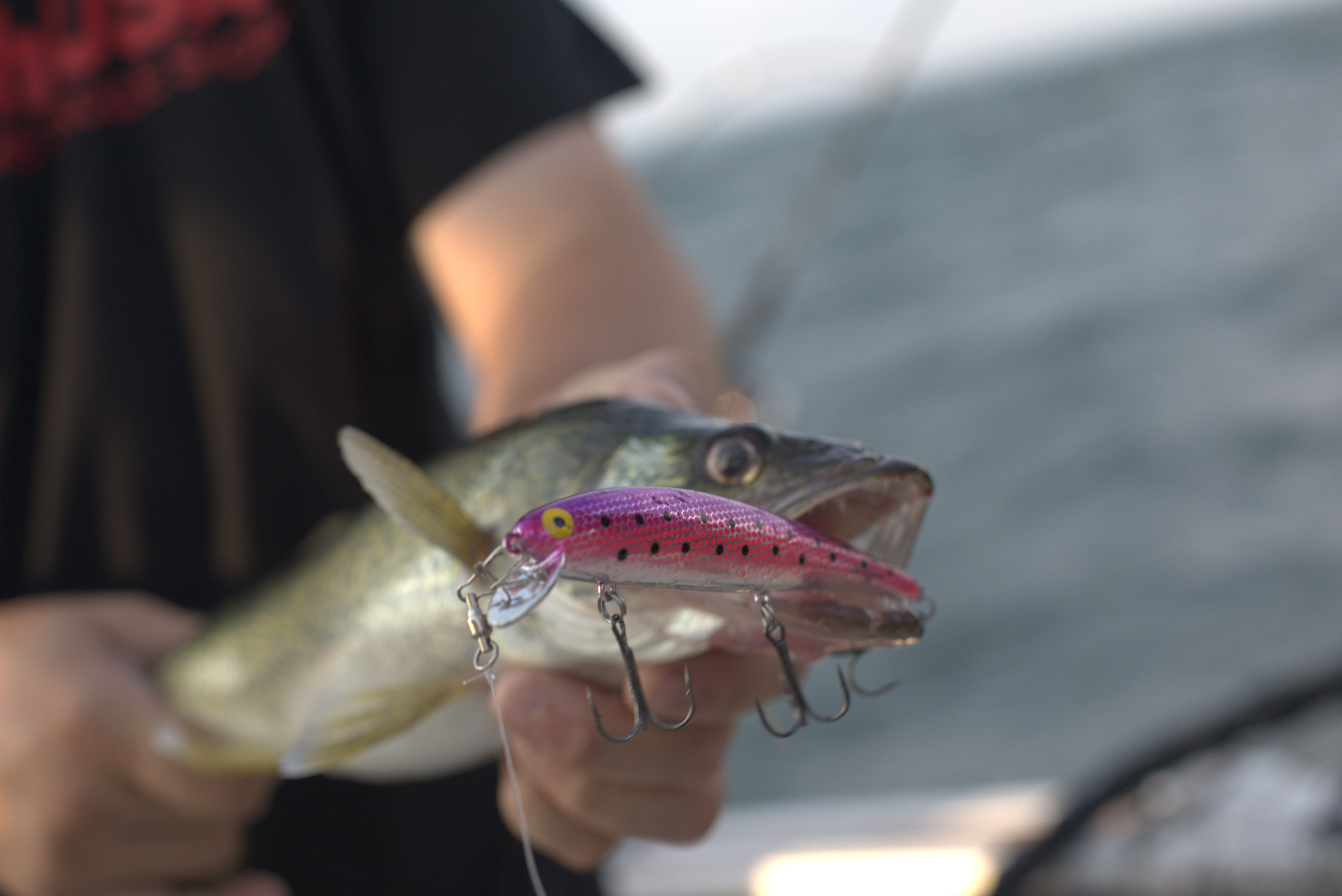
Black is the most common diver color for a reason: it’s neutral. It doesn’t kick out a ton of flash and it tends to be less intrusive than bright or metallic finishes. If you want to be conservative and still run a productive diver program, black will rarely steer you wrong.
The tradeoff: black rarely “supercharges” bites
Black is dependable — but it’s rarely the color that suddenly turns a slow day into a great one. If your goal is simply “don’t mess it up,” black is excellent. If your goal is “increase bites when conditions change,” you’ll want additional options.
The best time to go more visible is when fish need help finding your presentation — or when they’re already in a feeding/trigger mood and will respond to flash and contrast. Think like a predator: in low light or depth, visibility drops. In stained water, contrast matters. When fish are aggressive, “loud” can be good.
Low light periods are classic “attractor time.” A glow or reflective diver can help fish locate your lane. If you’re already a believer in glow spoons or flashers during these windows, it’s logical to consider the diver as part of that same visibility strategy.
Water filters light. As you go deeper, certain wavelengths disappear — meaning some colors stop being “color” and become darker shades or contrast blocks. That’s one reason glow and high-contrast finishes can play so well deeper.
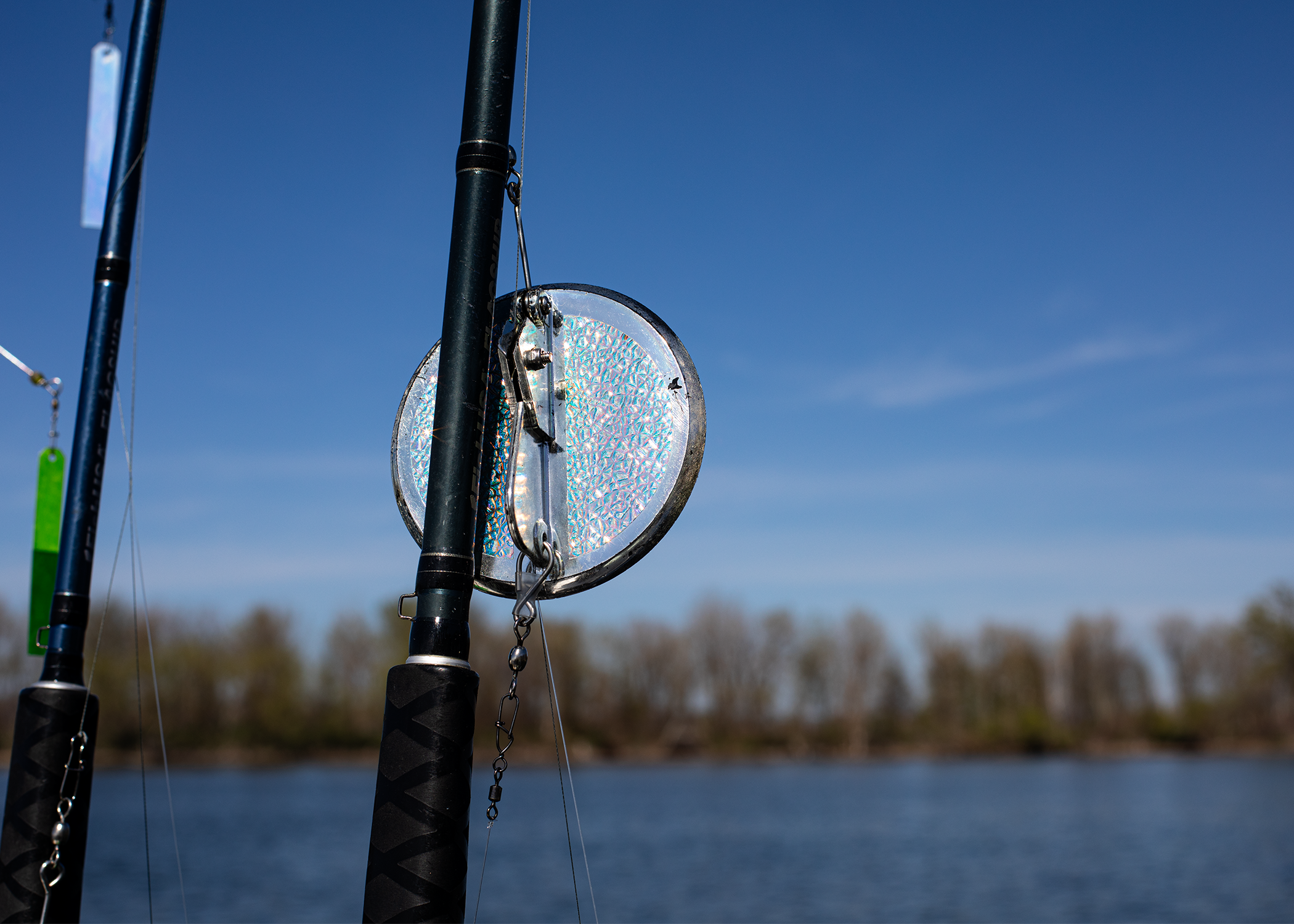
This surprises anglers: bright sun doesn’t always mean “go subtle.” On some days, a metallic or “crush” finish diver can act like a mini-attractor, especially when paired with a shiny spoon or reflective flasher. The key is balance — if fish are skittish, you may need to return to neutral.
In stained conditions, fish often respond better to contrast and presence than to subtlety. A bright diver can help fish find your spread from farther out, then your lure, leader length, and rig do the closing.
You don’t need a physics degree to use diver colors intelligently. You just need the basic principle: water absorbs and scatters light, and that changes what “color” even means underwater.
In general, longer wavelengths (like red/orange) fade first as depth increases, while blue/green penetrates farther in clear water. That’s why underwater environments quickly skew blue-green as you go deeper.
UV is complicated because penetration depends on clarity and organic matter, and fish vision varies by species and life stage. But anglers use UV finishes as another “visibility and contrast” tool — especially in clearer water. For a practical angler-focused overview, see: In-Fisherman: UV Light — Why It Matters.
Instead of swapping diver colors randomly, use a simple system. You’ll make better decisions — and you’ll learn faster because your changes are intentional.
Begin with at least one black diver as your control. If you change everything at once, you never know what actually improved the bite.
| Condition | Diver Color/Finish Starting Point | Why It Works |
|---|---|---|
| Dawn / dusk / overcast | Glow or high-contrast | More presence when visibility is limited |
| Bright sun + clear water | Black (baseline), then test subtle metallic | Neutral first; add flash if fish are aggressive |
| Stained water | Brighter colors / contrast | Contrast helps fish find the spread |
| Deep trolling | Glow / reflective / UV test | Compensates for reduced light and color loss |
You don’t need 20 divers. A smart kit is: black (neutral), metallic/reflective (flash), glow (low light/deep), and UV (test option). That mix covers most scenarios without overcomplicating your boat.
One of the most common patterns experienced trollers report is this: they swap diver colors, redeploy, and get an immediate bite. That doesn’t mean color is the only factor — but it’s a strong signal the diver is influencing fish behavior.
Diver color can matter across species, but the “best” look changes by conditions and mood. Use these as starting points — not rigid rules.
Salmon often respond to attraction and contrast — especially during feeding windows (morning/evening) or when you’re covering water to locate active pods. If you’re already running flashers, divers can be a complementary attractor rather than an invisible delivery tool.
Trout in clear water can be more “honest” about what looks natural. Black can be a strong baseline in high sun and gin-clear conditions, while glow/UV can shine when light drops or you’re working deeper water.
Walleye often favor low-light feeding windows. That’s where glow and higher visibility finishes can help — especially when you’re pulling deeper presentations or working stained water where contrast matters.
Before you declare a diver color “good” or “bad,” make sure your setup isn’t the real issue. Color works best when the fundamentals are correct.
Isolate before you conclude
If a color change didn’t work, check whether speed, leader length, or diver angle also shifted at the same time. A real color test only happens when everything else stays constant.
So, does diver color matter? If you troll enough, you’ll see days where it absolutely does. Black is a strong, conservative baseline and will keep you in the game. But if you want to raise your ceiling — more bites, faster adjustments, better consistency — treat your divers like part of the presentation “team.”
Action plan:
Often, yes — especially when salmon are aggressive, light is low, you’re fishing deep, or your spread needs extra attraction. Black is a safe baseline, but glow, UV, and metallic finishes can outperform black in the right conditions.
Black divers are better when you need a conservative, low-visibility presentation — clear water, bright sun, pressured fish. Colored divers can be better when you want added attraction or contrast.
Run glow in low light (dawn/dusk/overcast) and often deeper water. Use UV as a test option in clearer water or when you’re already seeing UV finishes outperform on spoons and flashers.
Start with black as your baseline. If fish are active, test subtle metallic or “crush” finishes — especially if your trailing presentation is also reflective.
Use purposeful changes: after a long lull, when light conditions change (sunrise to high sun, clouds moving in), or when you’re marking fish but not converting bites. Change one diver at a time and log results.
Walleye often favor low-light feeding windows, where glow and higher-visibility diver finishes can help — especially when pulling deeper presentations or working stained water where contrast matters. In clear water or bright sun, a black diver remains a safe baseline.
A smart starter kit covers four bases: black (neutral baseline), metallic/reflective (flash), glow (low light or deep water), and UV (test option in clearer water). That mix handles most trolling conditions without overcomplicating your boat.
Change one diver at a time and keep everything else constant — speed, leader length, lure, and location. Give each color a fair window (some changes produce bites quickly, others take 20–40 minutes), and log light, depth, and clarity conditions alongside which diver got bit.
Hook Me Up!
Sign up for emails and texts to get exclusive updates and offers.
By providing your number above, you agree to receive recurring automated marketing text msgs (e.g. cart reminders) to the mobile number used at opt-in from FishUSA on 25043. Consent is not a condition of purchase. Msg frequency may vary. Msg & data rates may apply. Reply HELP for help and STOP to cancel. See Terms and Conditions & Privacy Policy