

Best Flipping Rod, Reel & Line Setup for Bass Fishing
Best Flipping Rod, Reel & Line Setup for Bass Fishing
Flipping and pitching into heavy cover is one of the highest-percentage ways to catch big bass — but the setup has to be right. Major League Fishing pro Matt Becker breaks down the exact rod, reel, line, and terminal tackle he relies on, and why each piece of the puzzle matters.
Last updated: August 2026 · By: FishUSA Staff
Matt Becker’s Flipping Setup at a Glance
Flipping and pitching are precision techniques designed to put a bait exactly where big bass hide — under docks, in matted grass, along laydowns, and tight against any heavy cover that holds fish. The setup works as a system: each component is chosen to work with the others, not independently. Get one piece wrong and the whole presentation suffers.
Major League Fishing pro and FishUSA ambassador Matt Becker runs the same core setup whether he’s flipping deep grass, pitching to dock edges, or working wood. Here’s what’s on his rod.
| Component | Matt’s Pick | Key Spec |
|---|---|---|
| Rod | FishUSA Flagship Elite “The Dragger” | 7’6″ Heavy Fast |
| Reel | High-speed baitcaster | 8.0:1 gear ratio or higher |
| Line | Seaguar Tatsu Fluorocarbon | 20 lb |
| Weight | Epic Baits Tungsten Flipping Weight | 5/8 oz |
| Hook | Trokar TK137 Straight-Shank Flipping Hook | Extra wide gap |
| Bait | Creature bait (e.g., Yamamoto Beaver Bug) | Texas-rigged, compact profile |
Watch Matt walk through his complete flipping setup:
The Flipping Rod
The rod is the most important component of a flipping setup. It determines how accurately you can deliver the bait, how much power you have to pull fish out of cover, and how well you can detect subtle bites through a heavy line in tight vegetation.
What to Look For in a Flipping Rod
- Length — 7’ or longer: Extra length gives you reach to flip into cover without spooking fish, and the longer blank creates a better pendulum arc for accurate pitches. A 7’6″ rod is the most popular length for versatile flipping and pitching.
- Power — Heavy: Heavy power provides the backbone to pull fish away from structure immediately after the hookset. If you let a bass get back into a grass mat or around a dock piling, you lose it. Heavy rods move fish — medium-heavy rods give too much.
- Action — Fast: A fast tip loads energy quickly for accurate pitches and provides the sensitivity to detect bites even when the bait is buried in vegetation. It also gives you a crisp hookset with enough give to keep fish pinned.
Matt’s Pick: FishUSA Flagship Elite “The Dragger”
Matt Becker runs the FishUSA Flagship Elite “The Dragger” in 7’6″ Heavy Fast for his flipping work. This rod was built specifically with heavy-cover bass fishing in mind — it has the power to lift fish cleanly out of grass and the sensitivity to feel bites in conditions where you can’t always see the line move. The name says it all: when you hook a fish in the weeds, you drag it out.

Matt Becker’s pick
FishUSA Flagship Elite “The Dragger”
7’6″ · Heavy Power · Fast Action · Baitcasting
Rod tip: If you’re punching through heavy matted vegetation rather than mid-range grass flipping, consider stepping up to an Extra-Heavy power rod. The added backbone makes penetrating mats and pulling fish through them significantly easier.
The Flipping Reel
Flipping is a high-volume presentation — you’re making dozens, sometimes hundreds, of presentations throughout the day. The reel needs to keep up with that pace, and it needs to have the drag to stop big fish immediately when they eat.
Why Gear Ratio Matters for Flipping
High gear ratio is the defining reel spec for flipping. A reel with an 8.0:1 ratio retrieves roughly 36 or more inches of line per crank, compared to around 25 inches for a 6.3:1 reel. That extra line pickup matters in two key situations:
- Resetting your presentation: After each flip, you need to pick up line quickly to make the next pitch. High-speed reels let you reset in half the cranks, which adds up to significantly more casts over the course of a day.
- Catching up to the fish: Bass hooked in cover often run toward you. A high-speed reel lets you crank down and maintain tension before the fish reaches you — on a slow reel, you can lose the fish entirely in that slack.
Matt Becker runs an 8.1:1 gear ratio reel as part of his setup. Any quality baitcasting reel at 8.0:1 or higher will work. Look for a reel with a strong drag system (at least 15 lb of drag), a low-profile body for comfort during repeated casts, and a magnetic or centrifugal braking system for backlash control on short pitches.
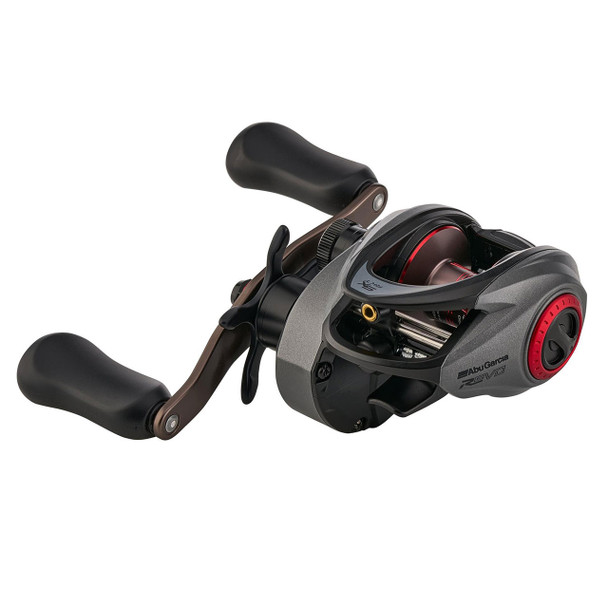
8.0:1 gear ratio or higher
High-Speed Baitcasting Reels for Flipping
Fast line pickup · Strong drag · Low-profile baitcaster
Line for Flipping
Line choice for flipping comes down to two main options: fluorocarbon for most flipping situations, or heavy braid for punching through matted vegetation. Matt Becker uses fluorocarbon as his go-to for mid-range flipping in grass and wood.
Why Fluorocarbon for Flipping
- Low visibility: Fluorocarbon’s refractive index is close to water, making it nearly invisible to fish — a significant advantage in clear-water cover or when targeting pressured fish.
- Abrasion resistance: Flipping means dragging line across grass stems, dock edges, bark, and rock. Fluorocarbon handles this abuse far better than monofilament.
- Sink rate: Fluoro sinks, which keeps your bait in the strike zone and helps it fall naturally through the water column rather than pulling up toward the surface.
- Low stretch sensitivity: Fluorocarbon transmits vibration better than mono. In heavy cover where you can’t always see the line move, being able to feel the bite is critical.
Why 20 lb
Twenty-pound fluorocarbon is Matt’s standard for most flipping. It’s strong enough to move bass out of grass and wood on a hard sweep hookset, while still being thin enough to cut through cover and allow a natural bait fall. In very heavy or matted grass, step up to 25 lb. In lighter cover or clear water with wary fish, 17 lb can improve bites.
Matt’s Pick: Seaguar Tatsu Fluorocarbon 20 lb
Seaguar Tatsu is one of the premium fluorocarbon lines in Seaguar’s lineup, built with a dual-structure construction that delivers exceptional softness and sensitivity while maintaining the abrasion resistance fluoro is known for. It knots cleanly, handles well on a baitcasting reel, and holds up through repeated contact with cover.
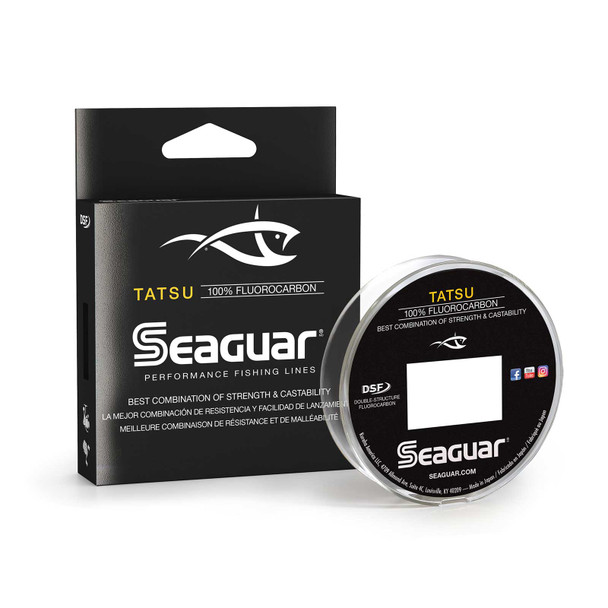
Matt Becker’s pick · 20 lb
Seaguar Tatsu Fluorocarbon Line
Dual-structure construction · Near-invisible · High abrasion resistance
When to use braid instead: If you’re punching through heavy matted grass, hydrilla mats, or layered lily pads, switch to 50–65 lb braid. Braid’s thinner diameter at high break strengths cuts through the mat more effectively than fluorocarbon, and you need the extra strength to horse fish up through the canopy after the hookset.
Terminal Tackle: Weight, Hook & Bait
The business end of a flipping rig is a Texas-rigged soft plastic on a straight-shank hook, pegged with a tungsten weight. Each component plays a specific role in the presentation.
The Weight: Tungsten Over Lead
Matt Becker uses a 5/8 oz Epic Baits Tungsten Flipping Weight for his mid-range grass work. Tungsten is the clear choice over lead for flipping for two reasons: it’s denser, which means a 5/8 oz tungsten weight is physically smaller than a 5/8 oz lead weight — a smaller profile falls faster and slips through cover more easily. And tungsten transmits vibration better than lead, giving you more sensitivity to feel bottom composition and subtle bites.
Weight selection by situation:
| Depth / Cover | Recommended Weight |
|---|---|
| Shallow (1–4 ft), light cover | 3/8 oz |
| Mid-range (4–10 ft), moderate grass or wood | 1/2–5/8 oz |
| Deeper water or heavy grass | 3/4–1 oz |
| Punching matted vegetation | 1–1.5 oz |

Denser, smaller, more sensitive than lead
Epic Baits Tungsten Flipping Weight
5/8 oz standard · Multiple sizes available · Compact profile
The Hook: Straight-Shank Flipping Hook
A straight-shank hook is the standard for flipping rigs. Unlike offset or extra-wide gap hooks, a straight-shank design keeps the soft plastic aligned with the hook point on a Texas rig — which improves hookup percentage when fish engulf a bait quickly in the cover. When you sweep the rod on the hookset, the hook rotates cleanly without the bend fighting the penetration angle.
Matt Becker uses the Trokar TK137 Straight-Shank Flipping Hook. Trokar’s chemically sharpened points are among the sharpest on the market right out of the package — critical for driving a hook through a hard bass mouth on a long-distance hookset.
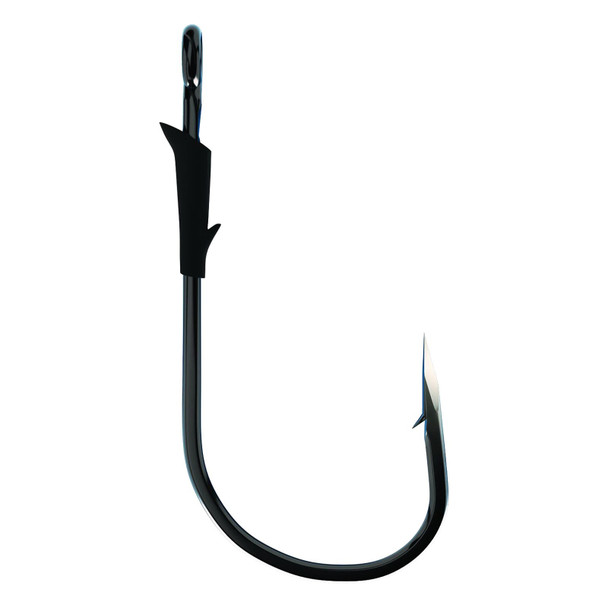
Matt Becker’s pick
Trokar Flippin’ Extra Wide Gap Hook
Straight-shank design · Chemically sharpened · Extra wide gap
The Bait: Compact Creature Bait
For flipping, you want a compact bait with enough appendages and action to trigger a reaction bite on the fall. Matt Becker uses the Yamamoto Beaver Bug — a beaver-style creature bait with a slim body that slips through cover and paddle appendages that kick on the drop. Other proven options include craw-style baits and compact soft-plastic creatures in the 3.5–4.5 inch range.
Key bait rigging tip: when Texas-rigging for a straight-shank hook, make sure your bait is rigged straight. A crooked bait spins on the fall and won’t present naturally. Run the hook through the top of the bait for about 1/4 inch, then push the point through straight so the bait hangs without any curve or twist. Peg your weight tight to the bait with a toothpick or stopper when flipping into heavy cover to prevent the weight sliding up on the hookset.
Flipping & Pitching Technique Tips
Flipping vs. Pitching: Know the Difference
Flipping is a short-range underhand pendulum presentation — typically 10 to 20 feet from the target. You let out a rod-length of line, hold it between the reel and the first guide, swing the bait back, then guide it forward into a precise target. Done right, the bait enters the water with minimal splash, which doesn’t spook fish in tight cover.
Pitching covers more distance. You hold the bait with your non-rod hand, point the rod at the target, release the bait in an underhand arc while letting the reel spool spin, and the bait swings forward to the target. Pitching is more like a low sidearm lob and lets you work fish from farther away — useful when the cover is in open, observable water where boat position would spook fish.
Where to Flip
Target the thickest, darkest, most protected spots in the cover. Bass use heavy cover for ambush and security — the biggest fish claim the best spots. Look for:
- The shaded underside of floating dock sections and boat lifts
- The deepest penetrable pockets in a grass mat
- Underneath laydown trees where the trunk meets the bank
- Inside corners where two types of cover intersect (a dock post next to a laydown, grass meeting a rip-rap bank)
- Any piece of cover that looks harder to reach than the surrounding area
Reading the Bite
Most flipping bites happen on the fall — the bait drops into the cover and a bass picks it up before it hits the bottom. Watch for two signs: your line moving to the side or stopping before it should, or a slight jump or twitch in the line as the bait descends. In heavy cover where you can’t always see the line, feel for the bite — a tap, a pull, or the bait simply going heavy at the end of the fall.
The Hookset
Don’t set the hook with a bass-style wrist snap. Flipping requires a strong, sweeping hookset — reel down any slack, then sweep the rod hard toward you and up, using your whole upper body. The heavy rod and stout line only work if you drive the hook with authority. After the hookset, keep the rod up and reel aggressively to move the fish toward you and away from the cover before it has a chance to wrap you up.
Efficiency on the Water
Flipping is most effective as a high-percentage, high-volume approach. Work a stretch of cover systematically, hit every likely spot, and move quickly from one presentation to the next. If a spot produces, mark it and come back — bass in the same structure tend to group together, and a productive dock or grass edge often holds more than one fish.
Flipping Setup FAQ
A 7-foot or longer heavy-power, fast-action baitcasting rod is standard for flipping and pitching. Extra length gives you reach and a better pendulum arc for accurate presentations, and heavy power provides the backbone to pull bass away from cover immediately after the hookset. Matt Becker uses the FishUSA Flagship Elite “Dragger” in 7’6″ Heavy Fast for his flipping setup.
A high-speed baitcasting reel at 8.0:1 or higher is the standard for flipping. High gear ratios let you pick up large amounts of line quickly — critical for resetting your presentation efficiently throughout the day, and for catching up with a fish that eats and runs toward you. Matt Becker runs an 8.1:1 reel as part of his setup.
Fluorocarbon in the 17–25 lb range is the preferred choice for most flipping situations. It’s nearly invisible in water, sinks (keeping the bait in the strike zone), and is highly abrasion resistant against wood, rocks, and grass. Matt Becker uses 20 lb Seaguar Tatsu fluorocarbon. For punching through heavy matted vegetation, switch to 50–65 lb braid.
Flipping is a short-range underhand pendulum presentation made from 10–20 feet away, using a rod-length of line held between the reel and first guide. Pitching covers more distance using an underhand sidearm arc with the reel engaged — similar to lobbing a bait underhanded. Both techniques target specific cover precisely, but pitching lets you work fish from farther away when close approach would spook them.
A 1/2–5/8 oz tungsten weight is the most versatile all-around choice for mid-range flipping in grass and wood — what Matt Becker uses. Use 3/8 oz in shallow, light cover; 3/4–1 oz in deeper water or heavier grass; and 1–1.5 oz when punching matted vegetation. Tungsten is preferred over lead for its denser, more compact profile and superior sensitivity.
A straight-shank flipping hook in the 3/0–5/0 range is standard. Straight-shank hooks keep the soft plastic aligned with the hook point on a Texas rig, which improves hookup percentage when fish engulf the bait quickly in cover. Matt Becker uses the Trokar TK137 straight-shank flipping hook with an extra wide gap for bulkier creature baits.
Compact creature baits, beaver-style baits, and soft-plastic craws are the most effective choices. They have a slim enough profile to slip into tight cover while the appendages kick and flutter on the fall. Matt Becker uses a Yamamoto Beaver Bug Texas-rigged on a straight-shank hook. Match bait size to hook gap and the profile of baitfish or crawfish in the water you’re fishing.
Yes — 50–65 lb braid is the preferred choice for punching through heavy matted grass, hydrilla mats, or dense lily pad canopies. Its thin diameter at high break strength cuts through vegetation that would stop fluorocarbon. For more open cover like dock pilings, laydowns, and patchy grass, fluorocarbon is usually better because it’s less visible and more abrasion resistant against hard structure.