

Best Color Whopper Plopper for Bass Fishing: A Complete Guide
Best Whopper Plopper Colors for Bass Fishing
The River2Sea Whopper Plopper draws bass to the surface with its churning propeller tail — but putting the right color in front of them is what gets them to bite. This guide breaks down the six best colors, when each one works, and how to match color to conditions for more topwater strikes.
Last updated: August 2026 · By: FishUSA Staff
Why Whopper Plopper Color Matters
Bass attacking a topwater lure are looking up at it from below — they see the lure as a silhouette against the sky. Color affects how clearly that silhouette reads, how well it mimics local forage, and whether it triggers a reaction bite or a deliberate one. In clear water under bright conditions, color selection has a meaningful impact. In stained water or low light, silhouette contrast matters more than specific pattern.
| Condition | Best Color(s) | Why It Works |
|---|---|---|
| Clear water, bright sun | Munky Butt, Perch, I Know It | Natural flash and baitfish patterns fool a close look |
| Clear water, low light | Bone | Bright silhouette visible from below at dawn and dusk |
| Stained or murky water | Loon, Bone | High-contrast profile bass can track in limited visibility |
| Open water, shad lakes | I Know It, Munky Butt | Mimics shimmer and flash of suspended shad schools |
| Near shallow bluegill cover | Bluegill | Matches local panfish forage bass are keying on |
| Northern lakes, smallmouth | Perch, Bone | Perch pattern matches natural prey; Bone works in any light |
| Night fishing | Loon, Bone | Dark and light contrast both visible against ambient light |
Best Whopper Plopper Colors
1. Bone
Best for: Low-light conditions, early morning, dusk, and overcast days. The most versatile all-around color in the lineup.
Bone’s off-white, slightly translucent body creates a clean, bright silhouette from below in almost any light condition. Bass see it clearly whether they’re looking up into morning sky glow, overcast grey, or the fading light of evening. It works from clear to lightly stained water and consistently outperforms other colors during the low-light feeding windows when topwater fishing is at its best.
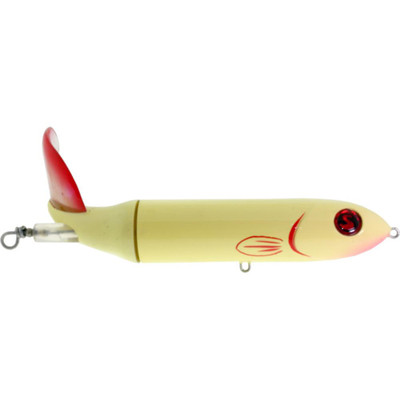
Best for: Low-light & overcast
River2Sea Whopper Plopper — Bone
Clear to lightly stained water · Dawn, dusk, cloudy days
2. Loon
Best for: Murky or stained water and aggressive bass in low-light periods.
Loon is solid black, which gives it the highest-contrast silhouette of any color in the lineup. In dirty, tannic, or off-colored water where bass locate prey by shadow and vibration rather than detail, a black lure gives them the clearest possible target. It’s also effective at night — the dark body casts a distinct shadow against any ambient sky light.
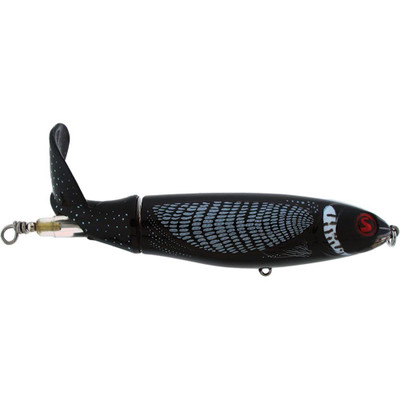
Best for: Stained water & night
River2Sea Whopper Plopper — Loon
Muddy, tannic, or off-color water · Low-light & night
3. Munky Butt
Best for: Clear water and bright sun when bass are actively chasing baitfish near the surface.
Munky Butt features a pearl-white belly with a pink-to-blue gradient, mimicking the flash of a shad or herring in open water. In clear lakes and reservoirs where bass can fully inspect the lure before committing, this natural baitfish pattern triggers more deliberate strikes than brighter or more opaque colors. Fish it when you can see bass busting baitfish on the surface.
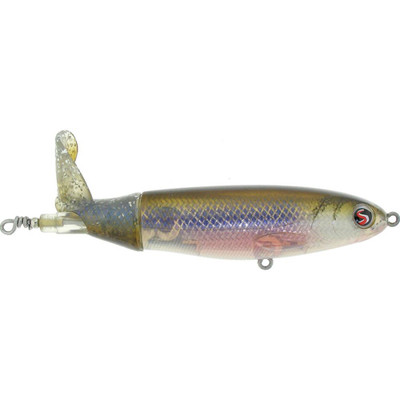
Best for: Clear water & bright sun
River2Sea Whopper Plopper — Munky Butt
Crystal-clear to lightly stained water · Shad lakes & reservoirs
4. Bluegill
Best for: Fishing near shallow weeds, docks, and wood where bass are feeding on sunfish and panfish.
The Bluegill pattern matches the sunfish and panfish that largemouth bass feed on heavily in ponds, lakes, and reservoirs throughout spring and summer. When bass are hanging near shallow cover — lily pads, dock edges, fallen timber — this pattern triggers the same predatory response they have when they’re hunting panfish along the same structure. Particularly effective from late spring through summer when bluegill are actively spawning in shallows.
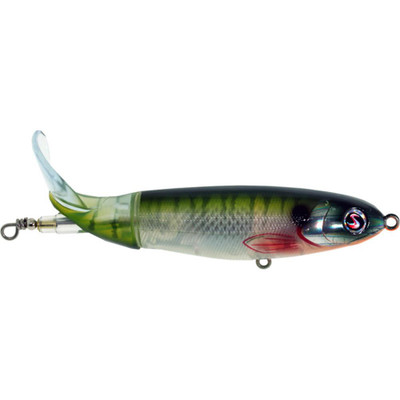
Best for: Shallow cover & panfish lakes
River2Sea Whopper Plopper — Bluegill
Clear to stained water · Late spring through summer
5. Perch
Best for: Northern lakes, rivers, and smallmouth bass water where perch are a primary forage.
The green and yellow Perch pattern is a must-have for waters where smallmouth and largemouth bass feed regularly on juvenile perch. Rocky and sandy-bottom lakes, rivers, and clear northern impoundments all support perch populations, and bass in these fisheries respond strongly to lures that imitate them. Fish it throughout summer and fall when young-of-year perch are abundant in the shallows.
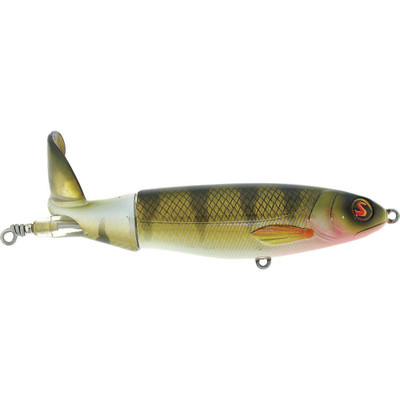
Best for: Northern lakes & smallmouth
River2Sea Whopper Plopper — Perch
Clear water with rocky or sandy bottom · Summer & fall
6. I Know It
Best for: Open-water shad fishing in reservoirs and large lakes, especially during fall baitfish movements.
I Know It replicates the silver shimmer of shad schools, making it the go-to choice when bass are busting suspended baitfish on open flats and main lake points. In fall when shad move toward the surface in large schools and bass corral them from below, this pattern matches exactly what fish are keying on. It also works well during late summer as bass begin staging near deep-water structure before the fall transition.
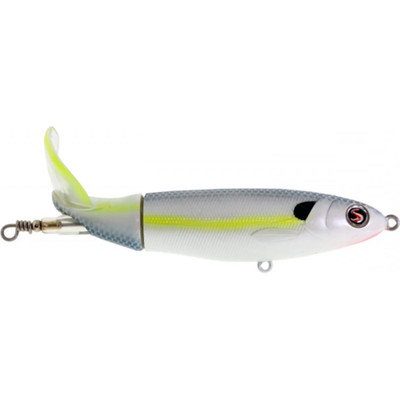
Best for: Open water & fall shad
River2Sea Whopper Plopper — I Know It
Open water with shad schools · Fall & late summer
Choosing the Right Whopper Plopper Size
Color is only part of the equation. Matching size to your target species and the bass’s current mood puts more fish on the hook.
| Size | Best For | When to Use |
|---|---|---|
| 90 (3.5 in) | Smallmouth bass, ponds, pressured fish | Finesse situations, smaller bodies of water, clear-water lakes with skittish bass |
| 110 (4.25 in) | Largemouth and smallmouth bass | Most situations — best all-around size for covering water and triggering bites |
| 130 (5 in) | Trophy largemouth, open water, aggressive fish | Low-pressure lakes, fall shad runs, situations where big bass are actively feeding on large baitfish |
Start with the 110. If you’re unsure which size to throw, the 110 covers the most ground. It casts well, generates enough noise to draw bass from distance, and is small enough that average-sized fish will commit to it. Downsize to the 90 when fishing gets tough; upsize to the 130 when you specifically want to filter for bigger bites.
Best Conditions for Whopper Plopper Fishing
Topwater fishing with the Whopper Plopper works best when specific conditions align. Understanding these windows keeps you fishing the lure when bass are most likely to come up for it.
- Morning and evening: Low-light windows are peak topwater time. Bass move shallow, visibility increases their willingness to commit to a surface strike, and the noise of the Whopper Plopper carries well in calm morning water.
- Overcast days: Cloud cover extends the topwater bite well into midday. Overcast conditions diffuse light, reduce glare that makes bass cautious, and spread fish more evenly across shallow structure.
- Warm water (60°F+): Bass metabolism is high enough in warm water to chase and commit to aggressive surface presentations. Below 60°F, topwater action slows significantly.
- Light wind and slight surface chop: A little texture on the water helps disguise the lure, reduces bass wariness, and triggers reaction bites from fish that might scrutinize a calm-water presentation.
- Fall baitfish activity: When bass are corralling shad schools near the surface in fall, topwater lures that mimic baitfish movement are at their most effective.
Tips for Fishing the Whopper Plopper
Retrieve
A steady retrieve that keeps the propeller tail churning consistently is the foundation. The tail needs enough speed to rotate and create sound — too slow and it stalls, too fast and the lure planes up and loses its surface action. Once you find the speed that produces a consistent churn, mix in pauses and brief speed changes. Bass that track the lure without committing often strike on a pause or a sudden burst of speed.
Target Cover
Cast tight to laydowns, dock edges, weed lines, rocky points, and any shallow structure where bass stage in warmer months. Work the Whopper Plopper parallel to cover edges rather than directly over it — bass positioned in cover are looking outward for prey, and a lure moving along the edge passes right through their strike zone.
Rod, Reel, and Line
A medium-heavy, fast-action casting rod in the 7 to 7’6” range gives the right combination of casting distance and hookset power for a treble-hooked topwater. Pair it with a baitcasting reel in the 6:1 to 7:1 gear ratio range. Run 30–50 lb braided line directly — braid floats, has no stretch for immediate hooksets, and doesn’t impede the lure’s action the way mono can.
Set the Hook Right
The most common mistake fishing topwater lures is setting the hook on sight rather than feel. When a bass blows up on the surface, wait until you feel the weight of the fish before sweeping the rod. Setting on the splash alone pulls the lure out of the fish’s mouth. Let the fish take it down, then set.
Whopper Plopper Color FAQ
Bone is the most consistently productive all-around color — its off-white, translucent body creates a strong silhouette in a wide range of light conditions. Loon (black) is the top choice for stained or murky water. In clear water under bright sun, Munky Butt and I Know It produce well by mimicking shad. The best color always depends on water clarity, forage, and light conditions.
Loon (black) is the best choice for stained, muddy, or tannic-colored water. Black provides a high-contrast silhouette that bass can track from below even when visibility is limited. Bone also holds up well in lightly stained water due to its bright profile against the sky.
The 110 is the most versatile size for largemouth — large enough to draw big fish and generate plenty of surface noise, small enough to fish around most cover without becoming unwieldy. The 130 is the better choice when specifically targeting trophy fish on open water where bass are aggressively chasing surface baitfish.
Bone and Loon are the top choices for night fishing. Bone creates a bright silhouette visible from below against ambient sky glow or moonlight. Loon (black) creates a solid, high-contrast shadow in complete darkness. At night, sound and vibration from the churning tail matter more than visual detail — either color works.
Color matters more in some conditions than others. In clear water during bright conditions, color selection has a meaningful impact — natural patterns like Munky Butt or Perch outperform generic colors because bass get a close look at the lure. In stained water or low light, silhouette and contrast matter more than specific color. The lure’s noise and action are always the primary triggers; color fine-tunes performance at the margins.
A steady medium retrieve that keeps the tail churning consistently is the most reliable starting point. Too slow and the tail stalls; too fast and the lure planes up and loses action. Mix in pauses and brief speed changes to trigger following fish — bass that track without committing often react to a sudden pause or burst of speed.
30–50 lb braided line is the standard for topwater fishing with the Whopper Plopper. Braid floats, has no stretch for immediate hooksets, and handles well around heavy cover. Its visibility in the water is not a concern for topwater applications. Pair it with a medium-heavy, fast-action casting rod for the best combination of casting distance and hook-setting power.
Yes — Munky Butt, Perch, and I Know It are specifically effective in clear water where bass get a full look at the lure. Match color to local baitfish (shad patterns in shad lakes, perch patterns near perch populations, bluegill patterns near weedy shallows). Fish it during lower-light windows when bass are more willing to commit to a surface strike despite the clear conditions.