

The Best Catfish Rods: Expert Picks, Specs, and Setups for Blues, Channels, and Flatheads
Best Catfish Rods: Expert Picks for Blues, Channels, and Flatheads
Blues bulldog in current, channels nip soft then run, flatheads find cover the second they feel resistance. The right catfish rod handles each of those fish differently. 11 picks across spinning and casting — with specs, setups, and callouts for each species.
Updated July 2026 · 11 rods covered · Spinning & casting
Blues, channels, and flatheads each fish differently enough that the rod doing the work matters. This guide covers 11 catfish rods across spinning and casting formats — with specs, setup pairings, and a breakdown of which rod fits which situation.
What Makes a Good Catfish Rod
Power
Medium-heavy is the floor for catfishing. It handles channels and eater blues without overkill. Heavy or extra-heavy gives you the backbone to work fish away from cover on a short line — critical once you have a 30-pound blue anchored on a river wing dam. Medium power is underpowered for anything serious.
Action
Moderate action is the catfishing standard. The tip loads on a run and gives with the fish, which is exactly what circle hooks need to set correctly. Fast or extra-fast tips pull the hook on hard runs — avoid them unless you’re jigging for channels with light spinning gear.
Length
7’6”–8’6” from a boat gives you reach for a rod spread without tips crossing on a running fish. 9’–11’ for bank fishing adds casting distance and keeps your line angle high over rocks, logs, and riprap.
Materials
E-glass absorbs shock better than graphite and handles heavy fish in tight cover without cracking under pressure. Composite blanks (glass/graphite mix) split the difference — lighter than E-glass with better flex than full graphite. Full graphite works for channels and light rigs but carries more risk with heavy fish at the boat.
Guides and Handles
Large-frame aluminum oxide or stainless guides handle heavy braid without groove wear. EVA foam handles hold up better with catfish slime and blood than cork — cork stains fast if you don’t clean it after every trip.
Spinning vs Casting for Catfish
Both formats work. The choice comes down to how you fish and what you’re targeting.
Go spinning if you’re: fishing from the bank, using lighter rigs (1–4 oz), targeting channels or eater blues, or building your first catfish rod setup. Spinning reels cast lighter rigs further and are easier to manage one-handed.
Go casting if you’re: running a multi-rod spread from an anchored boat, fishing heavy current with 4–8 oz sinkers, or targeting trophy blues or flatheads. Baitcasters handle heavier line and larger reels better, and clicker mode lets you hear the bite.
Best Spinning Rods for Catfish
Five spinning picks covering everything from budget builds to trophy-class control. These are all purpose-built for catfishing — not repurposed bass rods with a new name.
MadKatz Spinning Rod — Best Overall
The MadKatz handles 2–8 oz rigs without breaking a sweat. The E-glass blank loads deep under pressure and gives ground slowly — the kind of rod that doesn’t crack the first time you have to force a fish off a snag at close range. Tip is responsive enough to read a light bite on a still night, backbone is there when it’s time to close distance. A solid first serious catfish rod and a dependable anchor rod in a bigger spread.
- Best for: Blues on anchor, bank fishing for distance, Carolina and three-way rigs
- Why it works: E-glass absorbs shock on hard runs; forgiving tip protects circle hook sets
- Use it with: 40–65 lb braid, 40–60 lb mono or fluoro leader
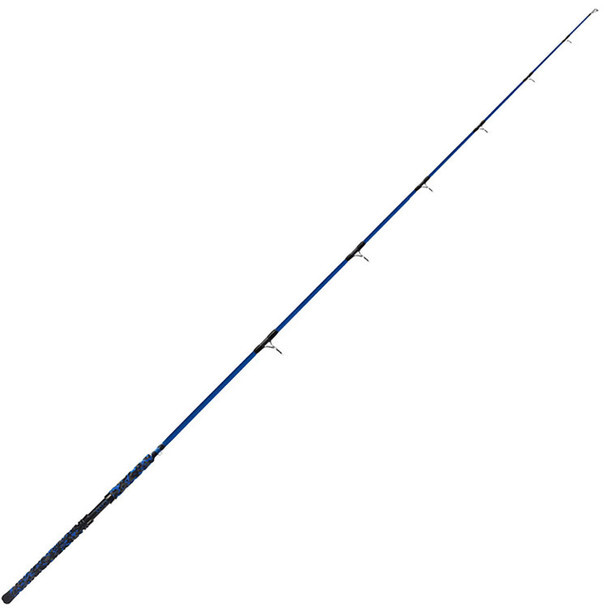
Catch The Fever HellCat Revenge Spinning Rod — Best Big-Fish Control
The HellCat Revenge is Catch The Fever’s most serious spinning option. Built for situations where a fish heads into current or digs for the nearest snag. The blank loads deep and smooth, gives you a true moderate load curve, and doesn’t fold under sustained pressure. Run this one when you’re anchored on a tailrace or working a river channel edge where a big blue is a real possibility.
- Best for: Trophy blues and flatheads, heavy current, 3–8 oz rigs, live bait
- Why it works: Strong mid and butt section keeps pressure on without the tip folding on a sustained run
- Use it with: 65 lb braid, 50–60 lb mono leader, large Kahle or circle hooks
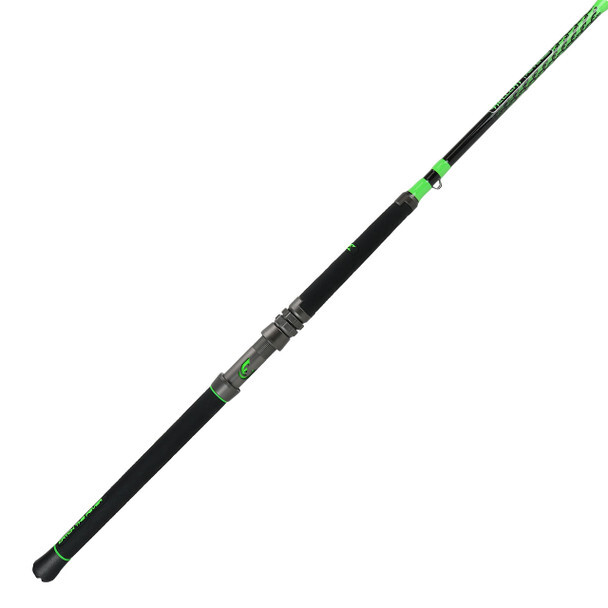
Okuma Cat Slayer Spinning Rod — Best All-Day Versatility
The Cat Slayer is designed for the angler targeting a mix — channels one hour, eater blues the next. The power curve is balanced enough to handle a solid blue without being overkill on the channels softly nipping bait. The lighter tip reads subtle bites; the mid-section handles the set. Long sessions on the bank or a river flat are easy with this rod.
- Best for: Channels, eater blues, slip float and Carolina rigs, mixed fisheries
- Why it works: Balanced power curve covers a wider fish size and rig weight range than a single-species rod
- Use it with: 30–50 lb braid, 1–3 oz slip sinker rigs, 3/0–5/0 circle hooks
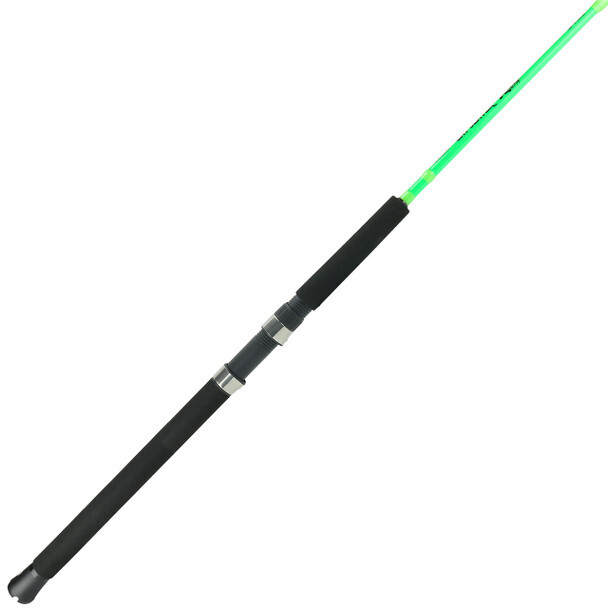
Catch The Fever Big Cat Fever Zakk Royce Spinning Rod — Best Anchor and Suspend
The Zakk Royce signature spinning rod is built for finicky situations — winter ledge fishing, suspended spreads, and anchor sets where the bite is soft and you need to feel it. The tip forgives on subtle takes without losing backbone through the mid-section. If you’re fishing structure in cold water where channels and blues go light on the bite, this rod reads it.
- Best for: Anchor sets, suspended presentations, winter ledge fishing, soft-bite situations
- Why it works: Forgiving tip detects soft bites without sacrificing backbone through the fight
- Use it with: 1–3 oz slip sinker or Santee Cooper rig; 40 lb braid, 30 lb mono leader
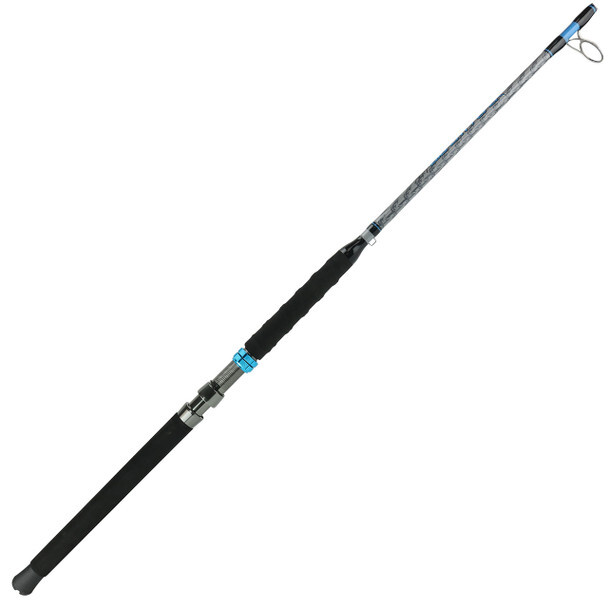
Catch The Fever Ravix Spinning Rod — Best Value
The Ravix does the right things for circle hooks and heavy braid without a premium price tag. If you’re running six rods off an anchor and don’t want six premium sticks in the water at once, this is the fill option. The power and action are calibrated for catfishing — not a repurposed freshwater rod with a new name on the blank.
- Best for: Budget builds, extra rods in a large spread, first catfish spinning rod
- Why it works: Purpose-built power and action for catfish rigs at an honest price
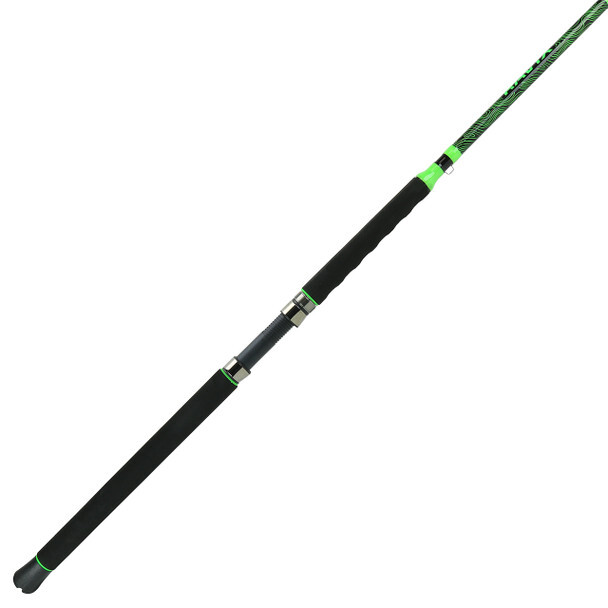
Best Casting Rods for Catfish
Six casting picks for trophy-class pressure, heavy current, long bank casts, and everything in between. Casting format handles heavier line, bigger reels, and multi-rod spreads better than spinning once you get past 30-pound fish on the regular.
Catch The Fever HellCat Revenge Casting Rod — Best Overall
The HellCat Revenge casting rod is built for catfish in serious water. Not light and fast — this rod absorbs the full weight of a heavy rig and fights a big fish on your terms. On rivers with current, rock edges, and timber, it holds position against pressure that would fold lighter rods. If you fish real catfish water, this is the rod that goes in the primary rod holder.
- Best for: River catfish, heavy current, 4–8 oz sinkers, trophy-class blues and flatheads
- Why it works: Strong mid and butt section handles sustained pressure; moderate tip works with circle hooks
- Use it with: 65–80 lb braid, 50–60 lb mono leader, 7/0–10/0 circle hooks
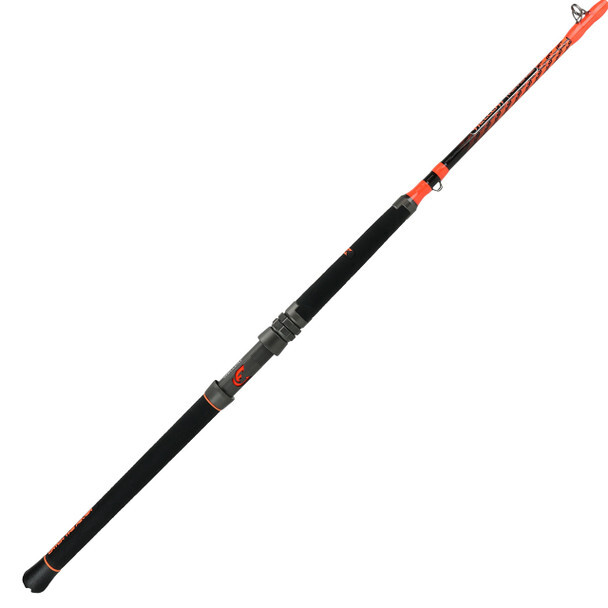
MadKatz Casting Rod — Best in Heavy Current
For heavy current and big baits, the MadKatz Casting has a true moderate action — not moderate-fast, not stiff. It loads deep, which protects knots and leaders when a large blue makes a run at close range. That deep load curve absorbs the shock that would snap a shorter, stiffer rod. Anchor this one in a heavy current spread with a clicker reel and let the rod do the work.
- Best for: Trophy blues, 3–8 oz sinkers in current, anchor sets
- Why it works: Deep load curve protects leaders on hard runs from heavy fish at short range
- Use it with: Clicker reels and Santee Cooper rigs for drifts; three-way rigs for anchor in current
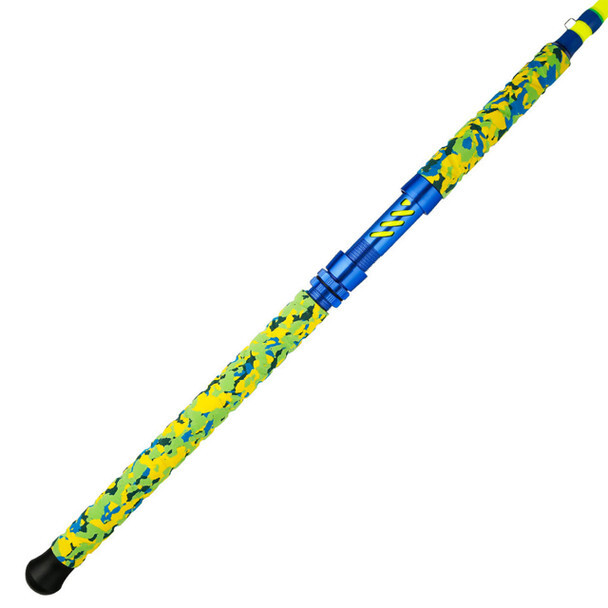
Catch The Fever Big Cat Fever Zakk Royce Casting Rod — Best Anchor Spread/Drift
The Zakk Royce casting rod gives you the bite sensitivity of a spinning rod in a casting format. On anchor spreads where you need to read which rod has a fish — and whether it’s a channel softly mouthing bait or a blue already moving with it — this rod tells you. The even load curve delivers consistent feedback from first touch to the net.
- Best for: Anchor spreads, drift fishing, situations requiring delicate bite detection
- Why it works: Even load curve from tip to butt produces steady, readable pressure through the whole fight
- Use it with: 50 lb braid, 40 lb mono leader, 6/0–8/0 circle hooks
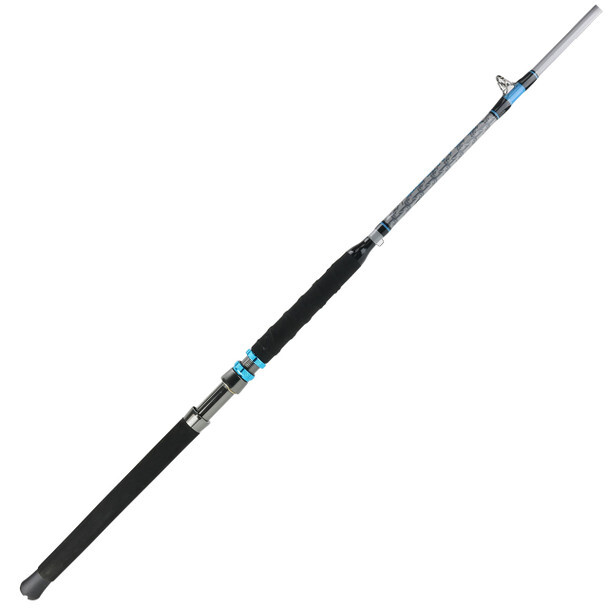
Catfish Sumo Chop Stick Master Series — Most Durable
The Chop Stick is built for hard use without apology. Tough glass blank, non-slip grip, hardware that doesn’t come loose after a season. Use this one on charter boats, guide trips, or any situation where the rod takes more abuse than your personal stick would. It shrugs off rough landings, gear pile-ons, and rough handling in ways graphite rods simply don’t.
- Best for: Guide boats, charter use, rough fishing environments, backup stick for heavy work
- Why it works: Purpose-built glass construction for repeated heavy use without failure under pressure
- Use it with: 65 lb braid, 50 lb mono leader, large circle hooks; heavy sinker anchor rigs
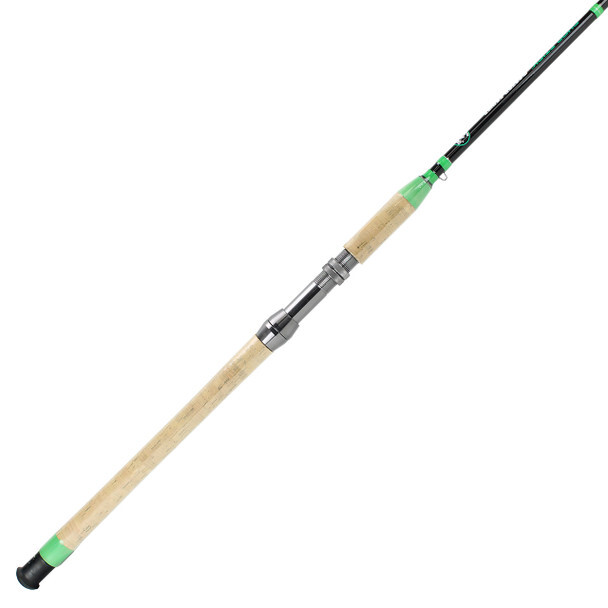
B’n’M Fishing Atlas Catfish Casting Rod — Best for Long Casts
The Atlas is built for distance. Long blank with solid tip recovery under heavy sinker loads keeps the cast clean from start to finish. For bank fishing large reservoirs or flat lakes where structure is far out, this rod adds meaningful casting distance over a shorter stick — the kind of reach that puts your bait on the flat edge instead of the slope in front of it.
- Best for: Long bank casts, big lake spreads, reservoir flats and channel edges
- Why it works: Tip recovery keeps the casting arc clean on heavy loads; extra length adds reach over standard-length sticks
- Use it with: 2–5 oz bank sinkers, Carolina rig, 40–65 lb braid; slip floats for slack-current banks
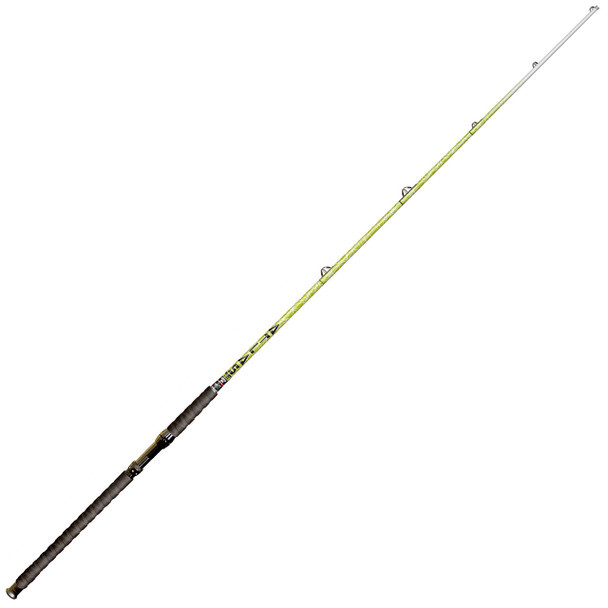
Catch The Fever Ravix Casting Rod — Best Value
The Ravix casting version gives you the right backbone and action for catfishing without a premium price. Good pick for backup rods in a big boat spread where you’re running 6–8 rods and don’t need all of them to be top-shelf. Solid hookset backbone, sensible moderate action for circle hooks, and a price that makes running extras easy to justify.
- Best for: Budget builds, extra rods in multi-rod spreads, first casting-format catfish rod
- Why it works: Right power and action for catfishing at the value price point
- Use it with: 40–65 lb braid, 40–50 lb mono leader, 5/0–8/0 circle or Kahle hooks
Build a Catfish Setup
The rod is only part of the equation. Here’s what goes with it.
Main Line
40–65 lb braid for most catfishing. High-vis yellow or orange makes line management easier when you’re watching multiple rods. Step up to 65–80 lb for trophy blue country where fish in the 40–80 lb range are realistic targets.
Leader
40–60 lb monofilament or fluorocarbon, 18–36 inches. Mono absorbs shock better on hard runs near the boat. Fluoro adds abrasion resistance in heavy rock, gravel, or timber. Longer leaders allow the weight to slide freely and reduce resistance on finicky bites.
Hooks
5/0–8/0 Kahle hooks for cut bait and chunk presentations. 6/0–10/0 circle hooks for live bait or when you want the hook to set itself on a tight-line bite. Skip trebles — they tangle in multi-rod spreads and are harder to remove from a fish safely.
Sinkers
1–3 oz egg or slip sinkers for Carolina-style rigs on flats and slow current. 3–6 oz bank or no-roll sinkers for anchor sets in current — flat sinkers hold bottom better than round ones in fast water. 3–5 oz egg sinkers for drift presentations where you want the rig to move.
Key Catfish Rigs
- Carolina rig: Slip sinker above a barrel swivel, 18–24 inch leader to hook. Works everywhere, adjustable for any situation.
- Three-way rig: Three-way swivel with a drop sinker arm and a leader arm. Keeps bait off the bottom in current without dragging.
- Santee Cooper rig: Carolina rig with a small foam float 2–4 inches above the hook. Suspends bait just off bottom in heavy current or over grass — flatheads and blues will find it.
Species-Specific Setups
Blue Catfish
Blues bulldog in current. Set up with 65–80 lb braid, 50–60 lb mono leader, and 4–8 oz bank sinkers for anchor sets on tailrace edges, river wing dams, and channel drop-offs. Cut skipjack or fresh shad works best. H to XH casting rod. Use a clicker reel or line alarm — blues pick up bait and move, and you want to know the moment line starts coming off the spool.
Channel Catfish
Channels respond to scent-heavy baits: stink bait, chicken liver, cut shad, punch bait. MH to H spinning or casting rod. 3–5 oz sinker on a Carolina rig worked through current edges, gravel flats, and tailwaters. Channels bite lighter than blues — the moderate tip makes a difference here when the bite is soft. A 12-pound channel mouthing bait feels nothing like a blue picking it up and walking.
Flathead Catfish
Flatheads are cover specialists. They hold in timber, laydowns, and concrete rubble. Heavy cover demands heavy tackle: H–XH rod, 65–80 lb braid, 60 lb mono leader, 5–8 oz anchor sinker to hold position. Live bait only — big bluegill, live bullheads, or live perch. Fish after dark. Flatheads come off structure to feed and go straight back into cover on the hookset. If you can’t horse a fish out on the first run, you’re losing that fish in the timber.
Bank vs Boat Catfishing
Bank Fishing
Bank fishing puts a premium on casting distance and line angle. A 9’–11’ rod casts heavier sinkers further and keeps your line above the rocks and riprap that line most catfish banks. Set multiple rods in holders spread over a wide arc to cover more water. Watch rod tips, not just line — a blue picking up bait and walking slow looks like a slow nod from 20 yards before it ever goes tight.
Boat Fishing
Anchored boat fishing with a spread means 7’6”–8’6” sticks fanned port and starboard. You can work 4–8 rods at once once the anchor is set. Clicker reels on the heavy rods let you hear the bite over wind and current. Keep rod spacing wide enough that lines don’t cross when a fish runs. From a drift boat, longer blanks help control line angles as you move downstream.
Care and Durability
Catfish release slime and blood onto blanks and handles. Rinse with fresh water after every session. EVA foam resists staining better than cork — if you fish cork handles, clean them before storage or they’ll get permanently saturated over a season.
Check guides for grooves every season by running your finger inside each ring. A cracked or grooved guide edge chews through braid fast. Replace any guide that catches.
Store rods horizontal in a rack or vertical in a tube. Leaning a rod tip-first in a corner loads the blank over time and sets a curve toward failure. Tighten reel seat collars before each trip — a loose reel seat lets the reel twist under load, and that torque transfers into the blank on a heavy fish.
Not Sure Which Rod to Choose? Start Here
If you’re trying to narrow it down fast, match your situation to the list below.
- New to catfishing / budget build: Ravix Spinning or Ravix Casting
- Channels and eater blues, bank or boat: Okuma Cat Slayer Spinning or Zakk Royce Casting
- Trophy blues in rivers or heavy current: MadKatz Casting or HellCat Revenge Casting
- Trophy blues or flatheads, prefer spinning: HellCat Revenge Spinning
- Winter ledge fishing or soft bites: Zakk Royce Spinning or Zakk Royce Casting
- Long bank casts, big lakes: B’n’M Atlas Catfish Casting
- Guide boats, hard use, rough conditions: Catfish Sumo Chop Stick
Catfish Rod FAQ
MH power handles channels well and still manages eater blues in the 10–25 lb range. Step up to H when fishing water that holds big blues — you’ll cross paths with them eventually. Full XH is overkill for channel-only setups where a 10–15 lb fish is your typical catch.
Graphite can be unforgiving when a big fish surges at close range and there’s no room to give line. E-glass or composite blanks cushion sudden load changes better and protect leaders on circle hooks during those short, brutal runs at the net. Graphite works fine for channels and light rigs but carries real risk once fish push past 20 pounds in heavy cover.
From a boat, 7’6”–8’6” gives you spread control and enough length for a net without the rod tips crossing when a fish runs. For bank fishing, 9’–10’+ adds casting distance and keeps your line angle above rocks and riprap. If you’re fishing a big river bank with snaggy bottom, the longer rod is worth it.
The Okuma Cat Slayer Spinning and the Catch The Fever Ravix (spinning or casting) are the best entry-level options. Both are built specifically for catfishing with the right power and action for circle hooks and heavy braid — not repurposed bass or walleye rods with a different name on the blank. The Okuma Cat Slayer is the stronger pick if you want one rod that covers channels and eater blues with room to grow into bigger fish.
Bank fishing favors longer rods for casting distance and high line angles over rocks and riprap. The B’n’M Atlas Catfish Casting Rod is built specifically for distance on big lakes and reservoirs. For rivers and smaller water, a 9’+ spinning rod in MH or H power with a moderate action — like the MadKatz Spinning — gets the job done and is easier to manage solo on a bank.
For blue catfish in rivers or heavy current, the HellCat Revenge Casting and MadKatz Casting are the top picks. Both have deep load curves and strong mid-sections that control heavy fish at close range without the blank buckling. If you prefer spinning, the HellCat Revenge Spinning handles trophy blues under sustained pressure — the blank doesn’t fold when a 40-pound fish makes a run in current.
40–65 lb braid for most catfishing situations. Step up to 65–80 lb for trophy blue country where fish in the 40–80 lb range are realistic. Always run a mono or fluorocarbon leader — 40–60 lb, 18–36 inches — between the braid and the hook. Braid has zero stretch; the mono leader absorbs the shock on hard runs near the boat and protects the knot connection on circle hooks.